Retrato de Canaletto

As 100 Pinturas Mais Famosas de Canaletto, uma Seleção da Galeria

Atualizado em Novembro 2026 · classificado pela nossa pontuação de popularidade (pesquisas, visitas e pedidos de cada obra) · 549 obras de Canaletto em nosso catálogo

Em resumo

De todas as obras originais deixadas por Canaletto, a mais famosa é O Grande Canal e a Igreja da Salve (1730), da coleção do Museum of Fine Arts, em Houston. Logo atrás vêm O Bucintoro Retornando ao Molo no Dia da Ascensão (1730) e Capriccio with Ruins and Porta Portello, Padua (1750). Nosso catálogo contém 549 obras de Canaletto; a galeria preservou as 100 que o mundo mais admira, cada uma exibida com sua data, seu museu e sua história.

1697 – 1768, Veneza Rococo style Mais obras: Royal Collection

As 10 principais pinturas de Canaletto: a escolha da galeria

1
O Grande Canal e a Igreja da Salve (1730) de Canaletto

O Grande Canal e a Igreja da Salve

1730 · Óleo sobre tela · Museum of Fine Arts, Houston

O Grande Canal e a Igreja da Salve, de autoria de Canaletto, captura um momento específico na vida de Veneza. Pintada em 1730, esta Paisagem Urbana veneziana coloca o espectador diretamente à beira da água. A cena se desenrola com a grandiosa cúpula da Santa Maria della Salute ancorando a composição, sua estrutura massiva elevando-se sobre a atividade do canal. A luz do sol dança sobre a superfície ondulante, lançando…

2
O Bucintoro Retornando ao Molo no Dia da Ascensão (1730) de Canaletto

O Bucintoro Retornando ao Molo no Dia da Ascensão

1730 · Óleo sobre tela

No coração do século XVIII, poucos espetáculos podiam rivalizar com a grandiosidade de Veneza durante as festividades do Dia da Ascensão. Giovanni Antonio Canal, conhecido universalmente como Canaletto, captura essa magia efêmera em sua obra-prima, O Bucintoro Retornando ao Molo no Dia da Ascensão. Esta imponente obra em óleo sobre tela é muito mais do que um mero registro topográfico; é uma janela para uma era perdida de esplendor marítimo…

3
Capriccio with Ruins and Porta Portello, Padua (1750) de Canaletto

Capriccio with Ruins and Porta Portello, Padua

1750 · Oil On Canvas · Gallerie dell'Accademia di Venezia, Veneza

Giovanni Antonio Canal, universally known as Canaletto, possessed an extraordinary gift for capturing the essence of Venice – its light, its atmosphere, and its vibrant daily life. His “Capriccio with Ruins and Porta Portello,” painted in 1750, is a quintessential example of this mastery, offering not merely a depiction of a scene but a carefully constructed evocation of memory, history, and the enduring beauty of a fading grandeur. This painting…

4
Capriccio of a Renaissance Triumphal Arch seen from the Portico of a Palace (1755) de Canaletto

Capriccio of a Renaissance Triumphal Arch seen from the Portico of a Palace

1755 · Oil On Canvas

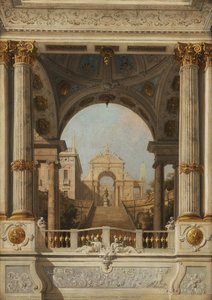
To gaze upon Giovanni Antonio Canaletto’s Capriccio of a Renaissance Triumphal Arch seen from the Portico of a Palace is to step directly into a meticulously crafted dreamscape, a moment where the grandeur of classical antiquity meets the vibrant energy of 18th-century life. Painted in 1755, this oil on canvas is far more than a mere depiction of architecture; it is a masterful meditation on permanence, memory, and the enduring…

5
The Feast Day of St Roch (1735) de Canaletto

The Feast Day of St Roch

1735 · Oil On Canvas · National Gallery, Londres

To step before Canaletto’s “The Feast Day of St Roch” is to be instantly transported to the sun-drenched, bustling streets of 18th-century Venice. Created in 1735, this masterpiece serves as much more than a mere topographical record; it is a vibrant, breathing window into a vanished era of grandeur and communal devotion. The painting captures a pivotal moment during the feast day of Saint Roch, a figure deeply revered by…

6
The Grand Canal (1728) de Canaletto

The Grand Canal

1728 · Oil On Canvas · Galleria degli Uffizi, Florença

To gaze upon Canaletto’s 1728 masterpiece, The Grand Canal, is to be transported instantly to the golden age of the Venetian Republic. This breathtaking canvas does not merely depict a waterway; it captures the very soul of a city at its zenith, pulsating with commerce, elegance, and an almost ethereal light. As the eye wanders across the expansive horizontal panorama, one feels the gentle movement of gondolas slicing through the…

7
Piazza San Marco (1730) de Canaletto

Piazza San Marco

1730 · Oil On Canvas · Metropolitan Museum of Art, Nova York

Piazza San Marco by Canaletto presents a wide view of the principal public square in Venice, Italy. Completed in 1730, the oil painting captures a Venetian cityscape centered on the activity within the square. The scene is populated by various figures, including citizens, merchants, and clergy, who move across the open space. The composition includes architectural landmarks such as St. Mark's Basilica and the Campanile, which rise above the surrounding…

8
Grand Canal: Looking North-East from Santa Croce to San Geremia (1732) de Canaletto

Grand Canal: Looking North-East from Santa Croce to San Geremia

1732 · Etching · Royal Collection, Londres

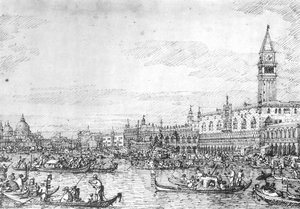
To gaze upon this depiction of the Grand Canal looking northeast from Santa Croce toward San Geremia is to step directly into the heart of 18th-century Venice. It is more than just an architectural record; it is a meticulously preserved moment of life, rendered with the breathtaking precision characteristic of Giovanni Antonio Canaletto. The scene unfolds before us, dominated by the majestic sweep of the waterway, where history and daily…

9
Piazza San Marco with the Basilica (1730) de Canaletto

Piazza San Marco with the Basilica

1730 · Oil On Canvas · Harvard Art Museums, Cambridge

The sun hangs high over the bustling heart of Venice in Canaletto's 1730 oil on canvas, Piazza San Marco with the Basilica. This scene captures the very essence of the city's most famous square, where the air feels thick with the movement of a thousand daily lives. We find ourselves standing within the wide expanse of the piazza, looking toward the grand architecture that defines this urban center. The light…

10
Venice: The Canale di San Marco with the Bucintoro at Anchor (1730) de Canaletto

Venice: The Canale di San Marco with the Bucintoro at Anchor

1730 · Royal Collection, Londres

Giovanni Antonio Canal, universally known as Canaletto, possessed an extraordinary gift for capturing the vibrant pulse of 18th-century Venice. His “Venice: The Bucintoro at the Molo on Ascension Day,” painted around 1754, stands as a testament to this skill – a monumental canvas brimming with life, color, and meticulously rendered detail. More than just a depiction of a specific event, it’s an immersive experience, transporting the viewer directly into the…

A seleção de Canaletto continua, de 11 a 100

11The Piazzetta Looking towards the Torre dell'Orologio (1725) de CanalettoThe Piazzetta Looking towards the Torre dell'Orologio1725 · Royal Collection 12The Piazzetta: Looking North, the Campanile under Repair (1745) de CanalettoThe Piazzetta: Looking North, the Campanile under Repair1745 · Royal Collection 13Santi Giovanni e Paolo and the Scuola di San Marco (1725) de CanalettoSanti Giovanni e Paolo and the Scuola di San Marco1725 · Gemäldegalerie 14Piazza San Marco: Looking East from the North-West Corner (1760) de CanalettoPiazza San Marco: Looking East from the North-West Corner1760 · National Gallery 15London: Ranelagh, Interior of the Rotunda (1754) de CanalettoLondon: Ranelagh, Interior of the Rotunda1754 · National Gallery 16Grand Canal: Looking North-East toward the Rialto Bridge (detail) (1725) de CanalettoGrand Canal: Looking North-East toward the Rialto Bridge (detail)1725 · Gemäldegalerie 17Grand Canal: Looking South-East from the Campo Santa Sophia to the Rialto Bridge (1756) de CanalettoGrand Canal: Looking South-East from the Campo Santa Sophia to the Rialto Bridge1756 · Staatliche Museen zu Berlin 18View through a Baroque Colonnade into a Garden, 1760-1768 (1768) de CanalettoView through a Baroque Colonnade into a Garden, 1760-17681768 · Albertina 19The Grand Canal near the Rialto Bridge, Venice (1730) de CanalettoThe Grand Canal near the Rialto Bridge, Venice1730 · Museum of Fine Arts 20Grand Canal: Looking North from Near the Rialto Bridge (1726) de CanalettoGrand Canal: Looking North from Near the Rialto Bridge1726 · Gemäldegalerie 21Capriccio: The Grand Canal, with an Imaginary Rialto Bridge and Other Buildings (1740) de CanalettoCapriccio: The Grand Canal, with an Imaginary Rialto Bridge and Other Buildings1740 · Galleria Nazionale 22View of San Giovanni dei Battuti at Murano (1725) de CanalettoView of San Giovanni dei Battuti at Murano1725 · Museu Hermitage 23Interior of San Marco, Venice (1745) de CanalettoInterior of San Marco, Venice1745 · Montreal Museum of Fine Arts 24Venice: Palazzo Grimani (1756) de CanalettoVenice: Palazzo Grimani1756 · National Gallery 25London: The Thames and the City of London from Richmond House (1747) de CanalettoLondon: The Thames and the City of London from Richmond House1747 26Alnwick Castle (1747) de CanalettoAlnwick Castle1747 27Venice, Bacino di San Marco on Ascension Day (1754) de CanalettoVenice, Bacino di San Marco on Ascension Day1754 28London seen through an arch of Westminster Bridge (1747) de CanalettoLondon seen through an arch of Westminster Bridge1747 29Entrance to the Grand Canal: Looking East (1725) de CanalettoEntrance to the Grand Canal: Looking East1725 · Gemäldegalerie 30Landscape with Ruins (also known as picket Duty in Virginia) de CanalettoLandscape with Ruins (also known as picket Duty in Virginia) 31The Piazzetta to the South (1720) de CanalettoThe Piazzetta to the South1720 · Royal Collection 32Piazza San Marco: Looking East along the Central Line (1723) de CanalettoPiazza San Marco: Looking East along the Central Line1723 · Museu Thyssen-Bornemisza 33Grand Canal: The Rialto Bridge from the South (1727) de CanalettoGrand Canal: The Rialto Bridge from the South1727 34Capriccio: The Horses of San Marco in the Piazzetta (1743) de CanalettoCapriccio: The Horses of San Marco in the Piazzetta1743 35Palazzo Ducale and the Piazza di San Marco (1755) de CanalettoPalazzo Ducale and the Piazza di San Marco1755 · Galleria degli Uffizi 36Piazza San Marco: Looking East from the South West Corner (1760) de CanalettoPiazza San Marco: Looking East from the South West Corner1760 · National Gallery 37Piazza San Marco, Looking toward San Geminiano (1735) de CanalettoPiazza San Marco, Looking toward San Geminiano1735 · Galleria Corsini 38View of the Arch of Constantine with the Colosseum (1742) de CanalettoView of the Arch of Constantine with the Colosseum1742 · J. Paul Getty Museum 39Arrival of the French Ambassador in Venice (detail) (1740) de CanalettoArrival of the French Ambassador in Venice (detail)1740 · Museu Hermitage 40Bacino di S. Marco: From the Piazzetta (1750) de CanalettoBacino di S. Marco: From the Piazzetta1750 · National Gallery of Victoria 41The Grand Canal, Venice, Looking South toward the Rialto Bridge (1734) de CanalettoThe Grand Canal, Venice, Looking South toward the Rialto Bridge1734 · Metropolitan Museum of Art 42The Colosseum (1743) de CanalettoThe Colosseum1743 · Galleria Borghese 43Perspective View (Stage design) de CanalettoPerspective View (Stage design)Accademia di San Luca 44Venice: Capriccio of the Courtyard of the Doges' Palace with the Scala dei Giganti (1744) de CanalettoVenice: Capriccio of the Courtyard of the Doges' Palace with the Scala dei Giganti1744 · Buckingham Palace 45Piazzetand the Doge s Palace from the Bacino di San Marco (1737) de CanalettoPiazzetand the Doge s Palace from the Bacino di San Marco1737 46The Stonemason's Yard (1726) de CanalettoThe Stonemason's Yard1726 · National Gallery 47Return of the Bucentoro to the Molo on Ascension Day (detail) (1732) de CanalettoReturn of the Bucentoro to the Molo on Ascension Day (detail)1732 · Royal Collection 48Venice: The Bacino from the Giudecca (1740) de CanalettoVenice: The Bacino from the Giudecca1740 · Wallace Collection 49The Doge's Palace with the Piazza di San Marco (1735) de CanalettoThe Doge's Palace with the Piazza di San Marco1735 · Galleria degli Uffizi 50The Grand Canal, Venice, Looking Southeast, with the Campo della Carità to the Right (1734) de CanalettoThe Grand Canal, Venice, Looking Southeast, with the Campo della Carità to the Right1734 · Metropolitan Museum of Art 51The Grand Canal with the Rialto Bridge and the Fondaco dei Tedeschi (1730) de CanalettoThe Grand Canal with the Rialto Bridge and the Fondaco dei Tedeschi1730 · Rijksmuseum 52The Grand Canal and the Church of the Salute (detail) (1730) de CanalettoThe Grand Canal and the Church of the Salute (detail)1730 · Museum of Fine Arts 53The Grand Canal from Campo San Vio towards the Bacino (1729) de CanalettoThe Grand Canal from Campo San Vio towards the Bacino1729 · Royal Collection 54Piazza San Marco: Looking South-East (1735) de CanalettoPiazza San Marco: Looking South-East1735 · National Gallery of Art 55Capriccio of the Rialto Bridge with the Lagoon Beyond (1746) de CanalettoCapriccio of the Rialto Bridge with the Lagoon Beyond1746 56Piazza San Marco, Looking Towards San Geminiano (1737) de CanalettoPiazza San Marco, Looking Towards San Geminiano1737 · Galleria Nazionale d'Arte Moderna 57A Regatta on the Grand Canal (1735) de CanalettoA Regatta on the Grand Canal1735 · National Gallery 58Rio dei Mendicanti: Looking South (1725) de CanalettoRio dei Mendicanti: Looking South1725 · Gemäldegalerie 59Grand Canal: Looking from Palazzo Balbi (1726) de CanalettoGrand Canal: Looking from Palazzo Balbi1726 · Gemäldegalerie 60The Porta Portello with the Brenta Canal in Padua, 1740-1743 (1743) de CanalettoThe Porta Portello with the Brenta Canal in Padua, 1740-17431743 · Albertina 61San Giacomo di Rialto (detail) (1725) de CanalettoSan Giacomo di Rialto (detail)1725 · Gemäldegalerie 62San Marco Square (Venice) (1743) de CanalettoSan Marco Square (Venice)1743 63Piazza San Marco, Looking East from the Southwest Corner (also known as Piazza San Marco and he Colonnade) (1756) de CanalettoPiazza San Marco, Looking East from the Southwest Corner (also known as Piazza San Marco and he Colonnade)1756 · National Gallery 64SS. Giovanni e Paulo and the Scuola de San Marco (1725) de CanalettoSS. Giovanni e Paulo and the Scuola de San Marco1725 · Staatliche Kunstsammlungen 65Rialto Bridge from the South (1737) de CanalettoRialto Bridge from the South1737 · Galleria Nazionale d'Arte Antica 66A Regatta on the Grand Canal (1740) de CanalettoA Regatta on the Grand Canal1740 67Entrance to the Grand Canal and the Church of La Salute (1735) de CanalettoEntrance to the Grand Canal and the Church of La Salute1735 68The Grand Canal with the Rialto Bridge in the Background (detail) (1724) de CanalettoThe Grand Canal with the Rialto Bridge in the Background (detail)1724 · Gemäldegalerie 69Capriccio: Ruins and Classic Buildings (1730) de CanalettoCapriccio: Ruins and Classic Buildings1730 · Museo Poldi Pezzoli 70Capriccio (Venetian Courtyard) (1765) de CanalettoCapriccio (Venetian Courtyard)1765 · Tel Aviv Museum of Art 71Venice: Riva degli Schiavoni (1730) de CanalettoVenice: Riva degli Schiavoni1730 · Royal Collection 72Grand Canal, Looking East from the Campo San Vio (1723) de CanalettoGrand Canal, Looking East from the Campo San Vio1723 · Museu Thyssen-Bornemisza 73Reception of the Imperial Ambassador at the Doge's Palace (1729) de CanalettoReception of the Imperial Ambassador at the Doge's Palace1729 74Entrance of the Grand Canal - from the West End of the Molo de CanalettoEntrance of the Grand Canal - from the West End of the MoloNational Gallery of Art 75Venice Viewed from the San Giorgio Maggiore de CanalettoVenice Viewed from the San Giorgio MaggioreStädelsche Kunstinstitut Und Städtische Galerie 76The Grand Canal near the Ponte del Rialto (1725) de CanalettoThe Grand Canal near the Ponte del Rialto1725 · Ashmolean Museum of Art and Archaeology 77Rome: The Arch of Constantine (detail) (1742) de CanalettoRome: The Arch of Constantine (detail)1742 · Royal Collection 78Vista da Igreja e do Palácio Ducal das Procuratie Vecchie (1742) de CanalettoVista da Igreja e do Palácio Ducal das Procuratie Vecchie1742 · National Gallery of Art 79Perspective View with Portico (detail) (1765) de CanalettoPerspective View with Portico (detail)1765 · Gallerie dell'Accademia di Venezia 80View of the Canale Grande from San Vio (Venice) de CanalettoView of the Canale Grande from San Vio (Venice)Bavarian State Painting Collections 81Reception of the Ambassador in the Doge's Palace (1730) de CanalettoReception of the Ambassador in the Doge's Palace1730 82The Vigilia di San Pietro de CanalettoThe Vigilia di San PietroStaatliche Museen zu Berlin 83Padua: The Prato della Valle with Santa Giustinia and the Church of Misericordia (sheet 1) (1740) de CanalettoPadua: The Prato della Valle with Santa Giustinia and the Church of Misericordia (sheet 1)1740 · Royal Collection 84O Canal Grande e a Igreja da Salvação (1738) de CanalettoO Canal Grande e a Igreja da Salvação1738 · Coleção Privada 85Grand Canal: San Geremia and the Entrance to the Cannaregio de CanalettoGrand Canal: San Geremia and the Entrance to the CannaregioBarnes Foundation 86San Giacomo de Rialto de CanalettoSan Giacomo de RialtoStaatliche Kunstsammlungen 87Imaginary View of Venice (1740) de CanalettoImaginary View of Venice1740 · British Museum 88London: Westminster Abbey, with a Procession of Knights of the Bath (1749) de CanalettoLondon: Westminster Abbey, with a Procession of Knights of the Bath1749 · Westminster Abbey 89La Vigilia di Santa Marta (1760) de CanalettoLa Vigilia di Santa Marta1760 · Staatliche Museen zu Berlin 90The Quay of the Dogana (1730) de CanalettoThe Quay of the Dogana1730 91View of the Ducal Palace (1730) de CanalettoView of the Ducal Palace1730 · El Paso Museum of Art 92Mestre (1741) de CanalettoMestre1741 93Roofs and Chimneys in Venice (1735) de CanalettoRoofs and Chimneys in Venice1735 94Padua: The Prato della Valle with Santa Giustinia and the Church of Misericordia (1740) de CanalettoPadua: The Prato della Valle with Santa Giustinia and the Church of Misericordia1740 95The Molo with the Library and the Entrance to the Grand Canal (1740) de CanalettoThe Molo with the Library and the Entrance to the Grand Canal1740 96Capriccio: a Palladian Design for the Rialto Bridge, with Buildings at Vicenza (1740) de CanalettoCapriccio: a Palladian Design for the Rialto Bridge, with Buildings at Vicenza1740 · Galleria Nazionale 97London: the Thames and the City of London from the Terrace of Richmond House (1747) de CanalettoLondon: the Thames and the City of London from the Terrace of Richmond House1747 98Piazza San Marco: Looking East from the South West Corner (1760) de CanalettoPiazza San Marco: Looking East from the South West Corner1760 99Interior Court of the Doge's Palace, Venice - Canaletto (2026) de CanalettoInterior Court of the Doge's Palace, Venice - Canaletto2026 · Fitzwilliam Museum 100The Feast Day of St Roch (detail) (1735) de CanalettoThe Feast Day of St Roch (detail)1735 · National Gallery

Pinturas famosas de Canaletto, período por período

Os temas que cativaram o olhar de Canaletto

Os quatro temas que mais se repetem nestas obras originais, cada um com o seu melhor exemplo.

Os museus que guardam os originais de Canaletto

Os 8 museus que detêm a maioria das pinturas desta página.

Museus Cidade Obras de Canaletto Pinturas desta lista
Royal Collection, LondresRoyal Collection Londres 54 Grand Canal: Looking North-East from Santa Croce to San Geremia, Venice: The Canale di San Marco with the Bucintoro at Anchor, The Piazzetta Looking towards the Torre dell'Orologio
National Gallery, LondresNational Gallery Londres 21 The Feast Day of St Roch, Piazza San Marco: Looking East from the North-West Corner, London: Ranelagh, Interior of the Rotunda
Gemäldegalerie, DresdenGemäldegalerie Dresden 10 Santi Giovanni e Paolo and the Scuola di San Marco, Grand Canal: Looking North-East toward the Rialto Bridge (detail), Grand Canal: Looking North from Near the Rialto Bridge
Metropolitan Museum of Art, Nova YorkMetropolitan Museum of Art Nova York 7 Piazza San Marco, The Grand Canal, Venice, Looking South toward the Rialto Bridge, The Grand Canal, Venice, Looking Southeast, with the Campo della Carità to the Right
National Gallery of Art, WashingtonNational Gallery of Art Washington 6 Piazza San Marco: Looking South-East, Entrance of the Grand Canal - from the West End of the Molo, Vista da Igreja e do Palácio Ducal das Procuratie Vecchie
Museum of Fine Arts, HoustonMuseum of Fine Arts Houston 3 O Grande Canal e a Igreja da Salve, The Grand Canal near the Rialto Bridge, Venice, The Grand Canal and the Church of the Salute (detail)
Galleria degli Uffizi, FlorençaGalleria degli Uffizi Florença 3 The Grand Canal, Palazzo Ducale and the Piazza di San Marco, The Doge's Palace with the Piazza di San Marco
Staatliche Museen zu Berlin, BerlimStaatliche Museen zu Berlin Berlim 3 Grand Canal: Looking South-East from the Campo Santa Sophia to the Rialto Bridge, The Vigilia di San Pietro, La Vigilia di Santa Marta

Canaletto década a década: a obra original que define cada uma

Obras por década

Escolha uma década para ver a obra original que a define.

Perguntas de colecionadores sobre as pinturas de Canaletto

Por qual obra Canaletto é mais conhecido(a)?Revelar a resposta

O Grande Canal e a Igreja da Salve (1730), Museum of Fine Arts, Houston. O Bucintoro Retornando ao Molo no Dia da Ascensão (1730) e Capriccio with Ruins and Porta Portello, Padua (1750) vêm a seguir.

Qual era a idade de Canaletto quando O Grande Canal e a Igreja da Salve foi feita?Revelar a resposta

33 anos: O Grande Canal e a Igreja da Salve data de 1730, e Canaletto nasceu em 1697.

Quais são as dez pinturas mais famosas de Canaletto?Revelar a resposta

O Grande Canal e a Igreja da Salve, O Bucintoro Retornando ao Molo no Dia da Ascensão, Capriccio with Ruins and Porta Portello, Padua, Capriccio of a Renaissance Triumphal Arch seen from the Portico of a Palace, The Feast Day of St Roch, The Grand Canal, Piazza San Marco, Grand Canal: Looking North-East from Santa Croce to San Geremia, Piazza San Marco with the Basilica e Venice: The Canale di San Marco with the Bucintoro at Anchor. O ranking acima apresenta o ano e o museu de cada uma.

Quantas pinturas Canaletto deixou?Revelar a resposta

Nosso catálogo contém 549 obras de Canaletto, datadas de 1720 a 1768.

Em quais museus estão expostas as obras-primas de Canaletto?Revelar a resposta

Principalmente em Royal Collection (Londres), National Gallery (Londres) e Gemäldegalerie (Dresden). A tabela de museus acima lista todos eles.

Em que anos Canaletto pintou as suas obras mais famosas?Revelar a resposta

Em 1730s: 29 das 100 obras nesta página foram feitas então, sendo O Grande Canal e a Igreja da Salve delas.

Quais são as primeiras e as últimas obras originais famosas de Canaletto?Revelar a resposta

Nesta página, a mais antiga é The Piazzetta to the South (1720) e a mais recente é View through a Baroque Colonnade into a Garden, 1760-1768 (1768).

Quais temas Canaletto escolheu com mais frequência?Revelar a resposta

Architecture (55), Venice (37) e Cityscape (30), entre as 100 obras nesta página.

Qual técnica Canaletto mais utilizou?Revelar a resposta

Oil On Canvas, para 69 das 100 obras nesta página.

A qual movimento artístico pertence Canaletto?Revelar a resposta

Rococo style e Baroque classicismo italiano, a julgar pelos originais nesta página.

Quais obras de Canaletto estão expostas no Royal Collection?Revelar a resposta

Grand Canal: Looking North-East from Santa Croce to San Geremia, Venice: The Canale di San Marco with the Bucintoro at Anchor e The Piazzetta Looking towards the Torre dell'Orologio: o Royal Collection, Londres detém 10 das obras desta página.

Canaletto: vida e obra

Vida Inicial, Família e Formação

Giovanni Antonio Canal, conhecido por muitos como Canaletto, nasceu em Veneza, Itália, em 18 de outubro de 1697. Ele cresceu em um ambiente onde as linhas de perspectiva e a ilusão de profundidade faziam parte do cotidiano. Seu pai, Bernardo Canal, era um pintor especializado em cenários teatrais, e sua mãe era Artemisia Barbieri. Desde muito jovem, Canaletto observava como seu pai construía os bastidores para o palco, aprendendo o segredo de transformar uma superfície plana em uma rua profunda e recuante ou em um salão grandioso.

Sua formação formal começou sob o olhar atento de seu pai. Ele não trabalhou sozinho; serviu como aprendiz ao lado de seu irmão, com ambos aprendendo o ofício da pintura de cenários teatrais. Este trabalho inicial exigia uma compreensão precisa de como a luz incide sobre uma superfície e de como a arquitetura pode ser manipulada para enganar o olhar. Esses anos dedicados aos cenários de palco forneceram a base técnica para seu interesse posterior pelos edifícios reais e pelas águas de Veneza.

A influência do ofício de sua família o acompanhou à medida que ele se voltava para temas mais permanentes. Seus primeiros anos foram definidos por este aprendizado, onde o foco recaía sobre a mecânica da visão e a construção do espaço. Ele aprendeu a manejar o pincel não apenas para retratar um tema, mas para construir um mundo que parecesse fisicamente presente.

Os Anos Formativos em Roma

Em 1718, Canaletto deixou Veneza rumo a Roma. Ele dedicou grande parte desse período imerso no universo teatral, aplicando as habilidades que herdara de seu pai diretamente nos palcos. Durante a temporada de carnaval de 1720, ele colaborou na produção dos cenários de duas óperas no Teatro Catranica. Tais produções contavam com composições de Alessandro Scarlatti, Tito Sempronio Greco e Turno Aricino. O trabalho com esses cenários exigia não apenas uma mão firme, mas uma compreensão meticulosa de como a luz e a sombra se projetam sobre um espaço meticulosamente desenhado.

Enquanto residia em Roma, ele teve o encontro transformador com a obra do vedutista Giovanni Paolo Pannini. Essa exposição à abordagem de Pannini sobre as vistas arquitetônicas começou a redirecionar seu olhar. Ele afastou-se do domínio puramente teatral para abraçar uma nova forma de enxergar a própria cidade. Canaletto passou a observar a realidade tangível e física de edifícios e ruas, um hábito que viria a definir toda a sua obra posterior. A transição do design de telões imaginários para a documentação de espaços urbanos reais representou uma mudança silenciosa, porém profunda, em sua prática artística.

As Vedute Venezianas e o Estilo Topográfico

Após retornar a Veneza, Canaletto começou a consolidar um estilo topográfico que se tornaria sua marca registrada. Ele voltou seu olhar para os canais da cidade, as fachadas imponentes dos palácios, a efervescência dos mercados e os detalhes silenciosos da vida cotidiana. Sua primeira obra conhecida, assinada e datada, um Capriccio Arquitetônico de 1723, surgiu em uma coleção particular em Milão, revelando desde cedo um interesse crescente pela forma como as edificações ocupam o espaço urbano.

O artista dedicou grande parte de sua jornada a documentar as texturas singulares da paisagem veneziana. Em 1725, ele pintou The Stonemason's Yard, uma obra que demonstra sua habilidade precoce em capturar o detalhe arquitetônico. Além disso, ele registrou o movimento fluido das águas e o fluxo das multidões durante eventos públicos, como a Regata no Grand Canal. Suas pinturas não eram meros registros visuais; eram observações meticulosas de como a luz e a sombra dançam sobre a pedra e a água.

O Período Inglês e a Vida em Londres

Entre 1746 e 1756, Canaletto realizou diversas viagens à Inglaterra. Durante este tempo, ele conquistou um lugar consolidado entre os colecionadores britânicos, contando com o apoio significativo do mercador e conhecedor Joseph "Consul" Smith. A influência de Smith foi fundamental para garantir o espaço do artista nos círculos daqueles que colecionavam suas vistas. Embora seus olhos estivessem frequentemente voltados para a arquitetura de Veneza, sua presença na Inglaterra permitiu-lhe documentar novas paisagens e cenários para um público de natureza distinta.

De 1749 a 1752, ele viveu em Londres, residindo na 41 Beak Street, no distrito de Soho. Este período foi marcado por seus deslocamentos pela cidade e seus arredores, capturando a luz e a estrutura específicas da paisagem inglesa. Sua obra desses anos reflete uma transição em sua temática, afastando-se dos canais de sua terra natal em direção à pedra e ao verde do campo britânico.

  • Eton College (1746-1756)

Técnica e Estilo Artístico

A abordagem de Canaletto distanciou-se dos temas religiosos e mitológicos tão favorecidos pelos pintores venezianos de eras anteriores. Em vez disso, ele voltou o seu olhar para a realidade tangível das ruas, da água e da pedra das cidades que documentava. A sua obra baseava-se frequentemente num sentido preciso de perspetiva. A natureza meticulosa dos seus desenhos preparatórios levou alguns a sugerir que ele utilizou uma camera obscura para alcançar tal precisão topográfica. Ele não se limitava a registar uma cena como faria uma câmara; ele manipulava as suas imagens para garantir que parecessem harmoniosas ao olho humano, equilibrando a vista real com um sentido de ordem composicional.

Para além das suas pinturas a óleo, foi um importante gravador que utilizou a técnica de água-forte para difundir os seus registos visuais. A sua capacidade de capturar a luz e a sombra não se tratava meramente de imitação, mas sim de compreender como a luz incide verdadeiramente sobre uma superfície. Ele observava como o brilho do sol cintilava na água e como projetava sombras longas através de uma praça, recriando estes efeitos no seu estúdio para construir profundidade e dimensão. Esta observação cuidadosa permitiu-lhe construir uma visão de Veneza que parecia, ao mesmo tempo, real e meticulosamente organizada.

Legado e Onde Ver Suas Obras

A sua presença ainda se faz sentir nas coleções de grandes instituições por toda a Europa e além. Em Londres, o seu traço é visível na National Gallery e na Royal Collection. Estas obras oferecem uma janela para as linhas precisas e a luz que ele capturou durante o seu tempo em Veneza e os seus anos na Inglaterra. Muitas das suas pinturas encontraram lares permanentes na Gemäldegalerie, em Dresden, reforçando o peso da sua influência na forma como as cidades são documentadas.

Do outro lado do Atlântico, a National Gallery of Art, em Washington, guarda a sua obra de 1742, View of the Church and the Doge's Palace from the Procuratie Vecchie. Esta peça revela a maestria com que ele manipulava a arquitetura e a atmosfera das ruas venezianas. A sua influência estendeu-se também à sua linhagem, com o seu sobrinho Bellotto seguindo os seus passos e tornando-se um artista de renome por mérito próprio.