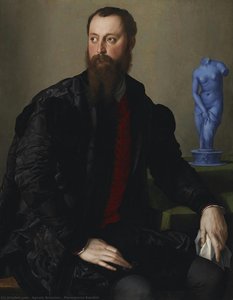
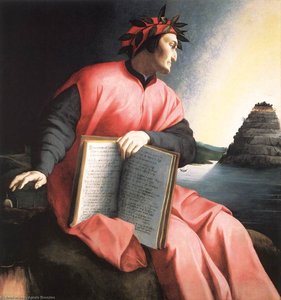
Retrato de Agnolo Bronzino

As 100 Pinturas Mais Famosas de Agnolo Bronzino, Cada Uma Única

Atualizado em Outubro 2026 · classificado pela nossa pontuação de popularidade (pesquisas, visitas e pedidos de cada obra) · 189 obras de Agnolo Bronzino em nosso catálogo

Em resumo

Vênus, Cupido e Tempo (Alegrória da Lux) (1540) é a pintura de Agnolo Bronzino que mais atrai olhares; a obra original pertence ao National Gallery, Londres. Depois disso, o olhar recai sobre Portrait of Eleonora da Toledo (1555) e Venus, Cupido and Satyr. Entre as 189 obras de Agnolo Bronzino em nosso catálogo, estas 100 são as mais famosas, cada uma uma original única apresentada com o seu ano, o seu museu e a razão pela qual perdura.

1503 – 1572, Florença Maneirismo Mais obras: Galleria degli Uffizi

As 10 principais pinturas de Agnolo Bronzino, sob o olhar da galeria

1
Vênus, Cupido e Tempo (Alegrória da Lux) (1540) de Agnolo Bronzino

Vênus, Cupido e Tempo (Alegrória da Lux)

1540 · Óleo sobre tela · National Gallery, Londres

Prepare to be captivated by "Venus, Cupid e o Tempo" – ou, como é frequentemente referida, a “Allegoria da Luxúria” – uma obra-prima do século XVI de Agnolo Bronzino que transcende a mera representação artística para se tornar um complexo jogo de símbolos e emoções. Pintada em 1540, esta tela não é apenas um retrato; é uma intrincada alegoria sobre o amor, a beleza, o tempo e as suas consequências,…

2
Portrait of Eleonora da Toledo (1555) de Agnolo Bronzino

Portrait of Eleonora da Toledo

1555 · Oil On Panel

To gaze upon Agnolo Bronzino's Portrait of Eleonora da Toledo is to step directly into the rarefied atmosphere of High Renaissance Florence. This painting, executed in 1555, transcends a mere likeness; it is a carefully constructed monument to status, power, and exquisite refinement. The subject, Eleonora da Toledo, radiates an almost palpable aura of aristocratic dignity. Bronzino captures her not just as a woman, but as a symbol of Medici…

3
Venus, Cupido and Satyr de Agnolo Bronzino

Venus, Cupido and Satyr

Oil

A pale, reclining figure occupies the center of the frame, her skin possessing the cool, polished sheen of marble. This is Venus, the goddess of love, draped in a way that emphasizes the tension between soft flesh and the hard edges of the composition. Beside her, Cupid clings to her form, a small, fleshy presence that embodies the sudden, sharp sting of passion. Their limbs are elongated, stretching toward one…

4
Portrait of Andrea Doria as Neptune (1550) de Agnolo Bronzino

Portrait of Andrea Doria as Neptune

1550 · Oil On Canvas · Pinacoteca di Brera, Milão

In the grand theater of the Italian Mannerist period, few images command the eye with such authoritative grace as Agnolo Bronzino’s Portrait of Andrea Doria as Neptune. This is not merely a portrait of a man, but a profound exercise in political allegory and divine projection. The subject, the legendary Genoese admiral Andrea Doria, is stripped of the heavy silks and velvet doublets typical of sixteenth-century aristocratic portraiture. Instead, Bronzino…

5
St. John the Baptist (1542) de Agnolo Bronzino

St. John the Baptist

1542 · Oil On Panel · J. Paul Getty Museum, Los Angeles

The figure of St. John the Baptist emerges from the shadows, rendered with a muscular intensity by the Florentine master Bronzino. This depiction captures the patron saint of Florence in a moment of profound spiritual tension. Created about 1542 - 1545, the work possesses a striking verticality that speaks to its original purpose. It does not exist in isolation but remains a fragment of a larger sacred narrative, having once…

6
Deposition (1565) de Agnolo Bronzino

Deposition

1565 · Oil On Canvas · Galleria dell'Accademia di Firenze, Florença

“Deposition,” painted in 1565 by the Florentine master Agnolo Bronzino, is not merely a religious scene; it's a meticulously crafted tableau of restrained emotion and profound psychological depth. Commissioned for the Observant Monastery in Cosmopoli, this work transcends simple narrative to become a meditation on grief, loss, and the delicate balance between earthly sorrow and divine grace. Bronzino, renowned for his “reserved elegance,” achieved this through an almost unnervingly controlled…

7
Portrait of a Young Man (1555) de Agnolo Bronzino

Portrait of a Young Man

1555 · Oil On Canvas · Nelson-Atkins Museum of Art, Kansas City

To gaze upon this portrait is to step directly into the rarefied atmosphere of mid-sixteenth-century Florence, a world governed by the subtle power plays and exquisite tastes of the Medici court. Agnolo Bronzino, the master chronicler of such elite circles, captured not merely a likeness, but an entire social stratum. The sitter, though anonymous to us today, embodies the controlled elegance expected of those who moved within the gilded cage…

8
Cosimo de Medici in Armour (1545) de Agnolo Bronzino

Cosimo de Medici in Armour

1545 · Oil On Panel · Museu Thyssen-Bornemisza, Madrid

The gaze of the Grand Duke of Tuscany, Cosimo I de' Medici, meets the viewer through the work titled Cosimo de Medici in Armour. Created by the Florentine artist Bronzino, this portrait captures the ruler in a moment of poised authority. The image emerges from the mid-16th century, dated about 1545, and presents a commanding presence through its structured composition. It exists as a significant version of the painting held…

9
Portrait of Cosimo I de' Medici as Orpheus (1537) de Agnolo Bronzino

Portrait of Cosimo I de' Medici as Orpheus

1537 · Oil On Panel · Philadelphia Museum of Art, Filadélfia

In this portrait, we encounter Cosimo I de' Medici, not merely as a ruler, but as the mythological musician Orpheus. He is positioned in a three-quarter view from behind, turning his gaze back toward us with a sense of psychological alertness. His body, rendered with a polished, marble-like texture, possesses an idealized beauty that speaks to the High Mannerist style. A single splash of crimson red drapery provides a sharp…

10
Portrait of Eleonora of Toledo and Her Son, Francesco de'Medici (1549) de Agnolo Bronzino

Portrait of Eleonora of Toledo and Her Son, Francesco de'Medici

1549 · Oil On Panel · Cincinnati Art Museum, Cincinnati

In this vertical half-length portrait, we encounter the Duchess of Florence, Eleonora of Toledo, and her son, Francesco de' Medici. The composition is defined by a controlled, almost sculptural stillness. Eleonora stands slightly behind the young boy, her hand resting upon his shoulder in a gesture that is both protective and formal. There is a certain aristocratic detachment in their expressions, a cool composure that characterizes the Florentine Mannerist style.…

Pinturas famosas de Agnolo Bronzino, números 11 a 100

11Portrait of Eleonora di Toledo, Bust (1560) de Agnolo BronzinoPortrait of Eleonora di Toledo, Bust1560 · Staatliche Kunstsammlungen Dresden 12Eleonora di Toledo (1560) de Agnolo BronzinoEleonora di Toledo1560 · National Gallery of Art 13Venus cupid time de Agnolo BronzinoVenus cupid timeNational Gallery 14Pierantonio Bandini (1555) de Agnolo BronzinoPierantonio Bandini1555 · Galeria Nacional do Canadá 15Deposition from the Cross (1545) de Agnolo BronzinoDeposition from the Cross1545 16Holy Family (1540) de Agnolo BronzinoHoly Family1540 · Galleria degli Uffizi 17Eleonora di Toledo (1543) de Agnolo BronzinoEleonora di Toledo1543 · Galeria Nacional de Praga 18Portrait of Lucrezia Panciatichi (1540) de Agnolo BronzinoPortrait of Lucrezia Panciatichi1540 · Galleria degli Uffizi 19Allegorical Portrait of Dante (1530) de Agnolo BronzinoAllegorical Portrait of Dante1530 20Ugolino Martelli (1535) de Agnolo BronzinoUgolino Martelli1535 21Cosimo I de' Medici in Armour (1550) de Agnolo BronzinoCosimo I de' Medici in Armour1550 · Museo degli Argenti 22Pope Leo X (1555) de Agnolo BronzinoPope Leo X1555 · Galleria degli Uffizi 23Saint Sebastian (1533) de Agnolo BronzinoSaint Sebastian1533 · Museu Salvador Dalí 24Venus, Cupid and Jealousy (1550) de Agnolo BronzinoVenus, Cupid and Jealousy1550 · Szépművészeti Múzeum 25Eleonora of Toledo with her son Giovanni de' Medici (1544) de Agnolo BronzinoEleonora of Toledo with her son Giovanni de' Medici1544 · Galleria degli Uffizi 26Venus, Cupid and Time (detail) (1540) de Agnolo BronzinoVenus, Cupid and Time (detail)1540 · National Gallery 27Don Garcia de' Medici (1550) de Agnolo BronzinoDon Garcia de' Medici1550 · Museu do Prado 28Eleonora da Toledo (1543) de Agnolo BronzinoEleonora da Toledo1543 · National Gallery Prague 29Portrait of Eleanora di Toledo (1560) de Agnolo BronzinoPortrait of Eleanora di Toledo1560 · National Gallery of Art 30Miracle of the Brazen Serpent (1542) de Agnolo BronzinoMiracle of the Brazen Serpent1542 · Palazzo Vecchio 31Portrait of Lucrezia Panciatichi (detail) (1540) de Agnolo BronzinoPortrait of Lucrezia Panciatichi (detail)1540 · Galleria degli Uffizi 32Portrait of a Young Man (1540) de Agnolo BronzinoPortrait of a Young Man1540 · Metropolitan Museum of Art 33Martyrdom of St Lawrence (1569) de Agnolo BronzinoMartyrdom of St Lawrence1569 · Basílica de São Lourenço 34Adoration of the Shepherds (1539) de Agnolo BronzinoAdoration of the Shepherds1539 · Szépművészeti Múzeum 35Eleonora da Toledo (1562) de Agnolo BronzinoEleonora da Toledo1562 36The Miracle of the Spring (1543) de Agnolo BronzinoThe Miracle of the Spring1543 · Palazzo Vecchio 37Gathering of the Manna (1543) de Agnolo BronzinoGathering of the Manna1543 · Palazzo Vecchio 38Galatea and Pygmalion (1530) de Agnolo BronzinoGalatea and Pygmalion1530 39Portrait of Ludovico Capponi (1551) de Agnolo BronzinoPortrait of Ludovico Capponi1551 · The Frick Collection 40Portrait of Cosimo I de' Medici (1545) de Agnolo BronzinoPortrait of Cosimo I de' Medici1545 · Galleria degli Uffizi 41Costanza da Sommaia (1540) de Agnolo BronzinoCostanza da Sommaia1540 · Detroit Institute of Arts 42Crossing of the Red Sea (1542) de Agnolo BronzinoCrossing of the Red Sea1542 · Palazzo Vecchio 43St John the Baptist (1550) de Agnolo BronzinoSt John the Baptist1550 · Galleria Borghese 44Portrait of a Lady in Red (detail) (1530) de Agnolo BronzinoPortrait of a Lady in Red (detail)1530 · Städelsche Kunstinstitut Und Städtische Galerie 45Portrait of a boy (1540) de Agnolo BronzinoPortrait of a boy1540 · Bode Museum 46The Feast Given by Joseph for His Brothers (1550) de Agnolo BronzinoThe Feast Given by Joseph for His Brothers1550 · Walters Art Museum 47Portrait of a Man, presumably a member of the Medici Family (1545) de Agnolo BronzinoPortrait of a Man, presumably a member of the Medici Family1545 · Statens Museum For Kunst 48Portrait of a Lady with a Puppy (1534) de Agnolo BronzinoPortrait of a Lady with a Puppy1534 49Don Giovanni de’Medici (1551) de Agnolo BronzinoDon Giovanni de’Medici1551 · Toledo Museum of Art 50Portrait of an Elderly Lady (1540) de Agnolo BronzinoPortrait of an Elderly Lady1540 · Fine Arts Museums of San Francisco 51Portrait of Lorenzo the Magnificent (1560) de Agnolo BronzinoPortrait of Lorenzo the Magnificent1560 52Portrait of a Young Man (1550) de Agnolo BronzinoPortrait of a Young Man1550 · National Gallery 53Madonna and Child with Saint John the Baptist (1540) de Agnolo BronzinoMadonna and Child with Saint John the Baptist1540 · Detroit Institute of Arts 54Portrait of a Lady in Green (1530) de Agnolo BronzinoPortrait of a Lady in Green1530 · Royal Collection 55Virgin and Child with the Young Saint John the Baptist (1528) de Agnolo BronzinoVirgin and Child with the Young Saint John the Baptist1528 · Art Institute of Chicago 56Portrait of a young Man in black with a book (1526) de Agnolo BronzinoPortrait of a young Man in black with a book1526 57portrait of a gentleman with his dog (1527) de Agnolo Bronzinoportrait of a gentleman with his dog1527 58Portrait of Francesco I de Medici (1527) de Agnolo BronzinoPortrait of Francesco I de Medici1527 59Madonna and Child with St. John the Baptist (1530) de Agnolo BronzinoMadonna and Child with St. John the Baptist1530 · National Museum in Wrocław 60Guidobaldo della Rovere (1531) de Agnolo BronzinoGuidobaldo della Rovere1531 61Eleonora di Toledo with her son Francesco (1549) de Agnolo BronzinoEleonora di Toledo with her son Francesco1549 62Portrait of a Baby Boy (1540) de Agnolo BronzinoPortrait of a Baby Boy1540 · Walters Art Museum 63Portrait of Cosimo I de' Medici in armour (1545) de Agnolo BronzinoPortrait of Cosimo I de' Medici in armour1545 · The National Museum in Poznań 64View of the Chapel of Eleonora da Toledo (1440) de Agnolo BronzinoView of the Chapel of Eleonora da Toledo1440 · Palazzo Vecchio 65Portrait of Giovanna Chevara and Giovanni Montalvo (1562) de Agnolo BronzinoPortrait of Giovanna Chevara and Giovanni Montalvo1562 · Worcester Art Museum 66Portrait of the dwarf Nano Morgantе (Back) (1552) de Agnolo BronzinoPortrait of the dwarf Nano Morgantе (Back)1552 67Descent of Christ Into Limbo (1552) de Agnolo BronzinoDescent of Christ Into Limbo1552 68Portrait of a Woman (1550) de Agnolo BronzinoPortrait of a Woman1550 · Cleveland Museum of Art 69Portrait of Cosimo I de' Medici, Grand Duke of Tuscany (1550) de Agnolo BronzinoPortrait of Cosimo I de' Medici, Grand Duke of Tuscany1550 · Gemäldegalerie Alte Meister im Schloss Wilhelmshöhe 70Portrait of a Young Man (1560) de Agnolo BronzinoPortrait of a Young Man1560 · Gemäldegalerie 71Piero de Medici il Gottoso (1560) de Agnolo BronzinoPiero de Medici il Gottoso1560 · National Gallery 72Portrait of Francesco I de' Medici (1551) de Agnolo BronzinoPortrait of Francesco I de' Medici1551 73Portrait of Bartolomeo Panciatichi (1540) de Agnolo BronzinoPortrait of Bartolomeo Panciatichi1540 · Galleria degli Uffizi 74Portrait of a man (copy) (1700) de Agnolo BronzinoPortrait of a man (copy)1700 · Amsterdam Museum 75Moses strikes water from the wall rocks (1544) de Agnolo BronzinoMoses strikes water from the wall rocks1544 76Altarpiece (1540) de Agnolo BronzinoAltarpiece1540 · Palazzo Vecchio 77The Dead Christ with the Virgin and St. Mary Magdalene (1530) de Agnolo BronzinoThe Dead Christ with the Virgin and St. Mary Magdalene1530 78Venus, Cupid and Envy (1548) de Agnolo BronzinoVenus, Cupid and Envy1548 · Szépművészeti Múzeum 79Saint John the Baptist (1553) de Agnolo BronzinoSaint John the Baptist1553 80Portrait of a Lady in Green (1530) de Agnolo BronzinoPortrait of a Lady in Green1530 · Royal Collection 81Portrait of Pope Clement VII (1564) de Agnolo BronzinoPortrait of Pope Clement VII1564 · Galleria degli Uffizi 82untitled (4490) (1532) de Agnolo Bronzinountitled (4490)1532 83The Holy Family (1545) de Agnolo BronzinoThe Holy Family1545 84Portrait of Francesco de’ Medici (1560) de Agnolo BronzinoPortrait of Francesco de’ Medici1560 · USC Fisher Museum of Art 85Lucrezia Panciatichi (1540) de Agnolo BronzinoLucrezia Panciatichi1540 86Adoration of the Shepherds (detail) (1539) de Agnolo BronzinoAdoration of the Shepherds (detail)1539 · Szépművészeti Múzeum 87A Young Woman and Her Little Boy (1540) de Agnolo BronzinoA Young Woman and Her Little Boy1540 · National Gallery of Art 88The Holy Family (1528) de Agnolo BronzinoThe Holy Family1528 · National Gallery of Art 89St Matthew (1525) de Agnolo BronzinoSt Matthew1525 90Portrait of Lorenzo Lenzi (1528) de Agnolo BronzinoPortrait of Lorenzo Lenzi1528 91St Mark (1525) de Agnolo BronzinoSt Mark1525 92Scenes of allegories of the cardinal virtues (1544) de Agnolo BronzinoScenes of allegories of the cardinal virtues1544 93Adoration of the Shepherds (detail) (11) (1539) de Agnolo BronzinoAdoration of the Shepherds (detail) (11)1539 · Szépművészeti Múzeum 94The Israelites crossing the Red Sea (1542) de Agnolo BronzinoThe Israelites crossing the Red Sea1542 95Christ in Limbo (1552) de Agnolo BronzinoChrist in Limbo1552 96Portrait of Nano Morgante (1552) de Agnolo BronzinoPortrait of Nano Morgante1552 97The Crossing of the Red Sea (1555) de Agnolo BronzinoThe Crossing of the Red Sea1555 98The Panciatichi Holy Family (detail) de Agnolo BronzinoThe Panciatichi Holy Family (detail) 99Portrait of Guidubaldo della Rovere (1532) de Agnolo BronzinoPortrait of Guidubaldo della Rovere1532 · Galleria Palatina 100Stigmatization of St. Francis (1544) de Agnolo BronzinoStigmatization of St. Francis1544

Pinturas famosas de Agnolo Bronzino, período por período

Os temas que cativaram o olhar de Agnolo Bronzino

Os quatro temas que mais se repetem nestas obras originais, cada um com o seu melhor exemplo.

Os museus que guardam os originais de Agnolo Bronzino

Os 8 museus que detêm a maioria das pinturas desta página.

Museu Cidade Obras de Agnolo Bronzino Pinturas desta lista
Galleria degli Uffizi, FlorençaGalleria degli Uffizi Florença 18 Holy Family, Portrait of Lucrezia Panciatichi, Pope Leo X
Palazzo Vecchio, FlorençaPalazzo Vecchio Florença 11 Miracle of the Brazen Serpent, The Miracle of the Spring, Gathering of the Manna
Szépművészeti Múzeum, BudapesteSzépművészeti Múzeum Budapeste 8 Venus, Cupid and Jealousy, Adoration of the Shepherds, Venus, Cupid and Envy
National Gallery, LondresNational Gallery Londres 5 Vênus, Cupido e Tempo (Alegrória da Lux), Venus cupid time, Venus, Cupid and Time (detail)
National Gallery of Art, WashingtonNational Gallery of Art Washington 4 Eleonora di Toledo, Portrait of Eleanora di Toledo, A Young Woman and Her Little Boy
Detroit Institute of Arts, DetroitDetroit Institute of Arts Detroit 2 Costanza da Sommaia, Madonna and Child with Saint John the Baptist
Walters Art Museum, BaltimoreWalters Art Museum Baltimore 2 The Feast Given by Joseph for His Brothers, Portrait of a Baby Boy
Royal Collection, LondresRoyal Collection Londres 2 Portrait of a Lady in Green, Portrait of a Lady in Green

Agnolo Bronzino ao longo das décadas: uma obra original única para cada uma

Obras por década

Escolha uma década para ver a obra original que a define.

Pinturas de Agnolo Bronzino: perguntas para a galeria

Qual é a obra mais famosa de Agnolo Bronzino?Revelar a resposta

Vênus, Cupido e Tempo (Alegrória da Lux) (1540), National Gallery, Londres. Portrait of Eleonora da Toledo (1555) e Venus, Cupido and Satyr vêm a seguir.

Com que idade Agnolo Bronzino criou Vênus, Cupido e Tempo (Alegrória da Lux)?Revelar a resposta

37 anos: Vênus, Cupido e Tempo (Alegrória da Lux) data de 1540, e Agnolo Bronzino nasceu em 1503.

Quais são as dez pinturas mais famosas de Agnolo Bronzino?Revelar a resposta

Vênus, Cupido e Tempo (Alegrória da Lux), Portrait of Eleonora da Toledo, Venus, Cupido and Satyr, Portrait of Andrea Doria as Neptune, St. John the Baptist, Deposition, Portrait of a Young Man, Cosimo de Medici in Armour, Portrait of Cosimo I de' Medici as Orpheus e Portrait of Eleonora of Toledo and Her Son, Francesco de'Medici. O ranking acima apresenta o ano e o museu de cada uma.

Quantas obras de Agnolo Bronzino são conhecidas?Revelar a resposta

Nosso catálogo contém 189 obras de Agnolo Bronzino, datadas de 1525 a 1569.

Onde se pode ver os originais mais famosos de Agnolo Bronzino?Revelar a resposta

Principalmente em Galleria degli Uffizi (Florença), Palazzo Vecchio (Florença) e Szépművészeti Múzeum (Budapeste). A tabela de museus acima lista todos eles.

Em que período Agnolo Bronzino criou as suas pinturas mais conhecidas?Revelar a resposta

Em 1540s: 36 das 100 obras nesta página foram feitas então, sendo Vênus, Cupido e Tempo (Alegrória da Lux) delas.

Qual pintura famosa de Agnolo Bronzino é a mais antiga e qual é a mais recente?Revelar a resposta

Nesta página, a mais antiga é St Matthew (1525) e a mais recente é Martyrdom of St Lawrence (1569).

Quais temas Agnolo Bronzino preferia?Revelar a resposta

Renaissance (35), Portrait (17) e Woman (16), entre as 100 obras nesta página.

Com quais materiais Agnolo Bronzino mais pintou?Revelar a resposta

Oil On Panel, para 34 das 100 obras nesta página.

A qual movimento pertence a obra de Agnolo Bronzino?Revelar a resposta

Maneirismo, a julgar pelos originais nesta página.

Quais originais de Agnolo Bronzino posso ver no Galleria degli Uffizi?Revelar a resposta

Holy Family, Portrait of Lucrezia Panciatichi e Pope Leo X: o Galleria degli Uffizi, Florença detém 8 das obras desta página.

Onde posso encomendar uma reprodução pintada à mão de Agnolo Bronzino?Revelar a resposta

Sim, como uma reprodução: a obra original permanece no seu museu, mas qualquer pintura desta página pode ser pintada à mão para você, feita sob encomenda uma a uma, a partir da própria página da pintura.

Agnolo Bronzino: um retrato do artista

Agnolo Bronzino: The Sculptor's Touch in Florentine Portraiture

Agnolo di Cosimo, known to history as Bronzino, emerged from the vibrant artistic landscape of Renaissance Florence in 1503, a period already brimming with genius. Born the son of a butcher, his path diverged sharply from familial trade, guided instead by an innate talent that would see him become one of the most sought-after portraitists of his era and a defining figure of Mannerism. His early training began with Raffaellino del Garbo, but it was under the tutelage of Jacopo da Pontormo that Bronzino’s artistic sensibilities truly took shape. While absorbing Pontormo's innovative style—characterized by expressive emotion and dynamic composition—he ultimately forged his own distinct voice—one characterized by a cool composure and refined detail markedly different from his teacher’s often emotionally charged works. This early period was also influenced by studies with Andrea del Sarto, exposing him to the legacies of Michelangelo and Leonardo da Vinci, foundational influences that would subtly permeate his mature style. The young Bronzino quickly demonstrated an aptitude for capturing not just physical likeness but a certain psychological depth, even in his earliest commissions.

Early Influences and Artistic Formation

Bronzino’s formative years were marked by exposure to the artistic currents of Florence under Pontormo and Sarto. Pontormo's embrace of expressive distortion—a technique that would become synonymous with Mannerism—challenged the prevailing ideals of naturalistic representation, pushing artists to explore new visual languages. Bronzino absorbed this stylistic boldness, adapting it to his own distinctive style while simultaneously grounding it in the anatomical precision championed by Michelangelo and Leonardo da Vinci. This dual influence shaped his artistic vision—a commitment to both intellectual rigor and emotional restraint—principles that would underpin his entire oeuvre. His early portraits showcased a remarkable sensitivity to gesture and posture, conveying subtle nuances of emotion without resorting to overt sentimentality. These formative experiences instilled in him a profound understanding of artistic technique and conceptual innovation—qualities that would prove crucial to his subsequent success as a court painter and Mannerist master.

The Medici Patronage and Florentine Artistic Zenith

Bronzino’s career ascended dramatically with the patronage of Cosimo I de’ Medici, Duke of Tuscany. Recognizing Bronzino's exceptional talent, Cosimo appointed him official court painter—a position he held until his death in 1572—solidifying his influence within Florentine artistic circles and securing commissions that would propel him to international renown. This relationship fostered an environment conducive to experimentation and innovation, allowing Bronzino to explore ambitious projects—including the lavish decorations celebrating Cosimo’s wedding to Eleonora di Toledo in 1539—that reflected the grandeur and sophistication of the Medici court. The portraits emanating from this period are not merely likenesses; they are carefully constructed statements of power, status, and dynastic ambition. Cosimo and Eleonora themselves became frequent subjects, immortalized in paintings that exude an aristocratic aloofness and polished elegance. These works weren’t simply about capturing physical resemblance but crafting enduring symbols of Medici authority—a testament to Bronzino's ability to translate political aspirations into visual masterpieces.

The Mannerist Style: Precision and Psychological Depth

Bronzino’s artistic style is quintessentially Mannerist—a movement that flourished in Italy during the mid-16th century as a reaction against the High Renaissance's emphasis on naturalism and harmonious balance. He embraced elongated forms, stylized poses, and an often cool, detached emotionality. His figures are rarely caught in moments of spontaneous action; instead, they appear carefully posed, almost sculptural in their stillness. This stylistic choice—a deliberate departure from the idealized beauty of earlier Renaissance art—reflected a broader intellectual preoccupation with philosophical concepts such as illusion and artificiality. Bronzino’s meticulous attention to detail—the textures of fabrics, the gleam of jewels, the subtle nuances of expression—all rendered with an almost enamel-like precision—served to heighten the sense of visual drama and psychological complexity. He wasn't interested in simply replicating reality; he sought to elevate it through artifice and stylistic control. As a result, Bronzino’s portraits stand apart from their contemporaries, embodying a distinctive aesthetic that continues to fascinate scholars and viewers alike.

Legacy and Enduring Influence

Bronzino’s legacy extends far beyond his individual artworks—he established the Accademia delle Arti del Disegno in 1563, fostering artistic excellence and shaping the intellectual landscape of Florence. His influence permeated European court portraiture for decades after his death, establishing Mannerist principles as benchmarks of aristocratic representation. Bronzino's ability to convey psychological depth within a framework of formal elegance—a hallmark of his style—continues to inspire artists today. He remains one of the most celebrated figures of Florentine Mannerism—a testament to his unwavering dedication to artistic innovation and his enduring contribution to the history of art. His portraits are treasured for their exquisite craftsmanship and profound insight into human character—works that transcend time and continue to captivate audiences worldwide.
  • Born: Florence, Italy, 1503
  • Died: Florence, Italy, 1572
  • Key Movement: Mannerism
  • Notable Works: *Venus, Cupid, Folly & Time*, Portraits of Cosimo I de’ Medici and Eleonora di Toledo

Todas as 189 obras de Agnolo Bronzino →