Retrato de Bertel Thorvaldsen

Pinturas de Bertel Thorvaldsen: As 29 mais famosas, sob o olhar de uma galeria

Atualizado em Novembro 2026 · classificado pela nossa pontuação de popularidade (pesquisas, visitas e pedidos de cada obra) · 35 obras de Bertel Thorvaldsen em nosso catálogo

Em resumo

Aos olhos da galeria, a pintura mais famosa de Bertel Thorvaldsen é The three Graces, cuja obra original está exposta no Accademia di San Luca, em Roma. Adonis (1808) e Christ completam o trio que todos reconhecem. Dos 35 trabalhos de Bertel Thorvaldsen em nosso catálogo, a galeria apresenta abaixo as 29 obras mais famosas, cada uma original, com seu ano, seu museu e o que a torna única.

1770 – 1844, Copenhaga Neoclassicism Mais obras: Museu Thorvaldsen

As 10 principais pinturas de Bertel Thorvaldsen na galeria

1
The three Graces de Bertel Thorvaldsen

The three Graces

Marble · Accademia di San Luca, Roma

In the quiet, hallowed halls of Neoclassical mastery, few works resonate with the same ethereal tenderness as Bertel Thorvaldsen’s The Three Graces. Sculpted in 1817 during the artist's most prolific years in Rome, this marble masterpiece is far more than a mere depiction of mythological figures; it is a profound meditation on harmony, intimacy, and the timeless ideals of beauty. As one gazes upon the smooth, luminous surfaces of the…

2
Adonis (1808) de Bertel Thorvaldsen

Adonis

1808 · Marble · Neue Pinakothek, Munique

This marble sculpture, created by Bertel Thorvaldsen, depicts the mythological figure of Adonis. The work is a full-length portrait of a young male figure presented in a contrapposto pose. The figure stands with his body slightly angled towards the viewer, holding a staff or spear in one hand, while drapery is loosely gathered around his other arm and leg. The sculpture is set upon a simple, rectangular base.

3
Christ de Bertel Thorvaldsen

Christ

Marble · Accademia di San Luca, Roma

To stand before this depiction of Christ is to encounter an immediate hush, a profound stillness captured in pale stone. The sculpture presents the upper torso and head of Jesus, rendered with the idealized perfection characteristic of Neoclassicism. Its surface, smooth and luminous—suggesting either fine marble or expertly finished plaster—seems to absorb and diffuse light, giving the figure an ethereal quality. The composition centers entirely on this divine presence; Christ’s…

4
Ganimede and the eagle de Bertel Thorvaldsen

Ganimede and the eagle

Marble · Accademia di San Luca, Roma

To stand before this magnificent representation of Ganymede and the Eagle is to step directly into the luminous halls of classical mythology. The sculpture, a masterful testament to Neoclassical ideals, captures a moment suspended between divine favor and earthly devotion. It portrays Ganymede, the eternally youthful cupbearer to the gods, in an act of tender offering—presenting sustenance to the majestic eagle that perches nearby. The sheer physicality of the piece,…

5
Christ (1821) de Bertel Thorvaldsen

Christ

1821 · Photography · Museu Thorvaldsen, Copenhaga

The sculpture Christ is a work by the Danish-Icelandic artist Bertel Thorvaldsen. Created about 1821, this piece depicts Jesus Christ in a moment of quiet contemplation. It is a religious subject, rendered as a marble or plaster sculpture. The figure is presented with a sense of serene presence, capturing a specific devotional mood through its form.

6
The Lion of Lucerne (1819) de Bertel Thorvaldsen

The Lion of Lucerne

1819 · Photography

The Lion of Lucerne, also known as the Lion Monument, emerges from the stone as a profound presence in Switzerland. Designed by the Danish sculptor Bertel Thorvaldsen, this rock relief captures a moment of heavy stillness. The work was hewn between 1820 and 1821 by Lukas Ahorn, carving a permanent memory into the cliff face. It remains one of the most famous monuments in Switzerland, drawing eyes to its silent,…

7
Monument of Pius VIII (1853) de Bertel Thorvaldsen

Monument of Pius VIII

1853 · Marble · Basílica de São Pedro, Cidade do Vaticano

In the hallowed, quietude of a Roman church interior, where light dances softly against ancient stone, stands a masterpiece that transcends the boundaries of time. The Monument of Pius VIII, sculpted by the legendary Danish master Albert Bertel Thorvaldsen in 1853, is far more than a mere commemorative marker; it is a profound dialogue between the mortal and the divine. Through the medium of exquisite Carrara marble, Thorvaldsen captures not…

9
Shepherd Boy (1800) de Bertel Thorvaldsen

Shepherd Boy

1800 · Marble · Museu Thorvaldsen, Copenhaga

The sculpture titled Shepherd Boy is a work by the Danish-Icelandic sculptor and medalist Bertel Thorvaldsen. Created about 1800, the figure captures a quiet moment of pastoral life. The boy sits upon a rocky outcrop, a companionable dog resting at his feet. It is a study of stillness and the simple bond between a youth and his animal.

10
Mercury Preparing to Kill Argus (1818) de Bertel Thorvaldsen

Mercury Preparing to Kill Argus

1818 · Marble · Museu Thorvaldsen, Copenhaga

The sculpture titled Mercury Preparing to Kill Argus is a work by the artist Bertel Thorvaldsen. Created about 1818, the piece captures a suspended moment of divine intent. It draws its subject matter from the narratives of Greek mythology, focusing on the messenger god, Mercury. The figure is frozen in the quiet tension of his purpose.

Pinturas de Bertel Thorvaldsen, classificadas de 11 a 29

Os temas que cativaram o olhar de Bertel Thorvaldsen

Os quatro temas que mais se repetem nestas obras originais, cada um com o seu melhor exemplo.

Os museus que guardam os originais de Bertel Thorvaldsen

Os 8 museus que detêm a maioria das pinturas desta página.

Museus Cidade Obras de Bertel Thorvaldsen Pinturas desta lista
Museu Thorvaldsen, CopenhagaMuseu Thorvaldsen Copenhaga 9 Christ, Shepherd Boy, Mercury Preparing to Kill Argus
Accademia di San Luca, RomaAccademia di San Luca Roma 3 The three Graces, Christ, Ganimede and the eagle
Neue Pinakothek, MuniqueNeue Pinakothek Munique 1 Adonis
Basílica de São Pedro, Cidade do VaticanoBasílica de São Pedro Cidade do Vaticano 1 Monument of Pius VIII
Statens Museum For Kunst, CopenhagueStatens Museum For Kunst Copenhague 1 Døgnets tider. Symboliseret ved fire vingede skikkelser
Staatliche Kunsthalle Karlsruhe, KarlsruheStaatliche Kunsthalle Karlsruhe Karlsruhe 1 Hebe
Palazzo del Quirinale, RomaPalazzo del Quirinale Roma 1 Triumph of Alexander the Great - Detail of the frieze
Manchester Art Gallery, ManchesterManchester Art Gallery Manchester 1 Shepherd

Bertel Thorvaldsen, uma pintura emblemática por década

Obras por década

Escolha uma década para ver a obra original que a define.

Pinturas de Bertel Thorvaldsen: a galeria responde

Qual pintura de Bertel Thorvaldsen é a mais famosa de todas?Revelar a resposta

The three Graces, Accademia di San Luca, Roma. Adonis (1808) e Christ vêm a seguir.

Quais são as 10 principais pinturas de Bertel Thorvaldsen?Revelar a resposta

The three Graces, Adonis, Christ, Ganimede and the eagle, Christ, The Lion of Lucerne, Monument of Pius VIII, Døgnets tider. Symboliseret ved fire vingede skikkelser, Shepherd Boy e Mercury Preparing to Kill Argus. O ranking acima apresenta o ano e o museu de cada uma.

Quantas obras Bertel Thorvaldsen criou?Revelar a resposta

Nosso catálogo contém 35 obras de Bertel Thorvaldsen, datadas de 1794 a 1831.

Onde estão expostos os originais mais famosos de Bertel Thorvaldsen?Revelar a resposta

Principalmente em Museu Thorvaldsen (Copenhaga), Accademia di San Luca (Roma) e Neue Pinakothek (Munique). A tabela de museus acima lista todos eles.

Quando é que Bertel Thorvaldsen criou as suas pinturas mais famosas?Revelar a resposta

Em 1810s: 8 das 29 obras nesta página foram feitas então, sendo The Lion of Lucerne delas.

Quais são as obras mais famosas de Bertel Thorvaldsen no início e no fim de sua carreira?Revelar a resposta

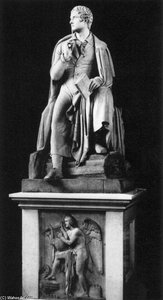
Nesta página, a mais antiga é Døgnets tider. Symboliseret ved fire vingede skikkelser (1794) e a mais recente é Statue of Byron (1831).

Quais temas Bertel Thorvaldsen mais explorou?Revelar a resposta

Sculpture (11), Marble (6) e Mythology (4), entre as 29 obras nesta página.

Em qual técnica Bertel Thorvaldsen mais trabalhou?Revelar a resposta

Marble, para 12 das 29 obras nesta página.

Com qual movimento Bertel Thorvaldsen está associado(a)?Revelar a resposta

Neoclassicism, a julgar pelos originais nesta página.

Quais obras originais de Bertel Thorvaldsen o Museu Thorvaldsen possui?Revelar a resposta

Christ, Shepherd Boy e Mercury Preparing to Kill Argus: o Museu Thorvaldsen, Copenhaga detém 9 das obras desta página.

Bertel Thorvaldsen: o artista

Bertel Thorvaldsen: Uma Vida em Pedra

Albert Bertel Thorvaldsen (1770-1844) foi um escultor de renome internacional, de ascendência dinamarquesa e islandesa, cuja obra personifica os mais puros ideais da arte neoclássica. Sua trajetória é uma narrativa de talento extraordinário, estudo incansável e um reconhecimento que atravessou fronteiras.

Primeiros Anos e Formação

Nascido em Copenhague, na Dinamarca, em uma família de classe trabalhadora com raízes islandesas, Thorvaldsen revelou uma promessa artística desde a infância. Sua genialidade precoce permitiu que fosse aceito na Real Academia de Belas Artes da Dinamarca com apenas onze anos de idade. O domínio excepcional de sua técnica rendeu-lhe uma bolsa de estudos para viajar a Roma em 1tub1797 – um passo decisivo que viria a definir o curso de sua carreira.

Anos em Roma: A Forja de um Estilo

Roma revelou-se o cenário ideal para o florescimento artístico de Thorvaldsen. Imerso no estudo da antiguidade clássica, ele dedicou-se meticulosamente à cópia de esculturas antigas, absorvendo seus princípios fundamentais de forma e proporção. Essa devoção conduziu-o ao desenvolvimento de um estilo neoclássico distinto, caracterizado pela pureza das linhas, formas idealizadas e uma sensação de grandeza serena.

Influências e Evolução Artística

Thorvaldsen foi profundamente impactado pelas obras dos escultores gregos e romanos da antiguidade, bem como por mestres contemporâneos como Antonio Canova. No entanto, ele trilhou um caminho próprio, afastando-se gradualmente do estilo mais exuberante de Canova em favor de uma ênf importância na simplicidade e no equilíbrio. Seu objetivo transcendia a mera captura da beleza física; ele buscava imortalizar a própria virtude moral em suas figuras.

Grandes Conquistas e Obras Notáveis

  • Escultura Religiosa: Thorvaldsen criou inúmeras obras sacras, incluindo o monumento funerário do Papa Pio VII – a única obra de um artista não católico situada dentro da Basílica de São Pedro.
  • Temas Mitológicos: Suas esculturas que retratam figuras mitológicas, como Ganimedes e a Águia, Hebe e Apolo, são celebradas mundialmente por sua graça e beleza clássica.
  • Monumentos Públicos: O artista recebeu encomendas para monumentos públicos por toda a Europa, incluindo estátuas de Nicolau Copérnico e Józef Poniatowski em Varsóvia, além de Maximiliano I em Munique.

O Retorno à Dinamarca e seu Legado

Em 1838, Thorvaldsen retornou à Dinamarca como um verdadeiro herói nacional. O governo dinamarquês ergueu o Museu Thorvaldsen, em Copenhague, para abrigar suas obras, um testemunho de sua imensa popularidade e relevância artística. Ele faleceu em 1844 e repousa no pátio do próprio museu que guarda sua memória.

Significância Histórica

Bertel Thorvaldsen desempenhou um papel fundamental na moldagem do movimento neoclássico. Suas esculturas foram amplamente admiradas e imitadas, influenciando gerações de artistas. Com maestria, ele reviveu os ideais clássicos na escultura, criando obras que continuam a inspirar reverência e admiração nos dias de hoje. Sua habilidade em fundir o rigor técnico com uma visão artística sublime consolidou seu lugar como um dos escultores mais importantes do século XIX.