
1


Atualizado em Outubro 2026 · classificado pela nossa pontuação de popularidade (pesquisas, visitas e pedidos de cada obra) · 31 obras de Bernie Casey em nosso catálogo
Em resumo
Vulva Love (1968) é a pintura de Bernie Casey que mais atrai olhares. Depois disso, o olhar recai sobre The Casey Trees (1968) e The Word Game (1968). Entre as 31 obras de Bernie Casey em nosso catálogo, estas 31 são as mais famosas, cada uma uma original única apresentada com o seu ano, o seu museu e a razão pela qual perdura.


 Three Thirty in the Morning1968
12
 The Open Box1968
13
 The Holy Sign1968
14
 Nocturnal Flower Garden1968
15
 Sex And Love, Peace And Freedom1968
16
 Sex Two Ways1968
17
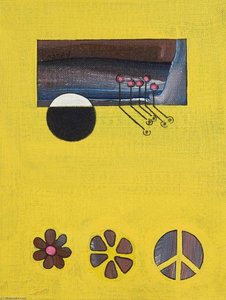 Nocturnal Lollipop Flowers1968
18
 In The Moon's Middle1970
19
 Gallup Farewell1970
20
 Inner Landscape1970
21
 The Night Road that Leads to Darkness1970
22
 Love And Peace1969
23
 White Daisy Land1968
24
 Rhea's Ray1968
25
 The Quiet Valley
26
 Cityscape
27
 Memory From Another Time, A1968
28
 Ten Flowers1968
29
 Last Night The Sex Grew1968
30
 The Afterthought of Dante's Inferno1968
31
 Peppermint Lunar Field1968
Os quatro temas que mais se repetem nestas obras originais, cada um com o seu melhor exemplo.
Cada obra original de Bernie Casey datada exibida aqui foi produzida em 3 anos, entre 1968 e 1970: ano a ano, aqui estão elas.
Escolha um ano para ver as obras originais.
Mais de 1968
 #2 The Casey Trees
 #3 The Word Game
 #4 In Springtime Yesterday
 #5 So I Simply Said
 #8 Trees.Precisely
 #9 Hommage To Jupiter And Mars
 #10 Nocturnal Wishings Bloom
#11 Three Thirty in the Morning
#12 The Open Box
#13 The Holy Sign
#14 Nocturnal Flower Garden
#15 Sex And Love, Peace And Freedom
#16 Sex Two Ways
#17 Nocturnal Lollipop Flowers
#23 White Daisy Land
#24 Rhea's Ray
#27 Memory From Another Time, A

Vulva Love (1968). The Casey Trees (1968) e The Word Game (1968) vêm a seguir.
29 anos: Vulva Love data de 1968, e Bernie Casey nasceu em 1939.
Vulva Love, The Casey Trees, The Word Game, In Springtime Yesterday, So I Simply Said, If You Feel Up To It, An Excerpt From A Terry Tip, Trees.Precisely, Hommage To Jupiter And Mars e Nocturnal Wishings Bloom. O ranking acima apresenta o ano e o museu de cada uma.
Nosso catálogo contém 31 obras de Bernie Casey, datadas de 1968 a 1970.
Em 1968: 22 das 31 obras nesta página foram feitas então, sendo Vulva Love delas.
Nesta página, a mais antiga é Vulva Love (1968) e a mais recente é In The Moon's Middle (1970).
Geometric design (3), Sunset landscape (2) e Landscape (2), entre as 31 obras nesta página.
Abstract expressionism, a julgar pelos originais nesta página.
