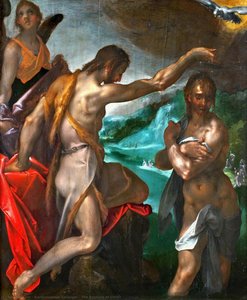
Retrato de Bartholomeus Spranger

As 74 Pinturas Mais Famosas de Bartholomeus Spranger, Cada Uma Única

Atualizado em Novembro 2026 · classificado pela nossa pontuação de popularidade (pesquisas, visitas e pedidos de cada obra) · 76 obras de Bartholomeus Spranger em nosso catálogo

Em resumo

Adoration of the Magi (1606) é a pintura de Bartholomeus Spranger que mais atrai olhares. Depois disso, o olhar recai sobre Ulysses and Circe (1586) e Allegory of Emperor Rudolf II (1592). Entre as 76 obras de Bartholomeus Spranger em nosso catálogo, estas 74 são as mais famosas, cada uma uma original única apresentada com o seu ano, o seu museu e a razão pela qual perdura.

1546 – 1611, Antuérpia Northern mannerism Mais obras: Kunsthistorisches Museum

As 10 principais pinturas de Bartholomeus Spranger, sob o olhar da galeria

1
Adoration of the Magi (1606) de Bartholomeus Spranger

Adoration of the Magi

1606 · Engraving

The work titled Adoration of the Magi, also recognized as The Adoration of the Kings, is a creation of the artist Bartholomeus Spranger. Born in Antwerp, Belgium, in 1546, Spranger brought a specific Northern sensibility to the religious scene. He remained active in his craft until his death in 1611. This specific piece emerged from his hand during a period of intense creative output, dated around 1590 or around 1595-6.

2
Ulysses and Circe (1586) de Bartholomeus Spranger

Ulysses and Circe

1586 · Oil On Canvas · Kunsthistorisches Museum, Viena

The air in the room feels heavy, thick with the scent of old stone and spilled wine. In this Mannerist encounter, the bodies do not merely exist; they twist. Circe, seen from behind, turns her torso in a serpentine arc, her pale skin catching a sharp, luminous light that cuts through the gloom. Her form is a curve of white against the deep, dark shadows of the background. Opposite her,…

3
Allegory of Emperor Rudolf II (1592) de Bartholomeus Spranger

Allegory of Emperor Rudolf II

1592 · Oil · Kunsthistorisches Museum, Viena

The Allegory of Emperor Rudolf II emerges from the brush of Bartholomeus Spranger, a painter who captures a moment of intense, swirling movement. Created in 1592, this work presents a complex arrangement of figures that seem to dance through a bright, open sky. The composition draws the eye upward toward a winged figure, while below, a pyramidal structure of deities and warriors creates a sense of layered depth. Every line…

4
Hercules, Deianira, and Nessus (1580) de Bartholomeus Spranger

Hercules, Deianira, and Nessus

1580 · Oil · Kunsthistorisches Museum, Viena

The air in this scene feels heavy, thick with the sudden, violent shift of fate. In a swirling composition of interlocking limbs and muscular torsos, the figures of Hercules, Deianira, and Nessus collide in a moment of profound struggle. The movement is restless, a serpentine energy that pulls the eye through a tangle of bodies. Hercules dominates the center, his form rendered with a powerful anatomical precision that catches the…

5
Minerva Victorious over Ignorance (1591) de Bartholomeus Spranger

Minerva Victorious over Ignorance

1591 · Oil On Canvas · Kunsthistorisches Museum, Viena

In this dynamic Mannerist oil painting, the goddess Minerva Victorious over Ignorance emerges as a central force of triumph. Created by Bartholomeus Spranger around 1591, the scene captures a moment of intense movement and theatrical energy. Minerva dominates the vertical space, her body held in an elegant, elongated contrapposto pose that suggests both grace and power. She wears a gleaming silver breastplate with a golden relief, paired with a light…

6
Self-portrait (1585) de Bartholomeus Spranger

Self-portrait

1585 · Oil On Canvas · Kunsthistorisches Museum, Viena

This oil portrait, titled Self-portrait, was executed by the artist Bartholomeus Spranger in 1585. It offers a direct encounter with the painter himself, captured during a period of significant professional development. The work measures 45 x 63 cm, providing an intimate scale for such a personal study of identity and presence.

7
Fall of Man (1595) de Bartholomeus Spranger

Fall of Man

1595 · Oil On Panel · Kunsthistorisches Museum, Viena

The religious art piece "Fall of Man" by Bartholomeus Spranger presents a scene centered on the biblical narrative of the expulsion from Paradise. The composition focuses on the figures of Adam and Eve in the immediate aftermath of their transgression. These two figures occupy the central space of the work, positioned within a landscape that reflects the consequences of their actions. The subject matter specifically addresses the moment of humanity's…

8
God the Father with the Holy Ghost and angels (1582) de Bartholomeus Spranger

God the Father with the Holy Ghost and angels

1582 · Oil On Panel · Kunsthistorisches Museum, Viena

A celestial hierarchy unfolds within an oval composition, capturing a moment of profound spiritual descent. At the apex, God the Father gazes downward with a solemn expression, one hand raised in blessing while the other rests upon a luminous orb that represents the universe. Beneath him, the Holy Ghost descends as a white dove, enveloped in radiant golden light. The scene is populated by cherubic angel faces emerging from soft,…

9
Apollo and the Muses (1590) de Bartholomeus Spranger

Apollo and the Muses

1590 · Oil · Kunsthistorisches Museum, Viena

In this Mannerist oil painting, we find ourselves drawn into a crowded, dynamic scene where mythology meets a lush, hilly landscape. Apollo sits at the center of this movement, a radiant figure distinguished by a halo, his fingers engaged with a stringed instrument. He is not alone; he is surrounded by several female Muses, each caught in a moment of music or quiet conversation. The composition feels intentional yet restless,…

10
Mercury and Venus (1578) de Bartholomeus Spranger

Mercury and Venus

1578 · Oil On Canvas · Bavarian State Painting Collections, Munique

The oil on canvas work titled Mercury and Venus was executed by the artist Bartholomeus Spranger. This painting is dated to about 1585. It captures a moment of mythic intimacy through the presence of two central nude figures. These figures, likely Mercury and Venus, are caught in the middle of an embrace.

Pinturas famosas de Bartholomeus Spranger, números 11 a 74

11The Fragrance (1578) de Bartholomeus SprangerThe Fragrance1578 · Bavarian State Painting Collections 12Saint Mary Magdalene (1578) de Bartholomeus SprangerSaint Mary Magdalene1578 · Bavarian State Painting Collections 13Holy Family (1578) de Bartholomeus SprangerHoly Family1578 · Bavarian State Painting Collections 14Lamentation of Christ (1576) de Bartholomeus SprangerLamentation of Christ1576 · Bavarian State Painting Collections 15Sine Cerere et Baccho friget Venus (1590) de Bartholomeus SprangerSine Cerere et Baccho friget Venus1590 · Kunsthistorisches Museum 16Mountain landscape with a scene of the early history of man (1569) de Bartholomeus SprangerMountain landscape with a scene of the early history of man1569 · Staatliche Kunsthalle Karlsruhe 17The contest between Apollo and Pan (1587) de Bartholomeus SprangerThe contest between Apollo and Pan1587 · Bavarian State Painting Collections 18Saint Luke painting the Virgin (1582) de Bartholomeus SprangerSaint Luke painting the Virgin1582 · Bavarian State Painting Collections 19The Flagellation of Christ (1586) de Bartholomeus SprangerThe Flagellation of Christ1586 · Statens Museum For Kunst 20Jael Kills Sisera (1586) de Bartholomeus SprangerJael Kills Sisera1586 · Statens Museum For Kunst 21Ecce Homo (1580) de Bartholomeus SprangerEcce Homo1580 22God the father with the holy spirit and angels (1582) de Bartholomeus SprangerGod the father with the holy spirit and angels1582 23Diana Resting after Hunt (1597) de Bartholomeus SprangerDiana Resting after Hunt1597 · Szépművészeti Múzeum 24Diana - Luna (1600) de Bartholomeus SprangerDiana - Luna1600 · Szépművészeti Múzeum 25Venus and Mercury put a blindfold over Cupid's eyes (1597) de Bartholomeus SprangerVenus and Mercury put a blindfold over Cupid's eyes1597 · Germanisches Nationalmuseum 26Portrait of Zdenko Adalbert Popel, 1st Prince Lobkowicz (1568-1628) (1600) de Bartholomeus SprangerPortrait of Zdenko Adalbert Popel, 1st Prince Lobkowicz (1568-1628)1600 · National Gallery Prague 27The Suicide of Sophonisba (1605) de Bartholomeus SprangerThe Suicide of Sophonisba1605 · National Gallery Prague 28Amor fleeing Psyche (1599) de Bartholomeus SprangerAmor fleeing Psyche1599 29Standing Nude Man (Bacchus) (1600) de Bartholomeus SprangerStanding Nude Man (Bacchus)1600 30Diana and Actaeon (1600) de Bartholomeus SprangerDiana and Actaeon1600 31Saint Barbara (1611) de Bartholomeus SprangerSaint Barbara1611 · Szépművészeti Múzeum 32Venus and Mercury (1585) de Bartholomeus SprangerVenus and Mercury1585 · Kunsthistorisches Museum 33Jupiter and Antiope (1596) de Bartholomeus SprangerJupiter and Antiope1596 · Kunsthistorisches Museum 34Allegory of Justice and Prudence (1599) de Bartholomeus SprangerAllegory of Justice and Prudence1599 · Museu do Louvre 35Venus and Adonis (1587) de Bartholomeus SprangerVenus and Adonis1587 · Rijksmuseum 36Venus and Mars warned by Mercury (1587) de Bartholomeus SprangerVenus and Mars warned by Mercury1587 · Kunsthistorisches Museum 37Hermes and Athena (1585) de Bartholomeus SprangerHermes and Athena1585 · Castelo de Praga 38Venus and Vulcan (1610) de Bartholomeus SprangerVenus and Vulcan1610 · Kunsthistorisches Museum 39Mountain landscape with a hermit (1567) de Bartholomeus SprangerMountain landscape with a hermit1567 · Staatliche Kunsthalle Karlsruhe 40Figure Studies (1575) de Bartholomeus SprangerFigure Studies1575 41Glaucus and Scylla (1582) de Bartholomeus SprangerGlaucus and Scylla1582 · Kunsthistorisches Museum 42Diana and Actaeon (1585) de Bartholomeus SprangerDiana and Actaeon1585 43Saint Margaret (1583) de Bartholomeus SprangerSaint Margaret1583 44Engelen dragen het lichaam van Christus (Engelenpietà), Bartholomeus Spranger, c. 1587 (1587) de Bartholomeus SprangerEngelen dragen het lichaam van Christus (Engelenpietà), Bartholomeus Spranger, c. 15871587 · Rijksmuseum 45The Baptism of Christ (1603) de Bartholomeus SprangerThe Baptism of Christ1603 · National Museum in Wrocław 46The Triumph of Venus (1600) de Bartholomeus SprangerThe Triumph of Venus1600 47Study of a Female Nude (Venus in a Drapery) (1605) de Bartholomeus SprangerStudy of a Female Nude (Venus in a Drapery)1605 · Museu Nacional de Varsóvia 48Achelous and Deianeira (1600) de Bartholomeus SprangerAchelous and Deianeira1600 49The Adoration of the Kings (1595) de Bartholomeus SprangerThe Adoration of the Kings1595 · National Gallery 50Adoration of the Kings (1595) de Bartholomeus SprangerAdoration of the Kings1595 · National Gallery 51Mercury Carrying Psyche to Mount Olympus (1611) de Bartholomeus SprangerMercury Carrying Psyche to Mount Olympus1611 52Odysseus and Circe (1585) de Bartholomeus SprangerOdysseus and Circe1585 · Kunsthistorisches Museum 53St Wenceslas and St Vitus de Bartholomeus SprangerSt Wenceslas and St VitusNational Gallery Prague 54St Sigismund and St Adalbert de Bartholomeus SprangerSt Sigismund and St AdalbertNational Gallery Prague 55Vulcan and Maia (1575) de Bartholomeus SprangerVulcan and Maia1575 · Kunsthistorisches Museum 56Ceres and Bacchus de Bartholomeus SprangerCeres and Bacchus 57Allegory de Bartholomeus SprangerAllegoryMusée des Beaux-Arts 58Apotheosis of the Arts (Fame leading the Arts to Olympus) de Bartholomeus SprangerApotheosis of the Arts (Fame leading the Arts to Olympus)National Gallery Prague 59Faun with Wounded Foot de Bartholomeus SprangerFaun with Wounded Foot 60La Peinture, la Sculpture et l'Architecture de Bartholomeus SprangerLa Peinture, la Sculpture et l'Architecture 61Le Christ sauveur du monde de Bartholomeus SprangerLe Christ sauveur du monde 62ALLEGORIA DA JUSTIÇA de Bartholomeus SprangerALLEGORIA DA JUSTIÇAMuseu do Louvre 63Venus + Mercury und Amus de Bartholomeus SprangerVenus + Mercury und Amus 64Peter and John Heal a Cripple at the Gate of the Temple de Bartholomeus SprangerPeter and John Heal a Cripple at the Gate of the Temple 65Salvator Mundi de Bartholomeus SprangerSalvator Mundi 66Faith, Hope and Charity de Bartholomeus SprangerFaith, Hope and Charity 67Sarah Presenting Hagar to Abraham de Bartholomeus SprangerSarah Presenting Hagar to Abraham 68Christ blessing little children de Bartholomeus SprangerChrist blessing little children 69Female Warrior Crushing a Satyr de Bartholomeus SprangerFemale Warrior Crushing a Satyr 70Venus and Adonis (1597) de Bartholomeus SprangerVenus and Adonis1597 · Kunsthistorisches Museum 71Epitaph of Goldsmith Nicolas Müller of Prague (1592) de Bartholomeus SprangerEpitaph of Goldsmith Nicolas Müller of Prague1592 · National Gallery Prague 72Angelica and Medoro (1600) de Bartholomeus SprangerAngelica and Medoro1600 · Alte Pinakothek 73Hermaphrodite and the nymph Salmacis (1582) de Bartholomeus SprangerHermaphrodite and the nymph Salmacis1582 · Kunsthistorisches Museum 74Herakles and Omphale (1585) de Bartholomeus SprangerHerakles and Omphale1585 · Kunsthistorisches Museum

Pinturas famosas de Bartholomeus Spranger, período por período

Os temas que cativaram o olhar de Bartholomeus Spranger

Os quatro temas que mais se repetem nestas obras originais, cada um com o seu melhor exemplo.

Os museus que guardam os originais de Bartholomeus Spranger

Os 8 museus que detêm a maioria das pinturas desta página.

Museus Cidade Obras de Bartholomeus Spranger Pinturas desta lista
Kunsthistorisches Museum, VienaKunsthistorisches Museum Viena 19 Ulysses and Circe, Allegory of Emperor Rudolf II, Hercules, Deianira, and Nessus
Bavarian State Painting Collections, MuniqueBavarian State Painting Collections Munique 7 Mercury and Venus, The Fragrance, Saint Mary Magdalene
National Gallery Prague, PragaNational Gallery Prague Praga 6 Portrait of Zdenko Adalbert Popel, 1st Prince Lobkowicz (1568-1628), The Suicide of Sophonisba, St Wenceslas and St Vitus
Szépművészeti Múzeum, BudapesteSzépművészeti Múzeum Budapeste 3 Diana Resting after Hunt, Diana - Luna, Saint Barbara
Staatliche Kunsthalle Karlsruhe, KarlsruheStaatliche Kunsthalle Karlsruhe Karlsruhe 2 Mountain landscape with a scene of the early history of man, Mountain landscape with a hermit
Statens Museum For Kunst, CopenhagueStatens Museum For Kunst Copenhague 2 The Flagellation of Christ, Jael Kills Sisera
Museu do Louvre, ParisMuseu do Louvre Paris 2 Allegory of Justice and Prudence, ALLEGORIA DA JUSTIÇA
Rijksmuseum, AmsterdãRijksmuseum Amsterdã 2 Venus and Adonis, Engelen dragen het lichaam van Christus (Engelenpietà), Bartholomeus Spranger, c. 1587

Bartholomeus Spranger ao longo das décadas: uma obra original única para cada uma

Obras por década

Escolha uma década para ver a obra original que a define.

Pinturas de Bartholomeus Spranger: perguntas para a galeria

Qual é a obra mais famosa de Bartholomeus Spranger?Revelar a resposta

Adoration of the Magi (1606). Ulysses and Circe (1586) e Allegory of Emperor Rudolf II (1592) vêm a seguir.

Com que idade Bartholomeus Spranger criou Adoration of the Magi?Revelar a resposta

60 anos: Adoration of the Magi data de 1606, e Bartholomeus Spranger nasceu em 1546.

Quais são as dez pinturas mais famosas de Bartholomeus Spranger?Revelar a resposta

Adoration of the Magi, Ulysses and Circe, Allegory of Emperor Rudolf II, Hercules, Deianira, and Nessus, Minerva Victorious over Ignorance, Self-portrait, Fall of Man, God the Father with the Holy Ghost and angels, Apollo and the Muses e Mercury and Venus. O ranking acima apresenta o ano e o museu de cada uma.

Quantas obras de Bartholomeus Spranger são conhecidas?Revelar a resposta

Nosso catálogo contém 76 obras de Bartholomeus Spranger, datadas de 1567 a 1611.

Onde se pode ver os originais mais famosos de Bartholomeus Spranger?Revelar a resposta

Principalmente em Kunsthistorisches Museum (Viena), Bavarian State Painting Collections (Munique) e National Gallery Prague (Praga). A tabela de museus acima lista todos eles.

Em que período Bartholomeus Spranger criou as suas pinturas mais conhecidas?Revelar a resposta

Em 1580s: 21 das 74 obras nesta página foram feitas então, sendo Ulysses and Circe delas.

Qual pintura famosa de Bartholomeus Spranger é a mais antiga e qual é a mais recente?Revelar a resposta

Nesta página, a mais antiga é Mountain landscape with a hermit (1567) e a mais recente é Saint Barbara (1611).

Quais temas Bartholomeus Spranger preferia?Revelar a resposta

Woman (34), Man (32) e Skin (13), entre as 74 obras nesta página.

Com quais materiais Bartholomeus Spranger mais pintou?Revelar a resposta

Oil, para 26 das 74 obras nesta página.

A qual movimento pertence a obra de Bartholomeus Spranger?Revelar a resposta

Northern mannerism, a julgar pelos originais nesta página.

Quais originais de Bartholomeus Spranger posso ver no Kunsthistorisches Museum?Revelar a resposta

Ulysses and Circe, Allegory of Emperor Rudolf II e Hercules, Deianira, and Nessus: o Kunsthistorisches Museum, Viena detém 19 das obras desta página.

Bartholomeus Spranger: um retrato do artista

Bartholomeus Spranger: O Pintor da Corte do Erotismo e da Majestade

Bartholomeus Spranger (1546-1611), um nome que ressoa pelos salões do Maneirismo Nórdico, foi muito mais do que um simples pintor; ele foi uma figura fundamental na moldagem das sensibilidades artísticas de sua época. Nascido em Antuérpia, filho de um mercador com extensas viagens, a vida inicial de Spranger sugeria um futuro imerso na arte e em influências estrangeiras. Sua formação inicial sob a tutela de Jan Mandijn, Frans Mostaert e Cornelis van Dalem proporcionou-lhe uma base sólida na pintura de paisagem – um ponto de partida surpreendente para um artista que viria a tornar-se renomado por suas representações intensamente sensuais do nu. No entanto, foi a sua estadia em Paris, em 1565, trabalhando no estúdio de Marc Duval, que verdadeiramente impulsionou sua trajetória artística, expondo-o a novas técnicas e perspectivas.

Influências Iniciais e Jornadas Italianas

O desenvolvimento artístico de Bartholomeus Spranger não se limitou às fronteiras dos Países Baixos. Ele dedicou-se com diligência à cópia de gravuras de Frans Floris e Parmigianino, absorvendo suas linhas elegantes e composições sofisticadas. De forma crucial, suas viagens estenderam-se até a Itália, onde passou oito meses em Milão e três meses em Parma, auxiliando Bernardino Gatti no ambicioso projeto de afrescos para a cúpula da Santa Maria della Steccata. Esta experiência proporcionou-lhe uma visão inestimável sobre técnicas de pintura em grande escala e expôs-no à vibrante cena artística da Renascença italiana. Sua estadia em Roma revelou-se particularmente formativa, estabelecendo uma conexão com Giulio Clovio, renomado pintor e designer manierista, que se tornou seu protegido. Foi neste período que ele encontrou Karel van Mander, cujo Schilder-boeck viria a fornecer, mais tarde, um relato detalhado da vida e da obra de Spranger — um testemunho da importância do artista dentro da comunidade artística.

A Corte Imperial de Praga

A carreira de Bartholomeus Spranger atingiu o seu verdadeiro ápice quando foi nomeado pintor da corte do Papa Pio V, em 1570. No entanto, o seu legado mais duradouro reside no serviço prestado ao Imperador do Sacro Império Romano, Rodolfo II, um colecionador apaixonado de arte e de conhecimentos esotéricos. A mudança da corte imperial para Praga, em 1581, marcou um ponto de viragem crucial para Spranger. A fascinação do imperador pela Antiguidade Clássica, pela mitologia e pela alquimia influenciou profundamente a obra do artista. Spranger respondeu diretamente a estas preferências, criando um corpo de pinturas dominado por figuras nuas de execução primorosa — frequentemente representadas de costas, evocando uma aura de mistério e sensualidade. Estas obras não eram meros estudos decorativos; tratavam-se de alegorias cuidadosamente construídas que refletiam as inclinações filosóficas de Rodolfo II e o seu desejo de projetar uma imagem de poder e sofisticação.

Estilo e Técnica: O Maneirismo Nórdico em seu Ápice

O estilo de Bartholomeus Spranger é um exemplo quintessencial do Maneirismo Nórdico, caracterizado por figuras alongadas, poses complexas e uma ênfase deliberada na elegância e no refinamento. Suas pinturas distinguem-se pela modelagem suave, pelo detalhe meticuloso e por um uso sutil da cor. Ele fundiu habilmente o realismo flamengo com as influências maneiristas italianas, particularmente a tradição romana de retratar a mitologia clássica. Seus desenhos, em particular, possuem uma energia e uma liberdade notáveis — um testemunho de seu desenho magistral. A obra de Spranger é notável por seu dinamismo, alcançado através de diagonais cuidadosamente orquestradas e uma sensação de movimento dentro de cada composição. A influência de seu treinamento inicial em pintura de paisagem pode ser vista nos fundos atmosféricos que ele frequentemente empregava, conferindo profundidade e contexto às suas figuras.

Legado e Influência

O impacto de Bartholomeus Spranger na arte europeia é imensurável. Suas pinturas, particularmente aquelas preservadas no Kunsthistorisches Museum, em Viena, representam o ápice do Maneirismo Nórdico. Sua obra serviu como fonte de inspiração para gerações subsequentes de artistas, incluindo a República Holandesa, onde seu estilo foi amplamente disseminado através de gravuras e por meio de artistas que haviam colaborado com ele. O detalhamento meticuloso e o apelo sensual de seus nus continuam a cativar o público nos dias de hoje, consolidando o lugar de Spranger como um mestre de seu ofício e uma figura de relevância fundamental na história da arte ocidental. Sua trajetória é uma narrativa de evolução artística, moldada por influências diversas e, em última análise, definida por sua visão única — uma visão que fundiu, de forma impecável, o erotismo, a alegoria e a grandiosidade imperial.