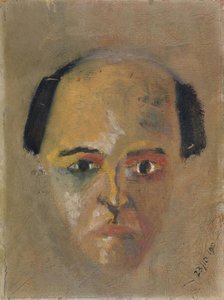
Retrato de Arnold Schönberg

As 65 Pinturas Mais Famosas de Arnold Schönberg, Cada Uma Única

Atualizado em Novembro 2026 · classificado pela nossa pontuação de popularidade (pesquisas, visitas e pedidos de cada obra) · 65 obras de Arnold Schönberg em nosso catálogo

Em resumo

Pierrot lunaire, op. 21 - Night (1912) é a pintura de Arnold Schönberg que mais atrai olhares; a obra original pertence ao Arnold Schönberg Center, Viena. Depois disso, o olhar recai sobre Calendário de Arnold Schönberg (1935) e Suite, op. 29 - Bi-directional twelve-tone row chart (1924). Entre as 65 obras de Arnold Schönberg em nosso catálogo, estas 65 são as mais famosas, cada uma uma original única apresentada com o seu ano, o seu museu e a razão pela qual perdura.

1874 – 1951, Viena Expressionism Mais obras: Arnold Schönberg Center

As 10 principais pinturas de Arnold Schönberg, sob o olhar da galeria

1
Pierrot lunaire, op. 21 - Night (1912) de Arnold Schönberg

Pierrot lunaire, op. 21 - Night

1912 · Acrylic On Canvas · Arnold Schönberg Center, Viena

Arnold Schönberg’s *Pierrot lunaire*, op. 21, stands as a monumental achievement in the evolution of modern music, a work born from the anxieties and aesthetic explorations of early 20th-century Europe. This particular rendition, “Night,” meticulously captured in this evocative photographic reproduction, offers a profound glimpse into Schönberg’s expressionistic vision – a world of fractured emotion, haunting beauty, and unsettling psychological depth. Composed in Berlin in 1912, the piece was commissioned…

2
Calendário de Arnold Schönberg (1935) de Arnold Schönberg

Calendário de Arnold Schönberg

1935 · Fotografia em Preto e Branco · Arnold Schönberg Center, Viena

Uma Janela para Hollywood e Além: O Calendário de Arnold Schönberg O calendário de Arnold Schönberg, criado em 1935 durante sua estadia temporária em Hollywood, não é apenas uma obra gráfica; é um documento fascinante que revela aspectos da vida cotidiana do renomado compositor austríaco e um retrato da atmosfera intelectual da época. Impresso em tinta sobre papel, este pequeno calendário apresenta uma imagem cuidadosamente composta: uma mulher sentada ao…

3
Suite, op. 29 - Bi-directional twelve-tone row chart (1924) de Arnold Schönberg

Suite, op. 29 - Bi-directional twelve-tone row chart

1924 · Acrylic On Canvas · Arnold Schönberg Center, Viena

Arnold Schönberg's "Suite, op. 29 – Bi-directional twelve-tone row chart" isn’t merely a musical score; it’s a visual manifestation of radical innovation, a testament to the composer’s relentless pursuit of sonic and artistic boundaries. Created in 1924, during a period of intense experimentation within his own compositional methods—specifically, his “Method of composing with twelve tones which are related only with one another”—this work represents a pivotal moment in 20th-century music…

4
Peace on Earth, op. 13 (1907) de Arnold Schönberg

Peace on Earth, op. 13

1907 · Black and White Photography · Arnold Schönberg Center, Viena

To gaze upon this depiction of Arnold Schoenberg's "Peace on Earth, op. 13" is not merely to look at an aged sheet of music; it is to encounter a preserved echo of profound human yearning. This composition, born from the charged atmosphere of early twentieth-century Europe, transcends its musical notation to become a tangible artifact of hope. The visual evidence—the sepia tones, the delicate creases, the faint patina of time…

5
Phantasy for Violin with Piano Accompaniment, op. 47 (1949) de Arnold Schönberg

Phantasy for Violin with Piano Accompaniment, op. 47

1949 · Acrylic On Canvas · Arnold Schönberg Center, Viena

This meticulously crafted hand-painted reproduction captures a pivotal moment in the oeuvre of Arnold Schoenberg, a composer who irrevocably altered the landscape of 20th-century music. The piece, “Phantasy for Violin with Piano Accompaniment,” op. 47, born from a commission in 1949, represents more than just a musical composition; it’s a tangible link to a brilliant mind grappling with radical innovation and profound personal transformation. The photograph itself – a stark…

6
Accompaniment to a Cinematographic Scene, op. 34 - Música de acompanhamento para uma cena cinematográfica (1929) de Arnold Schönberg

Accompaniment to a Cinematographic Scene, op. 34 - Música de acompanhamento para uma cena cinematográfica

1929 · Fotografia em Preto e Branco · Arnold Schönberg Center, Viena

Arnold Schoenberg, um nome que ressoa na história da música moderna, não apenas revolucionou a harmonia como também ousou explorar novas fronteiras criativas. Sua obra “Accompaniment to a Cinematographic Scene”, Op. 34 – ou “Drohende Gefahr, Angst, Katastrophe” como foi originalmente intitulada –, é um testemunho dessa busca incessante pela inovação e uma fascinante análise das possibilidades expressivas do cinema.

7
Blue Gaze (1910) de Arnold Schönberg

Blue Gaze

1910 · Oil On Board · Arnold Schönberg Center, Viena

“Blue Gaze,” painted in 1910 by the titan of musical innovation, Arnold Schoenberg, is more than just a portrait; it's a visceral manifestation of artistic struggle and a testament to the burgeoning power of abstraction. Created during a pivotal period in Schoenberg’s life – a time when he was simultaneously wrestling with the radical new techniques of atonality in music and exploring the uncharted territories of visual expression – this…

8
Transfer ticket for public transport in Berlin (1927) de Arnold Schönberg

Transfer ticket for public transport in Berlin

1927 · Acrylic On Canvas · Arnold Schönberg Center, Viena

This meticulously crafted hand-painted reproduction captures a pivotal moment in design history – the 1927 transfer ticket for the Berlin tram system, conceived by the visionary composer Arnold Schönberg. Far more than simply a means of payment, this circular artifact represents a radical shift towards efficiency and user experience, anticipating modern transit systems by nearly a century. Schönberg’s design wasn't born from artistic indulgence; it stemmed from a pragmatic desire…

9
The Musical Idea - W. A. Mozart K 465 (1934) de Arnold Schönberg

The Musical Idea - W. A. Mozart K 465

1934 · Giclée Print · Arnold Schönberg Center, Viena

W.A. Mozart’s K. 465, “The Musical Idea,” takes on an entirely new dimension through the lens of Arnold Schönberg's profound inquiry into musical representation. This isn’t merely a reproduction of a classical score; it’s a visual echo of Schönberg’s seminal work, "Der Musikalische Gedanke," a treatise that fundamentally shifted our understanding of composition and its relationship to logic, technique, and artistic expression. The photograph itself – a meticulously annotated music…

10
Piano Piece, op. 19/6 (1911) de Arnold Schönberg

Piano Piece, op. 19/6

1911 · Acrylic On Canvas · Arnold Schönberg Center, Viena

This meticulously crafted hand-painted reproduction captures Arnold Schönberg’s poignant “Piano Piece, op. 19/6,” a deceptively simple work born from a moment of profound grief and artistic experimentation. Created in 1911, shortly after the death of Gustav Mahler – a figure Schönberg deeply revered as both mentor and friend – the piece offers a rare glimpse into the composer’s emotional landscape during a period of intense creative upheaval. The image presented…

Pinturas famosas de Arnold Schönberg, números 11 a 65

11Excerpt from Arnold Schönberg’s own handwritten library catalogue: Works of Richard Strauss (1914) de Arnold SchönbergExcerpt from Arnold Schönberg’s own handwritten library catalogue: Works of Richard Strauss1914 · Arnold Schönberg Center 12Self-Portrait (1910) de Arnold SchönbergSelf-Portrait1910 · Arnold Schönberg Center 13The Biblical Way (Act I, Scene 2), Stadium (1927) de Arnold SchönbergThe Biblical Way (Act I, Scene 2), Stadium1927 · Arnold Schönberg Center 14The Lucky Hand (scene 1) (1910) de Arnold SchönbergThe Lucky Hand (scene 1)1910 · Arnold Schönberg Center 15Gertrud Schönberg (1930) de Arnold SchönbergGertrud Schönberg1930 · Arnold Schönberg Center 16Tears (1910) de Arnold SchönbergTears1910 · Arnold Schönberg Center 17Garden Scene (1907) de Arnold SchönbergGarden Scene1907 · Arnold Schönberg Center 18Playing Cards for Whist/Bridge - Jack of Spades (1910) de Arnold SchönbergPlaying Cards for Whist/Bridge - Jack of Spades1910 · Arnold Schönberg Center 19Formation scheme for the Gurrelieder (1918) de Arnold SchönbergFormation scheme for the Gurrelieder1918 · Arnold Schönberg Center 20The Lucky Hand (scene 2) (1910) de Arnold SchönbergThe Lucky Hand (scene 2)1910 · Arnold Schönberg Center 21Red Gaze (1910) de Arnold SchönbergRed Gaze1910 · Arnold Schönberg Center 22Piano Concerto, op. 42 - Programmatic keywords (1942) de Arnold SchönbergPiano Concerto, op. 42 - Programmatic keywords1942 · Arnold Schönberg Center 23Playing Cards for Whist/Bridge - King of Hearts (1910) de Arnold SchönbergPlaying Cards for Whist/Bridge - King of Hearts1910 · Arnold Schönberg Center 24Structural Functions of Harmony - Chart of the Regions (1948) de Arnold SchönbergStructural Functions of Harmony - Chart of the Regions1948 · Arnold Schönberg Center 25Interior and Portrait of a Woman (1910) de Arnold SchönbergInterior and Portrait of a Woman1910 · Arnold Schönberg Center 26Blue Self-Portrait (1910) de Arnold SchönbergBlue Self-Portrait1910 · Arnold Schönberg Center 27Self-Portrait (1918) de Arnold SchönbergSelf-Portrait1918 · Arnold Schönberg Center 28Mathilde Schönberg (1909) de Arnold SchönbergMathilde Schönberg1909 · Arnold Schönberg Center 29Expectation (Scene 3) (1911) de Arnold SchönbergExpectation (Scene 3)1911 · Arnold Schönberg Center 30Handwriting samples (1923) de Arnold SchönbergHandwriting samples1923 · Arnold Schönberg Center 31Suite for Piano, op. 25 - Prelude (1921) de Arnold SchönbergSuite for Piano, op. 25 - Prelude1921 · Arnold Schönberg Center 32Paisagem (1910) de Arnold SchönbergPaisagem1910 · Arnold Schönberg Center 33Erwartung, op. 17 (1909) de Arnold SchönbergErwartung, op. 171909 · Arnold Schönberg Center 34Exlibris (1910) de Arnold SchönbergExlibris1910 · Arnold Schönberg Center 35Alliance (Hands) (1910) de Arnold SchönbergAlliance (Hands)1910 · Arnold Schönberg Center 36Portrait of a Woman (1910) de Arnold SchönbergPortrait of a Woman1910 · Arnold Schönberg Center 37Xeque Coalition (1925) de Arnold SchönbergXeque Coalition1925 · Arnold Schönberg Center 38Moses and Aron (1930) de Arnold SchönbergMoses and Aron1930 · Arnold Schönberg Center 39Playing Cards for Whist/Bridge - Queen of clubs (1909) de Arnold SchönbergPlaying Cards for Whist/Bridge - Queen of clubs1909 · Arnold Schönberg Center 40Playing card design (1910) de Arnold SchönbergPlaying card design1910 · Arnold Schönberg Center 41Brief to Wilhelm von Wymetal (1907) de Arnold SchönbergBrief to Wilhelm von Wymetal1907 · Arnold Schönberg Center 42Alexander Zemlinsky (1910) de Arnold SchönbergAlexander Zemlinsky1910 · Arnold Schönberg Center 43Green Self-Portrait (1910) de Arnold SchönbergGreen Self-Portrait1910 · Arnold Schönberg Center 44Memory of Oskar Kokoschka (1910) de Arnold SchönbergMemory of Oskar Kokoschka1910 · Arnold Schönberg Center 45Mathilde Schönberg cooking (1912) de Arnold SchönbergMathilde Schönberg cooking1912 · Arnold Schönberg Center 46Model of a set of dentures (1926) de Arnold SchönbergModel of a set of dentures1926 · Arnold Schönberg Center 47Coalition Chess - Plane (1925) de Arnold SchönbergCoalition Chess - Plane1925 · Arnold Schönberg Center 48Gaze (Karl Kraus – The Great Wall of China) (1910) de Arnold SchönbergGaze (Karl Kraus – The Great Wall of China)1910 · Arnold Schönberg Center 49Furniture design (1931) de Arnold SchönbergFurniture design1931 · Arnold Schönberg Center 50Self-Portrait (1935) de Arnold SchönbergSelf-Portrait1935 · Arnold Schönberg Center 51Self-Portrait (1922) de Arnold SchönbergSelf-Portrait1922 · Arnold Schönberg Center 52The Musical Idea - Chart of the Regions (1934) de Arnold SchönbergThe Musical Idea - Chart of the Regions1934 · Arnold Schönberg Center 53Schematic representation of European Jewry (1934) de Arnold SchönbergSchematic representation of European Jewry1934 · Arnold Schönberg Center 54Model of a chair / library ladder (1945) de Arnold SchönbergModel of a chair / library ladder1945 · Arnold Schönberg Center 55Five Pieces for Orchestra, op. 16/5 – First written copy (1909) de Arnold SchönbergFive Pieces for Orchestra, op. 16/5 – First written copy1909 · Arnold Schönberg Center 56Staffliner for drawing staves (1950) de Arnold SchönbergStaffliner for drawing staves1950 · Arnold Schönberg Center 57Mauríce Zam (1935) de Arnold SchönbergMauríce Zam1935 · Arnold Schönberg Center 58Critic I (1910) de Arnold SchönbergCritic I1910 · Arnold Schönberg Center 59Emil Hertzka (1910) de Arnold SchönbergEmil Hertzka1910 · Arnold Schönberg Center 60Speak not always of the leaves, op. 15/14 (1909) de Arnold SchönbergSpeak not always of the leaves, op. 15/141909 · Arnold Schönberg Center 61Tipo impressor de música (1909) de Arnold SchönbergTipo impressor de música1909 · Arnold Schönberg Center 62Piano Piece, op. 11/2 (1909) de Arnold SchönbergPiano Piece, op. 11/21909 · Arnold Schönberg Center 63Walking Self-Portrait (1911) de Arnold SchönbergWalking Self-Portrait1911 · Arnold Schönberg Center 64Chess Set de Arnold SchönbergChess SetArnold Schönberg Center 65Tape Dispenser (1945) de Arnold SchönbergTape Dispenser1945 · Arnold Schönberg Center

Pinturas famosas de Arnold Schönberg, período por período

Os temas que cativaram o olhar de Arnold Schönberg

Os quatro temas que mais se repetem nestas obras originais, cada um com o seu melhor exemplo.

Os museus que guardam os originais de Arnold Schönberg

O museu que detém a maioria das pinturas desta página.

Museus Cidade Obras de Arnold Schönberg Pinturas desta lista
Arnold Schönberg Center, VienaArnold Schönberg Center Viena 65 Pierrot lunaire, op. 21 - Night, Calendário de Arnold Schönberg, Suite, op. 29 - Bi-directional twelve-tone row chart

Arnold Schönberg ao longo das décadas: uma obra original única para cada uma

Obras por década

Escolha uma década para ver a obra original que a define.

Pinturas de Arnold Schönberg: perguntas para a galeria

Qual é a obra mais famosa de Arnold Schönberg?Revelar a resposta

Pierrot lunaire, op. 21 - Night (1912), Arnold Schönberg Center, Viena. Calendário de Arnold Schönberg (1935) e Suite, op. 29 - Bi-directional twelve-tone row chart (1924) vêm a seguir.

Com que idade Arnold Schönberg criou Pierrot lunaire, op. 21 - Night?Revelar a resposta

38 anos: Pierrot lunaire, op. 21 - Night data de 1912, e Arnold Schönberg nasceu em 1874.

Quais são as dez pinturas mais famosas de Arnold Schönberg?Revelar a resposta

Pierrot lunaire, op. 21 - Night, Calendário de Arnold Schönberg, Suite, op. 29 - Bi-directional twelve-tone row chart, Peace on Earth, op. 13, Phantasy for Violin with Piano Accompaniment, op. 47, Accompaniment to a Cinematographic Scene, op. 34 - Música de acompanhamento para uma cena cinematográfica, Blue Gaze, Transfer ticket for public transport in Berlin, The Musical Idea - W. A. Mozart K 465 e Piano Piece, op. 19/6. O ranking acima apresenta o ano e o museu de cada uma.

Quantas obras de Arnold Schönberg são conhecidas?Revelar a resposta

Nosso catálogo contém 65 obras de Arnold Schönberg, datadas de 1907 a 1950.

Onde se pode ver os originais mais famosos de Arnold Schönberg?Revelar a resposta

Principalmente em Arnold Schönberg Center (Viena). A tabela de museus acima lista todos eles.

Em que período Arnold Schönberg criou as suas pinturas mais conhecidas?Revelar a resposta

Em 1910s: 29 das 65 obras nesta página foram feitas então, sendo Pierrot lunaire, op. 21 - Night delas.

Qual pintura famosa de Arnold Schönberg é a mais antiga e qual é a mais recente?Revelar a resposta

Nesta página, a mais antiga é Peace on Earth, op. 13 (1907) e a mais recente é Staffliner for drawing staves (1950).

Quais temas Arnold Schönberg preferia?Revelar a resposta

Atonality (10), Schoenberg (8) e Early 20th century (6), entre as 65 obras nesta página.

Com quais materiais Arnold Schönberg mais pintou?Revelar a resposta

Acrylic On Canvas, para 16 das 65 obras nesta página.

A qual movimento pertence a obra de Arnold Schönberg?Revelar a resposta

Expressionism e Expressionist modernism, a julgar pelos originais nesta página.

Quais originais de Arnold Schönberg posso ver no Arnold Schönberg Center?Revelar a resposta

Pierrot lunaire, op. 21 - Night, Calendário de Arnold Schönberg e Suite, op. 29 - Bi-directional twelve-tone row chart: o Arnold Schönberg Center, Viena detém 65 das obras desta página.

Arnold Schönberg: um retrato do artista

primeiros anos e o despertar musical

arnold schoenberg, compositor austro-americano, nasceu em 13 de setembro de 1874, em viena, áustria. sua infância foi marcada por origens humildes, sendo seu pai um sapateiro. apesar disso, a paixão inata de schoenberg pela música o levou a um profundo processo de autodidatismo no campo musical.

evolução musical e obras notáveis

as primeiras obras de schoenberg, como verklärte nacht (1899), exibiam uma síntese entre o estilo de brahms e wagner. conforme sua arte progredia, ele se tornou a figura central da segunda escola vienense, ao lado de anton webern e alban berg. suas composições, incluindo o quarteto de cordas nº 2 (1907–1908), erwartung (1909) e pierrot lunaire (1912), exemplificaram sua abordagem inovadora em direção à atonalidade.

ensino, emigração e vida tardia

schoenberg renunciou à academia prussiana de artes em 1933 devido à ascensão do nazismo ao poder, que rotulou sua música como "degenerada". ele então lecionou nos estados unidos, inclusive na universidade da califórnia, los angeles (1936–1944), onde instalações levam seu nome em sua honra. [https://OriginalUniqueArt.com/@/arnold-schaenberg](descubra mais sobre a vida e as obras de schoenberg na OriginalUniqueArt).

legado e influência

conforme o mundo tomava conhecimento do holocausto, schoenberg imortalizou suas vítimas em a survivor from warsaw (1947). o conservatório e academia de música de israel elegeu-o presidente honorário em 1951. [https://OriginalUniqueArt.com/@@/a@d3bqc7-the-museum-destroyed-by-fire-(united-states)](saiba mais sobre o impacto de seu trabalho na OriginalUniqueArt). pontos principais:
  • a música inovadora de schoenberg foi uma das mais influentes e polêmicas da música clássica do século XX.
  • pelo menos três gerações de compositores expandiram seus princípios, ainda que formais.
  • suas visões estéticas e musicohistóricas influenciaram os musicólogos theodor w. adorno e carl dahlhaus. [https://OriginalUniqueArt.com/@@/a@d3cl2x--a-journey-through-art-history-with-OriginalUniqueArt-s-extensive-collection-](explore a vasta coleção de arte na OriginalUniqueArt, abrangendo do século XII ao XX).