Retrato de Armand Guillaumin

As 100 Pinturas Mais Famosas de Armand Guillaumin, Cada Uma Única

Atualizado em Novembro 2026 · classificado pela nossa pontuação de popularidade (pesquisas, visitas e pedidos de cada obra) · 344 obras de Armand Guillaumin em nosso catálogo

Em resumo

Place Valhubert (1872) é a pintura de Armand Guillaumin que mais atrai olhares; a obra original pertence ao Musée d'Orsay, Paris. Depois disso, o olhar recai sobre River Scene (1890) e Paris - Quai de la Rapee (1885). Entre as 344 obras de Armand Guillaumin em nosso catálogo, estas 100 são as mais famosas, cada uma uma original única apresentada com o seu ano, o seu museu e a razão pela qual perdura.

1841 – 1927, Paris Impressionism Mais obras: Musée d'Orsay

As 10 principais pinturas de Armand Guillaumin, sob o olhar da galeria

1
Place Valhubert (1872) de Armand Guillaumin

Place Valhubert

1872 · Oil On Canvas · Musée d'Orsay, Paris

The air in 1872 carries a chill that settles upon the riverbank. Snow has smoothed the edges of the city, coating the ground in a pale, quiet layer. Along the sidewalk, trees rise like dark, skeletal fingers against a sky of muted blue. They stand still, their bare branches etched sharply against the light. Beneath them, the world is a study in frost and movement.

2
River Scene (1890) de Armand Guillaumin

River Scene

1890 · Oil On Canvas · The Israel Museum, Jerusalém

Around 1890, the banks of the Seine became a stage for the tension between nature and the encroaching modern age. This work captures a bustling waterway where the quietude of leisure meets the grit of commerce. Several boats navigate the expanse—some barges laden with cargo, others smaller vessels drifting through calmer stretches. In the distance, the horizon is punctuated by the dark, vertical silhouettes of smoking factory chimneys, a subtle…

3
Paris - Quai de la Rapee (1885) de Armand Guillaumin

Paris - Quai de la Rapee

1885 · Oil On Canvas

In this 1885 oil on canvas, we find ourselves positioned at the edge of the water, observing the industrial rhythm of the Quai de la Rapée. There is a certain weight to the scene, a sense of the heavy, working life that defined the Parisian riverfront during this period. A large cargo ship or barge dominates the left side of the composition, its massive form anchored in the midground, while…

4
Madame Guillaumin Reading (1882) de Armand Guillaumin

Madame Guillaumin Reading

1882 · Oil On Canvas

Madame Guillaumin Reading is an oil on canvas painting created by the French artist Armand Guillaumin. Dated 1882, this work is an impressionist portrait of a young girl. The subject is positioned outdoors, seated amidst a landscape of tall grass and foliage. The composition focuses on the girl as the central figure, set against a background of trees and a distant landscape that provides a sense of depth through atmospheric…

5
The Quai d'Austerlitz (1899) de Armand Guillaumin

The Quai d'Austerlitz

1899 · Oil On Canvas · Indianapolis Museum of Art, Indianapolis

The water of the harbor rests in muted blues and grays, a heavy expanse that mirrors a sky filled with drifting clouds. Boats sit moored in the middle ground, their dark, ochre hulls cutting through the shimmering surface. Along the shoreline, indistinct buildings rise like shadows against the horizon. The scene captures a quiet moment of transit and stillness at the Quai d'Austerlitz. Light filters through an overcast sky, casting…

6
Still Life with Box with Blue Gloves (1873) de Armand Guillaumin

Still Life with Box with Blue Gloves

1873 · Oil On Canvas

A vase of flowers sits at the center of a wooden table, holding its position with a heavy, silent grace. Around this floral heart, the world is composed of everyday things: a suitcase tucked into the upper corner, a bowl, a cup, and several books. Two volumes rest near the bottom left, while another lies to the right. The scene is a study in stillness. A pair of blue gloves…

7
Portrait of Madame Guillaumin (1898) de Armand Guillaumin

Portrait of Madame Guillaumin

1898 · Oil On Canvas · Musee du Petit Palais, Genebra

To gaze upon this portrait is to be invited into a moment suspended in time—a quiet afternoon steeped in the cultivated elegance of late 19th-century Parisian life. The subject, seated within an ornate chair, embodies a serene contemplation, her posture suggesting both intellectual engagement and profound repose. She is captured mid-activity, seemingly absorbed by the pages of a book, yet the surrounding details whisper tales of a richer, more decorative…

8
The Bouchardon Lock de Armand Guillaumin

The Bouchardon Lock

Oil On Canvas

The Bouchardon Lock emerges from the brush of Armand Guillaumin, a painter whose life began in Paris, France, in 1841. This work, which appears in various records as about 1908, captures a specific moment of light and water. Guillaumin moves through the landscape with a hand that seeks the immediate sensation of the river and the valley. He remains a presence in the history of French painting until his death…

9
The Bouchardon Mill, Crozant (1898) de Armand Guillaumin

The Bouchardon Mill, Crozant

1898 · Oil On Canvas · Metropolitan Museum of Art, Nova York

The river flows with a steady, rhythmic grace, carving its way through a rocky bed that catches the soft, diffused light of an overcast sky. Along the banks, the trees are heavy with the weight of the changing season, their leaves glowing in shades of golden yellow, orange, and pink. These bursts of color dominate the upper reaches of the scene, casting deep shadows of green, blue, and purple into…

10
Self Portrait with Easel (1878) de Armand Guillaumin

Self Portrait with Easel

1878 · Oil On Canvas · Van Gogh Museum, Amsterdã

In the quiet, contemplative depths of Self Portrait with Easel, we are invited into a private moment of creative gestation. Painted in 1878 by the French Impressionist master Ferdinand Guillaumin, this work serves as more than just a likeness; it is a window into the psychological landscape of a creator at work. The painting captures the artist seated before his easel, his gaze directed toward the viewer with an expression…

Pinturas famosas de Armand Guillaumin, números 11 a 100

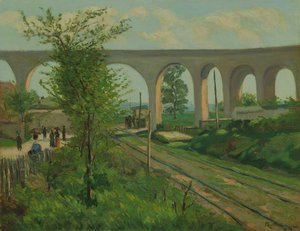
11Rocks at Trayas (1915) de Armand GuillauminRocks at Trayas1915 12La Seine de Armand GuillauminLa Seine 13The Arcueil Aqueduct at Sceaux Railroad Crossing de Armand GuillauminThe Arcueil Aqueduct at Sceaux Railroad CrossingArt Institute of Chicago 14Nanteuil-sur-Marne (1911) de Armand GuillauminNanteuil-sur-Marne1911 15The Sand Quarry (1895) de Armand GuillauminThe Sand Quarry1895 16Seaside at Agay (1900) de Armand GuillauminSeaside at Agay1900 17Self-Portrait (1895) de Armand GuillauminSelf-Portrait1895 · Ohara Museum of Art 18Paysage boise à l'étang de Armand GuillauminPaysage boise à l'étang 19The Seine at Charenton (1878) de Armand GuillauminThe Seine at Charenton1878 · Musée d'Orsay 20Villiers-sur-Morin (1905) de Armand GuillauminVilliers-sur-Morin1905 21Paysage de la Creuse 1 de Armand GuillauminPaysage de la Creuse 1 22The Banks of the River de Armand GuillauminThe Banks of the River 23Madame Guillaumin Sitting in a Garden (1890) de Armand GuillauminMadame Guillaumin Sitting in a Garden1890 24Mill of Pont Maupuit (1900) de Armand GuillauminMill of Pont Maupuit1900 · Art Institute of Chicago 25The Ruins of the Chateau at Crozant (1899) de Armand GuillauminThe Ruins of the Chateau at Crozant1899 26Hollow in the snow (1869) de Armand GuillauminHollow in the snow1869 · Musée d'Orsay 27Still Life with Casserole (1867) de Armand GuillauminStill Life with Casserole1867 28The Seine at Paris (also known as Quai de la Rapee) (1871) de Armand GuillauminThe Seine at Paris (also known as Quai de la Rapee)1871 · Museum of Fine Arts 29Painting (1876) de Armand GuillauminPainting1876 · National Museum of Art, Architecture and Design 30Quai de Bercy, circa 1874 (1874) de Armand GuillauminQuai de Bercy, circa 18741874 · Musée Carnavalet 31Les Environs de Paris (1874) de Armand GuillauminLes Environs de Paris1874 · Birmingham Museum and Art Gallery 32La Seine (1874) de Armand GuillauminLa Seine1874 · Fine Arts Museums of San Francisco 33The Seine at Charenton (1874) de Armand GuillauminThe Seine at Charenton1874 · Norton Simon Museum 34The Bridge of Louis Philippe (1875) de Armand GuillauminThe Bridge of Louis Philippe1875 · National Gallery of Art 35Snow (1876) de Armand GuillauminSnow1876 36Rue de Clamart at Vanves (1873) de Armand GuillauminRue de Clamart at Vanves1873 37Pont Marie, Quai Sully (1878) de Armand GuillauminPont Marie, Quai Sully1878 38The Seine (1873) de Armand GuillauminThe Seine1873 39La Route Tournante (1877) de Armand GuillauminLa Route Tournante1877 40Portrait of a Young Woman (1875) de Armand GuillauminPortrait of a Young Woman1875 41Damiette - Apple Trees (1884) de Armand GuillauminDamiette - Apple Trees1884 · Musée d'Orsay 42The Path to the Valley (1885) de Armand GuillauminThe Path to the Valley1885 · Petit Palais 43Painting (1880) de Armand GuillauminPainting1880 · National Museum of Art, Architecture and Design 44Quai de Bercy (1881) de Armand GuillauminQuai de Bercy1881 45Confluence of the Marne and the Seine, Île de France (1885) de Armand GuillauminConfluence of the Marne and the Seine, Île de France1885 46Pont Marie from the Quai d'Anjou (1883) de Armand GuillauminPont Marie from the Quai d'Anjou1883 47Palaiseau - Snow Effect (1883) de Armand GuillauminPalaiseau - Snow Effect1883 48Le Charrois au bord de la Seine (1882) de Armand GuillauminLe Charrois au bord de la Seine1882 49The Quay at Rouen (1882) de Armand GuillauminThe Quay at Rouen1882 50Quai de Bercey (1880) de Armand GuillauminQuai de Bercey1880 51Damiette (also known as Vallee de Chevreuse) (1880) de Armand GuillauminDamiette (also known as Vallee de Chevreuse)1880 52The Seine at Charenton (1880) de Armand GuillauminThe Seine at Charenton1880 53Quai Saint Bernard in the Snow (1882) de Armand GuillauminQuai Saint Bernard in the Snow1882 54Laundry Boat at Charenton (1880) de Armand GuillauminLaundry Boat at Charenton1880 55The Little Thieves (1885) de Armand GuillauminThe Little Thieves1885 56Epinay-sur-Orge (1884) de Armand GuillauminEpinay-sur-Orge1884 57Vase of Chrysanthemums (1885) de Armand GuillauminVase of Chrysanthemums1885 58Saint-Palais, the Pointe de la Douane, August 92, 10 o'clock in the morning (1892) de Armand GuillauminSaint-Palais, the Pointe de la Douane, August 92, 10 o'clock in the morning1892 · Petit Palais 59Village in Ile-de-France (1888) de Armand GuillauminVillage in Ile-de-France1888 60Woman and Child in Landscape (1892) de Armand GuillauminWoman and Child in Landscape1892 · Davis Museum and Cultural Center 61Ile de France (1888) de Armand GuillauminIle de France1888 62Quay de Bercy (1891) de Armand GuillauminQuay de Bercy1891 63The Quay d'Austerlitz, Morning (1886) de Armand GuillauminThe Quay d'Austerlitz, Morning1886 64Landscape at Breuillet (1890) de Armand GuillauminLandscape at Breuillet1890 65Pond with Willows, Îli-de-France (1889) de Armand GuillauminPond with Willows, Îli-de-France1889 66Le Pleteau Bromant a Pontgibaud (also known as Puy de Dome) (1890) de Armand GuillauminLe Pleteau Bromant a Pontgibaud (also known as Puy de Dome)1890 67la Manche Landscape (1890) de Armand Guillauminla Manche Landscape1890 68Landscape - the Creuse in the Snow (1890) de Armand GuillauminLandscape - the Creuse in the Snow1890 · Musee du Petit Palais 69Grainstacks (1891) de Armand GuillauminGrainstacks1891 · Musee du Petit Palais 70Damiette Landscape (1890) de Armand GuillauminDamiette Landscape1890 71Horses in the Sand at Ivry (1891) de Armand GuillauminHorses in the Sand at Ivry1891 72The Rock Breaker (1890) de Armand GuillauminThe Rock Breaker1890 · Rhode Island School of Design Museum of Art 73The Sea at Pointe de la Perriere, Saint-Palais (1892) de Armand GuillauminThe Sea at Pointe de la Perriere, Saint-Palais1892 74Small Valley at Pontgibaud (1890) de Armand GuillauminSmall Valley at Pontgibaud1890 75Sifting Sand (1891) de Armand GuillauminSifting Sand1891 76Passers-by in Paris in Winter (1888) de Armand GuillauminPassers-by in Paris in Winter1888 77Portrait of Madame Guillaumin (1892) de Armand GuillauminPortrait of Madame Guillaumin1892 78Rock Cliff on the Baumette Headland (1893) de Armand GuillauminRock Cliff on the Baumette Headland1893 · Wallraf-Richartz-Museum 79Rocks at Agay (1895) de Armand GuillauminRocks at Agay1895 · Petit Palais 80Les ruines du château de Crozant (1898) de Armand GuillauminLes ruines du château de Crozant1898 · Musée d'Unterlinden 81Vallée de la Creuse (1895) de Armand GuillauminVallée de la Creuse1895 · Musée d'Unterlinden 82Mountainous landscape (1895) de Armand GuillauminMountainous landscape1895 · Bavarian State Painting Collections 83Grainstacks in Île-de-France (1894) de Armand GuillauminGrainstacks in Île-de-France1894 · Museum Barberini 84View of Crozant (1898) de Armand GuillauminView of Crozant1898 85The Sea at Saint-Palais (1895) de Armand GuillauminThe Sea at Saint-Palais1895 · Wallraf-Richartz-Museum 86The Ruins at Crozant (1897) de Armand GuillauminThe Ruins at Crozant1897 87La Creuse Landscape (1895) de Armand GuillauminLa Creuse Landscape1895 88Madame Guillaumin Writing (1894) de Armand GuillauminMadame Guillaumin Writing1894 89Madame Guillaumin Reading in the Garden (1895) de Armand GuillauminMadame Guillaumin Reading in the Garden1895 90Landscape in the Vicinity of Rouen (1898) de Armand GuillauminLandscape in the Vicinity of Rouen1898 91The Platin Rock at Saint-Palais (1893) de Armand GuillauminThe Platin Rock at Saint-Palais1893 92Child Eating Soup (1894) de Armand GuillauminChild Eating Soup1894 93Ile de France Landscape (1895) de Armand GuillauminIle de France Landscape1895 94Saint-Julien-des-Chazes, Allier (1895) de Armand GuillauminSaint-Julien-des-Chazes, Allier1895 95Orchard at the Edge of the Woods in Saint-Cheron (1893) de Armand GuillauminOrchard at the Edge of the Woods in Saint-Cheron1893 96Snow at Crozant (1898) de Armand GuillauminSnow at Crozant1898 97Saint Palais, Pointe de la Perriere (1893) de Armand GuillauminSaint Palais, Pointe de la Perriere1893 98Landscape - the Creuse (1897) de Armand GuillauminLandscape - the Creuse1897 99Sunset on the Creuse (1898) de Armand GuillauminSunset on the Creuse1898 100Red Rocks (1894) de Armand GuillauminRed Rocks1894

Pinturas famosas de Armand Guillaumin, período por período

Os temas que cativaram o olhar de Armand Guillaumin

Os quatro temas que mais se repetem nestas obras originais, cada um com o seu melhor exemplo.

Os museus que guardam os originais de Armand Guillaumin

Os 8 museus que detêm a maioria das pinturas desta página.

Museus Cidade Obras de Armand Guillaumin Pinturas desta lista
Musée d'Orsay, ParisMusée d'Orsay Paris 10 Place Valhubert, The Seine at Charenton, Hollow in the snow
Petit Palais, ParisPetit Palais Paris 5 The Path to the Valley, Saint-Palais, the Pointe de la Douane, August 92, 10 o'clock in the morning, Rocks at Agay
Musee du Petit Palais, GenebraMusee du Petit Palais Genebra 3 Portrait of Madame Guillaumin, Landscape - the Creuse in the Snow, Grainstacks
Wallraf-Richartz-Museum, ColôniaWallraf-Richartz-Museum Colônia 3 Rock Cliff on the Baumette Headland, The Sea at Saint-Palais
Musée d'Unterlinden, ColmarMusée d'Unterlinden Colmar 3 Les ruines du château de Crozant, Vallée de la Creuse
Art Institute of Chicago, ChicagoArt Institute of Chicago Chicago 2 The Arcueil Aqueduct at Sceaux Railroad Crossing, Mill of Pont Maupuit
National Museum of Art, Architecture and Design, OsloNational Museum of Art, Architecture and Design Oslo 2 Painting, Painting
Indianapolis Museum of Art, IndianapolisIndianapolis Museum of Art Indianapolis 2 The Quai d'Austerlitz

Armand Guillaumin ao longo das décadas: uma obra original única para cada uma

Obras por década

Escolha uma década para ver a obra original que a define.

Pinturas de Armand Guillaumin: perguntas para a galeria

Qual é a obra mais famosa de Armand Guillaumin?Revelar a resposta

Place Valhubert (1872), Musée d'Orsay, Paris. River Scene (1890) e Paris - Quai de la Rapee (1885) vêm a seguir.

Com que idade Armand Guillaumin criou Place Valhubert?Revelar a resposta

31 anos: Place Valhubert data de 1872, e Armand Guillaumin nasceu em 1841.

Quais são as dez pinturas mais famosas de Armand Guillaumin?Revelar a resposta

Place Valhubert, River Scene, Paris - Quai de la Rapee, Madame Guillaumin Reading, The Quai d'Austerlitz, Still Life with Box with Blue Gloves, Portrait of Madame Guillaumin, The Bouchardon Lock, The Bouchardon Mill, Crozant e Self Portrait with Easel. O ranking acima apresenta o ano e o museu de cada uma.

Quantas obras de Armand Guillaumin são conhecidas?Revelar a resposta

Nosso catálogo contém 344 obras de Armand Guillaumin, datadas de 1867 a 1915.

Onde se pode ver os originais mais famosos de Armand Guillaumin?Revelar a resposta

Principalmente em Musée d'Orsay (Paris), Petit Palais (Paris) e Musee du Petit Palais (Genebra). A tabela de museus acima lista todos eles.

Em que período Armand Guillaumin criou as suas pinturas mais conhecidas?Revelar a resposta

Em 1890s: 46 das 100 obras nesta página foram feitas então, sendo River Scene delas.

Qual pintura famosa de Armand Guillaumin é a mais antiga e qual é a mais recente?Revelar a resposta

Nesta página, a mais antiga é Still Life with Casserole (1867) e a mais recente é Rocks at Trayas (1915).

Quais temas Armand Guillaumin preferia?Revelar a resposta

Landscape (17), Trees (10) e River (6), entre as 100 obras nesta página.

Com quais materiais Armand Guillaumin mais pintou?Revelar a resposta

Oil On Canvas, para 19 das 100 obras nesta página.

A qual movimento pertence a obra de Armand Guillaumin?Revelar a resposta

Impressionism, a julgar pelos originais nesta página.

Quais originais de Armand Guillaumin posso ver no Musée d'Orsay?Revelar a resposta

Place Valhubert, The Seine at Charenton e Hollow in the snow: o Musée d'Orsay, Paris detém 4 das obras desta página.

Armand Guillaumin: um retrato do artista

Juventude e Formação Artística

Nascido Jean-Baptiste Armand Guillaumin em 16 de fevereiro de 1841, em Paris, o homem que viria a ser conhecido como Ferdinand Guillaumin passou os seus primeiros anos equilibrando o trabalho com um interesse silencioso pelo desenho. Antes de se dedicar inteiramente à tela, trabalhou na loja de lingerie do seu tio. Durante as noites, frequentava aulas de desenho para aperfeiçoar o seu traço. Este período de trabalho foi interrompido por uma passagem pelo setor ferroviário do governo francês, um emprego que precedeu a sua entrada formal no mundo das artes.

Em 1861, ele direcionou-se para estudos mais sérios na Académie Suisse. Foi entre aquelas paredes que o seu caminho se cruzou com Paul Cézanne e Camille Pissarro. Estas conexões precoces não foram meros conhecidos passageiros; foram o início de amizades para a vida inteira. As experiências partilhadas no estúdio e as lições aprendidas naquelas salas ajudaram a moldar a direção da sua obra posterior.

Técnica e Estilo Artístico

Sua pincelada carrega uma certeza intrínseca, aplicada com uma mão solta e segura. Em seus primeiros anos, Ferdinand Guillaumin concentrou-se em capturar os efeitos fugazes da luz e da cor, uma marca registrada do movimento Impressionista. Ele frequentemente trabalhava com a tinta a óleo para traduzir a atmosfera de uma cena, fosse uma paisagem urbana parisiense coberta de neve ou a serenidade de uma margem de rio. Sua abordagem nunca buscou o detalhe fotográfico e preciso, mas sim a sensação imediata de um instante capturado no tempo.

À medida que sua carreira progredia, o uso da cor tornava-se cada vez mais intenso. Por volta de 1886, sua paleta lhe rendeu a reputação de um "colorista furioso". Ele se afastou dos tons sutis e naturalistas de seus contemporâneos, optando por uma aplicação muito mais audaciosa. Já na década de 1890, essa transição tornou-se ainda mais pronunciada. Suas cores tornaram-se menos fiéis à aparência real da natureza, inclinando-se para uma intensidade elevada, quase agressiva. Essa evolução sugere que ele já explorava um caminho em direção ao Fauvismo uma década inteira antes do surgimento do movimento.

A maneira como ele manipulava a luz frequentemente pendia para o simbólico, utilizando matizes vibrantes para evocar um senso de misticismo onírico. Essa tensão entre capturar uma paisagem real e utilizar a cor para expressar um estado emocional e interno define grande parte de sua produção. Sua obra situa-se, muitas vezes, no limiar entre a observação do mundo natural e uma interpretação mais subjetiva e expressiva da realidade.

Círculo de Artistas e Influências

Ferdinand Guillaumin transitava pelo coração do círculo impressionista, participando de seis das oito exposições realizadas pela Société anonyme des artistes peintres, sculpteurs et graveurs entre 1874 e 1886. Sua presença nesses encontros o colocava lado a lado com as próprias figuras que moldavam a linguagem visual da época. Ele chegou a compartilhar um estúdio na Île Saint-Louis com Paul Cézanne, e a proximidade entre os dois artistas era tamanha que Cézanne chegou a produzir gravuras dele. Esse convívio permitiu um intercâmbio constante e silencioso de ideias e métodos durante a década de 1870.

Seu ateliê funcionava frequentemente como um ponto de encontro para uma geração mais jovem de pintores. Nomes como Paul Gauguin, Paul Signac e Georges Seurat eram conhecidos por se reunirem entre suas paredes, encontrando ali um espaço para congregar. Essa conexão com a vanguarda emergente sugere a existência de uma ponte entre o grupo impressionista estabelecido e os movimentos que viriam a seguir. Até mesmo Vincent van Gogh encontrou muito o que admirar na abordagem de Ferdinand Guillaumin, demonstrando grande estima por sua obra através de inúmeras cartas trocadas entre 1888 e 1890.

Obras-Primas e Coleções

Grande parte de sua produção artística encontra-se preservada em importantes instituições ao redor do mundo. O Musée d’Orsay, em Paris, abriga 48 de suas obras, oferecendo um olhar profundo e significativo sobre sua evolução técnica e estética. Entre essas preciosidades, destaca-se a obra Place Valhubert, Paris, criada em 1872. Esta peça captura com maestria uma cena urbana de inverno, retratando o movimento de pessoas que caminham por uma paisagem urbana coberta de neve, nas proximidades de uma margem de rio.

Sua dedicação à paisagem frequentemente o conduzia às margens do Sena. The Seine at Charenton é mais um trabalho notável de seu vasto catálogo. A habilidade de Ferdinand Guillaumin em manipular a luz e a cor é evidente nestes estudos que entrelaçam o mundo natural e a vida urbana. Muitas dessas pinturas estão preservadas em diversos museus, garantindo que sua linguagem visual permaneça acessível e inspiradora para todos aqueles que estudam este período fascinante da história da arte.

Legado e Últimos Anos

Uma mudança profunda na trajetória de Ferdinand Guillaumin ocorreu em 1891. Após ganhar 100.000 francos na loteria estatal, ele finalmente encontrou a liberdade de abandonar seu emprego no governo. Essa conquista permitiu que ele se dedicasse inteiramente à pintura, mergulhando sem reservas em sua expressão artística. Nos anos que se seguiram, sua paleta tornou-se ainda mais audaciosa, afastando-se de uma fidelidade estrita à natureza em direção a um estilo que muitos consideram um precursor do Fauvismo, onde a cor assume um papel protagonista e vibrante.

Sua presença no mundo das artes permaneceu constante e influente até seu falecimento, em 26 de junho de 1927. As obras que ele deixou para a posteridade estão preservadas em prestigiadas coleções, incluindo o Musée d’Orsay e o Petit Palais, em Paris. As contribuições de Ferdinand Guillaumin para o movimento Impressionista permanecem inestimáveis para todos aqueles que estudam a fascinante evolução da luz e da cor no final do século XIX.