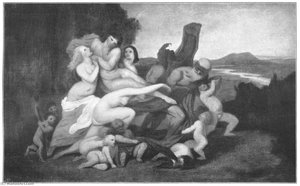
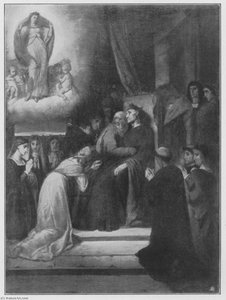
Retrato de Anselm Feuerbach

Pinturas de Anselm Feuerbach: As 100 mais famosas, sob o olhar de uma galeria

Atualizado em Novembro 2026 · classificado pela nossa pontuação de popularidade (pesquisas, visitas e pedidos de cada obra) · 128 obras de Anselm Feuerbach em nosso catálogo

Em resumo

Aos olhos da galeria, a pintura mais famosa de Anselm Feuerbach é Orpheus and Eurydike (1869). Portrait of an Older Gentleman (1852) e Kinderständchen (1860) completam o trio que todos reconhecem. Dos 128 trabalhos de Anselm Feuerbach em nosso catálogo, a galeria apresenta abaixo as 100 obras mais famosas, cada uma original, com seu ano, seu museu e o que a torna única.

1829 – 1880, Speyer Romanticism Mais obras: Bavarian State Painting Collections

As 10 principais pinturas de Anselm Feuerbach na galeria

1
Orpheus and Eurydike (1869) de Anselm Feuerbach

Orpheus and Eurydike

1869 · Oil On Canvas

In this 1869 mythological painting, Orpheus and Eurydike appear caught in a moment of profound tension. The artist, Anselm Feuerbach, captures the figures as they navigate the heavy atmosphere of a tragic legend. Orpheus, the legendary musician, stands with his lyre, his presence defined by the weight of the myth that surrounds him. Beside him, Eurydike moves through the scene, her presence tied to the sorrow of her fate. The…

2
Portrait of an Older Gentleman (1852) de Anselm Feuerbach

Portrait of an Older Gentleman

1852 · Oil On Canvas · Staatliche Kunsthalle Karlsruhe, Karlsruhe

In Portrait of an Older Gentleman by Anselm Feuerbach, the subject is captured in a close-up, bust-length view. He sits centered against a dark, indistinct background that offers no distraction from his presence. The composition relies on a muted and earthy color palette, where deep blacks, browns, and ochres settle into the shadows. This somber arrangement focuses entirely on the weight of the man's character. The style is realistic, prioritizing…

3
Kinderständchen (1860) de Anselm Feuerbach

Kinderständchen

1860 · Oil On Canvas · Niedersächsisches Landesmuseum Hannover, Hanover

We are looking at Kinderständchen, an oil on canvas painted by Anselm Feuerbach. This work dates to 1860, a period when the artist was refining his specific approach to form and color. It is a substantial piece, measuring 116 x 231 cm, which gives the composition a significant presence when viewed in person.

4
Iphigenie II (1871) de Anselm Feuerbach

Iphigenie II

1871 · Oil · Staatsgalerie Stuttgart, Stuttgart

The salt spray hangs in the air as a woman sits alone upon the earth, her presence a quiet anchor against the rhythmic movement of the sea. She wears a white dress that spills around her, its folds catching the light in a way that suggests the stillness of carved stone. Her hands are clasped tightly against her chest, a gesture of inward focus that pulls the viewer into her…

5
Self-portrait (1873) de Anselm Feuerbach

Self-portrait

1873 · Oil On Canvas · Alte Nationalgalerie, Berlim

The oil on canvas titled Self-portrait was painted by the artist Anselm Feuerbach in 1873. This work captures a specific moment in the life of a man born in 1829 and deceased in 1880. The image remains a quiet study of the individual, fixed in time through the medium of paint.

6
Self-portrait as a boy (1845) de Anselm Feuerbach

Self-portrait as a boy

1845 · Oil On Canvas · Alte Nationalgalerie, Berlim

In this intimate oil on canvas, we encounter Self-portrait as a boy, a work painted by Anselm Feuerbach. It is a quiet, early reflection, capturing the artist, Anselm Feuerbach, in his youth. The painting offers a rare glimpse into the subject's own likeness, rendered with a sense of gravity that belies the age of the sitter.

7
The Artist's Step-mother, Henriette Feuerbach (1878) de Anselm Feuerbach

The Artist's Step-mother, Henriette Feuerbach

1878 · Oil · Alte Nationalgalerie, Berlim

Henriette Feuerbach sits in a three-quarter profile, her presence defined by a somber, steady gaze. The portrait, executed in 1878, captures the subject in her later years, presenting a face of pale, luminous skin against a dark, atmospheric background. Her attire, a heavy black mourning garment, is rendered with meticulous attention to the tactile quality of lace and fabric. The lighting, descending from the upper left, carves deep shadows into…

8
English The Judgement of Paris Deutsch Das Urteil des Paris Русский Суд Париса (1870) de Anselm Feuerbach

English The Judgement of Paris Deutsch Das Urteil des Paris Русский Суд Париса

1870 · Oil On Canvas · Hamburger Kunsthalle, Hamburgo

In the grand tapestry of nineteenth-century art, few works capture the ethereal tension between classical grace and Romantic passion as profoundly as Anselm Feuerbach’s The Judgement of Paris. Created in 1870, this breathtaking oil painting serves as a window into a world where gods and mortals intersect amidst a lush, idyllic landscape. The scene depicts the pivotal moment of mythological destiny: the selection of the most beautiful goddess. As Venus,…

9
Selfportrait (1878) de Anselm Feuerbach

Selfportrait

1878 · Oil On Canvas · Kunsthaus Zürich, Zurique

The painting titled Selfportrait is a direct encounter with the artist Anselm Feuerbach. Created in 1878, this work belongs to the genre of self-portraiture. It captures a specific moment of the painter's own existence, rendered in oil on canvas. The image presents a man looking back at the viewer through a steady, unblinking gaze.

10
Samson and Delila (Copy after Rubens) (1848) de Anselm Feuerbach

Samson and Delila (Copy after Rubens)

1848 · Oil

This black and white reproduction of a dramatic, high-contrast painting depicts the biblical scene of Samson and Delilah. The composition is dynamic and crowded, characterized by intense movement and emotional turmoil. The subject matter captures the moment of Samson's betrayal or capture, with a central muscular male figure (Samson) being restrained or attacked by several men, while a woman (Delilah) watches from a seated position on the left. The perspective…

Pinturas de Anselm Feuerbach, classificadas de 11 a 100

11Allegorie (1847) de Anselm FeuerbachAllegorie1847 12Bacchuszug (1847) de Anselm FeuerbachBacchuszug1847 13Diana, Emerging from her Bath, Surrounded by Nymphs (1854) de Anselm FeuerbachDiana, Emerging from her Bath, Surrounded by Nymphs1854 · Bavarian State Painting Collections 14Gypsy with Tambourine* (1854) de Anselm FeuerbachGypsy with Tambourine*1854 · Staatliche Kunsthalle Karlsruhe 15Youthful Self-Portrait (1852) de Anselm FeuerbachYouthful Self-Portrait1852 · Staatliche Kunsthalle Karlsruhe 16Portrait (of the author?) (1854) de Anselm FeuerbachPortrait (of the author?)1854 17Flower girl (1854) de Anselm FeuerbachFlower girl1854 · Staatliche Kunsthalle Karlsruhe 18Drei weibliche Gestalten an einem kleinen See (1855) de Anselm FeuerbachDrei weibliche Gestalten an einem kleinen See1855 19Zigeuner (1854) de Anselm FeuerbachZigeuner1854 20Rokokodamen am Wasser (1854) de Anselm FeuerbachRokokodamen am Wasser1854 21Landschaft mit Wasserfall (1855) de Anselm FeuerbachLandschaft mit Wasserfall1855 22Landschaft mit badenden Frauen (1854) de Anselm FeuerbachLandschaft mit badenden Frauen1854 23Blumenmädchen (1854) de Anselm FeuerbachBlumenmädchen1854 24Damenbildnis (1854) de Anselm FeuerbachDamenbildnis1854 25Tänzerin (dekoratives Panneau) (1854) de Anselm FeuerbachTänzerin (dekoratives Panneau)1854 26Bildnis des Geheimrats Prof. Umbreit (1853) de Anselm FeuerbachBildnis des Geheimrats Prof. Umbreit1853 27Der Tod des Pietro Aretino (1854) de Anselm FeuerbachDer Tod des Pietro Aretino1854 28Bildnis des Prof. C. Cannstatt (1850) de Anselm FeuerbachBildnis des Prof. C. Cannstatt1850 29Mädchen, um einen toten Vogel trauernd (1854) de Anselm FeuerbachMädchen, um einen toten Vogel trauernd1854 30Untitled (AQR3R6) (1854) de Anselm FeuerbachUntitled (AQR3R6)1854 31Versuchung des heiligen Antonius (1854) de Anselm FeuerbachVersuchung des heiligen Antonius1854 32Hafis in der Schenke (1852) de Anselm FeuerbachHafis in der Schenke1852 33Pietà (1854) de Anselm FeuerbachPietà1854 34The Golden Age (1857) de Anselm FeuerbachThe Golden Age1857 · Bavarian State Painting Collections 35Portrait of the Photographer Reitmayer (1860) de Anselm FeuerbachPortrait of the Photographer Reitmayer1860 36Musical Poetry (1856) de Anselm FeuerbachMusical Poetry1856 · Staatliche Kunsthalle Karlsruhe 37Nanna (1861) de Anselm FeuerbachNanna1861 · Alte Nationalgalerie 38Iphigenie (1862) de Anselm FeuerbachIphigenie1862 · Hessisches Landesmuseum 39Pietà (1863) de Anselm FeuerbachPietà1863 · Bavarian State Painting Collections 40Madonna (1863) de Anselm FeuerbachMadonna1863 · Bavarian State Painting Collections 41Portrait of a Roman Woman  (Nanna) (1862) de Anselm FeuerbachPortrait of a Roman Woman (Nanna)1862 · Schackgalerie 42Nanna (1862) de Anselm FeuerbachNanna1862 43Portrait of Nanna Risi (1861) de Anselm FeuerbachPortrait of Nanna Risi1861 · Staatliche Kunsthalle Karlsruhe 44Kinder am Wasser (1859) de Anselm FeuerbachKinder am Wasser1859 45Bildnis Allgeyers (1857) de Anselm FeuerbachBildnis Allgeyers1857 · Bavarian State Painting Collections 46Kinder am Springbrunnen (1859) de Anselm FeuerbachKinder am Springbrunnen1859 47Dantes Tod (1858) de Anselm FeuerbachDantes Tod1858 48Maria mit dem Kind (1860) de Anselm FeuerbachMaria mit dem Kind1860 49Der Herbst (Balgende Buben mit Früchten) (1860) de Anselm FeuerbachDer Herbst (Balgende Buben mit Früchten)1860 50Die Schauspielszene aus Hamlet (1858) de Anselm FeuerbachDie Schauspielszene aus Hamlet1858 51Dante mit Virgil in der Unterwelt (1857) de Anselm FeuerbachDante mit Virgil in der Unterwelt1857 · Bavarian State Painting Collections 52Children Making Music (1864) de Anselm FeuerbachChildren Making Music1864 · Alte Nationalgalerie 53Laura in the Church (1865) de Anselm FeuerbachLaura in the Church1865 · Bavarian State Painting Collections 54Henriette Feuerbach, the Stepmother of the Artist (1871) de Anselm FeuerbachHenriette Feuerbach, the Stepmother of the Artist1871 55Lucrezia Borgia; Portrait of a Roman woman in white tunic and red robe (1864) de Anselm FeuerbachLucrezia Borgia; Portrait of a Roman woman in white tunic and red robe1864 · Städel Museum 56Two ladies in a landscape (1867) de Anselm FeuerbachTwo ladies in a landscape1867 · Alte Nationalgalerie 57Musizierende Kinder, von einer Nymphe belauscht (1864) de Anselm FeuerbachMusizierende Kinder, von einer Nymphe belauscht1864 · Bavarian State Painting Collections 58Self-portrait with cigarette (1871) de Anselm FeuerbachSelf-portrait with cigarette1871 59The Symposium (1871) de Anselm FeuerbachThe Symposium1871 · Alte Nationalgalerie 60Sleeping Nymph (1870) de Anselm FeuerbachSleeping Nymph1870 · Germanisches Nationalmuseum 61Spring Scene (1868) de Anselm FeuerbachSpring Scene1868 · Alte Nationalgalerie 62Mutter mit Kind (1867) de Anselm FeuerbachMutter mit Kind1867 63Lesbia mit dem Vogel (1868) de Anselm FeuerbachLesbia mit dem Vogel1868 64Ricordo di Tivoli (1867) de Anselm FeuerbachRicordo di Tivoli1867 65Das Urteil des Paris (1870) de Anselm FeuerbachDas Urteil des Paris1870 66Untitled (AQR3NQ) (1864) de Anselm FeuerbachUntitled (AQR3NQ)1864 · Bavarian State Painting Collections 67Orpheus (1869) de Anselm FeuerbachOrpheus1869 68Bildnis der Stiefmutter des Künstlers (1867) de Anselm FeuerbachBildnis der Stiefmutter des Künstlers1867 69Im Frühling. (Sechs Damen im Freien.) (1868) de Anselm FeuerbachIm Frühling. (Sechs Damen im Freien.)1868 70Self-Portrait with Cigarette (1875) de Anselm FeuerbachSelf-Portrait with Cigarette1875 71Self-Portrait (1878) de Anselm FeuerbachSelf-Portrait1878 · Staatliche Kunsthalle Karlsruhe 72Sturz der Titanen (1874) de Anselm FeuerbachSturz der Titanen1874 73Landschaft mit Ziegen (1873) de Anselm FeuerbachLandschaft mit Ziegen1873 74Deutsch Zigeunertanz (1853) de Anselm FeuerbachDeutsch Zigeunertanz1853 · Hamburger Kunsthalle 75Untitled (AQR3NN) (1852) de Anselm FeuerbachUntitled (AQR3NN)1852 · Kunsthalle Mannheim 76German Titanensturz de Anselm FeuerbachGerman Titanensturz 77The Judgment of Paris (1870) de Anselm FeuerbachThe Judgment of Paris1870 · Hamburger Kunsthalle 78Mythologische Szene (Siegfrieds Tod ) (1846) de Anselm FeuerbachMythologische Szene (Siegfrieds Tod )1846 79Rock cleft with cows (1855) de Anselm FeuerbachRock cleft with cows1855 · Alte Nationalgalerie 80girls bathing in the evening (1854) de Anselm Feuerbachgirls bathing in the evening1854 81Untitled (AQR3QJ) (1854) de Anselm FeuerbachUntitled (AQR3QJ)1854 82Untitled (AQR3P4) (1851) de Anselm FeuerbachUntitled (AQR3P4)1851 83Männlicher Halbakt (1851) de Anselm FeuerbachMännlicher Halbakt1851 84Young witch who is led to the stake (1851) de Anselm FeuerbachYoung witch who is led to the stake1851 · Germanisches Nationalmuseum 85Hafis vor der Schenke (1852) de Anselm FeuerbachHafis vor der Schenke1852 · Kunsthalle Mannheim 86Heroic landscape (1856) de Anselm FeuerbachHeroic landscape1856 · Alte Nationalgalerie 87Untitled (AQR3SW) (1856) de Anselm FeuerbachUntitled (AQR3SW)1856 88Deutsch Garten des Ariost (1863) de Anselm FeuerbachDeutsch Garten des Ariost1863 · Schackgalerie 89Landscape with Waterfall (1865) de Anselm FeuerbachLandscape with Waterfall1865 · Bavarian State Painting Collections 90Coast near Porto d'Anzio (1866) de Anselm FeuerbachCoast near Porto d'Anzio1866 · Staatliche Kunsthalle Karlsruhe 91Landschaft (1871) de Anselm FeuerbachLandschaft1871 92Untitled (AQR3R4) (1864) de Anselm FeuerbachUntitled (AQR3R4)1864 · Schackgalerie 93Medea (1870) de Anselm FeuerbachMedea1870 94Untitled (AQR3S8) (1866) de Anselm FeuerbachUntitled (AQR3S8)1866 · Schackgalerie 95Kinder am Strande (1867) de Anselm FeuerbachKinder am Strande1867 · Museum Georg Schäfer 96Italiano Paolo e Francesca (1864) de Anselm FeuerbachItaliano Paolo e Francesca1864 · Schackgalerie 97Francesca da Rimini (1864) de Anselm FeuerbachFrancesca da Rimini1864 · Bavarian State Painting Collections 98Musizierende Kinder (1864) de Anselm FeuerbachMusizierende Kinder1864 · Kunstmuseum Moritzburg 99Gastmahl des Plato (1869) de Anselm FeuerbachGastmahl des Plato1869 · Staatliche Kunsthalle Karlsruhe 100German Pfingstrosen (Päonien) Peonies (1871) de Anselm FeuerbachGerman Pfingstrosen (Päonien) Peonies1871 · Neue Pinakothek

Pinturas famosas de Anselm Feuerbach, período por período

Os temas que cativaram o olhar de Anselm Feuerbach

Os quatro temas que mais se repetem nestas obras originais, cada um com o seu melhor exemplo.

Os museus que guardam os originais de Anselm Feuerbach

Os 8 museus que detêm a maioria das pinturas desta página.

Museus Cidade Obras de Anselm Feuerbach Pinturas desta lista
Bavarian State Painting Collections, MuniqueBavarian State Painting Collections Munique 12 Diana, Emerging from her Bath, Surrounded by Nymphs, The Golden Age, Pietà
Alte Nationalgalerie, BerlimAlte Nationalgalerie Berlim 10 Self-portrait, Self-portrait as a boy, The Artist's Step-mother, Henriette Feuerbach
Staatliche Kunsthalle Karlsruhe, KarlsruheStaatliche Kunsthalle Karlsruhe Karlsruhe 10 Portrait of an Older Gentleman, Gypsy with Tambourine*, Youthful Self-Portrait
Schackgalerie, MuniqueSchackgalerie Munique 15 Portrait of a Roman Woman (Nanna), Deutsch Garten des Ariost, Untitled (AQR3R4)
Hamburger Kunsthalle, HamburgoHamburger Kunsthalle Hamburgo 3 English The Judgement of Paris Deutsch Das Urteil des Paris Русский Суд Париса, Deutsch Zigeunertanz, The Judgment of Paris
Germanisches Nationalmuseum, NurembergGermanisches Nationalmuseum Nuremberg 2 Sleeping Nymph, Young witch who is led to the stake
Niedersächsisches Landesmuseum Hannover, HanoverNiedersächsisches Landesmuseum Hannover Hanover 3 Kinderständchen
Staatsgalerie Stuttgart, StuttgartStaatsgalerie Stuttgart Stuttgart 1 Iphigenie II

Anselm Feuerbach, uma pintura emblemática por década

Obras por década

Escolha uma década para ver a obra original que a define.

Pinturas de Anselm Feuerbach: a galeria responde

Qual pintura de Anselm Feuerbach é a mais famosa de todas?Revelar a resposta

Orpheus and Eurydike (1869). Portrait of an Older Gentleman (1852) e Kinderständchen (1860) vêm a seguir.

Qual era a idade de Anselm Feuerbach ao concluir Orpheus and Eurydike?Revelar a resposta

40 anos: Orpheus and Eurydike data de 1869, e Anselm Feuerbach nasceu em 1829.

Quais são as 10 principais pinturas de Anselm Feuerbach?Revelar a resposta

Orpheus and Eurydike, Portrait of an Older Gentleman, Kinderständchen, Iphigenie II, Self-portrait, Self-portrait as a boy, The Artist's Step-mother, Henriette Feuerbach, English The Judgement of Paris Deutsch Das Urteil des Paris Русский Суд Париса, Selfportrait e Samson and Delila (Copy after Rubens). O ranking acima apresenta o ano e o museu de cada uma.

Quantas obras Anselm Feuerbach criou?Revelar a resposta

Nosso catálogo contém 128 obras de Anselm Feuerbach, datadas de 1845 a 1878.

Onde estão expostos os originais mais famosos de Anselm Feuerbach?Revelar a resposta

Principalmente em Bavarian State Painting Collections (Munique), Alte Nationalgalerie (Berlim) e Staatliche Kunsthalle Karlsruhe (Karlsruhe). A tabela de museus acima lista todos eles.

Quando é que Anselm Feuerbach criou as suas pinturas mais famosas?Revelar a resposta

Em 1850s: 41 das 100 obras nesta página foram feitas então, sendo Portrait of an Older Gentleman delas.

Quais são as obras mais famosas de Anselm Feuerbach no início e no fim de sua carreira?Revelar a resposta

Nesta página, a mais antiga é Self-portrait as a boy (1845) e a mais recente é The Artist's Step-mother, Henriette Feuerbach (1878).

Quais temas Anselm Feuerbach mais explorou?Revelar a resposta

Woman (35), Man (18) e Drapery (14), entre as 100 obras nesta página.

Em qual técnica Anselm Feuerbach mais trabalhou?Revelar a resposta

Oil On Canvas, para 49 das 100 obras nesta página.

Com qual movimento Anselm Feuerbach está associado(a)?Revelar a resposta

Romanticism e Neoclassicism, a julgar pelos originais nesta página.

Quais obras originais de Anselm Feuerbach o Bavarian State Painting Collections possui?Revelar a resposta

Diana, Emerging from her Bath, Surrounded by Nymphs, The Golden Age e Pietà: o Bavarian State Painting Collections, Munique detém 11 das obras desta página.

Anselm Feuerbach: o artista

O Poeta da Forma Clássica: A Vida e a Visão de Anselm Feuerbach

Anselm Feuerbach (1829-1880) ergue-se como uma figura monumental na tapeçaria do Romantismo e Neoclassicismo alemães, personificando uma rara e harmoniosa fusão entre essas duas poderosas correntes artísticas. Nascido em Speyer, em uma linhagem de profunda profundidade intelectual — seu pai, Joseph Anselm Ritter von Feuerbach, era um renomado arqueólogo — Feuerbach estava destinado a uma vida imersa no estudo da antiguidade. Esta conexão ancestral com o mundo clássico moldou profundamente suas sensibilidades artísticas desde os seus primeiros anos. Sua formação acadêmica teve início na Academia de Düsseldorf entre 1845 e 1848, onde a tutela rigorosa de mestres como Johann Wilhelm Schirmer e Wilhelm von Schadow lhe instilou uma compreensão fundamental da estética clássica e da precisão meticulosa do refinamento escultórico.

A trajetória de seu desenvolvimento foi marcada por uma busca incessante por uma linguagem visual que pudesse preencher a lacuna entre a profundidade emocional do Romantismo e a pureza estrutural do Neoclassicismo. Após aperfeiçoar suas habilidades na Academia de Munique, Feuerbach buscou inspiração além das fronteiras alemãs, estabelecendo-se em Antuérpia para dominar o vibrante colorismo veneziano sob a orientação de Gustave Wappers. Sua jornada por Paris, em 1851, proporcionou um momento crucial de ruptura artística; foi ali que ele produziu Hafiz na Fonte (1852). Esta obra deslumbrante, que infundiu a poesia árabe com o idealismo clássico, serviu como um testemunho de sua capacidade única de sintetizar influências culturais díspares em uma visão singular e transcendente.

Uma Peregrinação pela Luz e pela Antiguidade

Impulsionado por uma fascinação insaciável pelo Renascimento italiano, Feuerbach embarcou em uma peregrinação espiritual e artística pela Itália. Sua imersão em Veneza permitiu-lhe absorver o dinamismo expressivo e a paleta rica dos mestres venezianos, enquanto seu tempo em Florença e Roma consolidou sua dedicação aos ideais humanistas. Durante sua longa residência em Roma, que perdurou até 1873, ele tornou-se uma figura central entre os Deutschrömer — um grupo de artistas alemães que viviam na Itália e que incluía luminares como Arnold Böcklin e Hans von Marées. Este período foi caracterizado por um foco intenso na dignidade da forma humana e no poder evocativo dos temas mitológicos.

Sua técnica era uma mistura sofisticada de elementos fundamentais:

  • Idealismo Clássico: Um compromisso com a pureza da linha e a composição equilibrada encontradas na antiguidade grega.
  • Colorismo Veneziano: O uso da cor luminosa e emotiva para dar vida a formas estáticas.
  • Narrativa Poética: A habilidade de traduzir temas literários, desde mitos gregos até a poesia persa, em obras-primas visuais.

Legado e Significância Histórica

A obra de Anselm Feuerbach permanece como uma profunda meditação sobre a beleza duradoura do passado clássico. Ele não se limitou a imitar os antigos; em vez disso, reinterpretou o espírito deles para uma era moderna, criando composições que parecem simultaneamente atemporais e profundamente pessoais. Suas pinturas, frequentemente caracterizadas por composições de figuras elegantes e uma sensação de quietude melancólica, continuam a cativar o público com sua intensidade silenciosa. Ao entrelaçar o rigor estrutural do Neoclassicismo com o lirismo da alma do Romantismo, Feuerbach assegurou seu lugar como um dos pintores mais significativos do século XIX, deixando um legado que celebra o diálogo eterno entre a humanidade e o mito.