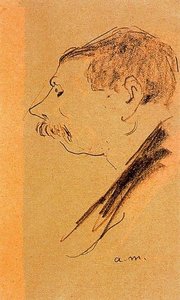
Retrato de Albert Marquet

As 100 Pinturas Mais Famosas de Albert Marquet, uma Seleção da Galeria

Atualizado em Novembro 2026 · classificado pela nossa pontuação de popularidade (pesquisas, visitas e pedidos de cada obra) · 296 obras de Albert Marquet em nosso catálogo

Em resumo

De todas as obras originais deixadas por Albert Marquet, a mais famosa é National Holiday at Le Havre (1906), da coleção do Villa Flora, em Winterthur. Logo atrás vêm Louvre Embankment and the New Bridge (1906) e Argel. La Plaza del Gobierno. Nosso catálogo contém 296 obras de Albert Marquet; a galeria preservou as 100 que o mundo mais admira, cada uma exibida com sua data, seu museu e sua história.

1875 – 1947, Bordéus Fauvism Mais obras: Museu Hermitage

As 10 principais pinturas de Albert Marquet: a escolha da galeria

1
National Holiday at Le Havre (1906) de Albert Marquet

National Holiday at Le Havre

1906 · Oil On Panel · Villa Flora, Winterthur

In 1906, the waterfront of Le Havre became a stage for a quiet, collective joy. This painting captures a national holiday, a moment where the rhythm of the city slows to accommodate the festivities. Along the river, boats sit docked, their presence grounding the scene in the reality of maritime life. People gather in small groups, some lingering near the water's edge while others move along the sidewalks. There is…

2
Louvre Embankment and the New Bridge (1906) de Albert Marquet

Louvre Embankment and the New Bridge

1906 · Oil On Canvas

To stand before Albert Marquet’s Louvre Embankment and the New Bridge is to be instantly transported into the vibrant, exhilarating heart of Paris at the turn of the 20th century. This oil on canvas, dating from 1906, is far more than a mere depiction of an urban vista; it is a captured moment of life—a symphony played out across the cobblestones and along the Seine. Marquet masterfully arrests the energy…

3
Argel. La Plaza del Gobierno de Albert Marquet

Argel. La Plaza del Gobierno

Lithograph

The artwork Argel. La Plaza del Gobierno is a creation by Albert Marquet. Born in 1875, the artist lived until 1947, leaving behind a vision shaped by the light of North Africa and the harbors of Europe. This specific piece captures a moment in Algiers, a place of movement and stone. It is also known by the title Alger, Le Palais Consulaire et La Place du Gouvernement. The work carries…

4
Academia en el taller de Gustave Moreau de Albert Marquet

Academia en el taller de Gustave Moreau

Charcoal

Academia en el taller de Gustave Moreau by Albert Marquet presents a scene centered on the practice of academic study. The subject matter focuses on a single figure positioned within a studio environment. This setting, which suggests a space dedicated to art history or the study of sculpture, contains a shelf populated with various objects that recede into the background. The arrangement of these elements creates a sense of a…

5
Window at Goulette de Albert Marquet

Window at Goulette

Oil

A vase of tulips sits upon a windowsill, their red and yellow petals catching the light. Beyond the glass, the world opens into a quiet expanse of water. A single boat sails across the distant blue, a small shape moving through the stillness. The scene is a quiet intersection of the domestic and the infinite. Inside, the flowers remain rooted and still; outside, the sea carries the vessel toward an…

6
Fruit, Knife and Napkin (1898) de Albert Marquet

Fruit, Knife and Napkin

1898 · Oil

In this 1898 still life, we find a moment of profound stillness captured on a table. The composition is anchored by a collection of fruit—apples, oranges, and pears—arranged with a sense of natural ease. Three apples are positioned across the scene, one to the left, one in the center, and a third toward the right, creating a rhythmic movement for the eye to follow. Two oranges provide weight to the…

7
Fishing Boats Returning, Collioure (1914) de Albert Marquet

Fishing Boats Returning, Collioure

1914 · Oil

The sea carries the weight of the day in its heavy, shifting tones. In this 1914 scene, the water is a vast expanse of color, holding several boats that drift upon its surface. Two sailboats dominate the view, one leaning toward the left and another anchored near the center, their forms cutting through the liquid light. Smaller vessels are scattered like debris across the swells, caught in the quiet rhythm…

8
Tempestad en La Goulette de Albert Marquet

Tempestad en La Goulette

Oil On Canvas

The composition of Tempestad en La Goulette is organized into distinct horizontal bands that define the landscape. At the base, a sandy beach meets the shoreline, where turbulent waves crash against the coast. A weathered wooden pier extends from the foreground into the water, creating a sharp linear element that cuts through the organic movement of the sea. In the distance, a mountain range rises against the horizon, its forms…

10
The Minaret at Sidi Bou Saïd de Albert Marquet

The Minaret at Sidi Bou Saïd

Oil On Canvas

The sun hangs suspended over a Mediterranean landscape, casting a soft, diffused glow across a coastal settlement. In this view of Sidi Bou Saïd, the architecture clings to the terrain, a cluster of geometric forms that seem to grow directly from the earth. A minaret rises above the rooftops, its silhouette a quiet anchor amidst the arrangement of buildings. The sea stretches toward a distant mountain range, where the colors…

A seleção de Albert Marquet continua, de 11 a 100

11Party in Sables d´Olonne de Albert MarquetParty in Sables d´Olonne 12The Louvre Embankment and the Pont-Neuf in Paris (1906) de Albert MarquetThe Louvre Embankment and the Pont-Neuf in Paris1906 · Museum Boijmans Van Beuningen 13Portrait of Clémentine (1895) de Albert MarquetPortrait of Clémentine1895 14Girl Embroidering, Seated in a Garden (1896) de Albert MarquetGirl Embroidering, Seated in a Garden1896 15Nude Lying on a Flowered Drapery (1913) de Albert MarquetNude Lying on a Flowered Drapery1913 16Nude with Raised Arms (1912) de Albert MarquetNude with Raised Arms1912 17Standing Nude (1913) de Albert MarquetStanding Nude1913 18Posters at Trouville (1906) de Albert MarquetPosters at Trouville1906 · National Gallery of Art 19Women of Laghouat (1921) de Albert MarquetWomen of Laghouat1921 · Centre Pompidou 20The Woman in Blue (1928) de Albert MarquetThe Woman in Blue1928 · Museu de Arte Moderna da Cidade de Paris 21Bay of Naples (1909) de Albert MarquetBay of Naples1909 · Museu Hermitage 22An Alley in the Jardin du Luxembourg (1901) de Albert MarquetAn Alley in the Jardin du Luxembourg1901 · Museu Hermitage 23View from a Balcony (1945) de Albert MarquetView from a Balcony1945 · Metropolitan Museum of Art 24Paris, Le Pont de l'Institut de Albert MarquetParis, Le Pont de l'Institut 25Samois de Albert MarquetSamois 26View of Saint-Jean-de-Luz (1907) de Albert MarquetView of Saint-Jean-de-Luz1907 · Museu Hermitage 27Pont-Neuf in the Snow (1910) de Albert MarquetPont-Neuf in the Snow1910 28The Garden at Pyla de Albert MarquetThe Garden at Pyla 29View of the Seine and the Monument to Henry IV (1906) de Albert MarquetView of the Seine and the Monument to Henry IV1906 · Museu Hermitage 30The port of Hamburg 2 de Albert MarquetThe port of Hamburg 2 31La Rochelle de Albert MarquetLa Rochelle 32La carreterra de La Frette de Albert MarquetLa carreterra de La Frette 33The port of Hamburg de Albert MarquetThe port of HamburgMuseu Hermitage 34Sables d'Olonne beach from the promenade de Albert MarquetSables d'Olonne beach from the promenade 35Milliners de Albert MarquetMillinersMuseu Hermitage 36The Village of Vosges (1892) de Albert MarquetThe Village of Vosges1892 37Young Girl on the Beach (1898) de Albert MarquetYoung Girl on the Beach1898 · Saint Louis Art Museum 38Le jardin de Saint-Cloud (1906) de Albert MarquetLe jardin de Saint-Cloud1906 · Museu de Arte do Condado de Los Angeles 39Bouquet of Flowers, 1898 (1898) de Albert MarquetBouquet of Flowers, 18981898 40Parisian suburb (1897) de Albert MarquetParisian suburb1897 · Musée des Beaux-Arts et d'Archéologie 41Dock at Havre (1906) de Albert MarquetDock at Havre1906 · Centre Pompidou 42Quai des Grands Augustins (1905) de Albert MarquetQuai des Grands Augustins1905 · Musée des Beaux-Arts 43The Port of Algiers (1900) de Albert MarquetThe Port of Algiers1900 44The Gate of St. Cloud, Paris (1904) de Albert MarquetThe Gate of St. Cloud, Paris1904 · Cleveland Museum of Art 45The Apse of Notre Dame (1902) de Albert MarquetThe Apse of Notre Dame1902 · Musée des Beaux-Arts et d'Archéologie 46Le Port de la Ponche (1905) de Albert MarquetLe Port de la Ponche1905 47Notre Dame under Snow (1905) de Albert MarquetNotre Dame under Snow1905 · Musée cantonal des Beaux-Arts 48Le Pont-Neuf par temps gris (1905) de Albert MarquetLe Pont-Neuf par temps gris1905 49Outskirts of Paris (1905) de Albert MarquetOutskirts of Paris1905 50Rue Norvins and Place du Tertre in Montmartre (1905) de Albert MarquetRue Norvins and Place du Tertre in Montmartre1905 51View of Agay, the Red Rocks (1905) de Albert MarquetView of Agay, the Red Rocks1905 52The Billancourt Bridge (1904) de Albert MarquetThe Billancourt Bridge1904 53The Seine and the Apse of Notre Dame (1901) de Albert MarquetThe Seine and the Apse of Notre Dame1901 · Musée d'Art Moderne de Troyes 54Farmyard at La Percaillerie (1901) de Albert MarquetFarmyard at La Percaillerie1901 55Pot of Flowers (1900) de Albert MarquetPot of Flowers1900 56Perspective Notre-Dame (1904) de Albert MarquetPerspective Notre-Dame1904 · Musée des Beaux-Arts de Pau 57Snowscene at Porte de Versailles (1904) de Albert MarquetSnowscene at Porte de Versailles1904 · Museu Nacional de Arte Ocidental 58The Port (1905) de Albert MarquetThe Port1905 · Kunstmuseum Den Haag 59Portrait of Aldre Rouveyre (1904) de Albert MarquetPortrait of Aldre Rouveyre1904 60Port of Hamburg (1909) de Albert MarquetPort of Hamburg1909 · Musée d'Art Moderne de Troyes 61Naked in the Stove de Albert MarquetNaked in the Stove 62Landscape with a Ferry Boat (1911) de Albert MarquetLandscape with a Ferry Boat1911 · Museu de Arte Moderna da Cidade de Paris 63Le Havre (1906) de Albert MarquetLe Havre1906 · Foundation E.G. Bührle Collection 64Vedette in Hamburg (1909) de Albert MarquetVedette in Hamburg1909 · Yale University Art Gallery 65Vue de Paris, le quai du Louvre (1906) de Albert MarquetVue de Paris, le quai du Louvre1906 66Honfleur (1911) de Albert MarquetHonfleur1911 · Museu Estatal Pushkin de Artes Visuais 67The Port of Naples (1909) de Albert MarquetThe Port of Naples1909 · Musée des Beaux-Arts et d'Archéologie 68Le port de Fécamp (1906) de Albert MarquetLe port de Fécamp1906 · Musée des Beaux-Arts de Quimper 69Le Louvre, Cour du Carrousel (1909) de Albert MarquetLe Louvre, Cour du Carrousel1909 · Bavarian State Painting Collections 70The Boardwalk at Sainte-Adresse (1906) de Albert MarquetThe Boardwalk at Sainte-Adresse1906 · Museum of Fine Arts 71Louvre Embankment and the New Bridge (1906) de Albert MarquetLouvre Embankment and the New Bridge1906 · Museu Hermitage 72Louvre Embankment, Summer (1906) de Albert MarquetLouvre Embankment, Summer1906 · Museu Hermitage 73Place de la Trinity in Paris (1911) de Albert MarquetPlace de la Trinity in Paris1911 · Museu Hermitage 74Le Pont Saint-Michel (1910) de Albert MarquetLe Pont Saint-Michel1910 · Museu de Arte do Condado de Los Angeles 75Pont Saint Michel, Paris (1910) de Albert MarquetPont Saint Michel, Paris1910 · Art Institute of Chicago 76Pont-Neuf in Sunshine (1906) de Albert MarquetPont-Neuf in Sunshine1906 · Art Gallery of Ontario 77View of the beach at Hendaya de Albert MarquetView of the beach at Hendaya 78Two Women de Albert MarquetTwo Women 79Ribera de la Mancha de Albert MarquetRibera de la Mancha 80Mujer de espaldas de Albert MarquetMujer de espaldas 81Desnudo de pie de Albert MarquetDesnudo de pie 82Nude of a woman de Albert MarquetNude of a woman 83Fabrica del extrarradio de Albert MarquetFabrica del extrarradio 84El descanso de la modelo de Albert MarquetEl descanso de la modelo 85En el muelle de Hamburgo de Albert MarquetEn el muelle de Hamburgo 86El Zuavo de Albert MarquetEl Zuavo 87The port of Boulogne de Albert MarquetThe port of Boulogne 88Port of Hamburg de Albert MarquetPort of Hamburg 89Nápoles-El velero de Albert MarquetNápoles-El velero 90André Rouveyre de Albert MarquetAndré RouveyreCentre Pompidou 91Puerta de Saint Cloud de Albert MarquetPuerta de Saint Cloud 92Tempest on the sea de Albert MarquetTempest on the sea 93Mujer en la calle de Albert MarquetMujer en la calle 94Mujer cosiendo de Albert MarquetMujer cosiendo 95El muelle Conti bajo la nieve de Albert MarquetEl muelle Conti bajo la nieve 96Desnudo sobre fondo azul de Albert MarquetDesnudo sobre fondo azul 97Personaje de perfil de Albert MarquetPersonaje de perfil 98Un hombre feliz de Albert MarquetUn hombre feliz 99Hombre en la calle de Albert MarquetHombre en la calle 100Mujer de cabellos largos de Albert MarquetMujer de cabellos largos

Pinturas famosas de Albert Marquet, período por período

Os temas que cativaram o olhar de Albert Marquet

Os quatro temas que mais se repetem nestas obras originais, cada um com o seu melhor exemplo.

Os museus que guardam os originais de Albert Marquet

Os 8 museus que detêm a maioria das pinturas desta página.

Museus Cidade Obras de Albert Marquet Pinturas desta lista
Museu Hermitage, São PetersburgoMuseu Hermitage São Petersburgo 11 Bay of Naples, An Alley in the Jardin du Luxembourg, View of Saint-Jean-de-Luz
Centre Pompidou, ParisCentre Pompidou Paris 14 Women of Laghouat, Dock at Havre, André Rouveyre
Musée des Beaux-Arts et d'Archéologie, BesançonMusée des Beaux-Arts et d'Archéologie Besançon 6 Parisian suburb, The Apse of Notre Dame, The Port of Naples
Museu de Arte Moderna da Cidade de Paris, ParisMuseu de Arte Moderna da Cidade de Paris Paris 6 The Woman in Blue, Landscape with a Ferry Boat
Museu Nacional de Arte Ocidental, TóquioMuseu Nacional de Arte Ocidental Tóquio 3 Sitting Nude, Snowscene at Porte de Versailles
Museu de Arte do Condado de Los Angeles, Los AngelesMuseu de Arte do Condado de Los Angeles Los Angeles 2 Le jardin de Saint-Cloud, Le Pont Saint-Michel
Musée d'Art Moderne de Troyes, TroyesMusée d'Art Moderne de Troyes Troyes 2 The Seine and the Apse of Notre Dame, Port of Hamburg
Museu Estatal Pushkin de Artes Visuais, MoscovoMuseu Estatal Pushkin de Artes Visuais Moscovo 6 Honfleur

Albert Marquet década a década: a obra original que define cada uma

Obras por década

Escolha uma década para ver a obra original que a define.

Perguntas de colecionadores sobre as pinturas de Albert Marquet

Por qual obra Albert Marquet é mais conhecido(a)?Revelar a resposta

National Holiday at Le Havre (1906), Villa Flora, Winterthur. Louvre Embankment and the New Bridge (1906) e Argel. La Plaza del Gobierno vêm a seguir.

Qual era a idade de Albert Marquet quando National Holiday at Le Havre foi feita?Revelar a resposta

31 anos: National Holiday at Le Havre data de 1906, e Albert Marquet nasceu em 1875.

Quais são as dez pinturas mais famosas de Albert Marquet?Revelar a resposta

National Holiday at Le Havre, Louvre Embankment and the New Bridge, Argel. La Plaza del Gobierno, Academia en el taller de Gustave Moreau, Window at Goulette, Fruit, Knife and Napkin, Fishing Boats Returning, Collioure, Tempestad en La Goulette, Sitting Nude e The Minaret at Sidi Bou Saïd. O ranking acima apresenta o ano e o museu de cada uma.

Quantas pinturas Albert Marquet deixou?Revelar a resposta

Nosso catálogo contém 296 obras de Albert Marquet, datadas de 1892 a 1945.

Em quais museus estão expostas as obras-primas de Albert Marquet?Revelar a resposta

Principalmente em Museu Hermitage (São Petersburgo), Centre Pompidou (Paris) e Musée des Beaux-Arts et d'Archéologie (Besançon). A tabela de museus acima lista todos eles.

Em que anos Albert Marquet pintou as suas obras mais famosas?Revelar a resposta

Em 1900s: 39 das 100 obras nesta página foram feitas então, sendo National Holiday at Le Havre delas.

Quais são as primeiras e as últimas obras originais famosas de Albert Marquet?Revelar a resposta

Nesta página, a mais antiga é The Village of Vosges (1892) e a mais recente é View from a Balcony (1945).

Quais temas Albert Marquet escolheu com mais frequência?Revelar a resposta

People (9), Sky (9) e Woman (8), entre as 100 obras nesta página.

Qual técnica Albert Marquet mais utilizou?Revelar a resposta

Oil On Canvas, para 18 das 100 obras nesta página.

A qual movimento artístico pertence Albert Marquet?Revelar a resposta

Fauvism, a julgar pelos originais nesta página.

Quais obras de Albert Marquet estão expostas no Museu Hermitage?Revelar a resposta

Bay of Naples, An Alley in the Jardin du Luxembourg e View of Saint-Jean-de-Luz: o Museu Hermitage, São Petersburgo detém 9 das obras desta página.

Albert Marquet: vida e obra

A Vida Imersa em Luz e Cor

Albert Marquet, nascido em Bordeaux em 1875, foi um pintor cuja jornada artística se desenrolou como uma evolução sutil, começando com a energia explosiva do Fauvismo e culminando em uma expressão naturalista profundamente pessoal. Sua vida inicial tomou um rumo crucial aos quinze anos, quando se mudou para Paris e ingressou na École des Arts Décoratifs. Foi nesse ambiente que seu caminho se cruzou com o de Henri Matisse – uma amizade que se revelaria extraordinariamente influente. Os dois jovens artistas não apenas compartilhavam companheirismo, mas também um ateliê, fomentando um espaço criativo onde as ideias e técnicas se entrelaçavam. Marquet continuou seus estudos na prestigiosa École des Beaux-Arts sob a tutela de Gustave Moreau, absorvendo a estética simbolista ao mesmo tempo em que traçava seu próprio caminho em direção à expressão moderna. Esses anos formativos lançaram as bases para sua participação em exposições que desafiaram as normas artísticas convencionais e redefiniram o cenário da arte.

Das Ferocidade Fauvista aos Paisagens Serenas

A ascensão de Marquet como artista coincidiu com o nascimento do Fauvismo, um movimento celebrado pelo uso ousado da cor e pela pincelada expressiva. Ele expôs ao lado de Matisse, André Derain, Maurice de Vlaminck e outros no infame Salon d'Automne de 1905, onde críticos desdenhosamente os apelidaram de “les fauves” – as feras selvagens. Embora abraçando a paleta fauvista, a abordagem de Marquet permaneceu singularmente sua. Ao contrário de alguns contemporâneos que se deleitavam com a intensidade cromática descontrolada, ele possuía um controle notável sobre o desenho e a luz, modulando as cores de forma sutil para criar composições harmoniosas. Essa restrição inerente prenunciava sua posterior evolução em direção a um estilo mais naturalista. Por volta de 1910, Marquet começou a se distanciar da fervorosa expressão puramente fauvista, voltando-se cada vez mais para as paisagens como seu tema principal. Ele embarcou em extensas viagens pela Europa e o Norte da África, buscando inspiração nos portos, praias e cidades que se tornariam marcos de sua obra madura. Essas jornadas não eram apenas sobre a representação de lugares; eram explorações do ambiente, da luz e da poesia sutil do cotidiano.

Um Mestre da Atmosfera e da Luz

A visão artística de Marquet estava profundamente enraizada na sensibilidade à luz e à atmosfera. Suas paisagens não são meras representações de lugares, mas sim evocações de humor e sensação. Ele dominava a captura dos reflexos cintilantes na água, do brilho suave da luz filtrando pela névoa e das sutis nuances de cor que definem um momento específico do dia ou estação do ano. Frequentemente, retornava aos mesmos locais repetidamente, observando como a luz transformava a cena ao longo do tempo – um testemunho de sua dedicação em capturar efeitos efêmeros. Isso é evidentemente demonstrado em suas inúmeras pinturas do Rio Sena em Paris, dos portos da Normandia e das paisagens costeiras do Norte da África. Sua técnica envolvia pinceladas abreviadas e uma paleta suave – cinzas, azuis e ocre – permitindo-lhe transmitir tanto forma quanto atmosfera com economia notável. Matisse próprio reconheceu uma afinidade entre o trabalho de Marquet e aquele de mestres japoneses como Hokusai, notando um ênfase compartilhado na simplicidade caligráfica e no poder evocativo da linha. *O artista não estava interessado em simplesmente reproduzir o que via; ele buscava capturar a sensação de estar lá.*

Influências e Desenvolvimento

Marquet nasceu em Bordeaux, uma cidade portuária francesa onde passou a maior parte de sua infância. Mudou-se para Paris em 1890, ingressando na Escola de Artes Decorativas, onde se tornou amigo de Henri Matisse. Em 1895, finalmente ingressou na École des Beaux-Arts, frequentando cursos de Gustave Moreau, um artista decadente cuja tradição romântica estava ultrapassada. Nos anos seguintes, concretizou diversas exposições no Salon des Indépendants, sem vender nenhuma obra. No entanto, consolidou sua carreira artística e ganhou reconhecimento entre a aristocracia parisiense. A maioria de suas obras, datadas deste período, seguiu uma linha impressionista, na qual provou seu controle do desenho e testou a distribuição da luz pela tela. São, aliás, desta época conhecidos variados estudos sobre a luz. A partir de 1904, Marquet se juntou ao movimento fauvista, que celebrava o uso ousado da cor e a pincelada expressiva. Em 1905, expôs com Matisse, André Derain, Maurice de Vlaminck, Othon Friesz, Georges Rouault, Henri Manguin, Louis Valtat e Jean Puy no Salon d'Automne. Os críticos deram a eles o apelido de "fauves" (feras), devido à paleta de cores vibrantes e pinceladas expressivas. Embora tenha abraçado a paleta fauvista, a abordagem de Marquet permaneceu singularmente sua. Ao contrário de alguns contemporâneos que se deleitavam com a intensidade cromática descontrolada, ele possuía um controle notável sobre o desenho e a luz, modulando as cores de forma sutil para criar composições harmoniosas. Por volta de 1910, Marquet começou a se distanciar da fervorosa expressão puramente fauvista, voltando-se cada vez mais para as paisagens como seu tema principal. Ele embarcou em extensas viagens pela Europa e o Norte da África, buscando inspiração nos portos, praias e cidades que se tornariam marcos de sua obra madura.
Legado e Influência Duradoura

Albert Marquet faleceu em 1947, deixando para trás um corpo de trabalho que continua a cativar o público com sua beleza silenciosa e profundidade emocional sutil. Suas pinturas são mantidas em prestigiosas museus ao redor do mundo, incluindo o Musée National d'Art Moderne em Paris, atestando à sua importância duradoura na história da arte moderna. Embora inicialmente tenha sido reconhecido como uma figura-chave no Fauvismo, o legado duradouro de Marquet reside em sua capacidade de transcender as etiquetas estilísticas e criar uma visão singularmente pessoal. Ele demonstrou que era possível abraçar a modernidade sem sacrificar os valores tradicionais como o desenho e a composição. Sua influência pode ser vista no trabalho de gerações posteriores de pintores de paisagens que buscavam capturar a beleza fugaz do mundo natural com sensibilidade e restrição. *A arte de Marquet nos lembra do poder da observação, da importância da luz e do apelo duradouro de uma visão serena e contemplativa.* Ele permanece um testemunho da capacidade do artista de encontrar significado profundo no cotidiano.

Características Chave do Estilo de Marquet

  • Inícios Fauvistas: As obras iniciais demonstram paletas de cores ousadas características do Fauvismo, embora com mais restrição do que alguns contemporâneos.
  • Ênfase na Luz e Atmosfera: Um traço definidor de seu trabalho maduro, concentrando-se em capturar as qualidades efêmeras da luz e seu efeito nas paisagens.
  • Paleta Suave: Uma preferência por cinzas, azuis e ocre para transmitir forma e atmosfera com economia.
  • Pinceladas Abreviadas: Uma técnica usada para sugerir em vez de definir detalhes, aumentando a sensação de movimento e luz.
  • Influência da Arte Japonesa: Uma apreciação notável pela simplicidade caligráfica e pelo poder evocativo da linha encontrados nas estampas japonesas.