Portrait of Albert Anker

The 83 Most Famous Albert Anker Paintings, a Gallery Selection

Updated Outubro 2026 · ranked by our popularity score (searches, visits and orders for each work) · 83 works by Albert Anker in our catalogue

In short

Of all the originals Albert Anker left, the most famous is Writing lessons (also known as Schreibunterricht) (1865). Close behind it come The Prodigal Son (1858) and Sunday afternoon (1862). Our catalog holds 83 works by Albert Anker; the gallery has kept the 83 the world admires most, each shown with its date, its museum and its story.

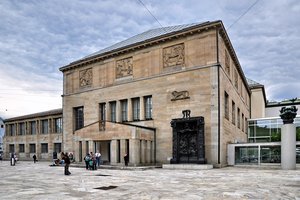
1831 – 1910, Ins Realism Most works: Kunsthaus Zürich

Albert Anker's top 10 paintings: the gallery's choice

The Albert Anker selection continues, 11 to 83

11The Milk Soup at Kappel (1869) by Albert AnkerThe Milk Soup at Kappel1869 · Kunsthaus Zürich 12Bathers (1865) by Albert AnkerBathers1865 13The song of the homeland (1874) by Albert AnkerThe song of the homeland1874 14The little knitters (1875) by Albert AnkerThe little knitters1875 · Kunst Museum Winterthur | Reinhart am Stadtgarten 15Porträt der Emilie Weiss (1874) by Albert AnkerPorträt der Emilie Weiss1874 16An Old Huguenot (1875) by Albert AnkerAn Old Huguenot1875 17Young mother contemplating her sleeping child in candlelight (1875) by Albert AnkerYoung mother contemplating her sleeping child in candlelight1875 18The artist's daughter Louise (1874) by Albert AnkerThe artist's daughter Louise1874 · Kunst Museum Winterthur | Reinhart am Stadtgarten 19Queen Bertha and the Spinners (1881) by Albert AnkerQueen Bertha and the Spinners1881 · Musée cantonal des Beaux-Arts 20Children at Breakfast (1879) by Albert AnkerChildren at Breakfast1879 · Kunstmuseum Basel 21Girl with a cat (1881) by Albert AnkerGirl with a cat1881 22Boy in a red waistcoat (1885) by Albert AnkerBoy in a red waistcoat1885 23Knitting girl watching the toddler in a cradle (1885) by Albert AnkerKnitting girl watching the toddler in a cradle1885 24Portrait of a girl (1885) by Albert AnkerPortrait of a girl1885 25Schoolgirl doing homework (1879) by Albert AnkerSchoolgirl doing homework1879 26The Genius of Death (1890) by Albert AnkerThe Genius of Death1890 27Fleissig / Appliquée (1886) by Albert AnkerFleissig / Appliquée1886 28Knitting girl (1888) by Albert AnkerKnitting girl1888 29Girl playing with cat (1887) by Albert AnkerGirl playing with cat1887 30Girl peeling potatoes (1886) by Albert AnkerGirl peeling potatoes1886 31Girl Braiding Her Hair (1887) by Albert AnkerGirl Braiding Her Hair1887 32Civil marriage (1887) by Albert AnkerCivil marriage1887 · Kunsthaus Zürich 33Portrait of a Girl in Bernese Costume (1897) by Albert AnkerPortrait of a Girl in Bernese Costume1897 34The Poor Man's Soup (1893) by Albert AnkerThe Poor Man's Soup1893 · Kunstmuseum Bern 35Girl eating soup (1898) by Albert AnkerGirl eating soup1898 36Bertha Gugger with daughter (1898) by Albert AnkerBertha Gugger with daughter1898 37The Zaeslin siblings (1896) by Albert AnkerThe Zaeslin siblings1896 38Old Man drinking Herbal Tea (1895) by Albert AnkerOld Man drinking Herbal Tea1895 39Reading Girl (1905) by Albert AnkerReading Girl1905 40Old man eating Mid-Morning Snack (Gyp) (1901) by Albert AnkerOld man eating Mid-Morning Snack (Gyp)1901 41Boy with Slate Tablet (1910) by Albert AnkerBoy with Slate Tablet1910 42Girl with Loaf of Bread (1910) by Albert AnkerGirl with Loaf of Bread1910 43Reading Old Farmer (1910) by Albert AnkerReading Old Farmer1910 44Girl with Slate Tablet (1910) by Albert AnkerGirl with Slate Tablet1910 45The Convalescent (1908) by Albert AnkerThe Convalescent1908 46Boy with a hat eating (1910) by Albert AnkerBoy with a hat eating1910 47Old farmer at the table (22 April 1907) (1907) by Albert AnkerOld farmer at the table (22 April 1907)1907 48Still Life: Two Glass of Red Wine, a Bottle of Wine, a Corkscrew and a Plate of Biscuits on a Tray by Albert AnkerStill Life: Two Glass of Red Wine, a Bottle of Wine, a Corkscrew and a Plate of Biscuits on a Tray 49The LIttle Musician (1873) by Albert AnkerThe LIttle Musician1873 50The Whistle Carver (1858) by Albert AnkerThe Whistle Carver1858 51An Interior with Mother and Children (1870) by Albert AnkerAn Interior with Mother and Children1870 52Still-life: Tea and Melted Bread (1873) by Albert AnkerStill-life: Tea and Melted Bread1873 53Still life with coffee setting and cognac bottle (1882) by Albert AnkerStill life with coffee setting and cognac bottle1882 54Sierre (1880) by Albert AnkerSierre1880 55Farmhouse parlor with green stove (1883) by Albert AnkerFarmhouse parlor with green stove1883 56Portrait of a Young Boy (1890) by Albert AnkerPortrait of a Young Boy1890 57Still life: Tasteful tea (1897) by Albert AnkerStill life: Tasteful tea1897 58Still Life with Wine and Chestnuts (1897) by Albert AnkerStill Life with Wine and Chestnuts1897 59Still-Life with Coffee, Milk and Potatoes (1896) by Albert AnkerStill-Life with Coffee, Milk and Potatoes1896 · Kunstmuseum Bern 60Der alte Feissli mit Kind auf Ofenbank (1898) by Albert AnkerDer alte Feissli mit Kind auf Ofenbank1898 61Still life, herrings (1899) by Albert AnkerStill life, herrings1899 62Strickende junge Frau mit Blumenstrauss (1903) by Albert AnkerStrickende junge Frau mit Blumenstrauss1903 63Der Schaffner (1899) by Albert AnkerDer Schaffner1899 64At the cemetery by Albert AnkerAt the cemetery 65Knitting Bernese woman with child by Albert AnkerKnitting Bernese woman with child 66Sitting bioy peeling vegetables by Albert AnkerSitting bioy peeling vegetables 67Portrait of a Girl by Albert AnkerPortrait of a Girl 68Portrait of a girl by Albert AnkerPortrait of a girl 69Sleeping girl on a wooden bench by Albert AnkerSleeping girl on a wooden bench 70Farmer reading in Bed I by Albert AnkerFarmer reading in Bed I 71Unterwalden (traditional costumes after Josef Reinhart) by Albert AnkerUnterwalden (traditional costumes after Josef Reinhart) 72A Farmer's Wife, Sewing by Albert AnkerA Farmer's Wife, Sewing 73Portrait of boy by Albert AnkerPortrait of boy 74Farmer with his cap holding his pen in his mouth and reading a letter by Albert AnkerFarmer with his cap holding his pen in his mouth and reading a letter 75Portrait of a Young Girl by Albert AnkerPortrait of a Young Girl 76Child at a Table (1908) by Albert AnkerChild at a Table1908 77Portrait of a girl with red necklace by Albert AnkerPortrait of a girl with red necklace 78Two Girls on the Stove Bench (1895) by Albert AnkerTwo Girls on the Stove Bench1895 · Kunsthaus Zürich 79Corner of a Room with Laundry Basket by Albert AnkerCorner of a Room with Laundry Basket 80Peasant Woman by Albert AnkerPeasant Woman 81A Seated Farmer with a Pipe by Albert AnkerA Seated Farmer with a Pipe 82Portrait of a girl by Albert AnkerPortrait of a girl 83Creche (1890) by Albert AnkerCreche1890 · Kunst Museum Winterthur | Reinhart am Stadtgarten

The subjects that held Albert Anker's eye

The four subjects that come back most often in these originals, each with its finest example.

The museums that keep Albert Anker's originals

The 7 museums that hold the most of the paintings on this page.

Museum City Works by Albert Anker Paintings from this list
Kunsthaus Zürich, ZuriqueKunsthaus Zürich Zurique 3 The Milk Soup at Kappel, Civil marriage, Two Girls on the Stove Bench
Kunst Museum Winterthur | Reinhart am Stadtgarten, WinterthurKunst Museum Winterthur | Reinhart am Stadtgarten Winterthur 3 The little knitters, The artist's daughter Louise, Creche
Musée d'Art et d'Histoire, NeuchâtelMusée d'Art et d'Histoire Neuchâtel 2 Sunday afternoon, The Bourbakis
Kunstmuseum Bern, BernaKunstmuseum Bern Berna 2 The Poor Man's Soup, Still-Life with Coffee, Milk and Potatoes
Palais des Beaux-Arts de Lille, LillePalais des Beaux-Arts de Lille Lille 1 In the Woods
Musée cantonal des Beaux-Arts, LausanneMusée cantonal des Beaux-Arts Lausanne 1 Queen Bertha and the Spinners
Kunstmuseum Basel, BasileiaKunstmuseum Basel Basileia 1 Children at Breakfast

Albert Anker decade by decade: the original that defines each

Works per decade

Pick a decade to see the original that defines it.

Collectors' questions about Albert Anker's paintings

Which work is Albert Anker most famous for?Reveal the answer

Writing lessons (also known as Schreibunterricht) (1865). The Prodigal Son (1858) and Sunday afternoon (1862) come next.

What age was Albert Anker when Writing lessons (also known as Schreibunterricht) was made?Reveal the answer

34 years old: Writing lessons (also known as Schreibunterricht) dates from 1865, and Albert Anker was born in 1831.

What are the ten most famous Albert Anker paintings?Reveal the answer

Writing lessons (also known as Schreibunterricht), The Prodigal Son, Sunday afternoon, The Bourbakis, In the Woods, The Wine Festival, Betende im Beinhaus von Stans, Baptism, Boy at table II and Girl, drinking coffee. The ranking above gives each one's year and museum.

How many paintings did Albert Anker leave?Reveal the answer

Our catalog holds 83 works by Albert Anker, dated from 1858 to 1910.

In which museums do Albert Anker's masterpieces hang?Reveal the answer

Mostly in Kunsthaus Zürich (Zurique), Kunst Museum Winterthur | Reinhart am Stadtgarten (Winterthur) and Musée d'Art et d'Histoire (Neuchâtel). The museum table above lists them all.

In which years did Albert Anker paint the most famous works?Reveal the answer

In 1890s: 16 of the 83 works on this page were made then, The Genius of Death among them.

What are the first and the last famous originals of Albert Anker?Reveal the answer

On this page, the earliest is The Prodigal Son (1858) and the latest Boy with Slate Tablet (1910).

Which subjects did Albert Anker choose most often?Reveal the answer

Rural life (3), Swiss art (3) and Portraits (3), across the 83 works on this page.

To which art movement does Albert Anker belong?Reveal the answer

Realism and Contemporary realism, judging by the originals on this page.

Which Albert Anker works hang at the Kunsthaus Zürich?Reveal the answer

The Milk Soup at Kappel, Civil marriage and Two Girls on the Stove Bench: the Kunsthaus Zürich, Zurique holds 3 of the works on this page.

Can I commission a reproduction of a Albert Anker painting?Reveal the answer

Yes, as a reproduction: the original stays in its museum, but any painting on this page can be painted by hand for you, made to order one at a time, from the painting's own page.

Albert Anker: life and work

Os Primeiros Anos e os Inícios Artísticos

Albert Samuel Anker, um nome que evoca cenas idílicas da Suíça e retratos tocantes da vida rural, nasceu em 1º de abril de 1831, na pequena cidade de Ens, na Suíça. Seu pai, Samuel Anker, era um veterinário respeitado e também atuava no cenário político como membro da assembleia constituinte do cantão de Berna. Essa combinação de praticidade científica e dever cívico influenciaria sutilmente o caminho de Albert. A família mudou-se para Neuchâtel em 1836, proporcionando um novo panorama para seus sentidos em desenvolvimento. Foi ali que Anker demonstrou aptidão para a arte, recebendo orientação inicial de Frédéric-Wilhelm Moritz, despertando uma paixão que definiria sua obra. Ele continuou sua formação formal ao lado de Auguste Bachelin sob a tutela de Louis Wallinger de 1845 a 1848, estabelecendo uma base sólida em desenho e observação. No entanto, as primeiras ambições de Anker não eram exclusivamente artísticas; ele se dedicou aos estudos teológicos nas universidades de Berna e Halle, na Alemanha, após concluir o Matura em 1851. Foram durante esses anos acadêmicos, cercado por ricas coleções de arte, que sua dedicação à pintura se solidificou, culminando no apoio de seu pai em 1854 para seguir uma carreira como artista.

Influências Parisienses e o Desenvolvimento de um Estilo Distinto

A decisão de se dedicar à arte levou Anker a Paris, o epicentro da inovação artística durante meados do século XIX. Ele ingressou na prestigiada École nationale supérieure des Beaux-Arts, estudando sob Charles Gleyre. Esse período foi fundamental para seu desenvolvimento, expondo-o às tendências francesas contemporâneas e solidificando suas habilidades técnicas. Ao absorver as influências do movimento realista – uma reação ao romantismo que enfatizava a representação da vida como ela realmente era – Anker não se limitou a imitar seus princípios. Ele forjou um estilo distinto caracterizado por detalhes meticulosos, expressão emocional sutil e um foco inabalável em cenas cotidianas da existência rural suíça. Ele não estava interessado em narrativas históricas grandiosas ou alegorias dramáticas; sua tela se tornou uma janela para a dignidade tranquila da vida camponesa. A obra de Anker reflete uma profunda apreciação pela simplicidade e autenticidade, retratando crianças, agricultores e interiores domésticos com realismo e ternura notáveis. A influência dos mestres holandeses como Johannes Vermeer é palpável em sua atenção à luz, composição e na representação íntima de espaços interiores – uma qualidade que confere uma serenidade atemporal às suas pinturas.

Temas, Obras Principais e Legado Artístico

Albert Anker tornou-se celebrado por capturar a essência da vida rural suíça do século XIX, ganhando o carinhoso título de “o pintor nacional” da Suíça. Suas telas são povoadas com cenas que ressoam com um senso de nostalgia e genuíno afeto por seus retratados. Entre suas obras mais queridas está "O Pequeno Músico", uma representação encantadora de um jovem absorto em tocar violino – um testemunho da capacidade de Anker de capturar a inocência juvenil e a concentração. “Retrato de uma Jovem Menina”, similarmente, demonstra sua habilidade em retratar traços delicados e transmitir emoção interior. "A Esposa do Fazendeiro, Costurando" é um estudo pungente da tranquilidade doméstica, revelando beleza nas tarefas mundanas da vida diária. Além dessas imagens icônicas, a dedicação de Anker à documentação do patrimônio cultural suíço é evidente em obras como “Unterwalden (trajes tradicionais após Josef Reinhart)”, uma série de estudos a aquarela que preservam meticulosamente os trajes tradicionais. Sua produção artística se estendeu além das pinturas para incluir retratos, naturezas-mortas e cenas de gênero que refletiam os valores e a estética de sua época. Até mesmo seu estudo a carvão "Fazendeiro Idoso à Mesa (22 de abril de 1907)” demonstra sua maestria da linha e da forma, transmitindo uma riqueza de caráter com meios mínimos. Os temas recorrentes na obra de Anker – infância, vida familiar, tradições rurais e a beleza da paisagem suíça – são entrelaçados para criar uma visão coerente de um mundo harmonioso.

Reconhecimento e Significado Duradouro

Ao longo de sua vida, Albert Samuel Anker desfrutou de considerável reconhecimento, expondo seu trabalho em inúmeras exposições nacionais e internacionais e recebendo aclamação crítica. Foi nomeado cavaleiro da Légion d'honneur em 1878, solidificando sua reputação no mundo artístico europeu.Suas pinturas desempenharam um papel crucial na formação da imagem da Suíça do século XIX, oferecendo uma visão tanto romantizada quanto realista da vida rural que ressoou profundamente com o público. A contribuição de Anker ao Realismo suíço foi significativa, influenciando gerações subsequentes de artistas que buscavam retratar suas próprias identidades nacionais e paisagens culturais. Ele serviu na Comissão Federal de Arte Suíça de 1889 a 1893 e novamente de 1895 a 1898, demonstrando ainda mais seu compromisso em promover o crescimento artístico dentro de seu país. Recebeu um doutorado honorário pela Universidade de Berna em 1900. Embora um derrame tenha limitado sua capacidade de pintar nos últimos anos, seu legado permaneceu seguro. Albert Samuel Anker faleceu em 16 de julho de 1910, em Ins, na Suíça, deixando para trás uma obra que continua a ser admirada por sua habilidade técnica, profundidade emocional e significado histórico duradouro – um testemunho do poder da arte para capturar o espírito de uma nação e a beleza da vida cotidiana.

All 83 works by Albert Anker →