Retrato de Thomas Wyck

As 80 Pinturas Mais Famosas de Thomas Wyck, Cada Uma Única

Atualizado em Novembro 2026 · classificado pela nossa pontuação de popularidade (pesquisas, visitas e pedidos de cada obra) · 89 obras de Thomas Wyck em nosso catálogo

Em resumo

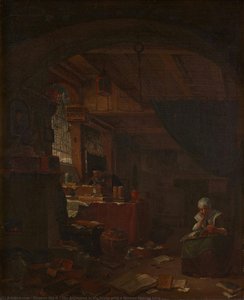
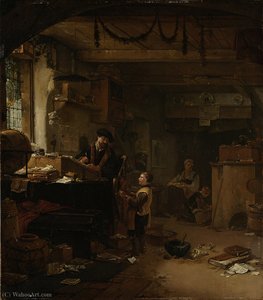
St Anthony, Archbishop of Florence (1654) é a pintura de Thomas Wyck que mais atrai olhares; a obra original pertence ao Nationalmuseum, Estocolmo. Depois disso, o olhar recai sobre Interior of a Dutch Farm Cottage (1654) e The Alchemist (1650). Entre as 89 obras de Thomas Wyck em nosso catálogo, estas 80 são as mais famosas, cada uma uma original única apresentada com o seu ano, o seu museu e a razão pela qual perdura.

1616 – 1677, Beverwijk Dutch golden age Mais obras: Bavarian State Painting Collections

As 10 principais pinturas de Thomas Wyck, sob o olhar da galeria

1
St Anthony, Archbishop of Florence (1654) de Thomas Wyck

St Anthony, Archbishop of Florence

1654 · Oil · Nationalmuseum, Estocolmo

The saint stands within a frame of heavy, arched architecture. He is a pillar of white and black, his monastic habit catching a sharp, directional light from the upper left. This light carves the folds of his robes and illuminates a face set with solemn authority. In one hand, he holds a tall processional cross; in the other, a scale. The metal of the scale catches the light, a small…

2
Interior of a Dutch Farm Cottage (1654) de Thomas Wyck

Interior of a Dutch Farm Cottage

1654 · Oil · Statens Museum For Kunst, Copenhague

In this 1654 work, we find ourselves drawn into the hushed, dim atmosphere of a rustic farm cottage. The composition is anchored by a heavy, dark architectural archway in the foreground, which acts as a threshold, inviting us to peer into a private, domestic world. A soft, directional light enters from a window on the left, casting a gentle glow across the scene. This light catches the subtle textures of…

3
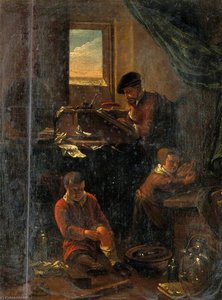
The Alchemist (1650) de Thomas Wyck

The Alchemist

1650 · Oil · Mauritshuis, Haia

The Alchemist is a detailed 17th-century genre painting that captures a cluttered workshop filled with a sense of intense scholarly focus. The composition is densely packed, utilizing a deep, shadowed interior that directs the viewer's eye toward a light source entering from a window on the left. The color palette is dominated by earthy tones, such as ochres and browns, which are sharply interrupted by the vibrant, saturated red of…

4
The Tinker (1654) de Thomas Wyck

The Tinker

1654 · Oil On Canvas · Statens Museum For Kunst, Copenhague

The Tinker is a genre painting by the Dutch artist Thomas Wijck. Created about 1654, the work depicts a man engaged in his manual trade within a workshop setting. The subject matter focuses on the specific activities of a laborer, providing a view into the daily existence of a traveling repairman. This depiction of a craftsman at work places the figure within the tradition of seventeenth-century Dutch genre scenes.

5
Almsgiving (1660) de Thomas Wyck

Almsgiving

1660 · Oil On Canvas · Philadelphia Museum of Art, Filadélfia

Almsgiving is a somber and atmospheric genre painting from 1660 that depicts a scene of charity within an old European setting. The composition is framed by a large, dark architectural archway in the foreground, which creates a sense of depth and directs the viewer's eye toward the central group of figures. The subject matter focuses on the interaction between people in a moment of social welfare, evoking themes of piety,…

6
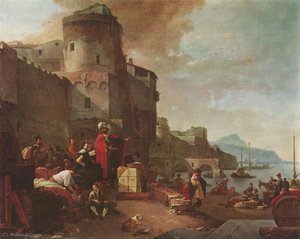
Capriccio of a Fort by the Sea, with Orientals and an Antique Statue (1673) de Thomas Wyck

Capriccio of a Fort by the Sea, with Orientals and an Antique Statue

1673 · Oil On Canvas · National Trust, Thames

To gaze upon this magnificent Capriccio of a Fort by the Sea is to step directly into a sun-drenched moment plucked from the heart of the Dutch Golden Age. Thomas Wyck’s masterful oil painting, dated 1673, transports us to a vibrant, almost theatrical harbor scene where the solidity of classical architecture meets the ephemeral energy of human endeavor. It is more than just a depiction of a port; it is…

7
Woman at Her Sewing Table (1655) de Thomas Wyck

Woman at Her Sewing Table

1655 · Oil On Canvas · Städel Museum, Frankfurt

In this intimate scene from 1655, we find ourselves drawn into a private, domestic moment. A woman sits at her sewing table, her attention entirely consumed by the needlework in her hands. The composition is tightly framed, pulling the viewer into the stillness of her world. Light enters from an unseen source to the left, washing over the bright white of her linen collar and the fabric she works upon,…

8
View of the Bay of Naples with Orientals and an Antique Statue (1673) de Thomas Wyck

View of the Bay of Naples with Orientals and an Antique Statue

1673 · Oil On Canvas · National Trust, Thames

Gaze upon this exquisite vision of the Bay of Naples, a scene that transports the viewer directly to an era of opulent leisure and artistic contemplation. The composition is alive with the gentle murmur of activity—the distant sails catching the sun, the figures gathered along the shore engaging in moments of quiet enjoyment. It is more than just a depiction of a beautiful vista; it is an immersion into a…

9
A rustic interior (1654) de Thomas Wyck

A rustic interior

1654 · Oil On Panel · Museum Boijmans Van Beuningen, Roterdã

The air inside this room feels heavy and still, thick with the scent of woodsmoke and old stone. A low, heavy ceiling presses down upon the scene, creating a sense of profound intimacy that wraps around the figures like a shroud. Light enters from a single, unseen source to the left, slicing through the gloom to catch the bright white of a woman's headscarf. This sudden brightness pulls the eye…

10
An Alchemist in His Studio (1600) de Thomas Wyck

An Alchemist in His Studio

1600 · Oil · Science History Institute, Philadelphia

A soft, warm light spills across a cluttered desk, illuminating an old man lost in the silent labor of thought. He sits hunched over a book, his eyes tracing lines of text that perhaps hold the secrets of the universe. The room feels heavy with the scent of old parchment and the stillness of a life dedicated to study. Around him, the tools of his obsession are scattered like fragments…

Pinturas famosas de Thomas Wyck, números 11 a 80

11Harbor Scene (1646) de Thomas WyckHarbor Scene1646 · Bavarian State Painting Collections 12An Alchemist (1646) de Thomas WyckAn Alchemist1646 · Bavarian State Painting Collections 13Italian Landscape with Figures at a Fountain among Antique Ruins (1647) de Thomas WyckItalian Landscape with Figures at a Fountain among Antique Ruins1647 · Städel Museum 14man reading in his laboratory (1641) de Thomas Wyckman reading in his laboratory1641 15Southern Sea-Harbour with architecture; tradesmen (1641) de Thomas WyckSouthern Sea-Harbour with architecture; tradesmen1641 16Morra-Players (1640) de Thomas WyckMorra-Players1640 · Academia de Belas Artes de Viena 17On the Gulf of Naples (1650) de Thomas WyckOn the Gulf of Naples1650 · Bavarian State Painting Collections 18Interior with Two Men and a Woman with a Baby (1656) de Thomas WyckInterior with Two Men and a Woman with a Baby1656 19Merchants with commodities in a Levante Harbour (1660) de Thomas WyckMerchants with commodities in a Levante Harbour1660 · Musée Fabre 20Painting (1656) de Thomas WyckPainting1656 · National Museum of Art, Architecture and Design 21The Gipsy Woman Telling the Soldiers their Fortunes (1660) de Thomas WyckThe Gipsy Woman Telling the Soldiers their Fortunes1660 · Statens Museum For Kunst 22The Yard of an Italian Tavern (1654) de Thomas WyckThe Yard of an Italian Tavern1654 · Statens Museum For Kunst 23The Weaver at Work in his Home (1654) de Thomas WyckThe Weaver at Work in his Home1654 · Statens Museum For Kunst 24A scholar in his Study (1660) de Thomas WyckA scholar in his Study1660 · Hallwyl Museum 25Alchemist in his laboratory (1650) de Thomas WyckAlchemist in his laboratory1650 · Staatliches Museum Schwerin 26An alchemist's workshop (1654) de Thomas WyckAn alchemist's workshop1654 · Gemäldegalerie 27The Alchemist in his Study with a Woman Making Lace (1660) de Thomas WyckThe Alchemist in his Study with a Woman Making Lace1660 · Science History Institute 28An Alchemist in his Laboratory (1654) de Thomas WyckAn Alchemist in his Laboratory1654 · Statens Museum For Kunst 29An Alchemist and His Family (1660) de Thomas WyckAn Alchemist and His Family1660 · Science History Institute 30Landscape with Arch Bridge (1646) de Thomas WyckLandscape with Arch Bridge1646 · Bavarian State Painting Collections 31Italian street scene de Thomas WyckItalian street scene 32Alchemist de Thomas WyckAlchemistRijksmuseum 33Mountain Monastery (1646) de Thomas WyckMountain Monastery1646 · Bavarian State Painting Collections 34Rock Landscape (1646) de Thomas WyckRock Landscape1646 · Bavarian State Painting Collections 35At the Seaport (1646) de Thomas WyckAt the Seaport1646 · Bavarian State Painting Collections 36Vegetable Market (1646) de Thomas WyckVegetable Market1646 · Bavarian State Painting Collections 37Italian Harbor with Fortifications and Staffage (1641) de Thomas WyckItalian Harbor with Fortifications and Staffage1641 38Italian Coastal Landscape (1640) de Thomas WyckItalian Coastal Landscape1640 39Interior of a Cave (1640) de Thomas WyckInterior of a Cave1640 40Apple Seller at a City Gate (1654) de Thomas WyckApple Seller at a City Gate1654 · National Museum in Wrocław 41A washerwoman and children by a river before a walled bridge (1654) de Thomas WyckA washerwoman and children by a river before a walled bridge1654 · Wallraf-Richartz-Museum 42Figures in the Courtyard of a House (1660) de Thomas WyckFigures in the Courtyard of a House1660 · Fairfax House 43An Alchemist at Work, with a Mother by a Cradle Beyond (1650) de Thomas WyckAn Alchemist at Work, with a Mother by a Cradle Beyond1650 · Science History Institute 44View of port of Ripa Grande. (1670) de Thomas WyckView of port of Ripa Grande.1670 · Musée Fabre 45A View of the Forum (1674) de Thomas WyckA View of the Forum1674 · National Trust 46An Alchemist in His Laboratory (1673) de Thomas WyckAn Alchemist in His Laboratory1673 · National Trust 47Capriccio of a Seaport with Orientals, Ruins, and an Antique Statue (1673) de Thomas WyckCapriccio of a Seaport with Orientals, Ruins, and an Antique Statue1673 · National Trust 48An Alchemist in His Laboratory, with an Assistant (1673) de Thomas WyckAn Alchemist in His Laboratory, with an Assistant1673 · National Trust 49Italian Courtyard (1677) de Thomas WyckItalian Courtyard1677 · Dulwich Picture Gallery 50Landscape with Bay (1646) de Thomas WyckLandscape with Bay1646 · Bavarian State Painting Collections 51Old Building de Thomas WyckOld BuildingKunsthistorisches Museum 52Interior of a Weaver's Cottage de Thomas WyckInterior of a Weaver's CottageNational Gallery of Ireland 53landscape with fountain and fig. de Thomas Wycklandscape with fountain and fig. 54horsemen resting before an inn de Thomas Wyckhorsemen resting before an inn 55Figures outside a tavern with a woman sewing, travellers on a bridge beyond de Thomas WyckFigures outside a tavern with a woman sewing, travellers on a bridge beyond 56Whitehall and St James's Park, London de Thomas WyckWhitehall and St James's Park, London 57Capriccio of a Roman Ruins with Orientals, a Fountain and an Antique Statue de Thomas WyckCapriccio of a Roman Ruins with Orientals, a Fountain and an Antique StatueNational Trust 58An Alchemist de Thomas WyckAn AlchemistMuseu Hermitage 59Dancing couple + many people at ruins de Thomas WyckDancing couple + many people at ruins 60A church interior de Thomas WyckA church interior 61Washerwomen at the Foot of the Torre delle Milizie, Rome de Thomas WyckWasherwomen at the Foot of the Torre delle Milizie, Rome 62Italian port de Thomas WyckItalian port 63Levantijnse haven de Thomas WyckLevantijnse havenRijksmuseum 64Southern Landscape de Thomas WyckSouthern Landscape 65Washerwomen in a yard. de Thomas WyckWasherwomen in a yard.Museu Nacional de Varsóvia 66The Alchemist de Thomas WyckThe AlchemistMuseu Fitzwilliam 67Riders by Italianate ruins with a seaport beyond de Thomas WyckRiders by Italianate ruins with a seaport beyond 68Italian Street Scene de Thomas WyckItalian Street SceneThe Ashmolean Museum of Art and Archaeology 69Spinning farmer de Thomas WyckSpinning farmerRijksmuseum 70View of the Thames at Westminster on Lord Mayor's Day de Thomas WyckView of the Thames at Westminster on Lord Mayor's Day 71The Poor Being Fed at a Monastery de Thomas WyckThe Poor Being Fed at a Monastery 72The Wreckers, Stormy Coast Scene with Tower de Thomas WyckThe Wreckers, Stormy Coast Scene with Tower 73A Philosopher in His Study, with Two Children de Thomas WyckA Philosopher in His Study, with Two Children 74Interior with an Alchemist de Thomas WyckInterior with an Alchemist 75Interior with an Alchemist Making a Gesture of Surprise, and a Female Assistant de Thomas WyckInterior with an Alchemist Making a Gesture of Surprise, and a Female Assistant 76Interior with an Alchemist Examining a Bowl Brought by a Boy de Thomas WyckInterior with an Alchemist Examining a Bowl Brought by a Boy 77Interior with an Alchemist Studying a Book, His Assistant Pouring Liquid into a Bowl de Thomas WyckInterior with an Alchemist Studying a Book, His Assistant Pouring Liquid into a Bowl 78Interior with an Alchemist Seated at a Table, Looking out of the Picture de Thomas WyckInterior with an Alchemist Seated at a Table, Looking out of the Picture 79Interior with an Alchemist Seated at a Table, Looking out of the Picture de Thomas WyckInterior with an Alchemist Seated at a Table, Looking out of the Picture 80Kitchen interior de Thomas WyckKitchen interiorFinnish National Gallery

Pinturas famosas de Thomas Wyck, período por período

Os temas que cativaram o olhar de Thomas Wyck

Os quatro temas que mais se repetem nestas obras originais, cada um com o seu melhor exemplo.

Os museus que guardam os originais de Thomas Wyck

Os 8 museus que detêm a maioria das pinturas desta página.

Museus Cidade Obras de Thomas Wyck Pinturas desta lista
Bavarian State Painting Collections, MuniqueBavarian State Painting Collections Munique 9 Harbor Scene, An Alchemist, On the Gulf of Naples
National Trust, ThamesNational Trust Thames 7 Capriccio of a Fort by the Sea, with Orientals and an Antique Statue, View of the Bay of Naples with Orientals and an Antique Statue, A View of the Forum
Statens Museum For Kunst, CopenhagueStatens Museum For Kunst Copenhague 6 Interior of a Dutch Farm Cottage, The Tinker, The Gipsy Woman Telling the Soldiers their Fortunes
Science History Institute, PhiladelphiaScience History Institute Philadelphia 4 An Alchemist in His Studio, The Alchemist in his Study with a Woman Making Lace, An Alchemist and His Family
Rijksmuseum, AmsterdãRijksmuseum Amsterdã 3 Alchemist, Levantijnse haven, Spinning farmer
Städel Museum, FrankfurtStädel Museum Frankfurt 2 Woman at Her Sewing Table, Italian Landscape with Figures at a Fountain among Antique Ruins
Musée Fabre, MontpellierMusée Fabre Montpellier 2 Merchants with commodities in a Levante Harbour, View of port of Ripa Grande.
Nationalmuseum, EstocolmoNationalmuseum Estocolmo 1 St Anthony, Archbishop of Florence

Thomas Wyck ao longo das décadas: uma obra original única para cada uma

Obras por década

Escolha uma década para ver a obra original que a define.

Pinturas de Thomas Wyck: perguntas para a galeria

Qual é a obra mais famosa de Thomas Wyck?Revelar a resposta

St Anthony, Archbishop of Florence (1654), Nationalmuseum, Estocolmo. Interior of a Dutch Farm Cottage (1654) e The Alchemist (1650) vêm a seguir.

Com que idade Thomas Wyck criou St Anthony, Archbishop of Florence?Revelar a resposta

38 anos: St Anthony, Archbishop of Florence data de 1654, e Thomas Wyck nasceu em 1616.

Quais são as dez pinturas mais famosas de Thomas Wyck?Revelar a resposta

St Anthony, Archbishop of Florence, Interior of a Dutch Farm Cottage, The Alchemist, The Tinker, Almsgiving, Capriccio of a Fort by the Sea, with Orientals and an Antique Statue, Woman at Her Sewing Table, View of the Bay of Naples with Orientals and an Antique Statue, A rustic interior e An Alchemist in His Studio. O ranking acima apresenta o ano e o museu de cada uma.

Quantas obras de Thomas Wyck são conhecidas?Revelar a resposta

Nosso catálogo contém 89 obras de Thomas Wyck, datadas de 1640 a 1677.

Onde se pode ver os originais mais famosos de Thomas Wyck?Revelar a resposta

Principalmente em Bavarian State Painting Collections (Munique), National Trust (Thames) e Statens Museum For Kunst (Copenhague). A tabela de museus acima lista todos eles.

Em que período Thomas Wyck criou as suas pinturas mais conhecidas?Revelar a resposta

Em 1650s: 17 das 80 obras nesta página foram feitas então, sendo St Anthony, Archbishop of Florence delas.

Qual pintura famosa de Thomas Wyck é a mais antiga e qual é a mais recente?Revelar a resposta

Nesta página, a mais antiga é Morra-Players (1640) e a mais recente é Italian Courtyard (1677).

Quais temas Thomas Wyck preferia?Revelar a resposta

Man (14), Woman (12) e People (12), entre as 80 obras nesta página.

Com quais materiais Thomas Wyck mais pintou?Revelar a resposta

Oil, para 24 das 80 obras nesta página.

A qual movimento pertence a obra de Thomas Wyck?Revelar a resposta

Dutch golden age e Baroque, a julgar pelos originais nesta página.

Quais originais de Thomas Wyck posso ver no Bavarian State Painting Collections?Revelar a resposta

Harbor Scene, An Alchemist e On the Gulf of Naples: o Bavarian State Painting Collections, Munique detém 9 das obras desta página.

Thomas Wyck: um retrato do artista

A Vida e o Legado de Thomas Wyck

Nascido em uma linhagem de criadores, Thomas Wyck emergiu como uma figura distinta dentro da vibrante paisagem da pintura da Era de Ouro Holandesa. Sua jornada artística começou sob o olhar atento de seu pai, de quem recebeu sua formação fundamental, um início que o enraizou profundamente nas tradições de seu ofício. Esta imersão precoce nas nuances técnicas da pintura a óleo preparou-o para uma vida de exploração e evolução estilística. Como um pintor tanto de vistas portuárias quanto de cenas de gênero, Wyck possuía uma habilidade única de capturar a energia pulsante do comércio marítimo e os momentos íntimos, muitas vezes misteriosos, da vida cotidiana.

A trajetória de sua carreira foi profundamente moldada por suas viagens pelo Mediterrâneo. Embora os registros históricos sobre seus movimentos exatos sejam objeto de debate acadêmico, evidências sugerem que, por volta de 1640, um pintor conhecido como Tommaso fiammingo estava ativo em Roma, uma figura que muitos acreditam ser o próprio Wyck. Este período de influência italiana é palpável em sua obra; suas telas frequentemente respiram com a luz e a atmosfera das paisagens romanas e a beleza costeira de Nápoles. Nos arredores de Nápoles, ele executou meticulosamente esboços que mais tarde floresceriam em desenhos detalhados de vistas costeiras, demonstrando um olhar aguçado para a intersecção entre a grandiosidade natural e a presença humana.

Maestria em Gênero e Cenas Marítimas

O repertório artístico de Wyck era notavelmente diverso, variando da teatralidade das paisagens italianizantes ao profundo simbolismo encontrado nas pinturas de gênero. Ele se destacou na criação de capriccios — fantasias imaginárias, muitas vezes arquitetônicas — como suas representações de fortes à beira-mar, onde a antiguidade clássica encontra o movimento vívido da vida marítima contemporânea. Sua capacidade de povoar essas cenas com uma multidão de figuras permitia-lhe tecer narrativas complexas de comércio, lazer e reverência histórica em uma única composição.

Além das vastas vistas de portos e baías, Wyck mergulhou nos cantos mais sombrios e introspectivos da experiência humana. Sua obra An Alchemist serve como um exemplo deslumbrante de sua habilidade em capturar a tensão intelectual. Nesta peça, o artista utiliza o cenário de um laboratório isolado para explorar as fronteiras difusas entre a ciência emergente e o misticismo antigo. Através do arranjo cuidadoso de objetos como relógios, livros e manuscritos, ele convida o espectador a contemplar temas como o tempo, a perseverança e a busca incessante pelo conhecimento oculto.

Eminência Profissional e Influência Duradoura

Ao retornar ao norte dos Países Baixos em 1642, Wyck estabeleceu-se como um pilar da comunidade artística. Seu prestígio profissional foi consolidado através de sua filiação à Guilda de São Lucas de Haarlem, uma instituição onde ele eventualmente alcançaria o estimado cargo de Decano em 1660. Este período de sua vida marcou o auge de sua influência e reconhecimento local, tornando-se uma figura central na cena artística holandesa.

O alcance da influência de Wyck estendeu-se muito além das fronteiras dos Países Baixos. Durante a era da Restauração Inglesa, ele viajou para a Inglaterra, onde seus talentos foram altamente requisitados. Seu legado foi ampliado por seu papel como mestre; seu filho e pupilo, Jan Wyck, tornou-se uma figura significativa no desenvolvimento da pintura de cenas esportivas inglesas, enquanto seu aluno Jan van der Vaart também levou essas tradições para novas terras. Através de seus descendentes e alunos, o brilho técnico e a sensibilidade atmosférica de Thomas Wyck continuaram a ressoar através dos séculos, deixando uma marca indelével na história da pintura europeia.