Retrato de Thomas Webster

As 89 Pinturas Mais Famosas de Thomas Webster, Cada Uma Única

Atualizado em Novembro 2026 · classificado pela nossa pontuação de popularidade (pesquisas, visitas e pedidos de cada obra) · 89 obras de Thomas Webster em nosso catálogo

Em resumo

Dotheboy's Hall (1848) é a pintura de Thomas Webster que mais atrai olhares; a obra original pertence ao Harvard Art Museums, Cambridge. Depois disso, o olhar recai sobre The Card Players e Football -. Entre as 89 obras de Thomas Webster em nosso catálogo, estas 89 são as mais famosas, cada uma uma original única apresentada com o seu ano, o seu museu e a razão pela qual perdura.

1800 – 1886, Londres Mais obras: Harvard Art Museums

As 10 principais pinturas de Thomas Webster, sob o olhar da galeria

1
Dotheboy's Hall (1848) de Thomas Webster

Dotheboy's Hall

1848 · Watercolor · Harvard Art Museums, Cambridge

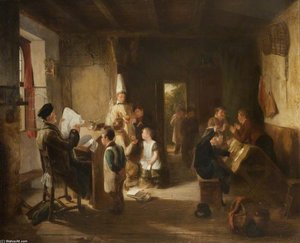
The painting Dotheboy's Hall is a work by the British painter Thomas Webster. Born in Ranelagh Street, Pimlico, London, Webster spent his formative years navigating the structured halls of artistic training. He entered the Royal Academy as a student in 1821, a period that would define his technical foundation and his place within the English tradition of genre painting.

2
The Card Players de Thomas Webster

The Card Players

Oil

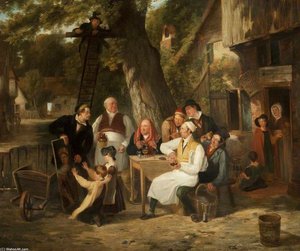
The air in the room feels heavy with the scent of old wood and the quiet tension of a game in progress. Sunlight streams through a window, cutting through the dimness of the rustic interior to illuminate a wooden table where life unfolds in small, deliberate movements. Six figures occupy this space, their presence felt through the textures of their working-class attire—the heavy fabric of jackets, the crispness of lace…

Pinturas famosas de Thomas Webster, números 11 a 89

11A Village Choir - de Thomas WebsterA Village Choir - 12Tussle Outside The Schoolroom de Thomas WebsterTussle Outside The Schoolroom 13The Artist's Father And Mother de Thomas WebsterThe Artist's Father And Mother 14Beating For Recruits (rocking The Cradle) de Thomas WebsterBeating For Recruits (rocking The Cradle) 15The Gypsy de Thomas WebsterThe Gypsy 16Late At School de Thomas WebsterLate At School 17The New Sign de Thomas WebsterThe New Sign 18The New Recruit de Thomas WebsterThe New RecruitTe Whare O Rehua Sarjeant Gallery 19Hop Garden de Thomas WebsterHop Garden 20Goodnight de Thomas WebsterGoodnight 21Contrary Winds de Thomas WebsterContrary Winds 22Sunday Evening de Thomas WebsterSunday Evening 23Study For 'the Village Choir' de Thomas WebsterStudy For 'the Village Choir' 24An Impressive Still Life Of Flowers On A Stone Ledge de Thomas WebsterAn Impressive Still Life Of Flowers On A Stone Ledge 25William Miles de Thomas WebsterWilliam Miles 26The Jewelry Seller de Thomas WebsterThe Jewelry Seller 27Going To The Fair de Thomas WebsterGoing To The Fair 28A Dame's School de Thomas WebsterA Dame's School 29Youth And Age de Thomas WebsterYouth And Age 30The Sewing Lesson de Thomas WebsterThe Sewing Lesson 31Sickness And Health; A Sketch de Thomas WebsterSickness And Health; A Sketch 32The Young Volunteer de Thomas WebsterThe Young Volunteer 33A musical evening de Thomas WebsterA musical evening 34Reading The News de Thomas WebsterReading The News 35A school playground de Thomas WebsterA school playground 36Sickness And Health de Thomas WebsterSickness And Health 37Maternal Affection de Thomas WebsterMaternal Affection 38Returning From The Fair de Thomas WebsterReturning From The Fair 39Roses, Tulips, Daisies, Chrysanthemums And Other Flowers In A Glass Vase On A Stone Ledge de Thomas WebsterRoses, Tulips, Daisies, Chrysanthemums And Other Flowers In A Glass Vase On A Stone Ledge 40Chasing the cat de Thomas WebsterChasing the cat 41The Smile de Thomas WebsterThe Smile 42Roast Pig de Thomas WebsterRoast Pig 43Good Night de Thomas WebsterGood Night 44Football de Thomas WebsterFootball 45Peonies, Roses, Delphiniums, Poppies And Other Flowers, On A Ledge de Thomas WebsterPeonies, Roses, Delphiniums, Poppies And Other Flowers, On A LedgeNiedersächsisches Landesmuseum 46The Frown de Thomas WebsterThe Frown 47Summer Flowers And Fruit In A Wicker Basket, An Extensive Landscape Beyond de Thomas WebsterSummer Flowers And Fruit In A Wicker Basket, An Extensive Landscape Beyond 48Robbing The Orchard de Thomas WebsterRobbing The Orchard 49Parrot Tulips, Roses, Snow Drops And Alstroemeria Arranged Around An Alcove, de Thomas WebsterParrot Tulips, Roses, Snow Drops And Alstroemeria Arranged Around An Alcove, 50Hollyhocks, Roses And Other Flowers In A Vase de Thomas WebsterHollyhocks, Roses And Other Flowers In A Vase 51Pink Peonies, Morning Glory, Hollyhocks, Plums And Grapes de Thomas WebsterPink Peonies, Morning Glory, Hollyhocks, Plums And Grapes 52Sickness And Health - de Thomas WebsterSickness And Health - 53The Battle Of The Nile de Thomas WebsterThe Battle Of The Nile 54The Letter de Thomas WebsterThe Letter 55The Early Lesson de Thomas WebsterThe Early Lesson 56The Market Cart de Thomas WebsterThe Market Cart 57Study For 'the Connoisseurs' de Thomas WebsterStudy For 'the Connoisseurs' 58The Artist's Father And Mothe de Thomas WebsterThe Artist's Father And Mothe 59Roses, Parrot Tulips, Plums, Pumpkins, And Butterflies In A Landscape de Thomas WebsterRoses, Parrot Tulips, Plums, Pumpkins, And Butterflies In A Landscape 60The Lesson de Thomas WebsterThe Lesson 61A Study Of 'the Schoolroom' de Thomas WebsterA Study Of 'the Schoolroom' 62Tulips, Peonies, Roses And Other Flowers In An Urn, An Extensive Landscape Beyond de Thomas WebsterTulips, Peonies, Roses And Other Flowers In An Urn, An Extensive Landscape Beyond 63Roses, Camellia, Iris, Parrot Tulips And Morning Glory In A Glass Vase, With Peaches de Thomas WebsterRoses, Camellia, Iris, Parrot Tulips And Morning Glory In A Glass Vase, With Peaches 64Parrot Tulips, Narcissus, Peonies, Chrysanthemums, Carnations, Lilies And Roses In An Urn With Fruit To The Side, On A Stone Ledge de Thomas WebsterParrot Tulips, Narcissus, Peonies, Chrysanthemums, Carnations, Lilies And Roses In An Urn With Fruit To The Side, On A Stone Ledge 65Study For 'a Letter From The Colonies' de Thomas WebsterStudy For 'a Letter From The Colonies' 66First Steps de Thomas WebsterFirst Steps 67The Playground de Thomas WebsterThe Playground 68The Boy With Many Friends de Thomas WebsterThe Boy With Many Friends 69'in Sickness And Health de Thomas Webster'in Sickness And Health 70Genius de Thomas WebsterGenius 71A Letter From The Colonies de Thomas WebsterA Letter From The Colonies 72Roses, Crysanthemums, Parrot Tulips, Carnations, Larkspur, And Butterlies On A Stone Ledge de Thomas WebsterRoses, Crysanthemums, Parrot Tulips, Carnations, Larkspur, And Butterlies On A Stone Ledge 73Roses, Irises, Morning Glory, Narcissi, Chrysanthemums And Two Butterflies, Under A Stone Fountain de Thomas WebsterRoses, Irises, Morning Glory, Narcissi, Chrysanthemums And Two Butterflies, Under A Stone Fountain 74Returning From The Fair de Thomas WebsterReturning From The Fair 75The School Room de Thomas WebsterThe School Room 76The Post Office (hope Deferred Makes The Heart Sick) de Thomas WebsterThe Post Office (hope Deferred Makes The Heart Sick) 77Beating For Recruits de Thomas WebsterBeating For Recruits 78A Tea Party de Thomas WebsterA Tea Party 79A Village Choir de Thomas WebsterA Village ChoirVictoria and Albert Museum 80Portrait Of George Goldney, Small Full-length, In Montem Costume, Eton College Beyond de Thomas WebsterPortrait Of George Goldney, Small Full-length, In Montem Costume, Eton College Beyond 81Saying Grace de Thomas WebsterSaying Grace 82Contrary Winds de Thomas WebsterContrary Winds 83Parrot Tulips, Chrysanthemums, Roses, Corn Flowers, Lilies And Narcissus In An Urn, With Fruit In Wicker Baskets And On A Platter To The Side, On A Stone Ledge de Thomas WebsterParrot Tulips, Chrysanthemums, Roses, Corn Flowers, Lilies And Narcissus In An Urn, With Fruit In Wicker Baskets And On A Platter To The Side, On A Stone Ledge 84A Crucifix Paperweight, Quill, Lilies, Roses, Morning Glory, Parrot Tulips, Grapes, Plumbs, With A Tazza And Some Glasses, On A Stone Ledge de Thomas WebsterA Crucifix Paperweight, Quill, Lilies, Roses, Morning Glory, Parrot Tulips, Grapes, Plumbs, With A Tazza And Some Glasses, On A Stone Ledge 85Reading The Scriptures de Thomas WebsterReading The Scriptures 86Roses, Tulips, Peonies, Grapes, Lemons And Butterflies, With A Roemer On A Ledge; And Roses, Grapes, Peaches, Thistles And Corn, With A Roemer On A Ledge de Thomas WebsterRoses, Tulips, Peonies, Grapes, Lemons And Butterflies, With A Roemer On A Ledge; And Roses, Grapes, Peaches, Thistles And Corn, With A Roemer On A Ledge 87Sunday Afternoon de Thomas WebsterSunday Afternoon 88Summer Flowers, Including Tulips, Poppies, Peonies And Petunia's In A Vase; And Roses, Tulips, Poppies, Narcissi And Other Flowers In A Vase de Thomas WebsterSummer Flowers, Including Tulips, Poppies, Peonies And Petunia's In A Vase; And Roses, Tulips, Poppies, Narcissi And Other Flowers In A Vase 89A Pinch Of Snuff de Thomas WebsterA Pinch Of Snuff

Pinturas famosas de Thomas Webster, período por período

Os temas que cativaram o olhar de Thomas Webster

Os quatro temas que mais se repetem nestas obras originais, cada um com o seu melhor exemplo.

Os museus que guardam os originais de Thomas Webster

Os 6 museus que detêm a maioria das pinturas desta página.

Museus Cidade Obras de Thomas Webster Pinturas desta lista
Harvard Art Museums, CambridgeHarvard Art Museums Cambridge 1 Dotheboy's Hall
Royal Collection, LondresRoyal Collection Londres 1 Roses, Peonies, Daisies And Other Flowers In A Basket, On A Ledge, A Landscape Beyond
Yale Center for British Art, New HavenYale Center for British Art New Haven 1 Ring O' Roses
Te Whare O Rehua Sarjeant GalleryTe Whare O Rehua Sarjeant Gallery 1 The New Recruit
Niedersächsisches Landesmuseum, HanoverNiedersächsisches Landesmuseum Hanover 1 Peonies, Roses, Delphiniums, Poppies And Other Flowers, On A Ledge
Victoria and Albert Museum, LondresVictoria and Albert Museum Londres 1 A Village Choir

Thomas Webster ao longo dos anos: os originais únicos de cada um

Todas as obras originais de Thomas Webster datadas aqui pertencem a um único ano, 1848: elas aparecem em ordem de fama.

Obras por ano

Escolha um ano para ver as obras originais.

Pinturas de Thomas Webster: perguntas para a galeria

Qual é a obra mais famosa de Thomas Webster?Revelar a resposta

Dotheboy's Hall (1848), Harvard Art Museums, Cambridge. The Card Players e Football - vêm a seguir.

Com que idade Thomas Webster criou Dotheboy's Hall?Revelar a resposta

48 anos: Dotheboy's Hall data de 1848, e Thomas Webster nasceu em 1800.

Quais são as dez pinturas mais famosas de Thomas Webster?Revelar a resposta

Dotheboy's Hall, The Card Players, Football -, Children At Prayer, Roses, Peonies, Daisies And Other Flowers In A Basket, On A Ledge, A Landscape Beyond, Ring O' Roses, A Football Game, Feeding Time, A Village Choir e The See-saw. O ranking acima apresenta o ano e o museu de cada uma.

Quantas obras de Thomas Webster são conhecidas?Revelar a resposta

Nosso catálogo contém 89 obras de Thomas Webster.

Onde se pode ver os originais mais famosos de Thomas Webster?Revelar a resposta

Principalmente em Harvard Art Museums (Cambridge), Royal Collection (Londres) e Yale Center for British Art (New Haven). A tabela de museus acima lista todos eles.

Quais temas Thomas Webster preferia?Revelar a resposta

Flowers (13), 19th century life (7) e Domestic scene (6), entre as 89 obras nesta página.

Thomas Webster: um retrato do artista

A Sombra da Indústria: Explorando a Arte de William Frederick Lutkin (1800-1886)

William Frederick Lutkin, nascido em 1800 e falecido em 1886, foi uma figura fundamental na transição do Neoclassicismo para o Romantismo dentro da arte britânica. Sua carreira estendeu-se por quase oito décadas, testemunhando mudanças profundas nas sensibilidades artísticas e refletindo a paisagem industrial florescente da Inglaterra vitoriana. Embora não tão amplamente celebrado quanto alguns de seus contemporâneos — como Turner, Constable ou até mesmo David — o realismo meticuloso de Lutkin, aliado a uma observação aguçada da vida cotidiana e um engajamento sutil com o comentário social, estabelece-o como um cronista significativo de sua era. Sua obra oferece uma janela única para as vidas e paisagens da Grã-Bretanha do século XIX, revelando tanto sua beleza quanto suas crescentes complexidades.

Anos Iniciais e Formação Artística

Os primeiros anos de Lutkin permanecem um tanto envoltos em mistério, embora se saiba que ele recebeu seu treinamento artístico inicial de seu pai, William Lutkin Sr., um pintor de retratos que também dirigia uma escola de arte em Londres. Essa conexão familiar proporcionou-lhe uma base sólida em técnicas tradicionais e temas — principalmente retratos e cenas históricas. No entanto, o jovem William rapidamente demonstancou uma inclinação distinta para a pintura de paisagem, um gênero que ganhava popularidade crescente durante este período. Ele passou vários anos estudando sob a tutela de John Brett na Suffolk School of Art, uma instituição renomada que defendia uma abordagem mais naturalista da representação de paisagens, afastando-se das formas idealizadas favorecidas pelas gerações anteriores. Essa exposição ao trabalho de Brett influenciou profundamente o estilo de Lutkin, encorajando-o a priorizar a representação precisa e a observação detalhada em detrimento de elementos puramente decorativos.

Uma Abordagem Realista: Capturando o Cotidiano

Lutkin distinguiu-se por seu compromisso com o realismo — uma característica que o separava de muitos de seus contemporâneos românticos, que frequentemente priorizavam a expressão emocional ou vistas dramáticas. Ele evitava paisagens grandiosas e vastas em favor de cenas meticulosamente renderizadas da vida rural, da atividade industrial e de cenários urbanos. Suas pinturas são caracterizadas por uma precisão quase fotográfica, capturando as texturas do tijolo, o brilho do metal e o cansaço das mãos trabalhadoras com um detalhe notável. Ele não estava interessado em glorificar a natureza ou romantizar a dificuldade; em vez disso, apresentava uma visão direta e sem adornos do mundo ao seu redor. Esse realismo foi ainda mais alimentado por suas viagens por toda a Inglaterra, documentando diversos cenários regionais e centros industriais. Seu trabalho no Yorkshire, por exemplo, exibe a beleza rústica dos pântanos ao lado das realidades cruas das comunidades mineradoras.

Temas e Comentário Social

Embora o foco principal de Lutkin permanecesse na representação de cenas da vida cotidiana, suas pinturas frequentemente carregavam um sutil comentário social. Ele retratava com frequência indivíduos da classe trabalhadora — mineiros, operários de fábricas e trabalhadores agrícolas — capturando seu trabalho físico e as dificuldades que enfrentavam. Suas representações de paisagens industriais, como as encontradas em sua série de pinturas da Fundição de Leeds, oferecem uma reflexão pungente sobre as rápidas mudanças trazidas pela Revolução Industrial. Essas obras não são abertamente críticas, mas sim um convite para que os espectadores contemplem o custo humano do progresso. Seus trabalhos tardios focaram cada vez mais nos efeitos da urbanização e no deslocamento das comunidades rurais, refletindo as ansiedades prevalentes durante este período de significativa agitação social.

Legado e Significância Histórica

A contribuição de William Frederick Lutkin para a arte britânica reside em sua habilidade de construir uma ponte entre o Neoclassicismo e o Romantismo, mantendo uma abordagem distintamente realista. Ele não foi um inovador extravagante, mas sim um observador diligente e um registrador habilidoso de seu tempo. Seu detalhe meticuloso e o retrato honesto da vida da classe trabalhadora fornecem percepções valiosas sobre a Inglaterra vitoriana — um período frequentemente romantizado na arte, mas raramente retratado com um realismo tão inabalável. Embora possa não ser tão amplamente reconhecido quanto alguns de seus contemporâneos mais célebres, o trabalho de Lutkin permanece um testemunho importante das transformações sociais e artísticas ocorridas durante o século XIX, oferecendo um registro visual convincente de uma nação lidando com a industrialização e suas consequências. Suas pinturas encontram-se agora em várias coleções importantes, incluindo a Tate Britain e a National Gallery, garantindo que sua perspectiva única continue a ser apreciada por entusiastas da arte e historiadores.