Retrato de Thomas Creswick

Pinturas de Thomas Creswick: As 70 mais famosas, sob o olhar de uma galeria

Atualizado em Outubro 2026 · classificado pela nossa pontuação de popularidade (pesquisas, visitas e pedidos de cada obra) · 71 obras de Thomas Creswick em nosso catálogo

Em resumo

Aos olhos da galeria, a pintura mais famosa de Thomas Creswick é English Landscape (1829), cuja obra original está exposta no Birmingham Museums And Art Gallery, em Birmingham. View Of The Thames At Battersea (1834) e Figures on a Balcony, probably at Westpoint (1843) completam o trio que todos reconhecem. Dos 71 trabalhos de Thomas Creswick em nosso catálogo, a galeria apresenta abaixo as 70 obras mais famosas, cada uma original, com seu ano, seu museu e o que a torna única.

1811 – 1869, Sheffield Romanticism Mais obras: Yale Center for British Art

As 10 principais pinturas de Thomas Creswick na galeria

1
English Landscape (1829) de Thomas Creswick

English Landscape

1829 · Oil On Canvas · Birmingham Museums And Art Gallery, Birmingham

In English Landscape by Thomas Creswick, a serene rural scene unfolds through a quiet, pastoral lens. The work centers on a peaceful natural setting, anchored by a large, mature tree that dominates the central foreground. Beneath the heavy canopy of this tree, human figures sit in repose near the edge of a stream. The presence of these figures integrates a sense of human scale into the vastness of the countryside.

4
Mount Tom, Massachusetts, USA (1840) de Thomas Creswick

Mount Tom, Massachusetts, USA

1840 · Oil On Canvas

The painting seeks to evoke a sense of contemplation through its stillness. By focusing on the "quiet" moments of the day, the artist avoids dramatic gestures in favor of tonal sensitivity. The soft, diffused lighting contributes to a tranquil mood, presenting the natural world as a place of escape and repose. It is a meticulous observation of light, shadow, and the subtle textures of the American landscape.

5
Distant View of Dover Castle (1847) de Thomas Creswick

Distant View of Dover Castle

1847 · Oil On Canvas · Government Art Collection, Londres

In Distant View of Dover Castle, Thomas Creswick organizes the landscape through a deliberate pyramidal structure. The castle sits at the apex of this formation, perched atop a prominent peak that draws the eye upward from the valley below. This arrangement creates a sense of quiet grandeur, anchoring the composition against the vastness of the sky. In the foreground, lush green vegetation and a winding path lead the viewer into…

Pinturas de Thomas Creswick, classificadas de 11 a 70

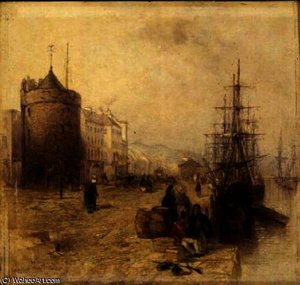
11A Distant View of Birmingham (1830) de Thomas CreswickA Distant View of Birmingham1830 · Birmingham Museums And Art Gallery 12A Landscape with Classical Ruins (1830) de Thomas CreswickA Landscape with Classical Ruins1830 13The Stile (1839) de Thomas CreswickThe Stile1839 14The Summer Bower, Derwent Water (1838) de Thomas CreswickThe Summer Bower, Derwent Water1838 · Yale Center for British Art 15The Well of St. Keyne (1838) de Thomas CreswickThe Well of St. Keyne1838 · Yale Center for British Art 16Waterloo (1838) de Thomas CreswickWaterloo1838 · Yale Center for British Art 17Dolwyddelan (1838) de Thomas CreswickDolwyddelan1838 · Yale Center for British Art 18St. Michael's Mount, Cornwall (1838) de Thomas CreswickSt. Michael's Mount, Cornwall1838 · Yale Center for British Art 19View from Mr. Southey's House, Keswick (1838) de Thomas CreswickView from Mr. Southey's House, Keswick1838 · Yale Center for British Art 20The Road through the Wood (1839) de Thomas CreswickThe Road through the Wood1839 21Kilkenny Castle (1836) de Thomas CreswickKilkenny Castle1836 22The Gap of Dunloe (1836) de Thomas CreswickThe Gap of Dunloe1836 23The Lower Lough Erne, from the Road near Ballyshannon (1836) de Thomas CreswickThe Lower Lough Erne, from the Road near Ballyshannon1836 24Glengarriff, County Cork, Ireland (1837) de Thomas CreswickGlengarriff, County Cork, Ireland1837 · Sheffield City Art Galleries 25England (1847) de Thomas CreswickEngland1847 · Auckland Art Gallery Toi o Tāmaki 26View on the Hudson River (1843) de Thomas CreswickView on the Hudson River1843 · Yale Center for British Art 27Moorland Scenery (1842) de Thomas CreswickMoorland Scenery1842 28Moorland Landscape (1840) de Thomas CreswickMoorland Landscape1840 · Amgueddfa Cymru 29High Tor, Matlock, Derbyshire (1841) de Thomas CreswickHigh Tor, Matlock, Derbyshire1841 · Sheffield City Art Galleries 30Street Scene, Llangollen, Wales (1849) de Thomas CreswickStreet Scene, Llangollen, Wales1849 31Crossing the stream (1849) (1849) de Thomas CreswickCrossing the stream (1849)1849 · Fitzwilliam Museum 32Genre scene with a flock of sheep (1850) de Thomas CreswickGenre scene with a flock of sheep1850 · Museu Nacional de Varsóvia 33The First Glimpse of the Sea (1850) de Thomas CreswickThe First Glimpse of the Sea1850 34Glendalough (1850) de Thomas CreswickGlendalough1850 35Evening, 'The west still glimmers with some streaks of day' (1850) de Thomas CreswickEvening, 'The west still glimmers with some streaks of day'1850 36The Mouth of a River (1855) de Thomas CreswickThe Mouth of a River1855 · Manchester Art Gallery 37The Valley Of Llangollen, North Wales (1856) de Thomas CreswickThe Valley Of Llangollen, North Wales1856 · Birmingham Museum and Art Gallery 38Landscape, Morning (also known as Crossing the Stream) (1860) de Thomas CreswickLandscape, Morning (also known as Crossing the Stream)1860 39Landscape, River Scene (1860) de Thomas CreswickLandscape, River Scene1860 · Sheffield City Art Galleries 40A Breezy Day on the English Coast, St Michael's Mount, Cornwall (1866) de Thomas CreswickA Breezy Day on the English Coast, St Michael's Mount, Cornwall1866 · Tyntesfield 41Dorothy Vernon's Doorway, Haddon Hall (1865) de Thomas CreswickDorothy Vernon's Doorway, Haddon Hall1865 42A drover and his herd crossing a ford de Thomas CreswickA drover and his herd crossing a ford 43Rest by the Way de Thomas CreswickRest by the WayDetroit Institute of Arts 44The Ford de Thomas CreswickThe Ford 45The Temple Of Jupiter Olympius, Athens de Thomas CreswickThe Temple Of Jupiter Olympius, Athens 46Land's End, Cornwall de Thomas CreswickLand's End, Cornwall 47Ballymahon de Thomas CreswickBallymahon 48Barnard castle on the tees de Thomas CreswickBarnard castle on the tees 49Carrickfergus de Thomas CreswickCarrickfergus 50The Ferry de Thomas CreswickThe FerrySheffield City Art Galleries 51Young Girl Bathing Her Feet de Thomas CreswickYoung Girl Bathing Her Feet 52Loch Eck de Thomas CreswickLoch EckWolverhampton Art Gallery 53Shallow streams de Thomas CreswickShallow streams 54A view of windsor castle de Thomas CreswickA view of windsor castle 55Over the Hills and Far Away de Thomas CreswickOver the Hills and Far Away 56Near Barmouth de Thomas CreswickNear BarmouthSheffield City Art Galleries 57The Millstream de Thomas CreswickThe MillstreamSheffield City Art Galleries 58Figures Resting Above a Cove, Cork de Thomas CreswickFigures Resting Above a Cove, Cork 59Landscape with Cattle de Thomas CreswickLandscape with CattleSheffield City Art Galleries 60The Ford de Thomas CreswickThe FordSheffield City Art Galleries 61Hillsborough, Sheffield de Thomas CreswickHillsborough, SheffieldSheffield City Art Galleries 62Figures on a Quay, Waterford de Thomas CreswickFigures on a Quay, Waterford 63The pedlars's visit de Thomas CreswickThe pedlars's visit 64Figures in an Italianate Landscape de Thomas CreswickFigures in an Italianate Landscape 65Landscape with Figures de Thomas CreswickLandscape with FiguresWolverhampton Art Gallery 66Landscape de Thomas CreswickLandscapeBolton Museum And Art Gallery 67Morecambe Bay de Thomas CreswickMorecambe BayBolton Museum And Art Gallery 68Haddon Hall Steps, Derbyshire de Thomas CreswickHaddon Hall Steps, Derbyshire 69Evening de Thomas CreswickEveningGuildhall Art Gallery 70The Nearest Way in Summer de Thomas CreswickThe Nearest Way in Summer

Pinturas famosas de Thomas Creswick, período por período

Os temas que cativaram o olhar de Thomas Creswick

Os quatro temas que mais se repetem nestas obras originais, cada um com o seu melhor exemplo.

Os museus que guardam os originais de Thomas Creswick

Os 8 museus que detêm a maioria das pinturas desta página.

Museus Cidade Obras de Thomas Creswick Pinturas desta lista
Yale Center for British Art, New HavenYale Center for British Art New Haven 9 Figures on a Balcony, probably at Westpoint, On the Terrace at Haddon Hall, Derbyshire, The Summer Bower, Derwent Water
Sheffield City Art Galleries, SheffieldSheffield City Art Galleries Sheffield 9 Glengarriff, County Cork, Ireland, High Tor, Matlock, Derbyshire, Landscape, River Scene
Birmingham Museums And Art Gallery, BirminghamBirmingham Museums And Art Gallery Birmingham 2 English Landscape, A Distant View of Birmingham
Birmingham Museum and Art Gallery, BirminghamBirmingham Museum and Art Gallery Birmingham 2 View Of The Thames At Battersea, The Valley Of Llangollen, North Wales
TyntesfieldTyntesfield 2 View of Putney Bridge, A Breezy Day on the English Coast, St Michael's Mount, Cornwall
Wolverhampton Art Gallery, WolverhamptonWolverhampton Art Gallery Wolverhampton 2 Loch Eck, Landscape with Figures
Bolton Museum And Art Gallery, BoltonBolton Museum And Art Gallery Bolton 2 Landscape, Morecambe Bay
Government Art Collection, LondresGovernment Art Collection Londres 1 Distant View of Dover Castle

Thomas Creswick, uma pintura emblemática por década

Obras por década

Escolha uma década para ver a obra original que a define.

Pinturas de Thomas Creswick: a galeria responde

Qual pintura de Thomas Creswick é a mais famosa de todas?Revelar a resposta

English Landscape (1829), Birmingham Museums And Art Gallery, Birmingham. View Of The Thames At Battersea (1834) e Figures on a Balcony, probably at Westpoint (1843) vêm a seguir.

Qual era a idade de Thomas Creswick ao concluir English Landscape?Revelar a resposta

18 anos: English Landscape data de 1829, e Thomas Creswick nasceu em 1811.

Quais são as 10 principais pinturas de Thomas Creswick?Revelar a resposta

English Landscape, View Of The Thames At Battersea, Figures on a Balcony, probably at Westpoint, Mount Tom, Massachusetts, USA, Distant View of Dover Castle, View of Belfast, The village smithy, Landscape with Harrow in the Distance, On the Terrace at Haddon Hall, Derbyshire e View of Putney Bridge. O ranking acima apresenta o ano e o museu de cada uma.

Quantas obras Thomas Creswick criou?Revelar a resposta

Nosso catálogo contém 71 obras de Thomas Creswick, datadas de 1829 a 1866.

Onde estão expostos os originais mais famosos de Thomas Creswick?Revelar a resposta

Principalmente em Yale Center for British Art (New Haven), Sheffield City Art Galleries (Sheffield) e Birmingham Museums And Art Gallery (Birmingham). A tabela de museus acima lista todos eles.

Quando é que Thomas Creswick criou as suas pinturas mais famosas?Revelar a resposta

Em 1830s: 16 das 70 obras nesta página foram feitas então, sendo View Of The Thames At Battersea delas.

Quais são as obras mais famosas de Thomas Creswick no início e no fim de sua carreira?Revelar a resposta

Nesta página, a mais antiga é English Landscape (1829) e a mais recente é A Breezy Day on the English Coast, St Michael's Mount, Cornwall (1866).

Quais temas Thomas Creswick mais explorou?Revelar a resposta

British countryside (4), Landscape (3) e Rural scene (3), entre as 70 obras nesta página.

Em qual técnica Thomas Creswick mais trabalhou?Revelar a resposta

Oil On Canvas, para 3 das 70 obras nesta página.

Com qual movimento Thomas Creswick está associado(a)?Revelar a resposta

Romanticism e Birmingham school, a julgar pelos originais nesta página.

Quais obras originais de Thomas Creswick o Yale Center for British Art possui?Revelar a resposta

Figures on a Balcony, probably at Westpoint, On the Terrace at Haddon Hall, Derbyshire e The Summer Bower, Derwent Water: o Yale Center for British Art, New Haven detém 9 das obras desta página.

Thomas Creswick: o artista

O Mestre Silencioso da Paisagem Britânica: A Vida e o Legado de Thomas Creswick

Nos anais da arte britânica do século XIX, poucos nomes evocam a beleza tranquila e envolta em névoa do campo inglês de forma tão pungente quanto Thomas Creswick Seddon. Nascido em 1811, em meio às paisagens rústicas e industriais de Sheffield, Creswick emergiu como uma figura definidora da Escola de Birmingham, um movimento artístico que priorizava a observação meticulosa e uma profunda sensibilidade tonal. Sua jornada, do coração de Derbyshire aos prestigiados salões da Royal Academy, é um testemunho de uma vida dedicada à busca da verdade atmosférica. Através de seus olhos, as colinas ondulantes, os castelos antigos e as águas calmas da Grã-Bretanha foram transformados em meditações poéticas sobre a luz e a sombra.

O desenvolvimento artístico de Creswick estava enraizado em um envolvimento profundo, quase espiritual, com o mundo natural. Ao contrário de muitos de seus contemporâneos, que dependiam fortemente da imaginação confinada ao estúdio, Creswick abraçou o ideal romântente de comunhão direta com a natureza. Ele passou inúmeras horas esboçando ao ar livre, capturando as nuances fugazes do clima e da luz antes mesmo de tocar uma tela em seu ateliê. Essa prática permitiu que ele dotasse suas obras de um senso de autenticidade inigualável. Suas primeiras exposições na Society of British Artists, em 1827, sinalizaram a chegada de um talento significativo, mas foi sua apresentação em 1836 de obras ambiciosas como “Llyn Gwynant, Morning” e “Carnarvon Castle” à Royal Academy que verdadeiramente consolidou sua reputação como um mestre do gênero paisagístico.

Um Domínio de Tom e Atmosfera

O que distingue uma paisagem de Creswick do vasto mar da arte pastoral vitoriana é seu comando extraordinário sobre uma paleta suave e sofisticada. Enquanto a era frequentemente seguia uma tendência para cores vibrantes e quase teatrais, Creswick encontrou sua maior força no jogo sutil de cinzas, verdes suaves e ocres terrosos. Ele era um pintor de atmosferas, especializado nos momentos "silenciosos" do dia — a luz prateada do amanhecer, a quietude pesada de uma tarde nublada ou o crepúsculo melancólico que suaviza as bordas do mundo. Esse autocontrole criava uma sensação de profunda tranquilidade, convidando o espectador a um estado de repouso contemplativo.

Sua proeza técnica era igualmente notável, caracterizada por um método minucioso de sobreposição de veladuras para alcançar uma profundidade luminosa. Ao construir camadas finas e transparentes de pigmento, ele conseguia replicar a maneira como a luz filtra através da névoica ou reflete na superfície de um lago imóvel. Essa técnica meticulosa permitia-lhe capturar as qualidades táteis da paisagem britânica — a umidade das pedras cobertas de musgo, o peso das nuvens baixas e o brilho delicado da água. Sua habilidade de manipular a luz e a sombra com tamanha precisão conferiu às suas pinturas uma presença tridimensional que parecia, ao mesmo tempo, incrivelmente real e onírica.

Significância Histórica e Influência Duradoura

A importância de Thomas Creswick estende-se muito além de sua habilidade técnica; ele foi uma ponte entre as tradições paisagísticas tradicionais do início do século XIX e as abordagens mais evocativas e atmosféricas que viriam a seguir. Sua obra ressoa com o espírito do movimento Pré-Rafaelita em sua devoção ao detalhe, mas mantém uma contenção distintamente britânica que evita a intensidade muitas vezes chocante daquele grupo. Sua influência pode ser vista na maneira como as gerações subsequentes de paisagistas abordaram o conceito de "humor" através do controle tonal, em vez de mera cor.

Ao longo de sua carreira prolífica, a obra de Creswick permaneceu vasta e variada, abrangendo:

  • Panoramas Expansivos: Grandes vistas que capturavam a majestade imponente das montanhas galesas e dos vales ingleses.
  • Estudos Íntimos: Representações detalhadas em pequena escala de clareiras florestais e margens de rios tranquilos, focando nos microdetalhes da natureza.
  • Paisagens Arquitetônicas: A integração de ruínas históricas e castelos ao ambiente natural, enfatizando a passagem do tempo.
Hoje, as obras de Thomas Creswick permanecem estimadas por colecionadores e instituições, como a Tate Britain, servindo como uma janela para uma era desaparecida de serenidade pastoral. Ele permanece como um pilar da história da arte britânica, lembrado não por gestos barulhentos ou dramáticos, mas por sua capacidade de encontrar o extraordinário nos cantos mais silenciosos do mundo natural.