Retrato de Stefan Lochner

Pinturas de Stefan Lochner: As 36 mais famosas, sob o olhar de uma galeria

Atualizado em Outubro 2026 · classificado pela nossa pontuação de popularidade (pesquisas, visitas e pedidos de cada obra) · 36 obras de Stefan Lochner em nosso catálogo

Em resumo

Aos olhos da galeria, a pintura mais famosa de Stefan Lochner é Madonna of the Rose Bush (1440), cuja obra original está exposta no Wallraf-Richartz-Museum, em Colônia. The Last Judgment (1435) e The Crucifixion (1440) completam o trio que todos reconhecem. Dos 36 trabalhos de Stefan Lochner em nosso catálogo, a galeria apresenta abaixo as 36 obras mais famosas, cada uma original, com seu ano, seu museu e o que a torna única.

1410 – 1451, Meersburg International gothic Mais obras: Städel Museum

As 10 principais pinturas de Stefan Lochner na galeria

1
Madonna of the Rose Bush (1440) de Stefan Lochner

Madonna of the Rose Bush

1440 · Oil On Panel · Wallraf-Richartz-Museum, Colônia

Stephan Lochner's Madonna of the Rose Bush, painted around 1440 in Cologne, Germany, isn’t merely a depiction of the Virgin Mary; it’s an immersive experience—a carefully constructed world brimming with symbolism and echoing the profound spirituality of its time. This panel painting transcends simple religious iconography, offering a glimpse into the artistic sensibilities and cultural values of late medieval Europe. Lochner, a prominent figure in Cologne's art scene, masterfully blended…

2
The Last Judgment (1435) de Stefan Lochner

The Last Judgment

1435 · Wallraf-Richartz-Museum, Colônia

Stephan Lochner’s “The Last Judgment,” painted in 1435, isn't merely a depiction of biblical narrative; it’s a profound meditation on mortality, divine justice, and the eternal consequences of earthly actions. Emerging from the late Gothic period in Cologne, Germany, this monumental panel transcends its historical context to resonate with an enduring power—a testament to the artist’s skill and his ability to capture both the drama and the solemnity of humanity's…

3
The Crucifixion (1440) de Stefan Lochner

The Crucifixion

1440 · Oil On Canvas · Germanisches Nationalmuseum, Nuremberg

To stand before this depiction of The Crucifixion by Stephan Lochner is to be enveloped in an atmosphere of profound, almost unbearable solemnity. It is not merely a historical recounting; it is a visceral confrontation with sacrifice. At the heart of the composition, Christ hangs upon the cross, his outstretched arms forming a powerful, tragic geometry against the backdrop of human grief and divine mystery. The scene pulses with narrative…

4
Mary Magdalen (1400) de Stefan Lochner

Mary Magdalen

1400 · Tempera On Panel · Museum Boijmans Van Beuningen, Roterdã

This painting, titled Mary Magdalen, is a religious work by the German master Stefan Lochner. It offers a quiet study of the saint, rendered with the delicate precision characteristic of the late International Gothic period. The subject is presented in a moment of contemplative grace, her presence defined by a sense of stillness and devotion.

5
The Virgin Crowned by Angels (1450) de Stefan Lochner

The Virgin Crowned by Angels

1450 · Tempera On Panel · Cleveland Museum of Art, Cleveland

In this sacred scene, The Virgin Crowned by Angels emerges from the quietude of the mid-fifteenth century. Painted by Stefan Lochner about 1450, the work presents a moment of profound religious devotion. The Virgin Mary stands as the central figure, cradling the Christ Child in a gesture of maternal grace. This depiction of the Madonna and Child invites the viewer into a space of quiet contemplation and spiritual presence.

6
Mary with the Christ-child next to a plant trough (1440) de Stefan Lochner

Mary with the Christ-child next to a plant trough

1440 · Oil · Bavarian State Painting Collections, Munique

The painting titled Mary with the Christ-child next to a plant trough is a work by Stefan Lochner. Created about 1440, this devotional piece captures a quiet moment of divinity. The central figures of the Madonna and Child are framed by a lush, green garden setting. Small flowers emerge from the earth near a plant trough, grounding the celestial scene in a tangible, botanical reality.

7
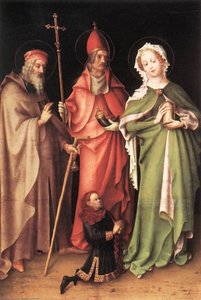
Sts. Catherine, Hubert and Quirinus (Last-Judgement-Altar) (1445) de Stefan Lochner

Sts. Catherine, Hubert and Quirinus (Last-Judgement-Altar)

1445 · Oil On Panel · Bavarian State Painting Collections, Munique

The presence of Sts. Catherine, Hubert and Quirinus (Last-Judgement-Altar) commands the space, a solemn Late Gothic altarpiece panel that emerges from the shadows of history. Painted by Stefan Lochner, this work carries the weight of a sacred vision. It dates to 1445, capturing a moment of profound spiritual stillness. The figures exist within a realm of deep color and intense devotion, frozen in a state of eternal grace.

8
John the Evangelist (1440) de Stefan Lochner

John the Evangelist

1440 · Tempera On Panel · Museum Boijmans Van Beuningen, Roterdã

This painting depicts John the Evangelist, a work executed by the artist Stefan Lochner. The subject is rendered in a profile or three-quarter view, oriented toward the right side of the panel. He is shown holding a chalice within his hands. The figure is positioned against a solid gold background that occupies the majority of the space behind the subject.

9
Saints Ambrose, Cecilia and Augustine (1447) de Stefan Lochner

Saints Ambrose, Cecilia and Augustine

1447 · Tempera On Panel · Wallraf-Richartz-Museum, Colônia

In this late Gothic religious altarpiece panel, the figures of Saints Ambrose, Cecilia and Augustine emerge from a shallow architectural space. Painted by Stefan Lochner, the work captures a moment of divine presence through its formal and symmetrical arrangement. The three saints dominate the frame, their presence felt through the heavy, sculptural folds of their drapery and the steady gaze of their faces. A smaller donor figure kneels in the…

Pinturas de Stefan Lochner, classificadas de 11 a 36

11Sts Anthony the Hermit, Cornelius and Mary Magdalen with a Donor (1445) de Stefan LochnerSts Anthony the Hermit, Cornelius and Mary Magdalen with a Donor1445 · Alte Pinakothek 12Martyrdom of the Twelve Apostles (Altarpiece for the Church of the Holy Apostles in Cologne, left wing) (1435) de Stefan LochnerMartyrdom of the Twelve Apostles (Altarpiece for the Church of the Holy Apostles in Cologne, left wing)1435 · Städel Museum 13Martyrdom of the Apostles: Martyrdom of Saint Thomas de Stefan LochnerMartyrdom of the Apostles: Martyrdom of Saint ThomasStädel Museum 14Martyrdom of the Apostles: Martyrdom of Saint Philip de Stefan LochnerMartyrdom of the Apostles: Martyrdom of Saint PhilipStädel Museum 15Martyrdom of the Apostles: Martyrdom of Saint Peter de Stefan LochnerMartyrdom of the Apostles: Martyrdom of Saint PeterStädel Museum 16Martyrdom of the Apostles: Martyrdom of St Paul de Stefan LochnerMartyrdom of the Apostles: Martyrdom of St PaulStädel Museum 17Martyrdom of the Apostles: Martyrdom of Saint Matthias de Stefan LochnerMartyrdom of the Apostles: Martyrdom of Saint MatthiasStädel Museum 18Martyrdom of the Apostles: Martyrdom of Saint Matthew de Stefan LochnerMartyrdom of the Apostles: Martyrdom of Saint MatthewStädel Museum 19Martyrdom of the Apostles: Martyrdom of Saint James the Younger de Stefan LochnerMartyrdom of the Apostles: Martyrdom of Saint James the YoungerStädel Museum 20Martyrdom of the Apostles: Martyrdom of St James the Elder de Stefan LochnerMartyrdom of the Apostles: Martyrdom of St James the ElderStädel Museum 21Martyrdom of the Apostles: Martyrdom of Saint Bartholomew de Stefan LochnerMartyrdom of the Apostles: Martyrdom of Saint BartholomewStädel Museum 22Martyrdom of the Apostles: Martyrdom of Saint Andrew de Stefan LochnerMartyrdom of the Apostles: Martyrdom of Saint AndrewStädel Museum 23Martyrdom of the Apostles: Martyrdom of Saints Simon and Judas de Stefan LochnerMartyrdom of the Apostles: Martyrdom of Saints Simon and JudasStädel Museum 24Presentation of Christ in the Temple (detail) de Stefan LochnerPresentation of Christ in the Temple (detail) 25Presentation of Christ in the Temple (detail) de Stefan LochnerPresentation of Christ in the Temple (detail) 26Hl. Ursula Mit Gefährten (The Dombild Altarpiece, left wing) (1445) de Stefan LochnerHl. Ursula Mit Gefährten (The Dombild Altarpiece, left wing)1445 27Adoration of the Magi (The Dombild Altarpiece, central part) (1445) de Stefan LochnerAdoration of the Magi (The Dombild Altarpiece, central part)1445 28Altarpiece of the Patron Saints of Cologne de Stefan LochnerAltarpiece of the Patron Saints of Cologne 29Triptych with the Virgin and Child in an Enclosed garden de Stefan LochnerTriptych with the Virgin and Child in an Enclosed garden 30Adoration of the Magi de Stefan LochnerAdoration of the Magi 31Presentation of Christ in the Temple de Stefan LochnerPresentation of Christ in the Temple 32Three saints de Stefan LochnerThree saintsNational Gallery 33St. Jerome in His Study de Stefan LochnerSt. Jerome in His Study 34Annunciation (1440) de Stefan LochnerAnnunciation1440 35Presentation of Christ in the Temple (1445) de Stefan LochnerPresentation of Christ in the Temple1445 · Fundação Calouste Gulbenkian 36Adoration of the Child Jesus (1445) de Stefan LochnerAdoration of the Child Jesus1445 · Alte Pinakothek

Pinturas famosas de Stefan Lochner, período por período

Os temas que cativaram o olhar de Stefan Lochner

Os quatro temas que mais se repetem nestas obras originais, cada um com o seu melhor exemplo.

Os museus que guardam os originais de Stefan Lochner

Os 8 museus que detêm a maioria das pinturas desta página.

Museus Cidade Obras de Stefan Lochner Pinturas desta lista
Städel Museum, FrankfurtStädel Museum Frankfurt 12 Martyrdom of the Twelve Apostles (Altarpiece for the Church of the Holy Apostles in Cologne, left wing), Martyrdom of the Apostles: Martyrdom of Saint Thomas, Martyrdom of the Apostles: Martyrdom of Saint Philip
Wallraf-Richartz-Museum, ColôniaWallraf-Richartz-Museum Colônia 4 Madonna of the Rose Bush, The Last Judgment, Saints Ambrose, Cecilia and Augustine
Museum Boijmans Van Beuningen, RoterdãMuseum Boijmans Van Beuningen Roterdã 2 Mary Magdalen, John the Evangelist
Bavarian State Painting Collections, MuniqueBavarian State Painting Collections Munique 2 Mary with the Christ-child next to a plant trough, Sts. Catherine, Hubert and Quirinus (Last-Judgement-Altar)
Alte Pinakothek, MuniqueAlte Pinakothek Munique 2 Sts Anthony the Hermit, Cornelius and Mary Magdalen with a Donor, Adoration of the Child Jesus
Germanisches Nationalmuseum, NurembergGermanisches Nationalmuseum Nuremberg 1 The Crucifixion
Cleveland Museum of Art, ClevelandCleveland Museum of Art Cleveland 1 The Virgin Crowned by Angels
National Gallery, LondresNational Gallery Londres 1 Three saints

Stefan Lochner, uma pintura emblemática por década

Obras por década

Escolha uma década para ver a obra original que a define.

Pinturas de Stefan Lochner: a galeria responde

Qual pintura de Stefan Lochner é a mais famosa de todas?Revelar a resposta

Madonna of the Rose Bush (1440), Wallraf-Richartz-Museum, Colônia. The Last Judgment (1435) e The Crucifixion (1440) vêm a seguir.

Qual era a idade de Stefan Lochner ao concluir Madonna of the Rose Bush?Revelar a resposta

30 anos: Madonna of the Rose Bush data de 1440, e Stefan Lochner nasceu em 1410.

Quais são as 10 principais pinturas de Stefan Lochner?Revelar a resposta

Madonna of the Rose Bush, The Last Judgment, The Crucifixion, Mary Magdalen, The Virgin Crowned by Angels, Mary with the Christ-child next to a plant trough, Sts. Catherine, Hubert and Quirinus (Last-Judgement-Altar), John the Evangelist, Saints Ambrose, Cecilia and Augustine e Sts Mark, Barbara and Luke. O ranking acima apresenta o ano e o museu de cada uma.

Quantas obras Stefan Lochner criou?Revelar a resposta

Nosso catálogo contém 36 obras de Stefan Lochner, datadas de 1435 a 1450.

Onde estão expostos os originais mais famosos de Stefan Lochner?Revelar a resposta

Principalmente em Städel Museum (Frankfurt), Wallraf-Richartz-Museum (Colônia) e Museum Boijmans Van Beuningen (Roterdã). A tabela de museus acima lista todos eles.

Quando é que Stefan Lochner criou as suas pinturas mais famosas?Revelar a resposta

Em 1440s: 13 das 36 obras nesta página foram feitas então, sendo Madonna of the Rose Bush delas.

Quais são as obras mais famosas de Stefan Lochner no início e no fim de sua carreira?Revelar a resposta

Nesta página, a mais antiga é The Last Judgment (1435) e a mais recente é The Virgin Crowned by Angels (1450).

Quais temas Stefan Lochner mais explorou?Revelar a resposta

Saints (4), Medieval art (3) e Religious art (3), entre as 36 obras nesta página.

Em qual técnica Stefan Lochner mais trabalhou?Revelar a resposta

Tempera On Panel, para 5 das 36 obras nesta página.

Com qual movimento Stefan Lochner está associado(a)?Revelar a resposta

International gothic e Late gothic, a julgar pelos originais nesta página.

Quais obras originais de Stefan Lochner o Städel Museum possui?Revelar a resposta

Martyrdom of the Twelve Apostles (Altarpiece for the Church of the Holy Apostles in Cologne, left wing), Martyrdom of the Apostles: Martyrdom of Saint Thomas e Martyrdom of the Apostles: Martyrdom of Saint Philip: o Städel Museum, Frankfurt detém 12 das obras desta página.

Stefan Lochner: o artista

Stephan Lochner: Unindo o Esplendor Gótico à Inovação do Renascimento Nórdico

Nascido por volta de 1410 na pitoresca cidade de Meersburg, na Alemanha – um local imerso em lendas e aninhado entre as deslumbrantes águas do Lago de Constança – a vida de Stephan Lochner foi tragicamente interrompida em Colônia, por volta de 1451. Apesar de sua breve carreira, este pintor enigmático deixou uma marca indelével no mundo da arte, fundindo com maestria as opulentas tradições do Gótico Internacional com o realismo emergente e a iconografia inovadora característica do início do Renascimento Nórdio. O legado de Lochner reside não apenas na beleza de suas obras individuais, mas também em sua influência sobre gerações subsequentes de artistas, particularmente Rogier van der Weyden e Hans Memling – pintores que carregariam adiante elementos de seu estilo distinto.

Pouco se sabe com certeza sobre os primeiros anos de Lochner. O consenso historiográfico sugere que ele passou parte de seus anos formativos como aprendiz nos Países Baixos, uma experiência que moldou profundamente suas sensibilidades artísticas. O contato com as cores vibrantes, o detalhamento intrincado e a iconografia em evolução, predominantes na pintura flamenga, sem dúvida influenciou sua abordagem à composição, às paletas de cores e à representação de figuras religiosas. Acredita-se que essa exposição internacional tenha sido um fator crucial para a síntese única de estilos encontrada em toda a sua obra.

Um Mestre da Cor e da Textura: Estilo Artístico e Obras Notáveis

As pinturas de Lochner são imediatamente reconhecíveis por seu uso impactante da cor, linhas longas e dinâmicas e texturas de superfície notavelmente virtuosas. Ele evitou os tons suaves frequentemente associados à arte gótica anterior, abraçando uma paleta mais brilhante e luminosa – uma característica que o alinha firmemente à estética emergente do Renascimento. Suas obras apresentam frequentemente vermelhos, azematas e dourados ricos, aplicados com um entendimento magistral de luz e sombra para criar uma sensação de profundidade e drama.

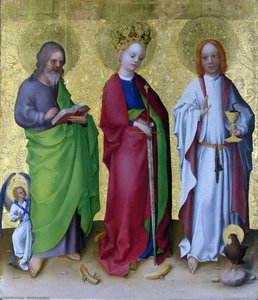
Entre suas peças mais celebradas está a “Madonna do Arbusto de Rosas” (51 x 40 cm, Museu Wallraf-Richartz, Colônia), uma obra-prima que exemplifica a habilidade técnica e o poder expressivo de Lochner. A pintura demonstra sua capacidade de imbuir temas religiosos com um sentido de emoção e espiritualidade quase palpável. “São Jerônimo em seu Estudo” (30 x 39 cm, óleo sobre painel) demonstra ainda mais sua capacidade de capturar a essência de seus sujeitos – uma contemplação silenciosa renderizada com detalhes notáveis e percepção psicológica. Já os “Três Santos”, uma composição complexa repleta de graça e equilíbrio, destaca a destreza de Lochner em retratar múltiplas figuras em um único quadro, criando uma narrativa visual dinâmica e envolvente.

Outra obra significativa é o "Retábulo do Domo" (ou Kölner Dombild), originalmente encomendado para a Catedral de Colônia. Este tríptico monumental, agora abrigado na Marienkapelle da catedral, permanece como um dos exemplos mais importantes de sua arte e um testemunho de sua visão artística. Os detalhes intrincados do retábulo, suas cores vibrantes e sua imagética simbólica continuam a fascinar os espectadores até hoje.

Influência e Legado: Uma Ponte Entre Estilos

A influência de Stephan Lochner nas gerações subsequentes de artistas do Norte foi substancial. Seu estilo distinto – caracterizado por linhas fluidas, cores brilhantes e um foco na expressão emocional – ressoou profundamente com seus contemporâneos, inspirando-os a incorporar elementos de sua abordagem em seus próprios trabalhos. Acredita-se que Rogier van der Weyden, em particular, tenha sido profundamente influenciado pelo uso da cor e da composição de Lochner, enquanto Hans Memling adotou de forma semelhante aspectos de seu estilo em seus painéis devocionais.

O “Retábulo do Domo” ergue-se como um exemplo particularmente convincente da influência de Lochner. Sua abordagem inovadora para retratar narrativas religiosas – combinando a elegância gótica com o realismo renascentista emergente – pavimentou o caminho para desenvolvimentos futuros na pintura da Europa Setentrional. Os detalhes intrincados e a iconografia simbólica do retábulo serviram como modelo para inúmeros artistas que o sucederam, consolidando a posição de Lochner como uma figura fundamental na transição da arte gótica tardia para o início do Renascimento.

Coleções Museológicas e Apreciação Contínua

As obras de Lochner são tesouros guardados em diversos museus proeminentes ao redor do mundo. O Museu Wallraf-Richartz, em Colônia, abriga a “Madonna do Arbusto de Rosas”, oferecendo aos visitantes um encontro direto com esta pintura icônica. O Museu Städel, em Frankfurt, exibe os “Painéis de Flémalle” (68 x 160 cm, carvalho), exibindo o domínio de Lochner na pintura sobre painel e sua habilidade em criar composições complexas repletas de detalhes e simbolismo. Além dessas instituições fundamentais, fragmentos de seu trabalho podem ser encontrados em várias coleções, garantindo que seu legado artístico continue a ser apreciado por entusiastas da arte em todo o mundo.

Hoje, as pinturas de Stephan Lochner são celebradas por sua beleza, perícia técnica e profunda ressonância emocional. Sua capacidade de fundir perfeitamente as tradições do Gótico Internacional com as inovações do início do Renascimento Nórdico consolidou seu lugar como um artista verdadeiramente excepcional – um mestre que uniu duas eras artísticas distintas e deixou um legado duradouro no mundo da arte.