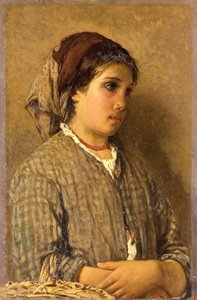
Retrato de Silvéstro Lega

As 65 Pinturas Mais Famosas de Silvéstro Lega, Cada Uma Única

Atualizado em Novembro 2026 · classificado pela nossa pontuação de popularidade (pesquisas, visitas e pedidos de cada obra) · 65 obras de Silvéstro Lega em nosso catálogo

Em resumo

Portrait of Giuseppe Garibaldi (1861) é a pintura de Silvéstro Lega que mais atrai olhares. Depois disso, o olhar recai sobre Head of the Virgin Mary from Perugino (1845) e Portrait of his brother Ettore as a child (1855). Entre as 65 obras de Silvéstro Lega em nosso catálogo, estas 65 são as mais famosas, cada uma uma original única apresentada com o seu ano, o seu museu e a razão pela qual perdura.

1826 – 1895, Modigliana Realism Mais obras: Palazzo Pitti

As 10 principais pinturas de Silvéstro Lega, sob o olhar da galeria

1
Portrait of Giuseppe Garibaldi (1861) de Silvéstro Lega

Portrait of Giuseppe Garibaldi

1861 · Oil

Created in 1861, the portrait emerges from a period of intense political movement in Italy. The subject's attire and the presence of the rifle suggest a connection to the military campaigns and the rugged lifestyle associated with the era's political shifts. The painting reflects the 19th-century movement toward realism, prioritizing direct observation and the accurate depiction of the human form within a natural setting.

2
Head of the Virgin Mary from Perugino (1845) de Silvéstro Lega

Head of the Virgin Mary from Perugino

1845 · Chalk

The artwork titled Head of the Virgin Mary from Perugino is a portrait created by the artist Silvestro Lega. This depiction focuses on the subject of the Virgin Mary, presented in a close-up view that emphasizes the head and shoulders. The work is dated to about 1845.

3
Portrait of his brother Ettore as a child (1855) de Silvéstro Lega

Portrait of his brother Ettore as a child

1855 · Oil On Canvas · Pinacoteca di Brera, Milão

A young boy sits in a moment of profound stillness, his gaze meeting the viewer with a calm, somewhat melancholic expression. He is positioned slightly off-center, a bust-length figure that feels immediate and intimate. The soft light, descending from the upper left, brushes against the contours of his face, casting gentle shadows that grant his features a palpable three-dimensional volume. There is a sense of weight to his presence, as…

4
Among the flowers in the garden (1862) de Silvéstro Lega

Among the flowers in the garden

1862 · Oil

The scene unfolds within the quiet confines of Among the flowers in the garden, an oil on canvas that captures a fleeting moment of stillness. Silvestro Lega, a significant figure in 19th-century Italian art, brings this garden to life through his careful observation of the natural world. The work dates to about 1862, a period when the artist's hand began to move toward a more profound engagement with the reality…

5
Camp of Zouaves (1861) de Silvéstro Lega

Camp of Zouaves

1861 · Charcoal

In "Camp of Zouaves" by Silvestro Lega, the composition follows a horizontal format that emphasizes the breadth of the military encampment. A central tent dominates the middle ground, acting as a focal point for the surrounding activity. To the left, a soldier blowing a horn provides a strong vertical element that draws the eye through the scene. The foreground is characterized by rough terrain and various scattered details, establishing a…

6
The water wheel [sketch] (1863) de Silvéstro Lega

The water wheel [sketch]

1863 · Charcoal

In The water wheel [sketch], Silvestro Lega organizes a horizontally oriented scene that emphasizes the structural length of the machinery. The water wheel dominates the central portion of the composition, acting as the primary anchor for the viewer's eye. A lone figure is positioned near the wheel, providing a sense of scale and human presence within the rural setting. This arrangement focuses the viewer's attention on the intersection of mechanical…

8
Reading (1864) de Silvéstro Lega

Reading

1864 · Oil

Two figures sit anchored in a moment of stillness. They are caught in the soft, diffused light of a private afternoon, their bodies turned toward one another in a shared, silent communion. One figure wears a dress of pale blue, a cool note against the warmth of the surrounding world. They are engaged in the simple act of reading, a gesture that pulls the viewer into their intimate circle. The…

9
The reading (1867) de Silvéstro Lega

The reading

The Reading by Silvestro Lega is an oil painting on canvas created about 1867. The work depicts a young woman seated upon a wooden bench. She is positioned in a state of quiet focus, her attention directed toward a book held in her hands. The scene is set against a backdrop of textured walls and a window with closed shutters, creating a contained, domestic environment.

10
The painter (1869) de Silvéstro Lega

The painter

1869 · Oil On Canvas

In The painter, Silvestro Lega presents a young woman positioned slightly off-center within the confines of her studio. The vertical composition emphasizes her presence, focusing the viewer's attention on her figure as she gazes downward toward a painter's palette held in her hands. This downward gaze suggests a moment of quiet contemplation or intense focus on her craft. At the base of the scene, a rug provides a grounding element…

Pinturas famosas de Silvéstro Lega, números 11 a 65

11The Dying Mazzini (Mazzini morente) (1873) de Silvéstro LegaThe Dying Mazzini (Mazzini morente)1873 · Rhode Island School of Design Museum of Art 12Woman sitting by a window sewing (1872) de Silvéstro LegaWoman sitting by a window sewing1872 13In the garden (1883) de Silvéstro LegaIn the garden1883 14Pitcher painted with bust of a young woman and floral motifs (1885) de Silvéstro LegaPitcher painted with bust of a young woman and floral motifs1885 15Man writing (1885) de Silvéstro LegaMan writing1885 16Portrait of a peasant woman (1890) de Silvéstro LegaPortrait of a peasant woman1890 17Head of a boy (1890) de Silvéstro LegaHead of a boy1890 18Woman from Gabbro (1888) de Silvéstro LegaWoman from Gabbro1888 19Bust of a young girl (1887) de Silvéstro LegaBust of a young girl1887 20Peasant women from Gabbro (1889) de Silvéstro LegaPeasant women from Gabbro1889 21Peasant woman at rest (1890) de Silvéstro LegaPeasant woman at rest1890 22La visita (1868) de Silvéstro LegaLa visita1868 · Galleria Nazionale d'Arte Moderna 23Bust of a peasant woman (1873) de Silvéstro LegaBust of a peasant woman1873 · Palazzo Pitti 24Villa Batelli along the Affrico river (1863) de Silvéstro LegaVilla Batelli along the Affrico river1863 25Il primo dolore (1863) de Silvéstro LegaIl primo dolore1863 26Landscape (1860) de Silvéstro LegaLandscape1860 27Portrait of a Child (1861) de Silvéstro LegaPortrait of a Child1861 28Farmhouses (1864) de Silvéstro LegaFarmhouses1864 29Courtyard entrance (1864) de Silvéstro LegaCourtyard entrance1864 30Little country church (1874) de Silvéstro LegaLittle country church1874 31Woman from Gabbro (1885) de Silvéstro LegaWoman from Gabbro1885 32The house of Don Giovanni Verità (1885) de Silvéstro LegaThe house of Don Giovanni Verità1885 33The hut on the farm (1880) de Silvéstro LegaThe hut on the farm1880 34Garden in Bellariva (1884) de Silvéstro LegaGarden in Bellariva1884 35Farmhouse with haystack (1880) de Silvéstro LegaFarmhouse with haystack1880 36Country Girl Leaning against a Ladder (1885) de Silvéstro LegaCountry Girl Leaning against a Ladder1885 37Farmhouse and haystacks (1888) de Silvéstro LegaFarmhouse and haystacks1888 38Church of San Michele in Crespina (1886) de Silvéstro LegaChurch of San Michele in Crespina1886 39Pagliai al sole (1890) de Silvéstro LegaPagliai al sole1890 40Figure of a woman de Silvéstro LegaFigure of a woman 41Seated man de Silvéstro LegaSeated man 42Young peasant woman de Silvéstro LegaYoung peasant woman 43The maid of the Bandini house de Silvéstro LegaThe maid of the Bandini house 44Don Verità de Silvéstro LegaDon Verità 45The spinner de Silvéstro LegaThe spinner 46Young peasant woman de Silvéstro LegaYoung peasant woman 47Peasant woman from Gabbro de Silvéstro LegaPeasant woman from Gabbro 48The letter de Silvéstro LegaThe letter 49Don Giovanni de Silvéstro LegaDon Giovanni 50The stitcher of lace trimmings for women's dresses de Silvéstro LegaThe stitcher of lace trimmings for women's dresses 51The Bandini sisters (1890) de Silvéstro LegaThe Bandini sisters1890 · Museum of Modern and Contemporary Art of Trento and Rovereto 52The owner of the farm (1887) de Silvéstro LegaThe owner of the farm1887 · Palazzo Pitti 53Ritorno dei bersaglieri italiani da una ricognizione (1861) de Silvéstro LegaRitorno dei bersaglieri italiani da una ricognizione1861 · Palazzo Pitti 54Head of a woman (1885) de Silvéstro LegaHead of a woman1885 · Pinacoteca di Brera 55Self-portrait (1861) de Silvéstro LegaSelf-portrait1861 · Galleria degli Uffizi 56In the villa (1880) de Silvéstro LegaIn the villa1880 · Palazzo Pitti 57A Walk in the Garden (1870) de Silvéstro LegaA Walk in the Garden1870 58Woman with ivy (1887) de Silvéstro LegaWoman with ivy1887 59The pergola (1864) de Silvéstro LegaThe pergola1864 · Palazzo Pitti 60Signora al Pianoforte de Silvéstro LegaSignora al Pianoforte 61The courier's horse de Silvéstro LegaThe courier's horse 62Small village with battlements de Silvéstro LegaSmall village with battlements 63Il pergolato (also known as Il dopopranzo) (1868) de Silvéstro LegaIl pergolato (also known as Il dopopranzo)1868 · Civica Galleria d'Arte Moderna 64The painter Tommasi painting in the garden (1885) de Silvéstro LegaThe painter Tommasi painting in the garden1885 65Il canto di uno stornello (1867) de Silvéstro LegaIl canto di uno stornello1867 · Palazzo Pitti

Pinturas famosas de Silvéstro Lega, período por período

Os temas que cativaram o olhar de Silvéstro Lega

Os quatro temas que mais se repetem nestas obras originais, cada um com o seu melhor exemplo.

Os museus que guardam os originais de Silvéstro Lega

Os 8 museus que detêm a maioria das pinturas desta página.

Museus Cidade Obras de Silvéstro Lega Pinturas desta lista
Palazzo Pitti, FlorençaPalazzo Pitti Florença 6 Bust of a peasant woman, The owner of the farm, Ritorno dei bersaglieri italiani da una ricognizione
Pinacoteca di Brera, MilãoPinacoteca di Brera Milão 2 Portrait of his brother Ettore as a child, Head of a woman
Pinacoteca metropolitana di Bari or Pinacoteca C. Giaquinto, BariPinacoteca metropolitana di Bari or Pinacoteca C. Giaquinto Bari 1 The reading
Rhode Island School of Design Museum of Art, ProvidenceRhode Island School of Design Museum of Art Providence 1 The Dying Mazzini (Mazzini morente)
Galleria Nazionale d'Arte Moderna, RomaGalleria Nazionale d'Arte Moderna Roma 1 La visita
Museum of Modern and Contemporary Art of Trento and RoveretoMuseum of Modern and Contemporary Art of Trento and Rovereto 1 The Bandini sisters
Galleria degli Uffizi, FlorençaGalleria degli Uffizi Florença 1 Self-portrait
Civica Galleria d'Arte Moderna, MilãoCivica Galleria d'Arte Moderna Milão 1 Il pergolato (also known as Il dopopranzo)

Silvéstro Lega ao longo das décadas: uma obra original única para cada uma

Obras por década

Escolha uma década para ver a obra original que a define.

Pinturas de Silvéstro Lega: perguntas para a galeria

Qual é a obra mais famosa de Silvéstro Lega?Revelar a resposta

Portrait of Giuseppe Garibaldi (1861). Head of the Virgin Mary from Perugino (1845) e Portrait of his brother Ettore as a child (1855) vêm a seguir.

Com que idade Silvéstro Lega criou Portrait of Giuseppe Garibaldi?Revelar a resposta

35 anos: Portrait of Giuseppe Garibaldi data de 1861, e Silvéstro Lega nasceu em 1826.

Quais são as dez pinturas mais famosas de Silvéstro Lega?Revelar a resposta

Portrait of Giuseppe Garibaldi, Head of the Virgin Mary from Perugino, Portrait of his brother Ettore as a child, Among the flowers in the garden, Camp of Zouaves, The water wheel [sketch], In the cellar, Reading, The reading e The painter. O ranking acima apresenta o ano e o museu de cada uma.

Quantas obras de Silvéstro Lega são conhecidas?Revelar a resposta

Nosso catálogo contém 65 obras de Silvéstro Lega, datadas de 1845 a 1890.

Onde se pode ver os originais mais famosos de Silvéstro Lega?Revelar a resposta

Principalmente em Palazzo Pitti (Florença), Pinacoteca di Brera (Milão) e Pinacoteca metropolitana di Bari or Pinacoteca C. Giaquinto (Bari). A tabela de museus acima lista todos eles.

Em que período Silvéstro Lega criou as suas pinturas mais conhecidas?Revelar a resposta

Em 1860s: 19 das 65 obras nesta página foram feitas então, sendo Portrait of Giuseppe Garibaldi delas.

Qual pintura famosa de Silvéstro Lega é a mais antiga e qual é a mais recente?Revelar a resposta

Nesta página, a mais antiga é Head of the Virgin Mary from Perugino (1845) e a mais recente é Portrait of a peasant woman (1890).

Quais temas Silvéstro Lega preferia?Revelar a resposta

Woman (13), Portrait (10) e Landscape (9), entre as 65 obras nesta página.

Com quais materiais Silvéstro Lega mais pintou?Revelar a resposta

Oil On Canvas, para 22 das 65 obras nesta página.

A qual movimento pertence a obra de Silvéstro Lega?Revelar a resposta

Realism, a julgar pelos originais nesta página.

Quais originais de Silvéstro Lega posso ver no Palazzo Pitti?Revelar a resposta

Bust of a peasant woman, The owner of the farm e Ritorno dei bersaglieri italiani da una ricognizione: o Palazzo Pitti, Florença detém 6 das obras desta página.

Silvéstro Lega: um retrato do artista

Silvestro Lega: Uma Vida no Realismo Italiano

  • Nascimento: Modigliana, Itália (1826)
  • Falecimento: 1895

Silvestro Lega foi uma figura de extrema relevância na arte italiana do século XIX, sendo reconhecido como um dos principais expoentes do movimento Macchiaioli. Sua obra é a personificação de um compromisso profundo com o realismo e com a observação minuciente da vida cotidiana, elementos que se entrelaçam harmoniosamente com sua participação nas correntes políticas e sociais de sua época.

Primeiros Anos e Formação Artística

  • Origens Familiares: Lega nasceu no seio de uma família abastada em Modigliana, próximo a Forlì, o que lhe proporcionou as condições ideais para o florescimento de seu talento desde cedo.
  • Educação: A partir de 1838, frequentou o Colégio Piarista, onde suas habilidades de desenho começaram a se destacar. Posteriormente, ingressou na Accademia di Belle Arti em Florença (1843-1847), estudando inicialmente desenho com Benedetto Servolini e Tommaso Gazzarini, e passando brevemente pela pintura sob a tutela de Giuseppe Bezzuoli.
  • A Influência de Luigi Mussini: Sua formação foi profundamente moldada por Luigi Mussini, que enfatizava os princípios florentinos do século XV aplicados ao desenho e à construção da forma, estabelecendo uma base sólida para sua abordagem artística inicial.
  • Serviço Militar e o Risorgimento: Como voluntário garibaldino, Lega não foi apenas um observador, mas um participante ativo das campanhas militares pela independência italiana (1848–4 li), demonstrando seu forte engajamento com os ideais do Risorgimento.
  • Estudos Posteriores: Em sua trajetória de aprendizado contínuo, buscou também o conhecimento sob a orientação de Antonio Ciseri.

O Movimento Macchiaioli e o Desenvolvimento Artístico

  • Estilo Acadêmico Inicial: No princípio, o estilo de Lega mantinha um caráter predominantemente acadêmico. O contemporâneo Diego Martelli notou que sua participação nas vibrantes discussões artísticas no Caffè Michelangelo — o epicentro dos jovens pintores da época — era infrequente.
  • A Transição para o Realismo: Por volta de 1859, a obra de Lega começou a transitar em direção ao realismo, afastando-se do purismo de Mussini. Essa evolução é visível nas lunetas que pintou para o Oratório da Madonna del Cantone, em Modigliana (1858-1863).
  • A Pintura En Plein Air: Ao lado de seus colegas Macchiaioli — Odoardo Borrani, Giuseppe Abbati, Telemaco Signorini e Raffaello Sernesi —, Lega abraçou a pintura en plein air, dedicando-se a observar e capturar diretamente as nuances e a luz das paisagens.
  • O Período da Família Batelli (1861-1870): Um capítulo fundamental de sua vida foi o período passado com a família Batelli, próximo ao Rio Affrico. Esse tempo influenciou profundamente sua arte, pois ele retratou as mulheres e as crianças da família em inúmeras telas, transmitindo uma sensação de serenidade doméstica e paz.

Obras Primordiais e Estilo Artístico

  • Pinturas Notáveis: Entre suas obras mais celebradas, destacam-se “A Caminhada no Jardim” (1870), "Il Pergolato" (também conhecido como "Il dopopranzo") (1864), “A Casa de Don Giovanni Veritá” (1885), “No Jardim” (1883) e “Jardim em Bellariva” (1884).
  • Características do Estilo: O estilo de Lega é definido por um equilíbrio cuidadoso entre a composição tradicional e o uso contemporâneo da cor, fruto da observação direta. Ele utilizava formas bem definidas e criava atmosferas através da transparência cromática, apresentando, em suas obras tardias, uma clara influência impressionista.
  • Foco Temático: Suas telas frequentemente evocam cenas da vida rural, encontros familiares e retratos íntimos, refletindo um olhar atento às experiências cotidianas das pessoas comuns.

Anos Finais e Legado

  • Tragédia Pessoal: A perda de Virginia Batelli (sua companheira), somada ao falecimento de três de seus irmãos, mergulhou Lega em um profundo luto e depressão em 1870, o que resultou em um hiato de quatro anos em sua produção pictórica (1874-1878).
  • Exploração Artística e Impressionismo: Apesar das dores pessoais, Lega permaneceu conectado ao mundo da arte. Admirador das obras de Camille Pissarro, chegou a estabelecer uma galeria de arte em Florença com Odoardo Borrani, embora o empreendimento tenha sido breve.
  • Anos Finais: Em sua maturidade, encontrou nova estabilidade e inspiração ao atuar como tutor dos filhos da família Tommasi. Suas obras finais, como “As Gabbarigiane”, demonstram um compromisso inabalável com o realismo, mesmo diante do declínio de sua visão.
  • Significado Histórico: A contribuição de Silvestro Lega reside na sua maestria em sintetizar técnicas composicionais tradicionais com a estética realista emergente do movimento Macchiaioli. Ele capturou a essência da vida italiana com sensibilidade e perícia, deixando um legado que ressoa até hoje. Ao elevar temas cotidianos ao patamar de importância artística, ele contribuiu para o movimento global em direção ao realismo na arte europeia do século XIX.