Retrato de Sigmar Polke

As 51 Pinturas Mais Famosas de Sigmar Polke, Cada Uma Única

Atualizado em Novembro 2026 · classificado pela nossa pontuação de popularidade (pesquisas, visitas e pedidos de cada obra) · 54 obras de Sigmar Polke em nosso catálogo

Em resumo

Levitation (2005) é a pintura de Sigmar Polke que mais atrai olhares; a obra original pertence ao Kunsthaus Zürich, Zurique. Depois disso, o olhar recai sobre Sem título (1968) e Sem título (1965). Entre as 54 obras de Sigmar Polke em nosso catálogo, estas 51 são as mais famosas, cada uma uma original única apresentada com o seu ano, o seu museu e a razão pela qual perdura.

1941 – 2010, Oleśnica Pop art Mais obras: Bavarian State Painting Collections

As 10 principais pinturas de Sigmar Polke, sob o olhar da galeria

1
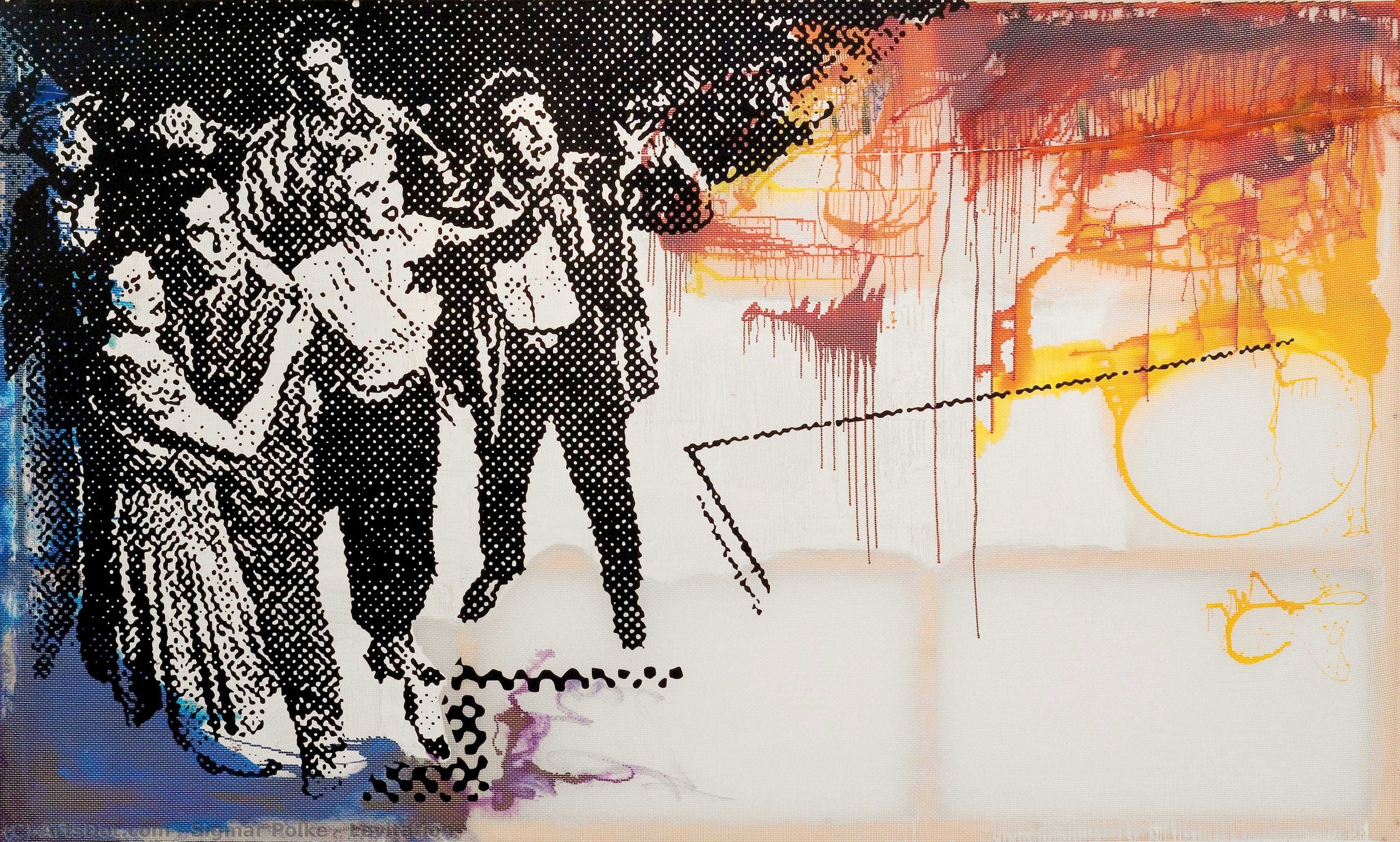
Levitation (2005) de Sigmar Polke

Levitation

2005 · Encaustic · Kunsthaus Zürich, Zurique

In the vast landscape of contemporary art, few names resonate with as much mystery and technical audacity as Sigmar Polke. His masterpiece, Levitation, created in 2005, serves as a profound meditation on the very nature of perception. At first glance, the viewer is met with a seemingly banal tableau—a table laden with objects that ground the scene in reality—yet this familiarity is quickly subverted by an underlying sense of existential…

2
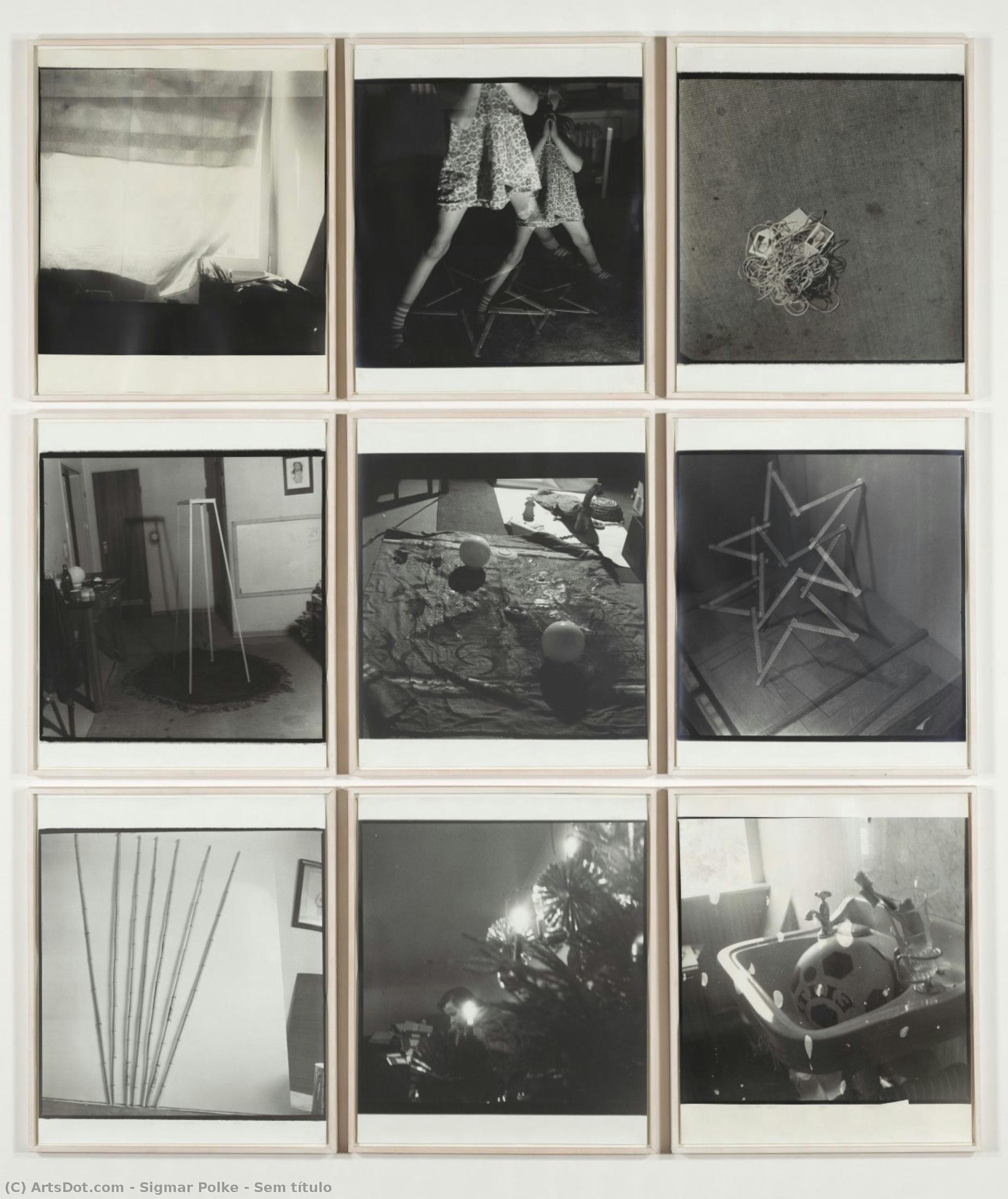
Sem título (1968) de Sigmar Polke

Sem título

1968 · Acrylic On Canvas · Fundação de Serralves, Porto

Sigmar Polke's "Sem título" (1968) isn’t merely a photograph; it’s a carefully constructed meditation on observation, displacement, and the unsettling beauty of everyday objects. This seminal work, housed within a stark grid of black-and-white frames, immediately draws the viewer into a world both familiar and profoundly strange. The arrangement—nine individual photographs presented as a unified whole—evokes a sense of systematic collection, almost like a meticulously documented survey of the mundane.…

3
Sem título (1965) de Sigmar Polke

Sem título

1965 · Acrylic On Canvas · Fundação de Serralves, Porto

Sigmar Polke’s “Sem título,” created in 1968, stands as an arresting testament to the burgeoning aesthetic of capitalist realism—a movement that sought to depict everyday life with unflinching honesty, mirroring the visual language of advertising and documentary filmmaking. More than just a photographic collage, it's a carefully constructed puzzle designed to challenge our assumptions about how we perceive the world around us.

4
Sem título (1968) de Sigmar Polke

Sem título

1968 · Acrylic On Canvas · Fundação de Serralves, Porto

Sigmar Polke's "Sem título" (1968), a deceptively simple grid of black and white photographs, is far more than just a collection of meticulously arranged objects. It’s a profound exploration of memory, displacement, and the inherent instability of visual perception – themes deeply rooted in the artist’s own turbulent personal history. Born in Poland amidst the upheaval of World War II and subsequently forced to flee to Germany as a child,…

Pinturas famosas de Sigmar Polke, números 11 a 51

Os temas que cativaram o olhar de Sigmar Polke

Os quatro temas que mais se repetem nestas obras originais, cada um com o seu melhor exemplo.

Os museus que guardam os originais de Sigmar Polke

Os 5 museus que detêm a maioria das pinturas desta página.

Museus Cidade Obras de Sigmar Polke Pinturas desta lista
Bavarian State Painting Collections, MuniqueBavarian State Painting Collections Munique 8 Ice Skater, Audatia, Double Portrait Fabiola
Fundação de Serralves, PortoFundação de Serralves Porto 3 Sem título, Sem título, Sem título
Kunsthaus Zürich, ZuriqueKunsthaus Zürich Zurique 1 Levitation
Institut Valencià d'Art Modern, ValenciaInstitut Valencià d'Art Modern Valencia 1 Sin título (Hochstand) / Torre de vigilancia
Buffalo AKG Art Museum, BuffaloBuffalo AKG Art Museum Buffalo 1 Break Domination

Sigmar Polke ao longo das décadas: uma obra original única para cada uma

Obras por década

Escolha uma década para ver a obra original que a define.

Pinturas de Sigmar Polke: perguntas para a galeria

Qual é a obra mais famosa de Sigmar Polke?Revelar a resposta

Levitation (2005), Kunsthaus Zürich, Zurique. Sem título (1968) e Sem título (1965) vêm a seguir.

Com que idade Sigmar Polke criou Levitation?Revelar a resposta

64 anos: Levitation data de 2005, e Sigmar Polke nasceu em 1941.

Quais são as dez pinturas mais famosas de Sigmar Polke?Revelar a resposta

Levitation, Sem título, Sem título, Sem título, Woman at mirror, Ice Skater, Audatia, Untitled, Sit correctly e Sunday. O ranking acima apresenta o ano e o museu de cada uma.

Quantas obras de Sigmar Polke são conhecidas?Revelar a resposta

Nosso catálogo contém 54 obras de Sigmar Polke, datadas de 1965 a 2005.

Onde se pode ver os originais mais famosos de Sigmar Polke?Revelar a resposta

Principalmente em Bavarian State Painting Collections (Munique), Fundação de Serralves (Porto) e Kunsthaus Zürich (Zurique). A tabela de museus acima lista todos eles.

Em que período Sigmar Polke criou as suas pinturas mais conhecidas?Revelar a resposta

Em 1960s: 8 das 51 obras nesta página foram feitas então, sendo Sem título delas.

Qual pintura famosa de Sigmar Polke é a mais antiga e qual é a mais recente?Revelar a resposta

Nesta página, a mais antiga é Sem título (1965) e a mais recente é Levitation (2005).

Quais temas Sigmar Polke preferia?Revelar a resposta

Fragmentation (5), Photography (3) e Collage (3), entre as 51 obras nesta página.

Com quais materiais Sigmar Polke mais pintou?Revelar a resposta

Acrylic On Canvas, para 3 das 51 obras nesta página.

A qual movimento pertence a obra de Sigmar Polke?Revelar a resposta

Pop art e Capitalist realism, a julgar pelos originais nesta página.

Quais originais de Sigmar Polke posso ver no Bavarian State Painting Collections?Revelar a resposta

Ice Skater, Audatia e Double Portrait Fabiola: o Bavarian State Painting Collections, Munique detém 8 das obras desta página.

Sigmar Polke: um retrato do artista

Sigmar Polke (1941–2010) – Uma Vida Forjada na Dispersão: Os Primeiros Anos e a Formação Artística

Sigmar Polke’s artistic journey was profoundly shaped by the tumultuous currents of 20th-century history, beginning with his birth in Olsztyn, Poland, in 1941. His early life was marked by displacement; as a child, he fled with his family first to Thuringia and then, seeking refuge from Communist rule, to West Germany in 1953. This experience of being uprooted, of existing between worlds, instilled within him a lifelong skepticism towards fixed ideologies and a fascination with the instability of perception – themes that would become central to his art. Before dedicating himself fully to painting, Polke underwent an apprenticeship as a stained glass worker in Düsseldorf (1959-1960), a formative experience that honed his technical skill and introduced him to the possibilities of manipulating light and color. He then formally studied at the Kunstakademie Düsseldorf (1961-1967) under a constellation of influential figures: Karl Otto Götz, Gerhard Hoehme, and most significantly, Joseph Beuys. It was within this environment that Polke began to forge his unique artistic voice, one characterized by experimentation, irony, and a relentless questioning of established norms.

Capitalista Realismo e a Subversão da Ideologia

Emerging in the early 1960s, Polke’s work quickly aligned with a burgeoning counter-cultural movement. In 1963, alongside Gerhard Richter, Konrad Lueg, and Manfred Kuttner, he co-founded *Kapitalistischer Realismo* (Capitalist Realism). This was not an artistic style in the traditional sense but rather a provocative gesture—a critique of both Western consumer culture and the rigid dogma of Soviet Socialist Realism. The movement’s name itself was deliberately ambiguous, suggesting that both systems were equally capable of producing artificial realities. Polke's early paintings from this period often appropriated imagery from advertising, comics, and popular media, presenting them with a detached irony that exposed their underlying ideological structures. He wasn’t simply rejecting capitalism; he was demonstrating its pervasive influence on perception itself. This initial foray into critical commentary established a pattern of subversive engagement that would define his career. Polke's meticulous attention to detail—replicating halftone dots from newspapers—served as a deliberate challenge to the dominant visual culture of the time, mirroring the movement’s broader aim of destabilizing accepted truths.
A Busca pela Linguagem Artística e Influências

Polke’s artistic explorations extended beyond mere stylistic imitation. His fascination with Joseph Beuys – who championed performance art and shamanistic rituals – profoundly impacted his approach to creativity. Götz, Hoehme and Lüg—fellow students at Düsseldorf Kunstakademie—further nurtured Polke's intellectual curiosity and encouraged him to push boundaries. He absorbed influences from Surrealism and Cubism, recognizing the power of abstraction to convey complex ideas and emotions. However, unlike many artists of his generation who embraced grand narratives or monumental forms, Polke consistently sought a more understated aesthetic, prioritizing subtle gestures and material transformations over overt statements. This commitment to experimentation—to embracing chance operations and disrupting conventional artistic conventions—became a hallmark of his oeuvre.

Fotografia e o Laboratório da Percepção

The 1970s witnessed a decisive shift in Polke’s artistic focus toward photography. Driven by an insatiable curiosity, he embarked on extensive travels to Pakistan and Afghanistan, documenting everyday life with a keen eye for the absurd and the unexpected. Unlike traditional documentary photographers who strive for objectivity, Polke subjected his images to radical chemical manipulation—altering colors, textures, and meanings—challenging the notion of photography as an impartial record of reality. He embraced chance operations and deliberately introduced imperfections, mirroring the movement’s broader aim of destabilizing accepted truths. This period reflects a deep exploration of perception—how our understanding of the world is shaped by subjective experience and mediated through technology. Polke's photographic works are characterized by meticulous attention to detail and an unsettling juxtaposition of familiar subjects with unexpected visual effects.

Uma Legado de Experimentação e Reflexão Crítica

Polke’s later work continued to grapple with historical events and perceptions thereof, frequently adopting a sardonic or critical perspective. He explored alchemy and chemistry as metaphors for artistic transformation—mixing industrial products like motor oil and petrol with paint to create works that defied categorization. His output spanned painting, photography, film, and sculpture, demonstrating his versatility as an artist and his unwavering commitment to pushing creative boundaries. Polke’s legacy resides not in stylistic imitation but in a profound engagement with fundamental questions about art's role in society—its capacity to provoke thought, disrupt complacency, and confront uncomfortable truths. He remains one of the most important artists of the postwar era, bridging Pop Art, Conceptual Art, and Neo-Expressionism. His experimental approach, his relentless questioning of established norms, and his profound understanding of the complexities of perception ensure his enduring influence on contemporary art.