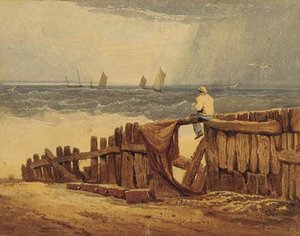
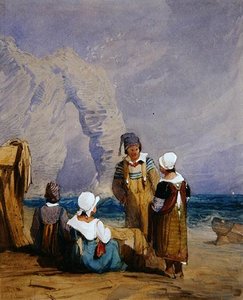
Retrato de Samuel Prout

As 100 Pinturas Mais Famosas de Samuel Prout, uma Seleção da Galeria

Atualizado em Novembro 2026 · classificado pela nossa pontuação de popularidade (pesquisas, visitas e pedidos de cada obra) · 111 obras de Samuel Prout em nosso catálogo

Em resumo

De todas as obras originais que Samuel Prout deixou, a mais famosa é Nuremberg. Logo atrás vêm Marketplace at Bruges (1817) e Tivoli, Temple Of The Sibyl. Nosso catálogo contém 111 obras de Samuel Prout; a galeria preservou as 100 que o mundo mais admira, cada uma exibida com sua data, seu museu e sua história.

1783 – 1852, Plymouth Romanticism Mais obras: Birmingham Museum and Art Gallery

As 10 principais pinturas de Samuel Prout: a escolha da galeria

1
Nuremberg de Samuel Prout

Nuremberg

Watercolor

In Nuremberg, Samuel Prout captures a bustling street scene that breathes with the energy of 19th-century Germany. The urban landscape unfolds before the viewer, revealing the intricate architectural character of the city through its weathered facades and historic structures. People move through the thoroughfares, their various activities suggesting a community in constant motion. This depiction of daily life transforms a simple street into a living narrative of a bygone era.

2
Marketplace at Bruges (1817) de Samuel Prout

Marketplace at Bruges

1817 · Watercolor · Smithsonian American Art Museum, Washington, D.C.

In this watercolor, Marketplace at Bruges by Samuel Prout, we find ourselves amidst a bustling historical marketplace. The composition is anchored on the center-right by an ornate, multi-story Gothic-style building, its surface detailed with elaborate carvings and timber framing. To the left, a darker, more weathered structure frames the view, providing a sense of depth through overlapping planes. In the distance, a tall, slender church spire reaches into a pale,…

3
Tivoli, Temple Of The Sibyl de Samuel Prout

Tivoli, Temple Of The Sibyl

Watercolor

The scene unfolds through Tivoli, Temple Of The Sibyl, a work rendered by the hand of Samuel Prout. This piece invites the viewer into a quiet moment of observation, where the weight of history rests upon the circular columns and ornate entablature of the ancient structure. The light catches the edges of the stone, casting long shadows that dance across the landscape of rolling hills and soft, drifting clouds.

A seleção de Samuel Prout continua, de 11 a 100

11Devonshire Characters And Strange Events de Samuel ProutDevonshire Characters And Strange Events 12The Palazzo Pisani Moretta On The Grand Canal, Venice de Samuel ProutThe Palazzo Pisani Moretta On The Grand Canal, Venice 13Bayenturm Cologne And Siegburg House de Samuel ProutBayenturm Cologne And Siegburg House 14Petrarch's House At Arqua - Da - Roscoe de Samuel ProutPetrarch's House At Arqua - Da - Roscoe 15Frankf. Sachsenhausen de Samuel ProutFrankf. Sachsenhausen 16Palazzo Ducale, Venice de Samuel ProutPalazzo Ducale, Venice 17Borghese Palace Rome Engraving de Samuel ProutBorghese Palace Rome Engraving 18Verona Bridge de Samuel ProutVerona Bridge 19Figures At A Market Before A Continental Cathedral de Samuel ProutFigures At A Market Before A Continental Cathedral 20Prague Old Town Bridge Tower de Samuel ProutPrague Old Town Bridge Tower 21Beach scene de Samuel ProutBeach scene 22Basle, On The Rhine de Samuel ProutBasle, On The Rhine 23Rouen Cathedral de Samuel ProutRouen Cathedral 24Milan Cathedral de Samuel ProutMilan Cathedral 25An Alpine Village de Samuel ProutAn Alpine Village 26The Cathedral At Worms de Samuel ProutThe Cathedral At Worms 27Forum Of Nerva, Rome de Samuel ProutForum Of Nerva, Rome 28Figures Bathed In Sunlight On A Continental Street de Samuel ProutFigures Bathed In Sunlight On A Continental Street 29Castle of Chillon, Lake of Geneva, Switzerland de Samuel ProutCastle of Chillon, Lake of Geneva, Switzerland 30Watching The Gondolier, Venice de Samuel ProutWatching The Gondolier, Venice 31Milan, The Cathedral Square de Samuel ProutMilan, The Cathedral Square 32Old Cottages, Devonshire de Samuel ProutOld Cottages, Devonshire 33Shipwrecked de Samuel ProutShipwrecked 34View Of The Courtyard Of Corbeau In Strasbourg de Samuel ProutView Of The Courtyard Of Corbeau In Strasbourg 35Heidelberg de Samuel ProutHeidelberg 36Anglers Fishing Before A Derelict Watermill de Samuel ProutAnglers Fishing Before A Derelict Watermill 37The Church Tower de Samuel ProutThe Church Tower 38Church Of St. Wolfram At Abbeville de Samuel ProutChurch Of St. Wolfram At Abbeville 39Frankfurt dom de Samuel ProutFrankfurt dom 40The rialto bridge, venice; and view of basle de Samuel ProutThe rialto bridge, venice; and view of basle 41Figures By The Coast At Durdle Door, Dorset de Samuel ProutFigures By The Coast At Durdle Door, Dorset 42A trading brig at anchor off the coast de Samuel ProutA trading brig at anchor off the coast 43The Piazetta Of St Marks, Venice de Samuel ProutThe Piazetta Of St Marks, Venice 44The Breakwater de Samuel ProutThe Breakwater 45A Beached Fishing Vessel, With Fishermen Beyond de Samuel ProutA Beached Fishing Vessel, With Fishermen Beyond 46River Scene de Samuel ProutRiver Scene 47The Doge's Palace, Venice de Samuel ProutThe Doge's Palace, Venice 48Doge's Palace, Venice de Samuel ProutDoge's Palace, Venice 49Figures Watching A Passing Storm de Samuel ProutFigures Watching A Passing Storm 50The Lake of Como, Italy de Samuel ProutThe Lake of Como, Italy 51Temple Of Vespasian de Samuel ProutTemple Of Vespasian 52Near Saltash, Cornwall de Samuel ProutNear Saltash, Cornwall 53Figures Before A Thatched Cottage, Devon de Samuel ProutFigures Before A Thatched Cottage, Devon 54Cologne de Samuel ProutCologne 55The Town Market de Samuel ProutThe Town Market 56Britton's Architectural Antiquities de Samuel ProutBritton's Architectural Antiquities 57Fishing Smacks Off Dover de Samuel ProutFishing Smacks Off Dover 58Scene From A Church Porch de Samuel ProutScene From A Church Porch 59Landscape, With River And Village de Samuel ProutLandscape, With River And Village 60Wurtzburg de Samuel ProutWurtzburg 61The Charles Bridge, Prague de Samuel ProutThe Charles Bridge, Prague 62A View In Nuremberg de Samuel ProutA View In Nuremberg 63Dresden zwinger kronentor de Samuel ProutDresden zwinger kronentor 64Utrecht Town Hall de Samuel ProutUtrecht Town Hall 65Figures In A Fishing Boat Approaching An Anchored Man-o-war de Samuel ProutFigures In A Fishing Boat Approaching An Anchored Man-o-war 66A Corner Of A Church de Samuel ProutA Corner Of A Church 67A Continental Street Scene de Samuel ProutA Continental Street Scene 68An Ornamental Coach de Samuel ProutAn Ornamental Coach 69The Bishop's Palace, Wurzburg de Samuel ProutThe Bishop's Palace, Wurzburg 70The Grand Canal; And View Towards Santa Maria Salute de Samuel ProutThe Grand Canal; And View Towards Santa Maria Salute 71The Molo And The Doges' Palace, Venice de Samuel ProutThe Molo And The Doges' Palace, Venice 72The Scaliger Monument, Verona, Italy de Samuel ProutThe Scaliger Monument, Verona, Italy 73On A Venetian Backwater; And Figures On A Continental Street de Samuel ProutOn A Venetian Backwater; And Figures On A Continental Street 74Nuremberg Executioner Tower Water Tower de Samuel ProutNuremberg Executioner Tower Water Tower 75Looe, Cornwall, from 'Village Scenery' de Samuel ProutLooe, Cornwall, from 'Village Scenery' 76Porch Of Regensburg Cathedral de Samuel ProutPorch Of Regensburg Cathedral 77Arch Of Constantine de Samuel ProutArch Of Constantine 78Figures On The Beach de Samuel ProutFigures On The Beach 79Venetians Resting Under The Arches de Samuel ProutVenetians Resting Under The Arches 80Shipping Vessels Beached By An Old Wharf With A Town Beyond de Samuel ProutShipping Vessels Beached By An Old Wharf With A Town Beyond 81Harbour Scene - de Samuel ProutHarbour Scene - 82Salving From The Wreck de Samuel ProutSalving From The Wreck 83Temple Of Pallas, Forum Of Nerva, Rome de Samuel ProutTemple Of Pallas, Forum Of Nerva, Rome 84Merchants Selling Their Wares On The Italian Lakes de Samuel ProutMerchants Selling Their Wares On The Italian Lakes 85Ilford church de Samuel ProutIlford church 86Rudiments of Landscape, pl. - (52) de Samuel ProutRudiments of Landscape, pl. - (52) 87Harbour Scene de Samuel ProutHarbour Scene 88A Dutch Street Scene de Samuel ProutA Dutch Street Scene 89Plympton Grammar School de Samuel ProutPlympton Grammar School 90A Shipyard at Blackwall de Samuel ProutA Shipyard at Blackwall 91The Crypt Of Canterbury Cathedral de Samuel ProutThe Crypt Of Canterbury Cathedral 92Wuerzburg Mainbruecke Und Festung de Samuel ProutWuerzburg Mainbruecke Und Festung 93Domo D'ossola, Italy de Samuel ProutDomo D'ossola, Italy 94Farm Scene No.1 de Samuel ProutFarm Scene No.1 95Palazzo Contarini Fasan On The Grand Canal de Samuel ProutPalazzo Contarini Fasan On The Grand Canal 96Ulm Cathedral Portal de Samuel ProutUlm Cathedral Portal 97Cottages Near St. Michael's Mount, Cornwall de Samuel ProutCottages Near St. Michael's Mount, Cornwall 98Old Mill, Near Monmouth de Samuel ProutOld Mill, Near Monmouth 99Market Day de Samuel ProutMarket Day 100The Arch Of Constantine, Rome, From The South-east de Samuel ProutThe Arch Of Constantine, Rome, From The South-east

Os temas que cativaram o olhar de Samuel Prout

Os quatro temas que mais se repetem nestas obras originais, cada um com o seu melhor exemplo.

Os museus que guardam os originais de Samuel Prout

Os 3 museus que detêm a maioria das pinturas desta página.

Museus Cidade Obras de Samuel Prout Pinturas desta lista
Birmingham Museum and Art Gallery, BirminghamBirmingham Museum and Art Gallery Birmingham 2 Temple Of Pallas , Rome, Interior Of A Cathedral
Smithsonian American Art Museum, Washington, D.C.Smithsonian American Art Museum Washington, D.C. 1 Marketplace at Bruges
Yale Center for British Art, New HavenYale Center for British Art New Haven 1 The Wreck of the Dutton, An East Indiaman

Samuel Prout ano a ano: as obras originais que definem cada um

De 1815 a 1817, apenas 3 anos, conheça todas as obras datadas de Samuel Prout nesta seleção: aqui está cada ano em sua melhor forma.

Obras por ano

Escolha um ano para ver as obras originais.

Perguntas de colecionadores sobre as pinturas de Samuel Prout

Por qual obra Samuel Prout é mais conhecido(a)?Revelar a resposta

Nuremberg. Marketplace at Bruges (1817) e Tivoli, Temple Of The Sibyl vêm a seguir.

Quais são as dez pinturas mais famosas de Samuel Prout?Revelar a resposta

Nuremberg, Marketplace at Bruges, Tivoli, Temple Of The Sibyl, The Temple Of Saturn And The Temple Of Vespasian, The Forum, Rome, Temple Of Pallas , Rome, Interior Of A Cathedral, The Wreck of the Dutton, An East Indiaman, Oyster Boats, Dover, A Donkey Resting In A Barn e At Cologne - Hotel De Prague. O ranking acima apresenta o ano e o museu de cada uma.

Quantas pinturas Samuel Prout deixou?Revelar a resposta

Nosso catálogo contém 111 obras de Samuel Prout, datadas de 1815 a 1817.

Em quais museus estão expostas as obras-primas de Samuel Prout?Revelar a resposta

Principalmente em Birmingham Museum and Art Gallery (Birmingham), Smithsonian American Art Museum (Washington, D.C.) e Yale Center for British Art (New Haven). A tabela de museus acima lista todos eles.

Em que anos Samuel Prout pintou as suas obras mais famosas?Revelar a resposta

Em 1817: 3 das 100 obras nesta página foram feitas então, sendo Marketplace at Bruges delas.

Quais são as primeiras e as últimas obras originais famosas de Samuel Prout?Revelar a resposta

Nesta página, a mais antiga é The Wreck of the Dutton, An East Indiaman (1815) e a mais recente é Marketplace at Bruges (1817).

Quais temas Samuel Prout escolheu com mais frequência?Revelar a resposta

Italy (14), Temples (12) e Scenes (8), entre as 100 obras nesta página.

Qual técnica Samuel Prout mais utilizou?Revelar a resposta

Watercolor, para 3 das 100 obras nesta página.

A qual movimento artístico pertence Samuel Prout?Revelar a resposta

Romanticism, a julgar pelos originais nesta página.

Quais obras de Samuel Prout estão expostas no Birmingham Museum and Art Gallery?Revelar a resposta

Temple Of Pallas , Rome e Interior Of A Cathedral: o Birmingham Museum and Art Gallery, Birmingham detém 2 das obras desta página.

Samuel Prout: vida e obra

O Mestre da Arquitetura Atmosférica

Na era de ouro da aquarela britânica, poucos nomes evocam o esplendor romântico de uma época passada como Samuel Prout. Um virtuoso da luz e da sombra, Prout possuía uma habilidade singular de dar vida à pedra, transformando frias ruínas arquitetônicas e movimentadas cenas de ruas europeias em narrativas emotivas e vivas. Sua obra não apenas documenta um local; ela captura a própria alma de um lugar, envolta nas névoas suaves e melancólicas do movimento Romântico. Contemplar um original de Prout é atravessar um portal para o século XIX, onde o jogo entre a luz solar e a sombra conta histórias de grandeza antiga e de uma silenciosa e cotidiana resiliência.

Nascido sob o ar marítimo de Plymouth em 1783, os primeiros anos de Prout foram moldados pela beleza rústica da costa de Devon. Filho de um fornecedor de artigos navais, sua infância foi marcada tanto pelos ritmos industriais dos estaleiros quanto por uma profunda conexão com o mundo natural. Embora um forte golpe de insolação em sua primeira infância o tenha deixado propenso a lutas físicas ao longo da vida, isso talvez tenha aguçado sua visão interna, forçando-o a encontrar consolo na observação meticulosa de seu entorno. Sob a orientação cuidadosa de seu diretor, John Bidlake, e ao lado de seu amigo de longa data Benjamin Robert Haydon, Prout começou a traduzir as casas pitorescas e os vales sinuosos da Cornualha em esboços delicados, lançando as bases para uma carreira que eventualmente cativaria a realeza.

Uma Jornada Através da Luz e da Linha

A evolução artística de Prout foi uma ascensão magistral, impulsionada por uma busca incessante pela sutileza tonal e profundidade atmosférica. Após mudar-se para Londres em 1802, ele ingressou em um vibrante círculo de ilustradores e mestres, absorvendo as técnicas de lendas como J.M.W. Turner e Thomas Girtin. Embora seu treinamento inicial lhe tenha proporcionado um comando rigoroso da linha, foi seu desenvolvimento posterior que permitiu que ele pioneirasse o gênero da "grande cena de rua". Ele foi além do simples registro topográfico, utilizando a aquarela para criar ambientes vastos e imersivos, onde a arquitetura parecia emergir de uma névoa onírica.

Suas viagens pela Europa continental — mais notavelmente através dos canais sinuosos de Veneza e das ruas históricas da Alemanha — tornaram-se o crisol de suas maiores conquistas. Nessas paisagens, Prout dominou a arte do pitoresco, equilibrando detalhes arquitetônicos intrincados com lavagens de cor expansivas e atmosféricas. Sua habilidade em renderizar a textura desgastada de paredes antigas e os reflexos cintilantes nas águas paradas dos canais rendeu-lhe o profundo respeito de seus pares. De fato, o grande crítico John Ruskin, que mais tarde se tornaria um titáculo da história da arte, encontrou tanta inspiração na obra de Prout que famosamente comentou que, embora pudesse se cansar de Turner, jamais poderia se cansar de Prout.

Legado e Reconhecimento Real

A importância de Samuel Prout estende-se muito além das fronteiras de seus belos esboços; ele foi uma figura fundamental que ajudou a definir os padrões estéticos da pintura em aquarela britânica. Sua proeza técnica e capacidade de evocar emoção através da paisagem arquitetônica renderam-lhe as mais altas honras de seu tempo, incluindo a prestigiosa nomeação como Pintor de Aquarelas Oficial do Rei George IV e, posteriormente, da Rainha Victoria. Este patrocínio real consolidou seu status como um artista primordial da era vitoriana.

A influência de Prout pode ser traçada através de vários aspectos fundamentais de seu legado duradouro:

  • A Invenção da Grande Cena de Rua: Ele transformou a pintura arquitetônica de uma documentação estática em um gênero dinâmico e movido por narrativas.
  • Mentoria e Influência: Sua abordagem meticulosa à luz e ao tom serviu como um precursor vital e inspiração para as obras de John Ruskin.
  • Maestria Atmosférica: Ele preencheu a lacuna entre a precisão topográfica e o expressionismo romântico, tornando a própria atmosfera um personagem central em suas composições.

Hoje, as obras de Samuel Prout permanecem estimadas por colecionadores e historiadores. Elas servem como um lembrete pungente de um período em que a arte buscava encontrar o sublime nas ruínas desmoronadas da história e na beleza silenciosa do cotidiano. Através de seu pincel, as pedras da Europa continuam a falar, sussurrando contos de luz, sombra e a passagem eterna do tempo.