Samuel Colman: vida e obra
Uma Vida Pintada com Luz: O Mundo de Samuel Colman
Samuel Colman, nascido em Portland, Maine, em 1832, foi uma figura que navegou com elegância pelas correntes em constante evolução da arte americana do século XIX. Ele não era apenas um pintor; era um explorador de meios, um observador atento de culturas e, fundamentalmente, um polímata cujas buscas artísticas estendiam-se muito além da tela. Sua infância, imersa na atmosfera literária da livraria de seu pai em Nova York, sem dúvida fomentou uma sensibilidade que informaria sua obra posterior – uma percepção aguçada para a narrativa, o detalhe e o poder do storytelling visual. Embora tenha recebido treinamento fundamental sob a tutela de Asher Durand, um pilar da Hudson River School, Colman rapidamente começou a traçar seu próprio caminho, caracterizado por uma curiosidade insaciável e uma disposição para abraçar novas influências.
De Paisagens Americanas a Visões Globais
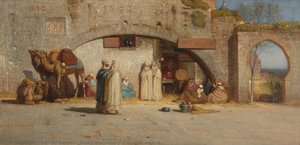
Os primeiros esforços artísticos de Colman o posicionaram firmemente dentro da tradiente da Hudson River School. Pinturas como “Meadows and Wildflowers at Conway” (1856) exemplificam este estilo inicial – representações meticulosas da paisagem americana, imbuídas de uma sensibilidade romântica que celebrava a beleza natural da nação. No entanto, ao contrário de alguns de seus contemporâneos que permaneceram dedicados a temas puramente domésticos, Colman possuía um espírito aventureiro que o impulsionou através de continentes. Suas extensas viagens pela Europa nas décadas de 1860 e início de 1870 – abrangendo França, Espanha, Itália, Marrocos, Egito, Holanda e Argélia – revelaram-se transformadoras. Estas jornadas não eram meras expedições turísticas; eram estudos imersivos de luz, cor, arquitetura e cultura. Ele começou a incorporar elementos arquitetônicos em suas pinturas — paisagens urbanas, castelos, pontes — refletindo uma visão artística em expansão. Essa mudança é evidente em obras que retratam cenas do Mediterrâneo, onde ele capturou com maestria a interação entre estruturas antigas e a vibrante vida local. Viagens posteriores ao Oeste Americano expandiram ainda mais seu repertório, resultando em paisagens que rivalizavam com as de Thomas Moran em escala e impacto dramático.
Um Defensor da Aquarela e Além
As contribuições de Colman não se limitaram à pintura a óleo. Ele foi um defensor apaixonado da aquarela, reconhecendo seu potencial único como meio de belas artes. Em 1866, ele cofundou a American Watercolor Society, tornando-se seu primeiro presidente e defendendo incansavelmente a causa desta técnica muitas vezes subestimada. Sua habilidade na aquarela é notável; suas obras demonstram um equilíbrio delicado entre espontaneidade e controle, capturando momentos fugazes de luz e atmosfera com uma precisão de tirar o fôlego. Além da pintura, Colman também foi um gravador talentoso, produzindo gravuras populares que disseminaram ainda mais sua visão artística. Mas mesmo enquanto se destacava nesses meios tradicionais, seus interesses continuaram a se diversificar. Na década de 1880, ele transitou para o design de interiores, colaborando com Louis Comfort Tiffany em projetos para figuras proeminentes como Samuel Clemens (Mark Twain) e Henry e Louisine Havemeyer. Essa incursão no design revelou sua compreensão inata de cor, forma e harmonia espacial.
Erudição, Geometria e um Legado Duradouro
Nos anos finais de sua vida, a curiosidade intelectual de Colman o conduziu por caminhos cada vez mais não convencionais. Ele acumulou uma impressionante coleção de objetos decorativos asiáticos, demonstrando um profundo apreço pelas formas de arte não ocidentais. Mais notavelmente, dedicou-se a explorar os princípios matemáticos subjacentes à composição artística, culminando na publicação de dois livros: “Nature's Harmonic Unity” (1912) e “Proportional Form” (1920). Estas obras revelam uma crença profunda de que a beleza está enraizada na harmonia geométrica – um conceito que informou sua própria prática artística. Samuel Colman faleceu na cidade de Nova York em 1920, deixando para trás um corpo de trabalho rico e variado. Suas pinturas estão presentes em importantes coleções de museus, incluindo o Metropolitan Museum of Art e o Smithsonian American Art Museum, garantindo seu lugar como uma figura significativa na história da arte americana. Ele permanece como um testemunho do poder da exploração artística, demonstrando que a verdadeira criatividade não conhece fronteiras — sejam elas geográficas, estilísticas ou disciplinares. Seu legado não é simplesmente feito de belas pinturas, mas de uma vida vivida em busca da beleza e do entendimento.