


1


Atualizado em Novembro 2026 · classificado pela nossa pontuação de popularidade (pesquisas, visitas e pedidos de cada obra) · 59 obras de Robert Gwathmey em nosso catálogo
Em resumo
The Farmer Wanted a Boy (1942) é a pintura de Robert Gwathmey que mais atrai olhares; a obra original pertence ao Art Institute of Chicago, Chicago. Depois disso, o olhar recai sobre Portrait of a Farmer's Wife (1951) e Parade (1951). Entre as 59 obras de Robert Gwathmey em nosso catálogo, estas 56 são as mais famosas, cada uma uma original única apresentada com o seu ano, o seu museu e a razão pela qual perdura.


The Parade painting by Robert Gwathmey is a remarkable piece of art that showcases the artist's unique style and technique. Created in 1951, this watercolour painting measures 53 x 36 cm and is currently housed at the Smithsonian American Art Museum in the United States. Artist Background Robert Gwathmey was an American artist known for his bold and expressive works of art. Born in 1903, he was a prominent figure…


 Untitled (853)
12
 Untitled (574)
13
 Untitled (791)
14
 Untitled (219)
15
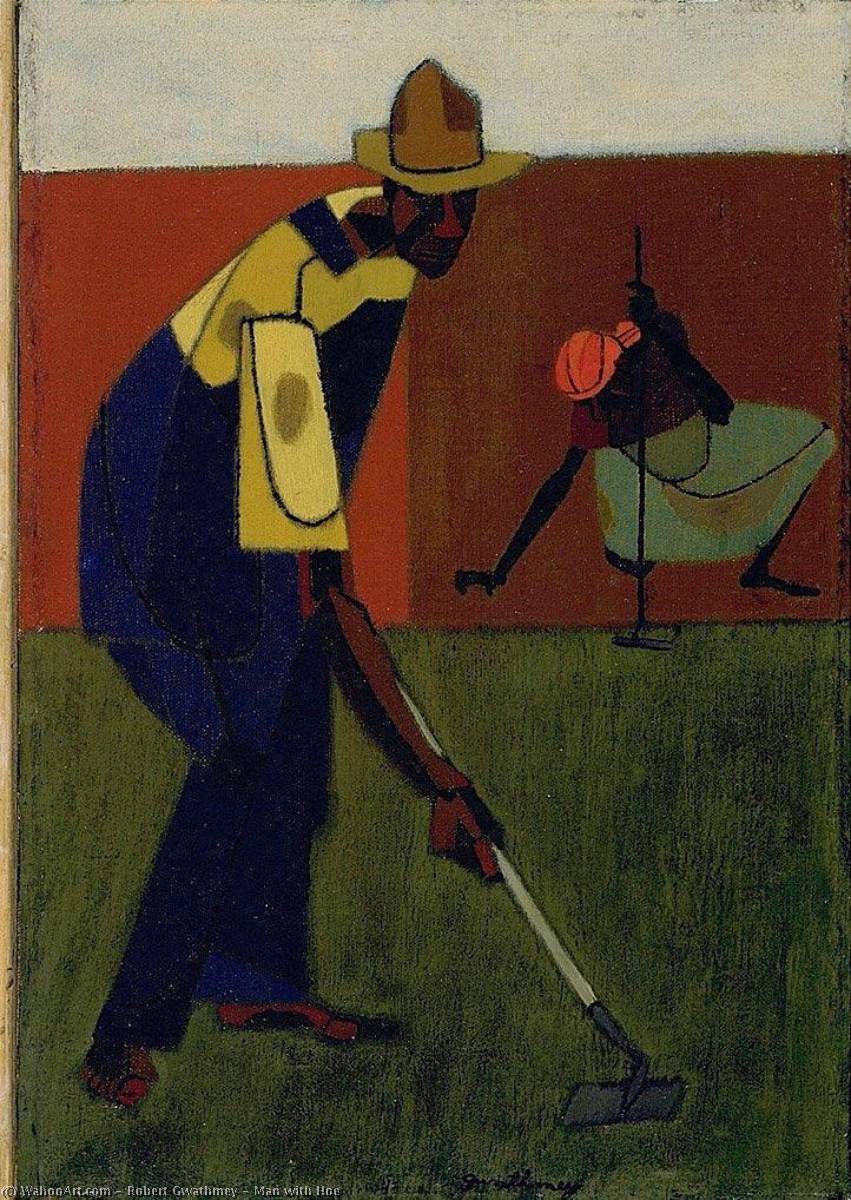
 Man with Hoe1944
16
 Singing and Mending1944
17
 Front Porch1947
18
 Poll Tax Country1945
19
 Sharecroppers and Blackberry Pickers1950
20
 Carrying the Sack1950
21
 Asleep at the Table1945 · Ogden Museum of Southern Art
22
 Untitled (813)
23
 Untitled (585)
24
 Untitled (196)
25
 Untitled (106)
26
 Untitled (721)
27
 Untitled (226)
28
 Untitled (193)
29
 Untitled (805)
30
 Untitled (561)
31
 Untitled (348)
32
 Untitled (491)
33
 Untitled (360)
34
 Untitled (416)
35
 Untitled (558)
36
 Untitled (285)
37
 Untitled (857)
38
 Untitled (207)
39
 Untitled (788)
40
 Untitled (724)
41
 Untitled (668)
42
 Untitled (655)
43
 Untitled (626)
44
 Untitled (735)
45
 Untitled (909)
46
 Untitled (968)
47
 Untitled (878)
48
 Untitled (106)
49
 Untitled (958)
50
 Untitled (857)
51
 Untitled (430)
52
 Untitled (750)
53
 Untitled (183)
54
 Untitled (229)
55
 Untitled (565)
56
 Going Home
Os 2 museus que detêm a maioria das pinturas desta página.
| Museus | Cidade | Obras de Robert Gwathmey | Pinturas desta lista |
|---|---|---|---|
 Art Institute of Chicago |
Chicago | 1 | The Farmer Wanted a Boy |
 Ogden Museum of Southern Art |
New Orleans | 1 | Asleep at the Table |
Os originais datados de Robert Gwathmey exibidos aqui abrangem cerca de dez anos, de 1942 a 1951: o olhar percorre-os ano após ano.
Escolha um ano para ver as obras originais.


The Farmer Wanted a Boy (1942), Art Institute of Chicago, Chicago. Portrait of a Farmer's Wife (1951) e Parade (1951) vêm a seguir.
39 anos: The Farmer Wanted a Boy data de 1942, e Robert Gwathmey nasceu em 1903.
The Farmer Wanted a Boy, Portrait of a Farmer's Wife, Parade, Untitled (504), Untitled (978), Untitled (811), Untitled (540), Untitled (830), Untitled (598) e Untitled (389). O ranking acima apresenta o ano e o museu de cada uma.
Nosso catálogo contém 59 obras de Robert Gwathmey, datadas de 1942 a 1951.
Principalmente em Art Institute of Chicago (Chicago) e Ogden Museum of Southern Art (New Orleans). A tabela de museus acima lista todos eles.
Em 1944: 2 das 56 obras nesta página foram feitas então, sendo Man with Hoe delas.
Nesta página, a mais antiga é The Farmer Wanted a Boy (1942) e a mais recente é Portrait of a Farmer's Wife (1951).
Social realism, a julgar pelos originais nesta página.