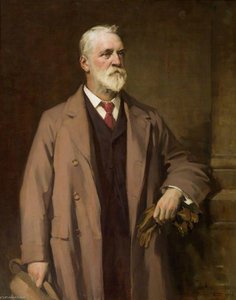
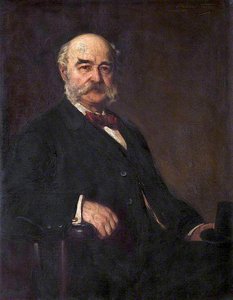
Retrato de Robert Gibb

Pinturas de Robert Gibb: As 28 mais famosas, sob o olhar de uma galeria

Atualizado em Novembro 2026 · classificado pela nossa pontuação de popularidade (pesquisas, visitas e pedidos de cada obra) · 31 obras de Robert Gibb em nosso catálogo

Em resumo

Aos olhos da galeria, a pintura mais famosa de Robert Gibb é Fechando os Portões em Hougoumont, 1815 (1903). Comrades, the 42nd Highlanders (copy of an earlier painting by the artist) (1894) e Sir Francis Webster (1912) completam o trio que todos reconhecem. Dos 31 trabalhos de Robert Gibb em nosso catálogo, a galeria apresenta abaixo as 28 obras mais famosas, cada uma original, com seu ano, seu museu e o que a torna única.

1845 – 1932, Glasgow Realism Mais obras: Royal Scottish Academy of Art - Architecture

As 10 principais pinturas de Robert Gibb na galeria

1
Fechando os Portões em Hougoumont, 1815 (1903) de Robert Gibb

Fechando os Portões em Hougoumont, 1815

1903 · Óleo sobre tela

Na grande tapeçaria da arte militar, poucos momentos ressoam com tanta tensão visceral quanto a obra-prima de 1903 de Robert Gibb, Fechando os Portões em Hougoumont, 1815. Este óleo sobre tela não é meramente uma representação de um evento histórico; é uma descida imersiva ao coração caótico da Batalha de Waterloo. À medida que o espectador se aproxima desta obra monumental, é imediatamente lançado na atmosfera repleta de fumaça de…

3
Sir Francis Webster (1912) de Robert Gibb

Sir Francis Webster

1912 · Oil · The Webster Memorial Theatre, Arbroath

This portrait of Sir Francis Webster was executed by the Scottish artist Robert Gibb in 1912. It is a work that captures a specific moment of civic recognition, having been presented by Arbroath Liberals and Other Friends on 20 April 1912. This presentation was made in recognition of his eminent public services within Arbroath.

4
Borthwick Castle (1831) de Robert Gibb

Borthwick Castle

A man on horseback moves through a landscape of quiet movement. He sits centered, a solitary figure navigating the space between the river and the rising hill. Above him, the castle looms, a heavy silhouette of stone anchored to the high ground. The sky and the earth meet in a soft, atmospheric haze that blurs the edges of the trees. Two birds drift through the air, one to the left…

5
The Sea King (1882) de Robert Gibb

The Sea King

1882 · Oil On Canvas · Royal Scottish Academy of Art - Architecture, Edimburgo

In this oil painting on canvas, Robert Gibb presents a large-scale study of a bearded warrior. Created about 1883, The Sea King captures a figure seated upon a collection of furs and draped fabric. The subject gazes toward the ocean, his posture suggesting a moment of quiet contemplation or perhaps a heavy sense of melancholy. The composition places the weight of the scene upon this central figure, whose presence dominates…

6
Rev. James Morison, 1816 - 1893 (1889) de Robert Gibb

Rev. James Morison, 1816 - 1893

In this 1889 oil portrait, Robert Gibb captures the likeness of a man defined by his convictions. The subject is Rev. James Morison, 1816 - 1893, a Scottish cleric who founded the Scottish Evangelical Union. Born in Bathgate, Linlithgowshire, Morison’s presence in the painting carries the weight of his theological history. He lived through a century of profound change, eventually passing away at his residence, Florentine Bank, Hillhead, Glasgow.

7
Rev. John Robson (1904) de Robert Gibb

Rev. John Robson

1904 · Oil On Canvas

A single light source carves a face from the shadows. The subject, an elderly man with a voluminous white beard, sits in a quiet, three-quarter pose. He is a figure of gravity, draped in a dark, formal coat that absorbs the surrounding gloom. His hands rest near a book, a heavy volume that anchors his presence in the dim space. The light catches the fine texture of his skin and…

8
Portrait of a Girl (1912) de Robert Gibb

Portrait of a Girl

1912 · Charcoal · Scottish National Gallery, Edimburgo

In the "Portrait of a Girl" by Robert Gibb, a young subject is captured in a bust-length study, rendered with a quiet, direct presence. Positioned centrally within the frame, the girl faces slightly toward the viewer's right, her gaze held at an intimate, eye-level perspective. The composition relies on the weight of form and the movement of light rather than a multitude of details, creating a sense of stillness. This…

9
Perth from Craigie (study) (1829) de Robert Gibb

Perth from Craigie (study)

1829 · Oil

This 1829 study offers a panoramic view of a settlement nestled against a rising hillside, framed by a backdrop of distant mountains. The composition focuses on the relationship between the built environment and the surrounding natural elements. A large body of water, likely a river or a lake, encircles the town, providing a sense of containment and tranquility. Small vessels are scattered across the water's surface, while figures and horses…

10
View of Perth (1829) de Robert Gibb

View of Perth

1829 · Oil

The canvas captures a hillside overlooking a river, where the earth meets the sky in a soft, atmospheric meeting. Mountains rise in the distance, their peaks softened by a pale haze that blurs the line between stone and air. Below, the water flows through the valley, a silver ribbon cutting through the greenery. Trees are scattered across the slope, their forms anchored in the soil but reaching toward the light.…

Pinturas de Robert Gibb, classificadas de 11 a 28

Os temas que cativaram o olhar de Robert Gibb

Os quatro temas que mais se repetem nestas obras originais, cada um com o seu melhor exemplo.

Os museus que guardam os originais de Robert Gibb

Os 8 museus que detêm a maioria das pinturas desta página.

Museus Cidade Obras de Robert Gibb Pinturas desta lista
Royal Scottish Academy of Art - Architecture, EdimburgoRoyal Scottish Academy of Art - Architecture Edimburgo 3 Borthwick Castle, The Sea King, View near Edinburgh
Scottish National Gallery, EdimburgoScottish National Gallery Edimburgo 3 Portrait of a Girl, Craigmillar Castle from Dalkeith Road, The Thin Red Line
The Webster Memorial Theatre, ArbroathThe Webster Memorial Theatre Arbroath 2 Sir Francis Webster, Janet Webster (1819–1908), Mother of Sir Francis Webster
Perth And Kinross Council, PerthPerth And Kinross Council Perth 2 Harry Young of Cleish, Convenor of Kinross shire, Lord Provost David MacGregor
The Black Watch Castle - Museum, PerthThe Black Watch Castle - Museum Perth 1 Comrades, the 42nd Highlanders (copy of an earlier painting by the artist)
Galeria Nacional de Retratos de Escócia, EdimburgoGaleria Nacional de Retratos de Escócia Edimburgo 1 Rev. James Morison, 1816 - 1893
Midlothian Council Library Headquarters, LeithMidlothian Council Library Headquarters Leith 1 Alexander Mitchell, Dalkeith
The Stirling Smith Art Gallery - Museum, StirlingThe Stirling Smith Art Gallery - Museum Stirling 1 Reverend James Muir

Robert Gibb, uma pintura emblemática por década

Obras por década

Escolha uma década para ver a obra original que a define.

Pinturas de Robert Gibb: a galeria responde

Qual pintura de Robert Gibb é a mais famosa de todas?Revelar a resposta

Fechando os Portões em Hougoumont, 1815 (1903). Comrades, the 42nd Highlanders (copy of an earlier painting by the artist) (1894) e Sir Francis Webster (1912) vêm a seguir.

Qual era a idade de Robert Gibb ao concluir Fechando os Portões em Hougoumont, 1815?Revelar a resposta

58 anos: Fechando os Portões em Hougoumont, 1815 data de 1903, e Robert Gibb nasceu em 1845.

Quais são as 10 principais pinturas de Robert Gibb?Revelar a resposta

Fechando os Portões em Hougoumont, 1815, Comrades, the 42nd Highlanders (copy of an earlier painting by the artist), Sir Francis Webster, Borthwick Castle, The Sea King, Rev. James Morison, 1816 - 1893, Rev. John Robson, Portrait of a Girl, Perth from Craigie (study) e View of Perth. O ranking acima apresenta o ano e o museu de cada uma.

Quantas obras Robert Gibb criou?Revelar a resposta

Nosso catálogo contém 31 obras de Robert Gibb, datadas de 1881 a 1929.

Onde estão expostos os originais mais famosos de Robert Gibb?Revelar a resposta

Principalmente em Royal Scottish Academy of Art - Architecture (Edimburgo), Scottish National Gallery (Edimburgo) e The Webster Memorial Theatre (Arbroath). A tabela de museus acima lista todos eles.

Quando é que Robert Gibb criou as suas pinturas mais famosas?Revelar a resposta

Em 1890s: 7 das 28 obras nesta página foram feitas então, sendo Comrades, the 42nd Highlanders (copy of an earlier painting by the artist) delas.

Quais são as obras mais famosas de Robert Gibb no início e no fim de sua carreira?Revelar a resposta

Nesta página, a mais antiga é Mrs William Ferguson (d.1881) (1881) e a mais recente é Backs to the Wall, 1918 (1929).

Quais temas Robert Gibb mais explorou?Revelar a resposta

Man (8), Elderly man (4) e Book (4), entre as 28 obras nesta página.

Em qual técnica Robert Gibb mais trabalhou?Revelar a resposta

Oil, para 8 das 28 obras nesta página.

Com qual movimento Robert Gibb está associado(a)?Revelar a resposta

Realism, a julgar pelos originais nesta página.

Quais obras originais de Robert Gibb o Royal Scottish Academy of Art - Architecture possui?Revelar a resposta

Borthwick Castle, The Sea King e View near Edinburgh: o Royal Scottish Academy of Art - Architecture, Edimburgo detém 3 das obras desta página.

Robert Gibb: o artista

A Alma Atmosférica da Escócia: A Vida e a Arte de Robert Gibb

Nas vastidões enevoadadas e cobertas de urze da paisagem escocesa do século XIX, poucos artistas capturaram a profunda interseção entre a grandiosidade histórica e a atmosfera natural com tanta maestria quanto Robert Gibb. Nascido em Edimburgo em 1845, Gibb emergiu como uma figura fundamental na arte britânica do final da era vitoriana, um pintor cujo pincel possuía a habilidade única de transpor o abismo entre a tradição clássica e a crescente profundidade emocional do tonalismo. A obra de sua vida serve como uma crônica visual de sua terra natal, movendo-se perfeitamente da escala robusta e monumental das Highlands até as complexidades psicológicas e íntimas do retrato formal.

A base artística de Gibb foi estabelecida nos prestigiados salões da Royal Scottish Academy, em Edimburgo. Durante esses anos formativos, ele mergulhou nas tradições neoclássicas que definiam a época, buscando inspiração nas composições estruturadas e na beleza idealizada defendida por mestres como Benjamin Haydon e George Frederic Watts. Este treinamento rigoroso instilou nele um respeito vitalício pela forma clássica, mas Gibb nunca se contentou em ser apenas um estudante do passado. Ele possuía um impulso inato para explorar as qualidades efêmeras da luz e do ar, buscando capturar não apenas a realidade física de uma cena, mas o seu próprio espírito.

Do Realismo de Barbizon à Luz Tonalista

À medida que sua carreira progredia, o estilo de Gibb passou por uma evolução cativante, afastando-se da precisão acadêmica estrita em direção a um realismo mais evocativo e atmosférico. Ele encontrou uma ressonância profunda na Escola de Barbizon, particularmente nas obras de Jean-François Millet e Gustave Courbet. Desses mestres franceses, ele adotou a ênfase na pintura plein air e uma reverência pela escala monumental da natureza. Suas primeiras paisagens frequentemente refletiam essa grandiosidade rústica, retratando os lochs e as montanhas escocesas com um senso de peso e permanência que comandava a atenção do espectador.

No entanto, conforme a influência do Impressionismo começava a ecoar pelo mundo da arte britânica, Gibb transitou para o Tonalismo. Essa mudança estilística marcou seu período mais maduro, caracterizado pelo abandono de contornos nítidos e definidos em favor de gradações sutis de cor e uma névoa atmosférica onipresente. Nestas obras tardias, a paisagem torna-se uma experiência etérea; a luz não apenas ilumina o sujeito, mas parece emergir de dentro dele. Através desta técnica, Gibb alcançou um senso de sfumato que permitia que as fronteiras entre a terra e o céu se dissolvessem, criando telas imbuídas de uma qualidade poética e inquietante.

Um Legado de Retratos e Grandiosidade Histórica

Embora suas paisagens sejam celebradas por sua profundidade atmosférica, a reputação de Gibb foi igualmente fortalecida por sua destreza como retratista. Ele possuía uma habilidade notável para renderizar a semelhança de figuras proeminentes da Escócia com precisão técnica e profunda percepção psicológica. Seus retratos de indivíduos como Sir John Watson Gordon e Sir Daniel Macnee distinguem-se por suas texturas ricas e um senso de presença digna, capturando o caráter de seus modelos através de um controle magistral de luz e sombra.

Além da quietude do retrato, Gibb também alcançou grande sucesso ao retratar cenas históricas e militares dramáticas. Seu trabalho frequentemente tocava em temas de identidade nacional e heroísmo, vistos de forma mais notável em obras como The Thin Red Line. Estas composições permitiam-lhe combinar sua habilidade para a pintura narrativa de grande escala com seu talento para capturar movimento e tensão. Através deste corpo de trabalho diversificado — que varia da solenidade do retrato de uma figura jurídica à escala épica de um campo de batalha — Robert Gibb assegurou seu lugar na história da arte como um artista capaz de traduzir a força duradoura da herança escocesa na linguagem delicada e fugaz da luz.