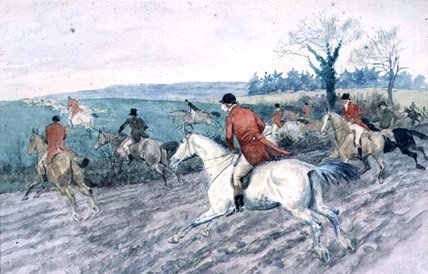
Retrato de Randolph Caldecott

As 49 Pinturas Mais Famosas de Randolph Caldecott, uma Seleção da Galeria

Atualizado em Novembro 2026 · classificado pela nossa pontuação de popularidade (pesquisas, visitas e pedidos de cada obra) · 49 obras de Randolph Caldecott em nosso catálogo

Em resumo

De todas as obras originais que Randolph Caldecott deixou, a mais famosa é Family Life In Colonial America. Logo atrás vêm Two Huntsmen Riding (1865) e The Volunteer's Courtship, 1798 (1870). Nosso catálogo contém 49 obras de Randolph Caldecott; a galeria preservou as 49 que o mundo mais admira, cada uma exibida com sua data, seu museu e sua história.

1846 – 1886, Chester Victorian illustration Mais obras: Hill Top Farm

As 10 principais pinturas de Randolph Caldecott: a escolha da galeria

1
Family Life In Colonial America de Randolph Caldecott

Family Life In Colonial America

Illustration

A cobblestone street serves as the stage for this detailed scene of colonial existence. A horse-drawn carriage sits parked at the roadside, its presence anchoring the composition. Beside it, a father in a blue coat and tricorne hat observes the activity, while his wife, dressed in a yellow gown and white apron, holds a child reaching toward the horse. The composition captures a fleeting instance of domesticity amidst the movement…

2
Two Huntsmen Riding (1865) de Randolph Caldecott

Two Huntsmen Riding

1865 · Oil On Canvas · Hill Top Farm

Two Huntsmen Riding by Randolph Caldecott presents a sporting scene centered on two huntsmen on horseback. The action is positioned in the middle ground of a rural landscape, framed by a horizontal composition. This arrangement places the riders against a vast, open sky and a distant horizon, emphasizing the scale of the environment. The work, dating from about 1865, captures a moment of movement through the landscape.

3
The Volunteer's Courtship, 1798 (1870) de Randolph Caldecott

The Volunteer's Courtship, 1798

1870 · Watercolor

The Volunteer's Courtship, 1798, by Randolph Caldecott, depicts a courtship between a soldier and a lady within an outdoor setting. The composition centers on these two figures, who are positioned in a three-quarter view facing one another. This arrangement creates an intimate focal point within the wooded environment. The perspective is set at eye level, placing the viewer in the immediate vicinity of the subjects. The subject matter captures a…

A seleção de Randolph Caldecott continua, de 11 a 49

Os temas que cativaram o olhar de Randolph Caldecott

Os quatro temas que mais se repetem nestas obras originais, cada um com o seu melhor exemplo.

Os museus que guardam os originais de Randolph Caldecott

O museu que detém a maioria das pinturas desta página.

Museus Cidade Obras de Randolph Caldecott Pinturas desta lista
Hill Top FarmHill Top Farm 3 Two Huntsmen Riding, Italian Cattle (recto) & Randolph Caldecott's Garden in Surrey (verso), Cattle in the Italian Alps (recto); The Artist's Garden in Surrey (verso)

Randolph Caldecott ano a ano: as obras originais que definem cada um

As obras datadas de Randolph Caldecott nesta seleção abrangem apenas 6 anos, de 1865 a 1870: uma carreira breve, apresentada aqui ano a ano.

Obras por ano

Escolha um ano para ver as obras originais.

Perguntas de colecionadores sobre as pinturas de Randolph Caldecott

Por qual obra Randolph Caldecott é mais conhecido(a)?Revelar a resposta

Family Life In Colonial America. Two Huntsmen Riding (1865) e The Volunteer's Courtship, 1798 (1870) vêm a seguir.

Quais são as dez pinturas mais famosas de Randolph Caldecott?Revelar a resposta

Family Life In Colonial America, Two Huntsmen Riding, The Volunteer's Courtship, 1798, Italian Cattle (recto) & Randolph Caldecott's Garden in Surrey (verso), Morning Ride, Fox Hunting -, Diana Wood's Wedding, Fox Hunting, Brighton ladies e The rivals. O ranking acima apresenta o ano e o museu de cada uma.

Quantas pinturas Randolph Caldecott deixou?Revelar a resposta

Nosso catálogo contém 49 obras de Randolph Caldecott, datadas de 1865 a 1870.

Em quais museus estão expostas as obras-primas de Randolph Caldecott?Revelar a resposta

Principalmente em Hill Top Farm. A tabela de museus acima lista todos eles.

Quais são as primeiras e as últimas obras originais famosas de Randolph Caldecott?Revelar a resposta

Nesta página, a mais antiga é Two Huntsmen Riding (1865) e a mais recente é The Volunteer's Courtship, 1798 (1870).

Quais temas Randolph Caldecott escolheu com mais frequência?Revelar a resposta

Farmer (4), Rural landscape (3) e Animals (3), entre as 49 obras nesta página.

A qual movimento artístico pertence Randolph Caldecott?Revelar a resposta

Victorian illustration, a julgar pelos originais nesta página.

Quais obras de Randolph Caldecott estão expostas no Hill Top Farm?Revelar a resposta

Two Huntsmen Riding, Italian Cattle (recto) & Randolph Caldecott's Garden in Surrey (verso) e Cattle in the Italian Alps (recto); The Artist's Garden in Surrey (verso): o Hill Top Farm detém 3 das obras desta página.

Randolph Caldecott: vida e obra

Randolph Caldecott: A Victorian Pioneer of Children’s Illustration

  • Early Life and Education
  • Banking Clerk to Artistic Innovator
  • The Golden Age of Illustration: Caldecott's Masterpieces
  • Style and Technique
  • Legacy and Influence

Early Life and Education

Randolph Caldecott (born March 22, 1846, Chester, Cheshire, England) was a British artist and illustrator whose distinctive style revolutionized children’s literature during the Victorian era. From his earliest years, he demonstrated an exceptional talent for drawing—a passion nurtured by his father, John Caldecott, who was originally a hatter and tailor but later developed an interest in accountancy. Growing up in Chester alongside thirteen siblings or half-siblings fostered keen observation of everyday life—a skill that would prove invaluable to his artistic endeavors. He attended King Henry VIII School, Chester, where he became head boy at the age of fifteen, receiving a solid academic foundation alongside his burgeoning artistic inclinations. This formative experience instilled in him a disciplined approach and honed his visual perception, shaping the trajectory of his lifelong creative pursuits.

Banking Clerk to Artistic Innovator

Initially, Caldecott pursued a conventional career path as a bank clerk at Whitchurch & Ellesmere Bank. For several years he balanced the meticulous demands of finance with his artistic explorations—a duality that perhaps refined his attention to detail and provided him with rich material for character studies from the diverse clientele he encountered. His father’s decision to prioritize banking instilled in Caldecott a sense of responsibility and practicality alongside his artistic passion. During this period, he honed his skills as an illustrator by studying under Sir Edward Poynter and sketching in the studio of J. Dalou—experiences that broadened his artistic horizons and solidified his commitment to mastering various mediums.

The Golden Age of Illustration: Caldecott's Masterpieces

Caldecott’s fame rests primarily on his series of Christmas books published with Edmund Evans from 1878 to 1886—works that transcended mere illustration and achieved the status of miniature masterpieces. These weren’t simply decorative additions to stories; they were vibrant narratives rendered in exquisite detail, capturing the spirit of Victorian festive traditions. Titles like *The House That Jack Built* and *The Diverting History of John Gilpin* captivated generations of children with their lively characters and dynamic compositions—a departure from the sentimental conventions prevalent at the time. Caldecott’s illustrations broke away from static poses, favoring movement and emotion—a stylistic innovation that profoundly influenced subsequent illustrators. He collaborated extensively with renowned authors such as Washington Irving and Juliana Horatia Ewing, elevating storytelling through visual artistry.

Style and Technique

Caldecott's artistic style was characterized by its distinctive features: dynamic compositions emphasizing perspective and movement; meticulous attention to detail—particularly in rendering textures and surfaces; and a masterful command of line and color. Unlike many illustrators of his era who adhered to traditional conventions, Caldecott embraced experimentation—incorporating techniques borrowed from etching and wood engraving to achieve unparalleled visual impact. His penchant for capturing fleeting moments of emotion and narrative tension distinguished him from contemporaries, establishing a style that remains instantly recognizable today.

Legacy and Influence

Randolph Caldecott’s legacy extends far beyond his celebrated Christmas books—he fundamentally reshaped the landscape of children's illustration. His pioneering approach to storytelling—characterized by humor, dynamism, and psychological insight—inspired generations of artists who followed him. Most notably, he established the Caldecott Medal—an annual award bestowed upon the most distinguished picture book published in the United States—a testament to his enduring contribution to literature and art. Caldecott’s influence continues to resonate within the field, reminding us that true artistry lies not merely in depicting subjects accurately but in conveying emotion and capturing the essence of human experience.