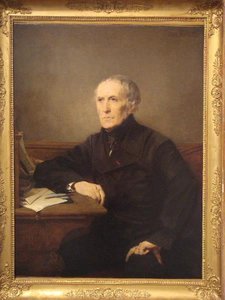
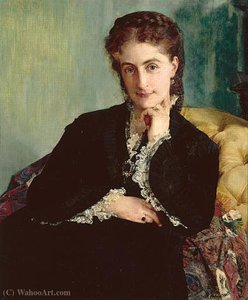
Retrato de Paul Baudry

As 42 Pinturas Mais Famosas de Paul Baudry, Cada Uma Única

Atualizado em Novembro 2026 · classificado pela nossa pontuação de popularidade (pesquisas, visitas e pedidos de cada obra) · 46 obras de Paul Baudry em nosso catálogo

Em resumo

Young Saint John the Baptist (1860) é a pintura de Paul Baudry que mais atrai olhares; a obra original pertence ao Musée d'Orsay, Paris. Depois disso, o olhar recai sobre Zenobie retrouvee par les bergers sur les bords e The Vision of Saint Hubert (1882). Entre as 46 obras de Paul Baudry em nosso catálogo, estas 42 são as mais famosas, cada uma uma original única apresentada com o seu ano, o seu museu e a razão pela qual perdura.

1828 – 1886, La Roche-sur-Yon Academic painting Mais obras: Musée Condé

As 10 principais pinturas de Paul Baudry, sob o olhar da galeria

1
Young Saint John the Baptist (1860) de Paul Baudry

Young Saint John the Baptist

1860 · Oil On Canvas · Musée d'Orsay, Paris

A young child stands alone within the quiet embrace of a woodland glade, his small figure anchored by a sense of profound stillness. This is the young Saint John the Baptist, caught in a moment of soft, naturalistic solitude. He holds a wooden staff that cuts a diagonal path across the vertical composition, a structural element that guides the eye toward the small banner attached to it. On this scrap…

2
Zenobie retrouvee par les bergers sur les bords de Paul Baudry

Zenobie retrouvee par les bergers sur les bords

Oil On Canvas

Zenobie retrouvee par les bergers sur les bords is a painting by Paul-Jacques-Aimé Baudry. The work depicts Zenobia, a Queen of Armenia, in a moment of significant distress. Following a revolt, Zenobia was fleeing alongside her husband. The narrative captured in the scene centers on the moment she was found wounded by shepherds at the River Araxes. This discovery occurs after Zenobia had requested that her husband kill her to…

3
The Vision of Saint Hubert (1882) de Paul Baudry

The Vision of Saint Hubert

1882 · Oil On Canvas · Musée Condé, Chantilly

The scene unfolds in 1882, capturing a moment of divine interruption within a dense forest. In The Vision of Saint Hubert, the artist Paul-Jacques-Aimé Baudry presents the transformative encounter of Saint Hubert, a pagan hunter. The air seems to hold its breath as the hunter faces a stag, a creature marked by a luminous cross that pierces the shadows of the woods. This celestial sign marks the exact instant of…

4
Venus Playing with Cupid (1858) de Paul Baudry

Venus Playing with Cupid

1858 · Oil On Canvas · Musée Condé, Chantilly

Venus Playing with Cupid by Paul-Jacques-Aimé Baudry presents a mythological scene centered within an oval frame. In the foreground, the figure of Venus reclines, her form partially covered by blue fabric. A small Cupid is positioned near her upper body, engaging in direct interaction with her. To the left of the central figures, a white bird, likely a dove, is captured in flight above a wooden structure or chair. The…

5
Portrait of a Man (1859) de Paul Baudry

Portrait of a Man

1859 · Oil On Canvas · Museum of Fine Arts Ghent (MSK), Gante

The artwork is the Portrait of a Man by the French painter Paul-Jacques-Aimé Baudry. Created in 1859, this oil on canvas work presents a bust-length composition. The subject of the painting is an elderly man, depicted from the chest upward against a dark, indistinct background.

7
The Coronation of the Woman (1883) de Paul Baudry

The Coronation of the Woman

1883 · Gouache · Musée Victor Hugo, Paris

The Coronation of the Woman was executed by Paul-Jacques-Aimé Baudry around 1883. The artist, born in 1828 in La Roche-sur-Yon, France, was a prominent figure in the French academic tradition. His career spanned the transition between the Second Empire and the early Third Republic, a period marked by significant shifts in Parisian decorative arts and institutional painting.

8
Studies of Antique Horsemen, after Charles Le Brun (1886) de Paul Baudry

Studies of Antique Horsemen, after Charles Le Brun

1886 · Gouache · Musée Carnavalet, Paris

This preparatory study, executed in 1886, captures a group of armored horsemen in a state of rapid, diagonal movement. The composition is tightly packed, focusing on the physical tension between the riders and their mounts. Several soldiers are depicted in Roman-style military attire, wearing crested helmets known as galea and heavy tunics. The horses are shown in mid-stride, their musculature defined by gestural lines that suggest the weight and power…

9
Study of a Horse and a Fallen Rider, after Le Brun (1886) de Paul Baudry

Study of a Horse and a Fallen Rider, after Le Brun

1886 · Oil On Board · Musée Carnavalet, Paris

The scene unfolds in 1886, captured through the focused lens of an oil study titled Study of a Horse and a Fallen Rider, after Le Brun. In this moment of intense physical struggle, the artist Paul-Jacques-Aimé Baudry translates a sense of chaotic movement onto the surface. The work breathes with the tension of a sudden, violent descent, freezing a fragment of action that feels as though it might continue to…

Pinturas famosas de Paul Baudry, números 11 a 42

Pinturas famosas de Paul Baudry, período por período

Os temas que cativaram o olhar de Paul Baudry

Os quatro temas que mais se repetem nestas obras originais, cada um com o seu melhor exemplo.

Os museus que guardam os originais de Paul Baudry

Os 8 museus que detêm a maioria das pinturas desta página.

Museus Cidade Obras de Paul Baudry Pinturas desta lista
Musée Condé, ChantillyMusée Condé Chantilly 4 The Vision of Saint Hubert, Venus Playing with Cupid, Enlevement de Psyche
Musée d'Orsay, ParisMusée d'Orsay Paris 3 Young Saint John the Baptist, Portrait of Charles Garnier, Wealth and young child
Musée Carnavalet, ParisMusée Carnavalet Paris 3 Studies of Antique Horsemen, after Charles Le Brun, Study of a Horse and a Fallen Rider, after Le Brun, Study of a Horse for the Equestrian Portrait of Comte de Palikao
Petit Palais, ParisPetit Palais Paris 2 Sketch for the Salle des Audiences of the Cour de Cassation of Paris: Glorification of the Law, Mrs. Louis Singer, born Theresa Stern
Musée d'Arts de Nantes, NantesMusée d'Arts de Nantes Nantes 2 Mrs. louis cézard, The penitent Madeleine
Museum of Fine Arts Ghent (MSK), GanteMuseum of Fine Arts Ghent (MSK) Gante 1 Portrait of a Man
Musée Victor Hugo, ParisMusée Victor Hugo Paris 1 The Coronation of the Woman
Indianapolis Museum of Art, IndianapolisIndianapolis Museum of Art Indianapolis 1 Study for an Architectural Decoration

Paul Baudry ao longo das décadas: uma obra original única para cada uma

Obras por década

Escolha uma década para ver a obra original que a define.

Pinturas de Paul Baudry: perguntas para a galeria

Qual é a obra mais famosa de Paul Baudry?Revelar a resposta

Young Saint John the Baptist (1860), Musée d'Orsay, Paris. Zenobie retrouvee par les bergers sur les bords e The Vision of Saint Hubert (1882) vêm a seguir.

Com que idade Paul Baudry criou Young Saint John the Baptist?Revelar a resposta

32 anos: Young Saint John the Baptist data de 1860, e Paul Baudry nasceu em 1828.

Quais são as dez pinturas mais famosas de Paul Baudry?Revelar a resposta

Young Saint John the Baptist, Zenobie retrouvee par les bergers sur les bords, The Vision of Saint Hubert, Venus Playing with Cupid, Portrait of a Man, Portrait of Charles Garnier, The Coronation of the Woman, Studies of Antique Horsemen, after Charles Le Brun, Study of a Horse and a Fallen Rider, after Le Brun e Ships in the Harbor. O ranking acima apresenta o ano e o museu de cada uma.

Quantas obras de Paul Baudry são conhecidas?Revelar a resposta

Nosso catálogo contém 46 obras de Paul Baudry, datadas de 1853 a 1886.

Onde se pode ver os originais mais famosos de Paul Baudry?Revelar a resposta

Principalmente em Musée Condé (Chantilly), Musée d'Orsay (Paris) e Musée Carnavalet (Paris). A tabela de museus acima lista todos eles.

Em que período Paul Baudry criou as suas pinturas mais conhecidas?Revelar a resposta

Em 1880s: 5 das 42 obras nesta página foram feitas então, sendo The Vision of Saint Hubert delas.

Qual pintura famosa de Paul Baudry é a mais antiga e qual é a mais recente?Revelar a resposta

Nesta página, a mais antiga é Ships in the Harbor (1853) e a mais recente é Studies of Antique Horsemen, after Charles Le Brun (1886).

Quais temas Paul Baudry preferia?Revelar a resposta

Nude figure (5), Woman (3) e Landscape (3), entre as 42 obras nesta página.

Com quais materiais Paul Baudry mais pintou?Revelar a resposta

Oil On Canvas, para 7 das 42 obras nesta página.

A qual movimento pertence a obra de Paul Baudry?Revelar a resposta

Academic painting, a julgar pelos originais nesta página.

Quais originais de Paul Baudry posso ver no Musée Condé?Revelar a resposta

The Vision of Saint Hubert, Venus Playing with Cupid e Enlevement de Psyche: o Musée Condé, Chantilly detém 4 das obras desta página.

Paul Baudry: um retrato do artista

Paul-Jacques-Aimé Baudry: A Master of Elegance and Parisian Decoration

Paul-Jacques-Aimé Baudry, born in the quiet town of La Roche-sur-Yon in France’s Vendée department on November 7, 1828, emerged from a modest background to become one of the most celebrated academic painters of his era. His father, a skilled clog maker, instilled in him a respect for craftsmanship and practicality, yet recognized and nurtured the burgeoning artistic talent within his son – a recognition that proved pivotal to Baudry’s future success. Early training in his local community laid the foundation for his artistic development, culminating in his enrollment at the prestigious École des Beaux-Arts in Paris in 1845, where he studied under Michel Martin Drolling, absorbing the rigorous traditions of the time and honing his technical skills. This foundational education instilled within him a dedication to precision, classical ideals, and a deep understanding of artistic history – principles that would shape his entire career.

The Roman Scholar: Influences and Early Recognition

Baudry’s journey truly began with his acceptance into the Prix de Rome in 1850, an extraordinary achievement that granted him a scholarship to study at the French Academy in Rome. This period proved transformative, immersing Baudry in the heart of Italian artistic heritage. He meticulously studied the works of masters such as Titian, Veronese, and most profoundly, Correggio – whose graceful forms, luminous colors, and dynamic compositions deeply resonated with his own artistic sensibilities. Correggio’s influence is particularly evident in Baudry's later work, manifesting in a delicate elegance and a masterful use of light and shadow. The competition for the Prix de Rome was fierce, with even the renowned sculptor Jacques-Louis David attempting to win it three times before finally succeeding. This experience instilled within Baudry a profound appreciation for artistic excellence and a commitment to rigorous training. Returning to Paris in 1853, he quickly gained recognition for his paintings, notably *The Martyrdom of a Vestal Virgin* and *The Child*, both purchased by the Luxembourg Museum – works that showcased his burgeoning talent and established him as a rising star within the Parisian art scene.

A Symphony of Color: The Opera Garnier Murals

Baudry’s most enduring legacy lies in his monumental mural decorations for the Palais Garnier, the opulent Paris Opera House. This ambitious project consumed nearly ten years of his life and represents the pinnacle of his artistic achievement. Commissioned to adorn the foyer – a space designed to evoke the grandeur of ancient Rome – Baudry created over thirty paintings depicting scenes of dancing, music, and mythological figures. These murals are not merely decorative; they are immersive experiences—a vibrant tapestry of color, movement, and narrative that transformed the Opera Garnier into a true celebration of art itself. The meticulous detail, masterful composition, and sheer scale of these works demonstrate Baudry’s extraordinary skill as a painter and his profound understanding of spatial design. The murals remain a testament to his artistic vision and continue to captivate visitors today.

Beyond the Foyer: Portraits, Historical Scenes, and a Lasting Impact

While the Opera Garnier murals cemented his fame, Baudry's artistic output extended far beyond this single commission. He produced numerous portraits of prominent figures—including François Guizot, Charles Garnier, and Edmond About—capturing not only their physical likenesses but also their personalities and intellect. He also explored historical subjects, notably *Charlotte Corday after the Murder of Marat*, a dramatic depiction of a pivotal moment in French history. Throughout his career, Baudry consistently favored mythological and fanciful themes, demonstrating a willingness to experiment with narrative and visual storytelling. His work reflects a deep engagement with classical mythology and a masterful ability to translate complex narratives into visually compelling compositions. Baudry’s election as a member of the Académie des Beaux-Arts in 1886—succeeding Jean Victor Schnetz—served as further recognition of his artistic merit and established him as a leading figure within the French art establishment.

A Legacy of Elegance

Paul-Jacques-Aimé Baudry died in Paris on January 17, 1886, leaving behind a rich and enduring legacy. His work stands as a testament to the power of academic training, classical influences, and artistic vision. While later movements like Impressionism challenged traditional styles, Baudry’s meticulous technique, elegant compositions, and evocative use of color continue to resonate with audiences today. He remains an important figure in 19th-century French art—a master of decorative painting who transformed the visual landscape of Paris and left behind a collection of works that embody the elegance, sophistication, and artistic ambition of his era. His murals at the Opera Garnier, in particular, serve as a lasting reminder of his extraordinary talent and enduring influence.