


1


Atualizado em Novembro 2026 · classificado pela nossa pontuação de popularidade (pesquisas, visitas e pedidos de cada obra) · 15 obras de Patrick Henry Bruce em nosso catálogo
Em resumo
Aos olhos da galeria, a pintura mais famosa de Patrick Henry Bruce é Composition V (1916), cuja obra original está exposta no Yale University Art Gallery, em New Haven. Composition IV (1916) e Plum (1912) completam o trio que todos reconhecem. Dos 15 trabalhos de Patrick Henry Bruce em nosso catálogo, a galeria apresenta abaixo as 15 obras mais famosas, cada uma original, com seu ano, seu museu e o que a torna única.


Os 8 museus que detêm a maioria das pinturas desta página.
| Museus | Cidade | Obras de Patrick Henry Bruce | Pinturas desta lista |
|---|---|---|---|
 Yale University Art Gallery |
New Haven | 6 | Composition V, Composition IV, Plum |
 Museum of Fine Arts |
Houston | 1 | Composition VI |
 Rhode Island School of Design Museum of Art |
Providence | 1 | Forms |
 Whitney Museum of American Art |
Nova Iorque | 1 | Painting |
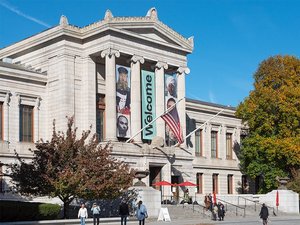 Museu de Belas Artes de Boston |
Boston | 1 | Forms (Peinture) |
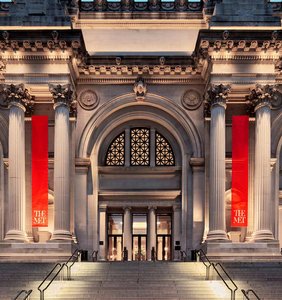 Metropolitan Museum of Art |
Nova York | 1 | Objects on a Table |
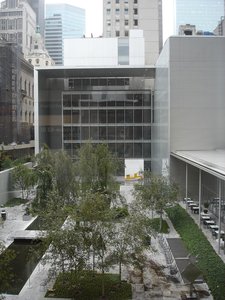 MoMA - Museu de Arte Moderna |
Nova York | 1 | Painting |
 The Valentine |
Richmond | 1 | Storebook, Volume 1 |
A carreira de Patrick Henry Bruce nesta página abrange 13 anos, de 1912 a 1924: cada ano aparece aqui com as suas obras originais mais famosas.
Escolha um ano para ver as obras originais.

Cylindrical, C-shaped, and triangular forms are painted with flat areas of vivid pink, purple, navy, royal, and light blue, turquoise, white, black, and gray in this abstract, horizontal painting. A rectangular form, jutting into the picture from the lower left corner, suggests a table, on which the shapes are stacked. The table has square, gray legs and a black top surface. The inner surface of the one leg we can…
Composition V (1916), Yale University Art Gallery, New Haven. Composition IV (1916) e Plum (1912) vêm a seguir.
35 anos: Composition V data de 1916, e Patrick Henry Bruce nasceu em 1881.
Composition V, Composition IV, Plum, Composition III, Composition II, Composition I, Composition VI, Forms, Painting e Forms (Peinture). O ranking acima apresenta o ano e o museu de cada uma.
Nosso catálogo contém 15 obras de Patrick Henry Bruce, datadas de 1912 a 1924.
Principalmente em Yale University Art Gallery (New Haven), Museum of Fine Arts (Houston) e Rhode Island School of Design Museum of Art (Providence). A tabela de museus acima lista todos eles.
Em 1916: 6 das 15 obras nesta página foram feitas então, sendo Composition V delas.
Nesta página, a mais antiga é Plum (1912) e a mais recente é Peinture/Nature Morte (1924).
Composition V, Composition IV e Plum: o Yale University Art Gallery, New Haven detém 6 das obras desta página.
The story of Patrick Henry Bruce is one of profound transitions, where the weight of American lineage met the radical liberation of European modernism. Born in 1881 in Campbell County, Virginia, Bruce was a descendant of the legendary statesman Patrick Henry, a heritage that connected him to the very roots of American history. His formative years were spent amidst the fading grandeur of the Berry Hill Estate, a vast plantation that had once been a cornerstone of Virginia's social fabric. This environment, steeped in historical context and the echoes of a bygone era, provided a unique psychological foundation for an artist who would eventually seek to dismantle traditional representation in favor of geometric clarity.
Despite the economic shifts following the Civil War that diminished his family’s fortunes, Bruce possessed an unyielding determination. His early artistic pursuits were marked by a rigorous self-discipline, balancing daytime work in real estate with evening studies at the Richmond Art Club. This period of grit and perseverance prepared him for the transformative journey that lay ahead, leading him from the quiet landscapes of Virginia to the bustling, avant-garde energy of New York and, ultimately, to the heart of the Parisian art scene.
In 1902, Bruce arrived in New York City, where he sought mentorship under titans of American realism such as William Merritt Chase and Robert Henri. These encounters provided him with a technical mastery of light and shadow, yet it was his move to Paris in 1904 that would fundamentally redefine his artistic language. Immersed in the vibrant intellectual currents of France, Bruce became a vital participant in the era's most significant aesthetic debates. He moved within the inner circles of the avant-garde, finding himself under the influence of Henri Matisse and engaging with the legendary collectors Gertrude and Leo Stein.
His development was characterized by a sophisticated synthesis of diverse movements. While his early work echoed the structural lessons of Paul Cézanne and the vibrant palettes of Fauvism, Bruce’s true genius lay in his ability to navigate the complexities of 20-century abstraction. Between 1912 and 1914, his collaborations with Sonia and Robert Delaunay exposed him to the rhythmic, circular energy of Orphism. However, rather than becoming a mere follower of any single school, Bruce carved out a distinct niche. He moved away from the fragmented, often chaotic energy of Cubism—which some associated with the destruction of World War I—and instead pursued a style defined by rational stillness and geometric precision.
The mature works of Patrick Henry Bruce are masterclasses in the use of flat color and architectural form. His compositions often feature a striking economy of means, where objects are reduced to their essential shapes—cylinders, triangles, and rectangles—yet retain a sense of tangible presence. In masterpieces such as Objects on a Table, one observes a deliberate departure from the splintered planes of traditional Cubism. Instead, Bruce utilizes clean lines and cool tonalities to create a sense of permanence and order. His use of color is equally calculated; he employs vivid pinks, deep navies, and bright turquoises not merely for decoration, but to define the boundaries of form and create a balanced, harmonious space.
Bruce’s contribution to the history of modern art lies in his role as a pioneer of Geometric Abstraction. By anticipating the principles of Purism, he helped bridge the gap between the expressive intensity of early modernism and the structured, streamlined aesthetics that would define much of the mid-20th century. His ability to infuse abstract forms with a sense of quietude and structural integrity remains his most enduring achievement. Though his life was cut short in 1936, the legacy of Patrick Henry Bruce persists as a testament to the power of artistic evolution—a journey from the historical echoes of Virginia to the timeless, universal language of pure form.


