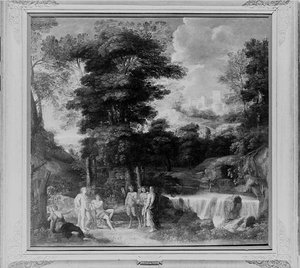
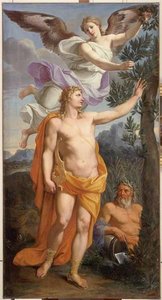
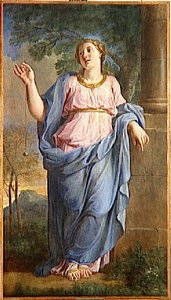
Retrato de Noël Coypel

Pinturas de Noël Coypel: As 83 mais famosas, sob o olhar de uma galeria

Atualizado em Novembro 2026 · classificado pela nossa pontuação de popularidade (pesquisas, visitas e pedidos de cada obra) · 90 obras de Noël Coypel em nosso catálogo

Em resumo

Aos olhos da galeria, a pintura mais famosa de Noël Coypel é LE TRIOMPHE D'APOLLON, cuja obra original está exposta no Museu do Louvre, em Paris. The Martyrdom of James, Son of Zebedee (1661) e Neptune enlevant la nymphe Amymone completam o trio que todos reconhecem. Dos 90 trabalhos de Noël Coypel em nosso catálogo, a galeria apresenta abaixo as 83 obras mais famosas, cada uma original, com seu ano, seu museu e o que a torna única.

1628 – 1707, Paris Baroque Mais obras: Museu do Louvre

As 10 principais pinturas de Noël Coypel na galeria

1
LE TRIOMPHE D'APOLLON de Noël Coypel

LE TRIOMPHE D'APOLLON

Oil On Canvas · Museu do Louvre, Paris

To stand before Noel Nicolas Coypel’s Le Triomphe d'Apollon is to step directly into the gilded halls of Baroque mythology. This painting is not merely a depiction; it is an immersion in idealized classical splendor. The central figure, embodying the radiant power and divine grace associated with Apollo—the god of light, music, and the arts—commands the viewer’s gaze. Coypel masterfully frames this apotheosis within an architectural setting so opulent, one…

2
The Martyrdom of James, Son of Zebedee (1661) de Noël Coypel

The Martyrdom of James, Son of Zebedee

1661 · Oil On Canvas

Noël Coypel executed The Martyrdom of James, Son of Zebedee in 1661. The artist, born in Paris, France, in 1628, was a significant figure in the French classical tradition. This work captures a violent moment of religious history through a dramatic composition.

3
Neptune enlevant la nymphe Amymone de Noël Coypel

Neptune enlevant la nymphe Amymone

Oil On Canvas

The canvas titled Neptune enlevant la nymphe Amymone presents a sudden collision of salt and skin. In this work by Noël Coypel, the god Neptune reaches through the spray to claim the nymph Amymone. It is a moment of divine movement captured in oil, dating to about 1720. The scene freezes the instant of abduction, where the ruler of the seas meets the resistance of the mortal world.

4
Birth of Venus (1732) de Noël Coypel

Birth of Venus

1732 · Museu Hermitage, São Petersburgo

Noël-Nicolas Coypel’s “Birth of Venus,” painted in 1732, isn't merely a depiction of a classical myth; it’s a vibrant embodiment of the Baroque spirit – a theatrical celebration of beauty, divine grace, and the potent allure of love. This magnificent canvas, now residing within the esteemed collection of the Tokyo Fuji Art Museum, transports us to a world where mythology intertwines with opulent grandeur and sensual delight. It's a painting…

5
Arabesques. A Sacrifice (1650) de Noël Coypel

Arabesques. A Sacrifice

1650 · Oil On Canvas

The air within this grand, multi-panel composition feels thick with the scent of ancient incense and the weight of divine ritual. Six vertical sections pull the eye upward, creating a rhythmic ascent that mimics the movement of smoke rising toward the heavens. Figures do not merely sit; they float and descend in a swirling, choreographed dance of flesh and drapery. Cherubs, or putti, drift through a sky of pale blues…

6
The Triumph of Bacchus (five fragments) (1675) de Noël Coypel

The Triumph of Bacchus (five fragments)

1675 · Oil On Canvas

This large-scale decorative scheme, composed of five fragments, presents a complex mythological scene through a monochromatic lens. The composition is structured around a dense, vertical arrangement of figures, garlands, and architectural elements. It reflects the French Baroque style, characterized by movement and theatricality. The arrangement of nymphs, satyrs, and deities amidst lush vegetation and classical architecture suggests a highly organized, ornamental design intended for a larger wall or ceiling decoration.…

7
The Triumph of Apollo (three fragments) (1675) de Noël Coypel

The Triumph of Apollo (three fragments)

1675 · Oil On Canvas

The gaze meets The Triumph of Apollo (three fragments), a work that emerges from the brush of Noël Coypel. Created about 1675, this piece captures a moment of mythological significance, centering on the celestial victory of Apollo. The scene unfolds through an allegorical lens, presenting the triumph of the god of light and music in a way that feels both structured and alive. It is a window into the grand…

8
The Triumph of Minerva (four fragments) (1675) de Noël Coypel

The Triumph of Minerva (four fragments)

1675 · Oil On Canvas

The Triumph of Minerva (four fragments) is a significant work by the French painter Noël Coypel. Created during the second half of the seventeenth century, specifically between 1684 and 1690, these fragments represent a substantial undertaking from the artist's career. The work is part of the Collection de Louis XIV, originating from the manufacture des Gobelins.

9
The Reprobation of Cain after the Death of Abel (1675) de Noël Coypel

The Reprobation of Cain after the Death of Abel

1675 · Oil

In The Reprobation of Cain after the Death of Abel, Noël Coypel captures the harrowing aftermath of the first fratricide. The scene unfolds with a heavy, visceral weight, presenting a moment of eternal consequence where the silence of sin meets the light of the heavens. Cain kneels in the foreground, his body language conveying a soul fractured by his own actions. He shields a face contorted by despair, his hands…

10
The Triumph of Mars (one of four fragments) (1687) de Noël Coypel

The Triumph of Mars (one of four fragments)

1687 · Oil On Canvas

The Triumph of Mars (one of four fragments) is a monumental Baroque oil painting by Noël Coypel. Executed around 1687, this vertical composition functions as an allegorical study of power and classical authority. The work belongs to a larger series of four fragments, of which this piece remains a significant component.

Pinturas de Noël Coypel, classificadas de 11 a 83

11The Triumph of Mars (one of four fragments) (1687) de Noël CoypelThe Triumph of Mars (one of four fragments)1687 12The Triumph of Mars (one of four fragments) (1687) de Noël CoypelThe Triumph of Mars (one of four fragments)1687 13Spring and Summer (1695) de Noël CoypelSpring and Summer1695 14Apollo Shepherd Guarding the Herds of Admetus (1688) de Noël CoypelApollo Shepherd Guarding the Herds of Admetus1688 · Opera de Versalhes 15Autumn and Winter (1697) de Noël CoypelAutumn and Winter1697 16The Chariot of the Day Natural (1695) de Noël CoypelThe Chariot of the Day Natural1695 17Apollo Crowned by Victory (1688) de Noël CoypelApollo Crowned by Victory1688 · Opera de Versalhes 18The Sacrifice of Manoah and His Wife, Parents of Samson (1690) de Noël CoypelThe Sacrifice of Manoah and His Wife, Parents of Samson1690 · Hood Museum of Art 19Jupiter Raised by the Korybantes (1701) de Noël CoypelJupiter Raised by the Korybantes1701 20Madame de Bourbon-Conti (1731) de Noël CoypelMadame de Bourbon-Conti1731 · Ringling Museum of Art 21Justice Punishing (1681) de Noël CoypelJustice Punishing1681 · Château de Versailles 22The Bath of Diana (1732) de Noël CoypelThe Bath of Diana1732 · Museu Hermitage 23The Rape of Europa (detail) (1727) de Noël CoypelThe Rape of Europa (detail)1727 · Philadelphia Museum of Art 24Trajan donnant des audiences publiques de Noël CoypelTrajan donnant des audiences publiquesMuseu do Louvre 25Christ at Prayer on the Mount of Olives (1704) de Noël CoypelChrist at Prayer on the Mount of Olives1704 26Jupiter Chariot between Justice and Piety (study) (1671) de Noël CoypelJupiter Chariot between Justice and Piety (study)1671 27APOLLON COURONNE PAR MINERVE de Noël CoypelAPOLLON COURONNE PAR MINERVEMuseu do Louvre 28Equity (also known as Equité) (1668) de Noël CoypelEquity (also known as Equité)1668 · Château de Fontainebleau 29Hercules Fighting Achelous (1669) de Noël CoypelHercules Fighting Achelous1669 30LA REPROBATION DE CAIN APRES LA MORT D'ABEL de Noël CoypelLA REPROBATION DE CAIN APRES LA MORT D'ABELMuseu do Louvre 31Jupiter Raised by the Korybantes (1705) de Noël CoypelJupiter Raised by the Korybantes1705 32Loth and his Daughters (1704) de Noël CoypelLoth and his Daughters1704 · Musée Des Beaux 33LA NATIVITE de Noël CoypelLA NATIVITE 34The Rape of Europa (1727) de Noël CoypelThe Rape of Europa1727 · Philadelphia Museum of Art 35A Landscape with the Flight into Egypt de Noël CoypelA Landscape with the Flight into Egypt 36FIGURE ALLEGORIQUE de Noël CoypelFIGURE ALLEGORIQUEBavarian State Painting Collections 37LA TERRE de Noël CoypelLA TERRE 38SAINTE FAMILLE de Noël CoypelSAINTE FAMILLE 39APOLLON ET MARSYAS de Noël CoypelAPOLLON ET MARSYAS 40TRAJAN RENDANT LA JUSTICE de Noël CoypelTRAJAN RENDANT LA JUSTICE 41JUPITER ENFANT ELEVE PAR LES CORYBANTES de Noël CoypelJUPITER ENFANT ELEVE PAR LES CORYBANTES 42PTOLEMEE PHILADELPHE REND LA LIBERTE AUX JUIFS de Noël CoypelPTOLEMEE PHILADELPHE REND LA LIBERTE AUX JUIFS 43La Vigilance de Noël CoypelLa Vigilance 44NYMPHES PRESENTANT UNE CORNE D'ABONDANCE A AMALTHEE de Noël CoypelNYMPHES PRESENTANT UNE CORNE D'ABONDANCE A AMALTHEE 45HERCULE ET NESSUS de Noël CoypelHERCULE ET NESSUS 46SOLON EXPLIQUANT SES LOIS de Noël CoypelSOLON EXPLIQUANT SES LOIS 47La Résurrection du Christ de Noël CoypelLa Résurrection du Christ 48DEJANIRE ENVOYANT LA CHEMISE EMPOISONNEE DE NESSUS A HERCULE de Noël CoypelDEJANIRE ENVOYANT LA CHEMISE EMPOISONNEE DE NESSUS A HERCULE 49Apollon vainqueur du serpent Python de Noël CoypelApollon vainqueur du serpent PythonOpera de Versalhes 50APOLLON ET MERCURE de Noël CoypelAPOLLON ET MERCUREOpera de Versalhes 51Junon apparaît à Hercule de Noël CoypelJunon apparaît à HerculeOpera de Versalhes 52HERCULE FAISANT UN SACRIFICE A JUPITER de Noël CoypelHERCULE FAISANT UN SACRIFICE A JUPITER 53HERCULE ET ACHELOUS de Noël CoypelHERCULE ET ACHELOUSOpera de Versalhes 54L'ABONDANCE de Noël CoypelL'ABONDANCE 55ALEXANDRE SEVERE FAIT DISTRIBUER DU BLE AU PEUPLE DANS UN TEMPS DE DISETTE de Noël CoypelALEXANDRE SEVERE FAIT DISTRIBUER DU BLE AU PEUPLE DANS UN TEMPS DE DISETTE 56APOTHEOSE D'HERCULE de Noël CoypelAPOTHEOSE D'HERCULE 57LA JUSTICE RECOMPENSANTE de Noël CoypelLA JUSTICE RECOMPENSANTE 58SOULAGEMENT DE LA FAMINE PAR LES ENFANTS DE LA PIETE de Noël CoypelSOULAGEMENT DE LA FAMINE PAR LES ENFANTS DE LA PIETE 59LA JUSTICE PUNISSANTE de Noël CoypelLA JUSTICE PUNISSANTE 60ESCLAVES RECEVANT DES MARQUES DE LEUR LIBERTE de Noël CoypelESCLAVES RECEVANT DES MARQUES DE LEUR LIBERTE 61SIMON GUILLAIN (1581 1658) de Noël CoypelSIMON GUILLAIN (1581 1658) 62JUPITER ACCOMPAGNE DE LA JUSTICE ET DE LA PIETE de Noël CoypelJUPITER ACCOMPAGNE DE LA JUSTICE ET DE LA PIETE 63La Résurrection de Noël CoypelLa Résurrection 64ANGES PRESENTANT LE MEDAILLON DE LOUIS XIV de Noël CoypelANGES PRESENTANT LE MEDAILLON DE LOUIS XIV 65Sacrifice to Jupiter de Noël CoypelSacrifice to JupiterOpera de Versalhes 66ALEXANDRE SEVERE FAISANT DISTRIBUER DU BLE AU PEUPLE DE ROME DANS UN TEMPS DE DISETTE de Noël CoypelALEXANDRE SEVERE FAISANT DISTRIBUER DU BLE AU PEUPLE DE ROME DANS UN TEMPS DE DISETTEMuseu do Louvre 67The Justice of Trajan (small version) (1675) de Noël CoypelThe Justice of Trajan (small version)1675 68Apollon couronne par la Victoire de Noël CoypelApollon couronne par la VictoireMuseu do Louvre 69PTOLEMEE PHILADELPHE DONNANT LA LIBERTE AUX JUIFS de Noël CoypelPTOLEMEE PHILADELPHE DONNANT LA LIBERTE AUX JUIFSMuseu do Louvre 70Saint Jacques le Majeur, conduit au supplice, guérit un paralytique et embrasse son accusateur de Noël CoypelSaint Jacques le Majeur, conduit au supplice, guérit un paralytique et embrasse son accusateurMuseu do Louvre 71L'Equité de Noël CoypelL'Equité 72Christ on the Cross de Noël CoypelChrist on the Cross 73Apollo Crowned by Minerva de Noël CoypelApollo Crowned by Minerva 74Apollo Crowned by Victory de Noël CoypelApollo Crowned by Victory 75Story of Hercules - Hercules Making a Sacrifice to Jupiter de Noël CoypelStory of Hercules - Hercules Making a Sacrifice to Jupiter 76Holy Family (after Raphael, small version) de Noël CoypelHoly Family (after Raphael, small version)Musée des Beaux-Arts de Dijon 77Purchase de Noël CoypelPurchase 78Story of Hercules - The Apotheosis of Hercules de Noël CoypelStory of Hercules - The Apotheosis of Hercules 79Hercule combattant Achelous de Noël CoypelHercule combattant Achelous 80The Nativity (study) de Noël CoypelThe Nativity (study)Musée Des Beaux 81Les échevins parisiens quittent l'Hôtel de Ville pour se rendre à Notre Dame assister au Te Deum, à l'occasion de la victoire de Seneffe (1674) de Noël CoypelLes échevins parisiens quittent l'Hôtel de Ville pour se rendre à Notre Dame assister au Te Deum, à l'occasion de la victoire de Seneffe (1674)Musée Carnavalet 82Marsyas Playing Flute before Apollo and Midas de Noël CoypelMarsyas Playing Flute before Apollo and MidasMusée des Beaux-Arts de Marseille 83SOLON SOUTENANT LA JUSTICE DE SES LOIS CONTRE LES OBJECTIONS DES ATHENIENS de Noël CoypelSOLON SOUTENANT LA JUSTICE DE SES LOIS CONTRE LES OBJECTIONS DES ATHENIENSMuseu do Louvre

Pinturas famosas de Noël Coypel, período por período

Os temas que cativaram o olhar de Noël Coypel

Os quatro temas que mais se repetem nestas obras originais, cada um com o seu melhor exemplo.

Os museus que guardam os originais de Noël Coypel

Os 8 museus que detêm a maioria das pinturas desta página.

Museus Cidade Obras de Noël Coypel Pinturas desta lista
Museu do Louvre, ParisMuseu do Louvre Paris 9 LE TRIOMPHE D'APOLLON, Trajan donnant des audiences publiques, APOLLON COURONNE PAR MINERVE
Opera de Versalhes, VersalhesOpera de Versalhes Versalhes 7 Apollo Shepherd Guarding the Herds of Admetus, Apollo Crowned by Victory, Apollon vainqueur du serpent Python
Museu Hermitage, São PetersburgoMuseu Hermitage São Petersburgo 2 Birth of Venus, The Bath of Diana
Philadelphia Museum of Art, FiladélfiaPhiladelphia Museum of Art Filadélfia 2 The Rape of Europa (detail), The Rape of Europa
Musée Des Beaux, RennesMusée Des Beaux Rennes 2 Loth and his Daughters, The Nativity (study)
Hood Museum of Art, HanoverHood Museum of Art Hanover 1 The Sacrifice of Manoah and His Wife, Parents of Samson
Ringling Museum of Art, SarasotaRingling Museum of Art Sarasota 1 Madame de Bourbon-Conti
Château de Versailles, VersalhesChâteau de Versailles Versalhes 1 Justice Punishing

Noël Coypel, uma pintura emblemática por década

Obras por década

Escolha uma década para ver a obra original que a define.

Pinturas de Noël Coypel: a galeria responde

Qual pintura de Noël Coypel é a mais famosa de todas?Revelar a resposta

LE TRIOMPHE D'APOLLON, Museu do Louvre, Paris. The Martyrdom of James, Son of Zebedee (1661) e Neptune enlevant la nymphe Amymone vêm a seguir.

Quais são as 10 principais pinturas de Noël Coypel?Revelar a resposta

LE TRIOMPHE D'APOLLON, The Martyrdom of James, Son of Zebedee, Neptune enlevant la nymphe Amymone, Birth of Venus, Arabesques. A Sacrifice, The Triumph of Bacchus (five fragments), The Triumph of Apollo (three fragments), The Triumph of Minerva (four fragments), The Reprobation of Cain after the Death of Abel e The Triumph of Mars (one of four fragments). O ranking acima apresenta o ano e o museu de cada uma.

Quantas obras Noël Coypel criou?Revelar a resposta

Nosso catálogo contém 90 obras de Noël Coypel, datadas de 1650 a 1705.

Onde estão expostos os originais mais famosos de Noël Coypel?Revelar a resposta

Principalmente em Museu do Louvre (Paris), Opera de Versalhes (Versalhes) e Museu Hermitage (São Petersburgo). A tabela de museus acima lista todos eles.

Quando é que Noël Coypel criou as suas pinturas mais famosas?Revelar a resposta

Em 1670s: 6 das 83 obras nesta página foram feitas então, sendo The Triumph of Bacchus (five fragments) delas.

Quais são as obras mais famosas de Noël Coypel no início e no fim de sua carreira?Revelar a resposta

Nesta página, a mais antiga é Arabesques. A Sacrifice (1650) e a mais recente é Jupiter Raised by the Korybantes (1705).

Quais temas Noël Coypel mais explorou?Revelar a resposta

Mythology (9), Man (9) e Woman (9), entre as 83 obras nesta página.

Em qual técnica Noël Coypel mais trabalhou?Revelar a resposta

Oil On Canvas, para 29 das 83 obras nesta página.

Com qual movimento Noël Coypel está associado(a)?Revelar a resposta

Baroque, a julgar pelos originais nesta página.

Quais obras originais de Noël Coypel o Museu do Louvre possui?Revelar a resposta

LE TRIOMPHE D'APOLLON, Trajan donnant des audiences publiques e APOLLON COURONNE PAR MINERVE: o Museu do Louvre, Paris detém 9 das obras desta página.

Noël Coypel: o artista

Um Legado Forjado na Luz Clássica: A Vida e a Arte de Noël Nicolas Coypel

Noël Nicolas Coypel, um nome frequentemente pronunciado ao lado do seu reverenciado predecessor, Nicolas Poussin, foi uma figura fundamental na pintura francesa do século XVII. Nascido em 25 de dezembro de 1628, no coração de Paris, a jornada artística de Coypel não foi marcada por um aclame imediato, mas sim por uma ascensão gradual, moldada pelo incentivo familiar e por uma profunda imersão na tradição clássica. Seu pai, embora também artista, carecia de um sucesso substancial, mas foi ele quem proporcionou ao jovem Noël a centelha inicial — uma paixão pela pintura que acabaria por definir sua vida. Essa exposição precoce, no entanto, provou ser mais do que apenas fundacional; ela instilou em Coypel a determinação não apenas de dominar o ofício, mas também de elevar seu prestígio através de um estudo rigoroso e dedicação incansável.

Formação Inicial e a Influência de Poussin

Os anos formativos de Coypel foram significativamente influenciados por sua fascinação pelas obras de Nicolas Poussin, uma figura monumental cujo ênfase na ordem, clareza e temática clássica ressoou profundamente no jovem artista. Esta admiração não era meramente passiva; Coypel buscou ativamente compreender e emular as técnicas de Poussin, estudando meticulosamente suas composições, paletas de cores e abordagem à forma. Um passo crucial em seu desenvolvimento ocorreu ao ser contratado por Charles Errard, um proeminente decorador encarregado de criar inúmeras pinturas para o Palácio do Louvre. Este encargo proporcionou uma experiência prática inestimável e permitiu que Coypel aperfeiçoasse suas habilidades enquanto contribuía para um dos projetos artísticos mais prestigiados da França. Ele também se beneficiou da tutela de Noël Quillerier, outro pintor respeitado que refinou ainda mais sua compreensão dos princípios clássicos e do equilíbrio composicional.

Uma Carreira Definida por Papéis Institucionais e Grandes Comissões

A carreira de Coypel desenrolou-se através de uma série de funções cada vez mais proeminentes dentro do estabelecimento artístico francês. Em 1672, foi nomeado diretor da prestigiada Academia Francesa em Roma — um cargo que lhe permitiu passar quatro anos imerso no coração artístico da Europa, cultivando ainda mais sua sensibilidade clássica. Esta nomeação não era apenas uma honra; significava o reconhecimento de seu talento e potencial como líder no mundo das artes. Ao retornar à França, Coypel ascendeu ao cargo de diretor da Academia de Pintura, onde se dedicou a fomentar a próxima geração de artistas e a manter os padrões de excelência acadêmica. Entre suas conquistas mais celebradas estava seu trabalho em projetos decorativos de grande escala, incluindo pinturas para o Louvre e outras instituições parisienses significativas. Sua obra Martírio de São Tiago na Notre Dame permanece como um testemunho de sua maestria em temas clássicos, composição dramática e habilidade técnica — uma representação poderosa que encapsula a eleguidade e a grandiosidade características de seu estilo.

Legado Familiar e Impacto Duradouro

O nome Coypel tornou-se sinônimo de talento artístico, estendendo-se para além do próprio Noël Nicolas. Seus filhos, Antoine e Noël-Nicolas Coypel, seguiram os passos do pai, estabelecendo-se como pintores realizados e contribuindo para a continuidade do legado familiar. Essa dedicação familiar destaca a importância da formação artística dentro do lar dos Coypel e a influência duradoura do exemplo de Noël Nicolas. Além de sua própria produção prolífica, Coypel desempenhou um papel vital na moldagem da cena artística francesa durante um período de mudanças significativas. Sua ênfase nos princípios clássicos, combinada com um senso refinado de elegância, deixou uma marca indelével em inúmeros artistas que o sucederam. Ele não foi meramente um pintor; foi um mestre, um administrador e um defensor da excelência artística cuja influência continua a ser sentida hoje. Para explorar a amplitude de sua obra, incluindo obras-primas como o Martírio de São Tiago, visite recursos como OriginalUniqueArt.com, onde uma coleção abrangente de suas pinturas aguarda descoberta. Sua arte permanece como um lembrete poderoso da beleza duradoura e do apelo atemporal da pintura clássica.