Retrato de Niklaus Manuel

As 13 Pinturas Mais Famosas de Niklaus Manuel, uma Seleção da Galeria

Atualizado em Novembro 2026 · classificado pela nossa pontuação de popularidade (pesquisas, visitas e pedidos de cada obra) · 13 obras de Niklaus Manuel em nosso catálogo

Em resumo

De todas as obras originais deixadas por Niklaus Manuel, a mais famosa é Allegory of Death, da coleção do Museu do Louvre, em Paris. Logo atrás vêm Portrait of an unknown nobleman. e Temptation of Saint Anthony. Nosso catálogo contém 13 obras de Niklaus Manuel; a galeria preservou as 13 que o mundo mais admira, cada uma exibida com sua data, seu museu e sua história.

1484 – 1530, Bern Renaissance Mais obras: Kunstmuseum Bern

As 10 principais pinturas de Niklaus Manuel: a escolha da galeria

1
Allegory of Death de Niklaus Manuel

Allegory of Death

Drawing · Museu do Louvre, Paris

To gaze upon this drawing is to confront one of humanity's most enduring philosophical quandaries: the passage of time and the inevitability of decay. This piece, an arresting study in Renaissance allegory, presents a figure caught in a profound moment of transition. The central nude woman, rendered with exquisite detail, embodies more than just human form; she becomes a living meditation on beauty’s ephemeral nature. Her flowing hair seems to…

5
Bernese Collection of the Historisches Museum Bern de Niklaus Manuel

Bernese Collection of the Historisches Museum Bern

A Noble Portrait from Renaissance Bern: Unveiling Niklaus Manuel's Masterpiece This striking portrait, part of the esteemed Bernese Collection housed within the Historisches Museum Bern, offers a captivating glimpse into 16th-century Swiss society. Painted by Niklaus Manuel (1484-1530), a pivotal figure in Bern’s artistic landscape and a man who skillfully bridged art and politics, this work exemplifies the burgeoning Renaissance spirit taking hold in Switzerland. The subject is depicted as…

A seleção de Niklaus Manuel continua, de 11 a 13

Os temas que cativaram o olhar de Niklaus Manuel

Os quatro temas que mais se repetem nestas obras originais, cada um com o seu melhor exemplo.

Os museus que guardam os originais de Niklaus Manuel

Os 4 museus que detêm a maioria das pinturas desta página.

Museus Cidade Obras de Niklaus Manuel Pinturas desta lista
Kunstmuseum Bern, BernaKunstmuseum Bern Berna 2 St Eligius in the Workshop, St Luke Painting the Madonna (detail)
Museu do Louvre, ParisMuseu do Louvre Paris 1 Allegory of Death
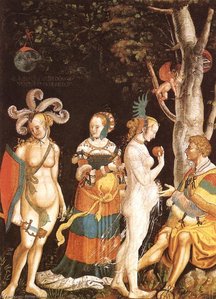
Kunstmuseum Basel, BasileiaKunstmuseum Basel Basileia 1 The Judgment of Paris
Kunstmuseum Basel, BasileiaKunstmuseum Basel Basileia 1 Beheading of John the Baptist

Niklaus Manuel ano a ano: as obras originais que definem cada um

1517 é o ano de cada obra datada de Niklaus Manuel nesta seleção: aqui estão elas, classificadas por fama.

Obras por ano

Escolha um ano para ver as obras originais.

Perguntas de colecionadores sobre as pinturas de Niklaus Manuel

Por qual obra Niklaus Manuel é mais conhecido(a)?Revelar a resposta

Allegory of Death, Museu do Louvre, Paris. Portrait of an unknown nobleman. e Temptation of Saint Anthony vêm a seguir.

Quais são as dez pinturas mais famosas de Niklaus Manuel?Revelar a resposta

Allegory of Death, Portrait of an unknown nobleman., Temptation of Saint Anthony, Anna selbdritt and the Holy Jacobus and Rochus as intercessors for mankind bothered by the plague humanity, Bernese Collection of the Historisches Museum Bern, Thomas Aquinas in Saint Louis, Hl. Lukas, die Madonna malend, Altarflügel, St Eligius in the Workshop, Copy of the Danse Macabre of the Dominican cemetery of Bern‎ e St Luke Painting the Madonna (detail). O ranking acima apresenta o ano e o museu de cada uma.

Quantas pinturas Niklaus Manuel deixou?Revelar a resposta

Nosso catálogo contém 13 obras de Niklaus Manuel.

Em quais museus estão expostas as obras-primas de Niklaus Manuel?Revelar a resposta

Principalmente em Kunstmuseum Bern (Berna), Museu do Louvre (Paris) e Kunstmuseum Basel (Basileia). A tabela de museus acima lista todos eles.

Quais temas Niklaus Manuel escolheu com mais frequência?Revelar a resposta

Religious scene (2) e Saints (2), entre as 13 obras nesta página.

A qual movimento artístico pertence Niklaus Manuel?Revelar a resposta

Renaissance, a julgar pelos originais nesta página.

Quais obras de Niklaus Manuel estão expostas no Kunstmuseum Bern?Revelar a resposta

St Eligius in the Workshop e St Luke Painting the Madonna (detail): o Kunstmuseum Bern, Berna detém 2 das obras desta página.

Niklaus Manuel: vida e obra

The Renaissance Visionary of Bern: The Life and Legacy of Niklaus Manuel

In the vibrant tapestry of the sixteenth-century Northern Renaissance, few figures loom as large or as multifaceted as Niklaus Manuel. Born in Berlin around 1484, this extraordinary individual was far more than a mere painter; he was a mercenary soldier, a writer, and a pivotal figure in the civic life of Bern. His life was a whirlwind of movement and intellect, bridging the gap between the brutal realities of European warfare and the refined humanist ideals of the Renaissance. As a central character in the artistic landscape of Switzerland, Manuel’s work serves as a profound window into an era defined by spiritual struggle, political upheaval, and a burgeoning fascination with the human condition.

The foundation of Manuel’s technical mastery can be traced back to his formative years in Basel, where he underwent rigorous training under the legendary Hans Holbein the Younger. This apprenticeship was transformative, instilling in him a meticulous devotion to realism and a sophisticated command of chiaroscuro. From Holbein, Manuel inherited an eye for the minute details of nature and the human form, as well as the ability to use light and shadow to imbue his subjects with psychological depth. This connection to the humanist tradition allowed him to move beyond simple ornamentation, instead creating works that prioritized observation and an accurate, almost visceral, representation of the world around him.

A Mastery of Symbolism and Narrative

Manuel’s artistic output is characterized by a remarkable versatility, ranging from deeply religious altarpieces to biting satirical compositions. His ability to weave complex theological narratives with humanist symbolism allowed him to capture the dualities of his age—the sacred and the profane, the eternal and the mortal. One of his most hauntingly beautiful themes was the exploration of mortality, often expressed through intricate landscapes and symbolic figures. In works such as his Allegory of Death, he utilizes the image of a nude woman holding a skull to evoke profound meditations on transformation and the inevitability of the end, set against an intricately detailed backdrop that showcases his command over environmental storytelling.

Beyond the contemplative, Manuel possessed a talent for depicting intense, dynamic struggle. His Temptation of Saint Anthony stands as a testament to his ability to utilize the emerging Mannerist style, employing rich colors and intense detail to portray demonic temptation and spiritual warfare. This capacity for drama was perhaps most famously realized in his monumental mural, the Danse Macabre, at the Dominican Abbey in Bern. Although this masterpiece was tragically lost to history in 1660, its influence lived on through contemporary copies, reminding viewers of his ability to command large-scale compositions that spoke to the collective consciousness of the Bernese people.

Historical Significance and Artistic Endurance

The significance of Niklaus Manuel extends far beyond the borders of Switzerland. He represented a unique breed of Renaissance man—an artist whose brush was as active in the halls of governance and the battlefields of Europe as it was in the quiet studios of Basel. His portraits, such as those found in the Historisches Museum Bern, reveal a master capable of capturing the dignity and symbolic weight of the nobility, using dramatic lighting to elevate his subjects into icons of their era.

Ultimately, Manuel’s legacy is defined by his role as a bridge. He bridged the gap between the late Gothic traditions and the burgeoning Renaissance; he bridged the distance between the soldier's grit and the scholar's grace; and most importantly, he bridged the human experience with the divine through his art. His works remain essential touchstones for understanding the cultural metamorphosis of the sixteenth century, offering a glimpse into a world where art, politics, and spirituality were inextricably entwined.