Retrato de Nicolas Bertin

As 42 Pinturas Mais Famosas de Nicolas Bertin, uma Seleção da Galeria

Atualizado em Outubro 2026 · classificado pela nossa pontuação de popularidade (pesquisas, visitas e pedidos de cada obra) · 43 obras de Nicolas Bertin em nosso catálogo

Em resumo

De todas as obras originais deixadas por Nicolas Bertin, a mais famosa é The Good Samaritan (1701), da coleção do Bavarian State Painting Collections, em Munique. Logo atrás vêm Christ and the Canaanite Woman (1701) e Christ and the Samaritan Woman (1701). Nosso catálogo contém 43 obras de Nicolas Bertin; a galeria preservou as 42 que o mundo mais admira, cada uma exibida com sua data, seu museu e sua história.

1667 – 1736, Paris Baroque Mais obras: Bavarian State Painting Collections

As 10 principais pinturas de Nicolas Bertin: a escolha da galeria

1
The Good Samaritan (1701) de Nicolas Bertin

The Good Samaritan

1701 · Oil · Bavarian State Painting Collections, Munique

This monochromatic painting, dated 1701, depicts a scene from the biblical parable of the Good Samaritan. The composition centers on a man assisting an injured individual onto a horse. To the left, a stone archway provides a structured architectural element, while the background is filled with the dense, detailed textures of foliage and trees. The entire work is rendered in a grayscale palette, utilizing a wide range of tonal values…

3
Christ and the Samaritan Woman (1701) de Nicolas Bertin

Christ and the Samaritan Woman

1701 · Oil · Bavarian State Painting Collections, Munique

In this 1701 oil painting, two figures are positioned within a wooded landscape near a stone well. Christ is depicted with an outstretched arm, a gesture directed toward the Samaritan woman. She reacts to his presence with a specific hand gesture, creating a diagonal tension between their bodies. The composition follows a triangular arrangement, guiding the eye from the seated or leaning figure of Christ toward the woman and then…

4
Hercules Delivering Prometheus (1703) de Nicolas Bertin

Hercules Delivering Prometheus

1703 · Oil On Canvas

A heavy, muscular tension pulls at the center of the canvas. Hercules moves with a sudden, diagonal force, his body a study in strained anatomy and heroic intent. He reaches toward Prometheus, whose torso is pale against the encroaching shadows of the rocky landscape. The scene is a collision of flesh and stone, a moment of violent rescue frozen in oil. Red drapery cuts through the earthy browns of the…

5
Saint Gregory the Great (1707) de Nicolas Bertin

Saint Gregory the Great

1707 · Oil

In this intimate oil painting, we encounter Saint Gregory the Great, a figure of profound spiritual weight. The portrait, executed by the French painter Nicolas Bertin, captures the subject in a moment of quiet, upward contemplation. It is a work that invites a closer look at the individual's character and the divine connection suggested by his expression.

6
Venus Orders Vulcan to Make Arms for Aeneas (1704) de Nicolas Bertin

Venus Orders Vulcan to Make Arms for Aeneas

1704 · Oil · Opera House, Versailles

The scene unfolds within a rugged, outdoor workshop or grotto, where heavy textures define the rocky background and the foliage of large trees. In the center-left, Venus is depicted as a luminous, seated figure, her body angled as she gestures toward Vulcan. Vulcan is positioned with his back to the viewer, his muscular frame leaning over an anvil as he engages in his craft. The arrangement of the figures follows…

7
Hercules fighting Achelous. (1710) de Nicolas Bertin

Hercules fighting Achelous.

1710 · Oil · Museu Nacional de Varsóvia, Varsóvia

The canvas captures a violent collision between the hero Hercules and the river god Achelous. Two muscular male figures dominate the foreground, locked in a physical struggle that defines the composition. Their limbs form energetic, diagonal lines, guiding the eye through the chaos of the combat. Above the fray, a winged female figure floats amidst the clouds, holding a laurel wreath as a symbol of divine oversight or impending triumph.…

8
Bacchanalia. (1710) de Nicolas Bertin

Bacchanalia.

1710 · Oil · Museu Nacional de Varsóvia, Varsóvia

Nicolas Bertin’s Bacchanalia. presents a scene of exuberant revelry set within a dark, cavernous environment. The composition is dynamic, centering on a group of figures engaged in celebration. On the left, a male figure is captured in mid-motion, his back partially turned to the viewer as he raises a golden goblet toward the others. To the right, three figures—two women and a man—recline together upon a draped surface. The arrangement…

9
Hercules Delivering Prometheus (1703) de Nicolas Bertin

Hercules Delivering Prometheus

1703 · Oil On Canvas · Birmingham Museum of Art, Birmingham

A heavy, muscular tension pulls the eye upward. Hercules moves in a powerful diagonal, his body a study of strained anatomy and light. He reaches toward the suffering figure of Prometheus, whose flesh is pale against the dark, craggy shadows of the rock. The air feels thick with the scent of dust and the heat of a struggle. Every muscle is a knot of effort, carved by light that strikes…

10
The Infant Zeus among Nymphs (1710) de Nicolas Bertin

The Infant Zeus among Nymphs

The Infant Zeus among Nymphs by Nicolas Bertin depicts a mythological scene set within a lush, pastoral landscape. The composition is organized in a dynamic, pyramidal structure that directs the viewer's eye toward the center of the grouping. At this focal point, an infant Zeus is surrounded by a group of nymphs. These figures are positioned in various poses of movement and service, creating a sense of activity within the…

A seleção de Nicolas Bertin continua, de 11 a 42

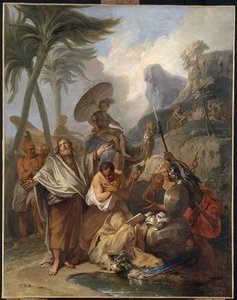
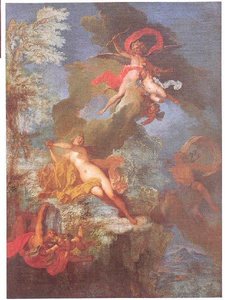
11Bacchus with Four Putti (1716) de Nicolas BertinBacchus with Four Putti1716 · Bavarian State Painting Collections 12Saturn Clipping the Wings of Eros (1716) de Nicolas BertinSaturn Clipping the Wings of Eros1716 · Bavarian State Painting Collections 13Amor Leaves Psyche (1716) de Nicolas BertinAmor Leaves Psyche1716 · Bavarian State Painting Collections 14Prophets and Kings of the Old Testament Adoring the Name of Jehovah (1718) de Nicolas BertinProphets and Kings of the Old Testament Adoring the Name of Jehovah1718 · Museum of Fine Arts 15The Resurrection of Christ (1730) de Nicolas BertinThe Resurrection of Christ1730 · Musée Carnavalet 16Christ Washing the Feet of His Disciples (1725) de Nicolas BertinChrist Washing the Feet of His Disciples1725 · Art Institute of Chicago 17Daniel in the Lions' Den (1736) de Nicolas BertinDaniel in the Lions' Den1736 · Musée des Beaux-Arts de Strasbourg 18Susanna and the Elders (1699) de Nicolas BertinSusanna and the Elders1699 · Rijksmuseum 19Phaeton no Carro de Apolônio (1720) de Nicolas BertinPhaeton no Carro de Apolônio1720 · Museu do Louvre 20PROMETHEE DELIVRE PAR HERCULE de Nicolas BertinPROMETHEE DELIVRE PAR HERCULEMuseu do Louvre 21Saint Philippe baptisant l'eunuque de la reine Candace de Nicolas BertinSaint Philippe baptisant l'eunuque de la reine CandaceMuseu do Louvre 22Vertumnus and Pomona (1706) de Nicolas BertinVertumnus and Pomona1706 · Opera House 23Joseph and Potiphar"s Wife, Nicolas Bertin, 1690 - 1710 (1710) de Nicolas BertinJoseph and Potiphar"s Wife, Nicolas Bertin, 1690 - 17101710 · Rijksmuseum 24Jupiter and Danaë de Nicolas BertinJupiter and DanaëMuseu Nacional do Château de Compiègne 25The Finding of the Money in Benjamin's Sack de Nicolas BertinThe Finding of the Money in Benjamin's SackNational Gallery of Ireland 26Bacchus and Ariadne de Nicolas BertinBacchus and AriadneNationalmuseum 27Nicolas Bertin - Apollon et les Muses de Nicolas BertinNicolas Bertin - Apollon et les Muses 28La Lapidation de saint Etienne de Nicolas BertinLa Lapidation de saint Etienne 29Hercule délivrant Prométhée de Nicolas BertinHercule délivrant Prométhée 30Jupiter et Léda de Nicolas BertinJupiter et LédaMuseu Nacional do Château de Compiègne 31Acis et Galathée de Nicolas BertinAcis et GalathéeMuseu Nacional do Château de Compiègne 32Moïse et les filles de Jethro de Nicolas BertinMoïse et les filles de Jethro 33Persée délivrant Andromède de Nicolas BertinPersée délivrant AndromèdeMuseu Nacional do Château de Compiègne 34LE TRIOMPHE DE DAVID de Nicolas BertinLE TRIOMPHE DE DAVID 35Jupiter et Danaë de Nicolas BertinJupiter et Danaë 36Vénus et l'Amour de Nicolas BertinVénus et l'Amour 37Anacréon et l'Amour de Nicolas BertinAnacréon et l'Amour 38PHAETON CONDUISANT LE CHAR DU SOLEIL de Nicolas BertinPHAETON CONDUISANT LE CHAR DU SOLEILMuseu do Louvre 39La résurrection de Lazare de Nicolas BertinLa résurrection de Lazare 40Moïse et les filles de Jéthro de Nicolas BertinMoïse et les filles de Jéthro 41Psyché abandonnée par l'Amour de Nicolas BertinPsyché abandonnée par l'AmourMuseu Nacional do Château de Compiègne 42Hercule assommant les soldats de Busiris Hercule et les Nymphes (Titre ancien) Hercule et les filles de Stymphalos (Titre ancien) de Nicolas BertinHercule assommant les soldats de Busiris Hercule et les Nymphes (Titre ancien) Hercule et les filles de Stymphalos (Titre ancien)

Os temas que cativaram o olhar de Nicolas Bertin

Os quatro temas que mais se repetem nestas obras originais, cada um com o seu melhor exemplo.

Os museus que guardam os originais de Nicolas Bertin

Os 8 museus que detêm a maioria das pinturas desta página.

Museus Cidade Obras de Nicolas Bertin Pinturas desta lista
Bavarian State Painting Collections, MuniqueBavarian State Painting Collections Munique 6 The Good Samaritan, Christ and the Canaanite Woman, Christ and the Samaritan Woman
Museu Nacional do Château de Compiègne, CompiègneMuseu Nacional do Château de Compiègne Compiègne 5 Jupiter and Danaë, Jupiter et Léda, Acis et Galathée
Museu do Louvre, ParisMuseu do Louvre Paris 4 Phaeton no Carro de Apolônio, PROMETHEE DELIVRE PAR HERCULE, Saint Philippe baptisant l'eunuque de la reine Candace
Opera House, VersaillesOpera House Versailles 2 Venus Orders Vulcan to Make Arms for Aeneas, Vertumnus and Pomona
Museu Nacional de Varsóvia, VarsóviaMuseu Nacional de Varsóvia Varsóvia 2 Hercules fighting Achelous., Bacchanalia.
Rijksmuseum, AmsterdãRijksmuseum Amsterdã 2 Susanna and the Elders, Joseph and Potiphar"s Wife, Nicolas Bertin, 1690 - 1710
Birmingham Museum of Art, BirminghamBirmingham Museum of Art Birmingham 1 Hercules Delivering Prometheus
National Museum of Art, Architecture and Design, OsloNational Museum of Art, Architecture and Design Oslo 1 The Infant Zeus among Nymphs

Nicolas Bertin década a década: a obra original que define cada uma

Obras por década

Escolha uma década para ver a obra original que a define.

Perguntas de colecionadores sobre as pinturas de Nicolas Bertin

Por qual obra Nicolas Bertin é mais conhecido(a)?Revelar a resposta

The Good Samaritan (1701), Bavarian State Painting Collections, Munique. Christ and the Canaanite Woman (1701) e Christ and the Samaritan Woman (1701) vêm a seguir.

Qual era a idade de Nicolas Bertin quando The Good Samaritan foi feita?Revelar a resposta

34 anos: The Good Samaritan data de 1701, e Nicolas Bertin nasceu em 1667.

Quais são as dez pinturas mais famosas de Nicolas Bertin?Revelar a resposta

The Good Samaritan, Christ and the Canaanite Woman, Christ and the Samaritan Woman, Hercules Delivering Prometheus, Saint Gregory the Great, Venus Orders Vulcan to Make Arms for Aeneas, Hercules fighting Achelous., Bacchanalia., Hercules Delivering Prometheus e The Infant Zeus among Nymphs. O ranking acima apresenta o ano e o museu de cada uma.

Quantas pinturas Nicolas Bertin deixou?Revelar a resposta

Nosso catálogo contém 43 obras de Nicolas Bertin, datadas de 1699 a 1736.

Em quais museus estão expostas as obras-primas de Nicolas Bertin?Revelar a resposta

Principalmente em Bavarian State Painting Collections (Munique), Museu Nacional do Château de Compiègne (Compiègne) e Museu do Louvre (Paris). A tabela de museus acima lista todos eles.

Em que anos Nicolas Bertin pintou as suas obras mais famosas?Revelar a resposta

Em 1700s: 8 das 42 obras nesta página foram feitas então, sendo The Good Samaritan delas.

Quais são as primeiras e as últimas obras originais famosas de Nicolas Bertin?Revelar a resposta

Nesta página, a mais antiga é Susanna and the Elders (1699) e a mais recente é Daniel in the Lions' Den (1736).

Quais temas Nicolas Bertin escolheu com mais frequência?Revelar a resposta

Man (12), Drapery (8) e Woman (6), entre as 42 obras nesta página.

Qual técnica Nicolas Bertin mais utilizou?Revelar a resposta

Oil, para 10 das 42 obras nesta página.

A qual movimento artístico pertence Nicolas Bertin?Revelar a resposta

Baroque, a julgar pelos originais nesta página.

Quais obras de Nicolas Bertin estão expostas no Bavarian State Painting Collections?Revelar a resposta

The Good Samaritan, Christ and the Canaanite Woman e Christ and the Samaritan Woman: o Bavarian State Painting Collections, Munique detém 6 das obras desta página.

Nicolas Bertin: vida e obra

Primeiros Anos e Fundamentos Artísticos

Nicolas Bertin, nascido em Paris em 1667, emergiu de uma linhagem profundamente imersa nas tradições artísticas da França do final do século XVII. Embora seu pai fosse um escultor que, infelizmente, faleceu quando Nicolas tinha apenas quatro anos, as sementes da criatividade foram claramente plantadas desde cedo. Sua formação formal teve início em 1678, através de um aprendizado sob a tutela de Guy-Louis Vernansal, uma figura respeitada nos círculos artísticos parisienses. Esse alicerce inicial revelou-se fundamental, mas a educação de Bertin não parou por aí; ele logo se viu estudando sob a orientação de Jean Jouvenet e, posteriormente, de Louis Boullongne, ambos pintores influentes que moldariam significativamente o desenvolvimento de seu estilo. Esses mestres instilaram nele não apenas a habilidade técnica, mas também um profundo apreço pelo poder narrativo e pela composição dramática — qualidades que se tornariam as marcas registradas de sua própria obra.

O Prix de Rome e a Inspiração Italiana

O talento de Nicolas Bertin manifestou-se com rapidez, culminando em uma conquista memorável em 1685: a vitória no prestigiado Prix de Rome com sua pintura “A Construção da Arca de Noé”. Este prêmio representava a mais alta honraria que um aspirante artista francês poderia receber, concedendo-lhe a oportunidade inestimável de estudar na Académie de France, em Roma. Ele chegou à Itália no final daquele ano e permaneceu até o inverno de 1688-89, mergulhando profundamente no patrimônio artístico do mundo antigo e nos mestres do Renascimento. Durante sua estadia no estrangeiro, foi profundamente influenciado pelas obras de Rafael, pela família Carracci e por Correggio, absorvendo suas técnicas e abordagens composicionais. Notavelmente, Bertin também participou de um protesto estudantil contra os métodos de ensino da Académie de France, demonstrando um espírito independente que continuaria a informar suas escolhas artísticas ao longo de toda a sua carreira.

Uma Estrela Ascendente nos Círculos Artísticos de Paris

Ao retornar a Paris após uma breve estadia em Lyon, Nicolas Bertin conquistou um reconhecimento constante dentro do prestigiado establishment artístico francês. Em 1703, foi formalmente admitido como membro da Académie Royale de Peinture et de Sculpture, apresentando a obra “Hércules Libertando Prometeu” como seu morceau de réception — o trabalho exigido para a plena integração à instituição. Esta aceitação consolidou sua posição entre os principais pintores de sua geração e abriu portas para encomendas de grande importância. Em 1715, sua ascensão foi selada com a nomeação como professor na Académie Royale, o que reforçou ainda mais sua influência sobre os jovens artistas que buscavam o seu caminho.

Narrativas Mitológicas e Cenas Religiosas

A obra de Nicolas Bertin é caracterizada por uma mistura cativante de temas mitológicos e religiosos, frequentemente renderizados com a graça barroca e um detalhamento meticuloso. Suas obras iniciais, como “Mercúrio Matando Argos” (hoje perdida), revelam as influências estilísticas dos irmãos Boullogne — figuras graciosas e cores claras de origem flamenga. No entanto, Bertin logo começou a traçar seu próprio caminho, desenvolvendo uma abordagem distinta para a narrativa através da pintura. Suas telas produzidas por volta da virada do século, como “José e a Mulher de Potifar” e “Susana e os Anciãos”, exemplificam essa transição. Estas cenas religiosas íntimas eram particularmente populares entre colecionadores particulares, oferecendo narrativas ambíguas que permitiam tanto interpretações sagradas quanto seculares. Ele não estava meramente ilustrando contos bíblicos; ele explorava temas de tentação, desejo e moralidade com uma sensibilidade matizada. Outras obras notáveis incluem "A Fuga para o Egito" e “Marte e Vênus”, cada uma demonstrando seu domínio sobre a composição, a cor e a expressão emocional.

Legado e Significância Histórica

A obra de Nicolas Bertin personifica a transição fluida entre o período tardio do Barroco e o estilo emergente do Rococó. Embora profundamente enraizada na intensidade dramática e na precisão técnica do Barroco, suas pinturas também exibem uma ênfase crescente na elegância, no refinamento e na profundidade narrativa — qualidades que viriam a se tornar centrais para a estética Rococó. Sua habilidade em fundir temas sagrados com nuances seculares cativou um público vasto, garantindo-lhe um lugar de destaque entre os pintores mais requisitados da França durante sua vida. Atualmente, as pinturas de Bertin integram importantes coleções europeias e americanas, continuando a fascinar espectadores com sua beleza, complexidade e mérito artístico perene. Seu legado reside não apenas na qualidade primorosa de sua execução, mas também em sua capacidade de capturar o espírito de uma era em transformação — um tempo marcado tanto pela devoção religiosa quanto pelo florescimento do secularismo.