Saint Russia
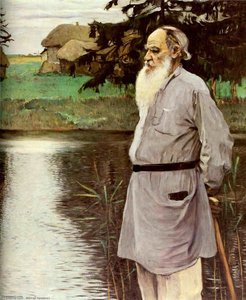
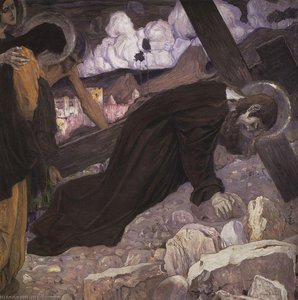
Saint Russia is an oil on canvas work by Mikhail Nesterov. The artist executed this piece between 1901 and 1905. It remains part of the permanent collection at the State Russian Museum in the Russian Federation.
Em resumo
Saint Russia é a pintura de Mikhail Nesterov que mais atrai olhares. Depois disso, o olhar recai sobre Self-Portrait (1918) e Saint Sergius' labours (right part of the triptych) (1896). Entre as 158 obras de Mikhail Nesterov em nosso catálogo, estas 100 são as mais famosas, cada uma uma original única apresentada com o seu ano, o seu museu e a razão pela qual perdura.
Saint Russia is an oil on canvas work by Mikhail Nesterov. The artist executed this piece between 1901 and 1905. It remains part of the permanent collection at the State Russian Museum in the Russian Federation.
The artwork is titled Self-Portrait and was created by the artist Mikhail Nesterov. This specific piece is a monochrome portrait that focuses on a self-representation of the artist. The work was produced in 1918.
A solitary figure moves through a landscape of winter. Dressed in a long coat and hat, a man resembling a monk or priest carries a child in his arms. The scene is set upon a street lined with buildings, where the urban architecture meets a heavy, white blanket of snow. In the background, the presence of a dog and other distant figures adds a sense of lived-in movement to the…
Mikhail Nesterov produced Solovki in 1917. The work provides a representation of the Solovki islands located in Russia. This landscape captures a specific geographic setting through a lens of quietude and natural scale.
In this 1940 work, titled Portrait of Vera Mukhina, the artist Mikhail Nesterov captures a moment of quiet intensity. The painting focuses on the likeness of Vera Mukhina, a woman who lived from 1889 to 1953. It is a study of character and presence, rendered during a period when the artist and his subject had recently become acquainted, having met in the autumn of 1939.
In the quietude of Mikhail Nesterov’s 1909 masterpiece, St. Mark the Apostle, we are invited into a moment of profound spiritual contemplation. The painting presents a striking portrait of the Apostle, depicted with deep, soulful features and a dignified beard, seated in a state of meditative repose upon a rugged rock. Set against a lush, natural backdrop that suggests a secluded garden or a sacred grove, the composition breathes with…
The scene before us is Autumn, a landscape that captures a specific, quiet moment in the changing seasons. Mikhail Nesterov, a painter who sought to translate the very essence of the Russian soul onto canvas, brings this seasonal transition to life through his unique vision. The work, created in 1906, invites a sense of stillness into the viewer's space, as if the air itself has paused to breathe.
The scene unfolds through the Portrait of Olga Nesterova (Woman in a Riding Habit), a work that captures a quiet, suspended moment in time. Mikhail Nesterov brings this figure to life, presenting a woman who exists within a landscape of soft light and natural textures. She stands poised, her presence defined by the elegant lines of her riding habit, a garment that speaks to a specific way of life and…
Youth of Saint Sergiy Radonezhsky is a painting by Mikhail Nesterov. The canvas captures a quiet moment of grace, a stillness held within the brushstrokes of a man who sought the essence of the Russian soul. Nesterov, born in Ufa, Russia, in 1862, spent his life translating the unseen into the visible. His hand moved between the heavy weight of realism and the light, ethereal touch of symbolism.
In "Old painter" by Mikhail Nesterov, the viewer enters a quiet studio where time seems to pause. The composition centers entirely on an elderly artist, whose intense focus anchors the scene as he works upon a large canvas. He sits at his easel, caught in a moment of profound concentration. In the background, a classical sculpture rests in the shadows, acting as a silent focal point that draws the eye…
Os quatro temas que mais se repetem nestas obras originais, cada um com o seu melhor exemplo.
Os 4 museus que detêm a maioria das pinturas desta página.
| Museus | Cidade | Obras de Mikhail Nesterov | Pinturas desta lista |
|---|---|---|---|
| Varsóvia | 3 | Nun, Sea view., Landscape study | |
| Moscovo | 7 | Philosopher | |
| Bratislava | 1 | Nuns | |
| Erevan | 1 | A Litte Fox |
Escolha uma década para ver a obra original que a define.
In "Old painter" by Mikhail Nesterov, the viewer enters a quiet studio where time seems to pause. The composition centers entirely on an elderly artist, whose intense focus anchors the scene as he works upon a large canvas. He sits at his easel, caught in a moment of profound concentration. In the background, a classical sculpture rests in the shadows, acting as a silent focal point that draws the eye…
A solitary figure moves through a landscape of winter. Dressed in a long coat and hat, a man resembling a monk or priest carries a child in his arms. The scene is set upon a street lined with buildings, where the urban architecture meets a heavy, white blanket of snow. In the background, the presence of a dog and other distant figures adds a sense of lived-in movement to the…
In the quietude of Mikhail Nesterov’s 1909 masterpiece, St. Mark the Apostle, we are invited into a moment of profound spiritual contemplation. The painting presents a striking portrait of the Apostle, depicted with deep, soulful features and a dignified beard, seated in a state of meditative repose upon a rugged rock. Set against a lush, natural backdrop that suggests a secluded garden or a sacred grove, the composition breathes with…
The artwork is titled Self-Portrait and was created by the artist Mikhail Nesterov. This specific piece is a monochrome portrait that focuses on a self-representation of the artist. The work was produced in 1918.
In Wayfarer, Mikhail Nesterov presents a quiet rural scene that invites a moment of stillness. Painted about 1921, the work centers on a subtle human connection set against a natural backdrop. An elderly woman and a young boy occupy the space, caught in a contemplative exchange that feels both private and significant. There is a sense of shared thought between them, a quietude that suggests the passing of experience from…
In this medium close-up portrait of V.G.Chertkov, Mikhail Nesterov captures the sitter reclining within the heavy embrace of a large, cushioned chair. The perspective is a direct, eye-level view that pulls the viewer into an intimate space with the man. His clothing is rendered in deep blacks and browns, anchoring the figure against a textured background of muted blues and teals. The arrangement is formal, yet the realistic and expressive…
In this 1940 work, titled Portrait of Vera Mukhina, the artist Mikhail Nesterov captures a moment of quiet intensity. The painting focuses on the likeness of Vera Mukhina, a woman who lived from 1889 to 1953. It is a study of character and presence, rendered during a period when the artist and his subject had recently become acquainted, having met in the autumn of 1939.
Saint Russia. Self-Portrait (1918) e Saint Sergius' labours (right part of the triptych) (1896) vêm a seguir.
Saint Russia, Self-Portrait, Saint Sergius' labours (right part of the triptych), Solovki, Portrait of Vera Mukhina, St. Mark the Apostle, Autumn, Portrait of Olga Nesterova (Woman in a Riding Habit), Youth of Saint Sergiy Radonezhsky e Old painter. O ranking acima apresenta o ano e o museu de cada uma.
Nosso catálogo contém 158 obras de Mikhail Nesterov, datadas de 1875 a 1940.
Principalmente em Museu Nacional de Varsóvia (Varsóvia), Galeria Tretyakov (Moscovo) e Slovak National Gallery (Bratislava). A tabela de museus acima lista todos eles.
Em 1900s: 29 das 100 obras nesta página foram feitas então, sendo St. Mark the Apostle delas.
Nesta página, a mais antiga é Portrait of M. M. Nesterova, the artist's mother (1875) e a mais recente é Portrait of Vera Mukhina (1940).
Religious (18), Portraits (14) e Women (13), entre as 100 obras nesta página.
Oil On Canvas, para 12 das 100 obras nesta página.
Symbolist painting, a julgar pelos originais nesta página.
Nun, Sea view. e Landscape study: o Museu Nacional de Varsóvia, Varsóvia detém 3 das obras desta página.
Mikhail Vasilyevich Nesterov, nascido em 31 de maio de 1862, em Ufa, Rússia, não foi apenas um pintor, mas um verdadeiro poeta visual da alma russa. Ele emergiu de uma família patriarcal e mercantil onde as inclinações artísticas eram surpreendentemente cultivadas; o amor do pai pela história e literatura acendeu nele o desejo de traduzir histórias e emoções para a tela. Este incentivo inicial o levou a Moscou em 1874, matriculando-se na Escola Real Voskresensky – um passo crucial que o colocou no caminho para se tornar um dos mais importantes pintores simbolistas da Rússia. A educação artística formal começou na Escola de Pintura, Escultura e Arquitetura de Moscou em 1877, onde estudou com artistas renomados como Pavel Sorokin, Illarion Pryanishnikov e Vasily Perov – este último provando ser uma figura particularmente influente. Mesmo durante esses anos formativos, o talento de Nesterov era evidente quando ele começou a expor seu trabalho com a escola já em 1879. Um breve período insatisfatório na Academia Imperial de Belas Artes o levou a retornar a Moscou e buscar orientação adicional de Alexei Savrasov, solidificando sua base artística. Essas primeiras experiências lhe instilaram uma mistura de realismo e uma sensibilidade emergente à atmosfera e profundidade emocional que caracterizariam seu estilo maduro.
A grande oportunidade de Nesterov chegou com O Eremita (1889), uma pintura que imediatamente ressoou com o público e a crítica. Sua aquisição por Pavel Tretyakov, o renomado colecionador e fundador da Galeria Tretyakov, não foi meramente uma transação financeira, mas uma validação da voz artística crescente de Nesterov. Esta compra lhe proporcionou a oportunidade de viajar extensivamente pela Europa – Áustria, Alemanha, França e Itália – ampliando seus horizontes e expondo-o a diversas tradições artísticas. No entanto, foi ao retornar à Rússia que sua verdadeira vocação começou a tomar forma. Ele se tornou profundamente envolvido em um projeto monumental: uma série de obras dedicadas à vida de São Sérgio de Radonezh, uma figura espiritual que dominaria suas energias criativas por quase meio século. Este compromisso não era simplesmente artístico; era uma profunda exploração da espiritualidade russa e do ascetismo – uma sede de significado que permeou a cultura russa na época. Simultaneamente, Nesterov navegou pelas complexas correntes da cena artística russa, alinhando-se tanto com os Peredvizhniki (Os Errantes), conhecidos por suas representações realistas de questões sociais, quanto com Mir Iskusstva (Mundo da Arte), um grupo que defendia o esteticismo e o simbolismo. Esta dupla afiliação reflete a tensão inerente em seu trabalho – uma mistura de realismo enraizado na vida russa e uma qualidade etérea que sugeria verdades espirituais mais profundas.
A encomenda para decorar a Catedral de São Volodymyr em Kiev em 1890 marcou outra virada, mergulhando Nesterov no mundo da arte bizantina e da iconografia religiosa. Embora tenha cumprido suas obrigações, ele frequentemente infundiu sutilmente suas contribuições com expressão artística pessoal – um testemunho de seu espírito independente. Este período o viu lutar com as restrições do trabalho encomendado versus sua própria visão criativa, uma luta que continuaria ao longo de sua carreira. Além dos temas religiosos, Nesterov se destacou na pintura de retratos, capturando a semelhança de figuras proeminentes como Ivan Ilyin, Ivan Pavlov e Sergei Yudin. Seu retrato de Ivan Pavlov (1935), pelo qual recebeu o Prêmio Stalin em 1941, é uma prova poderosa de sua capacidade de transmitir não apenas a aparência física, mas também a profundidade intelectual e o caráter. Ao longo de sua carreira, o estilo de Nesterov evoluiu, passando do realismo inicial para uma abordagem mais lírica e simbólica caracterizada por cores suaves, pinceladas delicadas e uma atmosfera de contemplação silenciosa. Suas paisagens frequentemente serviam como pano de fundo para narrativas espirituais, confundindo as fronteiras entre o terreno e o divino. Ele procurou capturar não apenas o que via, mas o que estava abaixo da superfície – a vida interior e as lutas espirituais de seus sujeitos.
Mikhail Nesterov faleceu em Moscou em 18 de outubro de 1942, deixando para trás um rico legado artístico que continua a inspirar admiração e reflexão. Seu trabalho representa uma síntese única do realismo russo, simbolismo e fervor religioso. Ele não estava apenas retratando cenas; ele estava tentando capturar a essência da alma russa – sua sede de significado espiritual e sua conexão com a terra. Suas pinturas não são meramente imagens para serem admiradas, mas janelas para um mundo de fé, contemplação e profunda emoção. A influência de Nesterov pode ser vista nas obras das gerações subsequentes de artistas russos que buscaram explorar temas semelhantes de espiritualidade e identidade nacional. Sua capacidade de imbuir cenas cotidianas com peso simbólico e seu domínio da cor e da luz continuam a ressoar com o público hoje.
Aqui estão algumas peças cruciais que definem a jornada artística de Nesterov:
O desenvolvimento artístico de Nesterov foi moldado por várias influências-chave: Vasily Perov, cuja abordagem realista aos temas sociais ressoou com o trabalho inicial de Nesterov; Alexei Savrasov, que o orientou no refinamento de sua técnica e compreensão da pintura paisagística; e Pavel Tretyakov, cujo patrocínio forneceu suporte crucial e reconhecimento. Em última análise, Mikhail Vasilyevich Nesterov se destaca como uma figura imponente na história da arte russa – um pintor que ousou explorar as profundezas do espírito humano e traduzir essas explorações em imagens de beleza e poder duradouros.