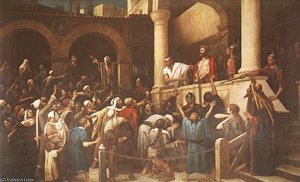
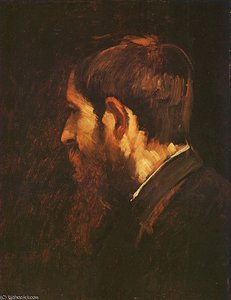
Retrato de Mihály Munkácsy

As 100 Pinturas Mais Famosas de Mihály Munkácsy, Cada Uma Única

Atualizado em Novembro 2026 · classificado pela nossa pontuação de popularidade (pesquisas, visitas e pedidos de cada obra) · 139 obras de Mihály Munkácsy em nosso catálogo

Em resumo

The Wrestler's Challenge (1875) é a pintura de Mihály Munkácsy que mais atrai olhares; a obra original pertence ao Art Institute of Chicago, Chicago. Depois disso, o olhar recai sobre Self-Portrait II. (1881) e Christ on the Cross. Entre as 139 obras de Mihály Munkácsy em nosso catálogo, estas 100 são as mais famosas, cada uma uma original única apresentada com o seu ano, o seu museu e a razão pela qual perdura.

1844 – 1900, Mukachevo Realism Mais obras: Galeria Nacional Húngara

As 10 principais pinturas de Mihály Munkácsy, sob o olhar da galeria

1
The Wrestler's Challenge (1875) de Mihály Munkácsy

The Wrestler's Challenge

1875 · Oil On Panel · Art Institute of Chicago, Chicago

The Wrestler's Challenge is an oil on panel painting created by the Hungarian artist Mihály Munkácsy. The work emerged in 1875. It captures a moment of physical tension held within a dim, rustic space. The artist, Mihály Munkácsy, was born in Mukachevo, Ukraine, and brought his specific vision to this composition.

2
Self-Portrait II. (1881) de Mihály Munkácsy

Self-Portrait II.

1881 · Oil On Canvas · Galeria Nacional Húngara, Budapeste

The oil-on-canvas work titled Self-Portrait II. presents a direct encounter with the artist, Mihály Munkácsy. Painted about 1881, this intimate study captures the man behind the brush. The subject is the artist himself, looking out from the frame with a gaze that meets the viewer's own. It is a quiet confrontation of identity and presence.

3
Christ on the Cross de Mihály Munkácsy

Christ on the Cross

Oil On Canvas · Déri Museum, Debrecen

The scene unfolds with the heavy, unmistakable weight of the crucifixion of Jesus Christ. In "Christ on the Cross," the viewer finds themselves amidst a moment of profound religious significance, where the central figure hangs upon the wood, suspended between heaven and earth. This explicit portrayal of the crucifixion captures a moment of intense human suffering and spiritual gravity. The atmosphere remains thick with the solemnity of the event, drawing…

4
Apotheosis of the Renaissance (1888) de Mihály Munkácsy

Apotheosis of the Renaissance

1888 · Oil · Kunsthistorisches Museum, Viena

The ceiling of the Kunsthistorisches Museum in Vienna does not merely exist; it breathes. It is a grand, multi-layered vision of celestial triumph, where the heavy architecture of the Renaissance meets the infinite blue of the heavens. A dome, seemingly sliced open, invites the eye upward through a complex, swirling motion of light and shadow. Below, the terrestrial world is crowded and heavy, filled with the deep reds and earthy…

5
Portrait of a Little Girl (1890) de Mihály Munkácsy

Portrait of a Little Girl

1890 · Oil On Canvas · Kunsthalle Bremen, Bremen

Mihály Munkácsy’s Portrait of a Little Girl is a vertical composition focusing on the subject from the waist up. Positioned slightly off-center, the girl is set against a dark, indistinct background. This void of detail pushes the figure forward, emphasizing the stark contrast between the deep, moody tones of black and dark brown and the subject herself. A bright, creamy white blouse and a crimson skirt provide the primary points…

7
In Front of the Inn (1864) de Mihály Munkácsy

In Front of the Inn

1864 · Oil On Canvas · Ernest Zmeták Art Gallery, Nové Zámky

Mihály Munkácsy painted In Front of the Inn in 1864. This genre scene captures a lively, rustic gathering outside a tavern. The composition centers on the social interactions of rural life, focusing on a group of people assembled around a table.

8
Hay Wagon in a Grove (1868) de Mihály Munkácsy

Hay Wagon in a Grove

1868 · Oil On Canvas

In "Hay Wagon in a Grove" by Mihály Munkácsy, we find ourselves observing a quiet moment of agricultural labor. The composition is anchored by a large, central haystack, which several figures are busy loading or managing. This central activity is set against a vast, expansive sky that occupies the upper two-thirds of the canvas, creating a sense of immense space. The landscape recedes into a deep perspective, drawing the eye…

9
Making Lint (1871) de Mihály Munkácsy

Making Lint

1871 · Oil · Galeria Nacional Húngara, Budapeste

Making Lint is a genre picture by the artist Mihály Munkácsy. This work was created about 1871. The painting depicts a group of people gathered in a dimly lit, rustic interior, likely during a meal. The composition is crowded, with figures arranged around a central table. The scene focuses on a moment of quiet, weary domestic life.

Pinturas famosas de Mihály Munkácsy, números 11 a 100

11A condemned man (1870) de Mihály MunkácsyA condemned man1870 · The Mesdag Collection 12Easter Sprinkling (1865) de Mihály MunkácsyEaster Sprinkling1865 · Galeria Nacional Húngara 13Male Study for “The Condemned Cell” (1869) de Mihály MunkácsyMale Study for “The Condemned Cell”1869 · Galeria Nacional Húngara 14Head of girl (1869) de Mihály MunkácsyHead of girl1869 15The Condemned (1870) de Mihály MunkácsyThe Condemned1870 · Frye Art Museum 16The Village Blacksmith (1875) de Mihály MunkácsyThe Village Blacksmith1875 · Instituto de Arte de Dayton 17Study for the Pawnbroker's Shop (1874) de Mihály MunkácsyStudy for the Pawnbroker's Shop1874 · Galeria Nacional Húngara 18Study for the Village Hero (1874) de Mihály MunkácsyStudy for the Village Hero1874 · Galeria Nacional Húngara 19Male Study for the Pawnbroker's Shop (1873) de Mihály MunkácsyMale Study for the Pawnbroker's Shop1873 · Galeria Nacional Húngara 20Night Wanderers I. (1872) de Mihály MunkácsyNight Wanderers I.1872 · Galeria Nacional Húngara 21Gypsy Camp (1873) de Mihály MunkácsyGypsy Camp1873 · Alte Nationalgalerie 22Condemned cell II (1878) de Mihály MunkácsyCondemned cell II1878 · Galeria Nacional Húngara 23In the Kitchen (1872) de Mihály MunkácsyIn the Kitchen1872 24Self-portrait (1875) de Mihály MunkácsySelf-portrait1875 25Christ before Pilate (1881) de Mihály MunkácsyChrist before Pilate1881 26Praying Leviathan (1882) de Mihály MunkácsyPraying Leviathan1882 · Dordrechts Museum 27Portrait of Charles Sedelmeyer (1879) de Mihály MunkácsyPortrait of Charles Sedelmeyer1879 · Galeria Nacional Húngara 28Christ before Pilate (1881) de Mihály MunkácsyChrist before Pilate1881 · Déri Museum 29Christ on the Cross (Study painting) (1882) de Mihály MunkácsyChrist on the Cross (Study painting)1882 · Galeria Nacional Húngara 30The Hero of the Village (reduction) (1882) de Mihály MunkácsyThe Hero of the Village (reduction)1882 · Galeria Nacional Húngara 31Flowers in a Vase / Drawing up of bouquets (1881) de Mihály MunkácsyFlowers in a Vase / Drawing up of bouquets1881 · Museu Estatal Pushkin de Artes Visuais 32An afternoon in the park (1880) de Mihály MunkácsyAn afternoon in the park1880 33After Lunch (Maternal Happiness) (1892) de Mihály MunkácsyAfter Lunch (Maternal Happiness)1892 · Galeria Nacional Húngara 34Study for the Painting Titled Hímző leány (1886) de Mihály MunkácsyStudy for the Painting Titled Hímző leány1886 35Embroidering Girl (1888) de Mihály MunkácsyEmbroidering Girl1888 36Ballad (1888) de Mihály MunkácsyBallad1888 37Piano-lesson (1890) de Mihály MunkácsyPiano-lesson1890 38Conquest (Settlement of the Magyars in Hungary) (1893) de Mihály MunkácsyConquest (Settlement of the Magyars in Hungary)1893 39Conquest (The entry of the Hungarians in the Carpathian Basin) (1893) de Mihály MunkácsyConquest (The entry of the Hungarians in the Carpathian Basin)1893 40The Music Room (1878) de Mihály MunkácsyThe Music Room1878 · Metropolitan Museum of Art 41A Study for "Paradise Lost (1899) de Mihály MunkácsyA Study for "Paradise Lost1899 · Brooklyn Museum 42a self portrait of the artist de Mihály Munkácsya self portrait of the artist 43The Avenger of His Honor (End of a Duel) (1869) de Mihály MunkácsyThe Avenger of His Honor (End of a Duel)1869 44Storm at the Puszta (1867) de Mihály MunkácsyStorm at the Puszta1867 · Galeria Nacional Húngara 45The Battlefield of Isaszeg (1867) de Mihály MunkácsyThe Battlefield of Isaszeg1867 · Galeria Nacional Húngara 46Evening Atmosphere (1870) de Mihály MunkácsyEvening Atmosphere1870 · Galeria Nacional Húngara 47Grove (1873) de Mihály MunkácsyGrove1873 48Corn Field (1874) de Mihály MunkácsyCorn Field1874 · Galeria Nacional Húngara 49Gypsies_at_the_forest_edge (1873) de Mihály MunkácsyGypsies_at_the_forest_edge1873 50Window bay (1877) de Mihály MunkácsyWindow bay1877 · Galeria Nacional Húngara 51Twilight Landscape (1882) de Mihály MunkácsyTwilight Landscape1882 · Galeria Nacional Húngara 52Landscape with Alley and Building (1882) de Mihály MunkácsyLandscape with Alley and Building1882 · Galeria Nacional Húngara 53Still Life with Flowers and Jug (1881) de Mihály MunkácsyStill Life with Flowers and Jug1881 · Galeria Nacional Húngara 54Entrance to Colpachi Park (1888) de Mihály MunkácsyEntrance to Colpachi Park1888 55The Drinker de Mihály MunkácsyThe Drinker 56Self-Portrait de Mihály MunkácsySelf-Portrait 57I Entered the Kitchen de Mihály MunkácsyI Entered the Kitchen 58Grandfather's Name Day de Mihály MunkácsyGrandfather's Name Day 59Self-contempt de Mihály MunkácsySelf-contemptNationalmuseum 60Apotheosis of the Renaissance de Mihály MunkácsyApotheosis of the RenaissanceKunsthistorisches Museum 61untitled (1319) de Mihály Munkácsyuntitled (1319)Galeria Nacional Húngara 62untitled (7430) de Mihály Munkácsyuntitled (7430) 63Christ Before Pilate - de Mihály MunkácsyChrist Before Pilate - 64untitled (6571) de Mihály Munkácsyuntitled (6571) 65untitled (537) de Mihály Munkácsyuntitled (537)Déri Museum 66untitled (7526) de Mihály Munkácsyuntitled (7526)Galeria Nacional Húngara 67Visiting the New Baby de Mihály MunkácsyVisiting the New Baby 68The faggot gatherer de Mihály MunkácsyThe faggot gatherer 69Hungarian Rider On The Evening Way Home de Mihály MunkácsyHungarian Rider On The Evening Way Home 70untitled (2598) de Mihály Munkácsyuntitled (2598) 71Enough, dear mother! de Mihály MunkácsyEnough, dear mother! 72Dark Street (1871) de Mihály MunkácsyDark Street1871 · Galeria Nacional Húngara 73Hungarian Village Scene de Mihály MunkácsyHungarian Village Scene 74untitled (22) de Mihály Munkácsyuntitled (22)Walters Art Museum 75untitled (7470) de Mihály Munkácsyuntitled (7470) 76untitled (8291) de Mihály Munkácsyuntitled (8291) 77baby's visitors de Mihály Munkácsybaby's visitors 78untitled (2243) de Mihály Munkácsyuntitled (2243) 79untitled (2090) de Mihály Munkácsyuntitled (2090)Galeria Nacional Húngara 80Milton Dictating 'paradise Lost' de Mihály MunkácsyMilton Dictating 'paradise Lost' 81The Story Of A Battle de Mihály MunkácsyThe Story Of A Battle 82untitled (9090) de Mihály Munkácsyuntitled (9090) 83untitled (719) de Mihály Munkácsyuntitled (719)Galeria Nacional Húngara 84untitled (8984) de Mihály Munkácsyuntitled (8984) 85Mozart Directing His Requiem On His Deathbed de Mihály MunkácsyMozart Directing His Requiem On His Deathbed 86untitled (3851) de Mihály Munkácsyuntitled (3851) 87untitled de Mihály Munkácsyuntitled 88untitled (357) de Mihály Munkácsyuntitled (357) 89untitled (3307) de Mihály Munkácsyuntitled (3307) 90untitled (2533) de Mihály Munkácsyuntitled (2533) 91In The Barbizon Woods de Mihály MunkácsyIn The Barbizon Woods 92untitled (2957) de Mihály Munkácsyuntitled (2957) 93untitled (5193) de Mihály Munkácsyuntitled (5193) 94untitled (9901) de Mihály Munkácsyuntitled (9901)Galeria Nacional Húngara 95untitled (8787) de Mihály Munkácsyuntitled (8787) 96Avenue In Colpach de Mihály MunkácsyAvenue In ColpachGaleria Nacional Húngara 97Visit To A New Mother de Mihály MunkácsyVisit To A New MotherBavarian State Painting Collections 98In The Barbizon Woods - de Mihály MunkácsyIn The Barbizon Woods - 99untitled (4051) de Mihály Munkácsyuntitled (4051) 100Apotheosis Of The Renaissance de Mihály MunkácsyApotheosis Of The Renaissance

Pinturas famosas de Mihály Munkácsy, período por período

Os temas que cativaram o olhar de Mihály Munkácsy

Os quatro temas que mais se repetem nestas obras originais, cada um com o seu melhor exemplo.

Os museus que guardam os originais de Mihály Munkácsy

Os 8 museus que detêm a maioria das pinturas desta página.

Museus Cidade Obras de Mihály Munkácsy Pinturas desta lista
Galeria Nacional Húngara, BudapesteGaleria Nacional Húngara Budapeste 34 Self-Portrait II., In front of the Collecting Box, Making Lint
Déri Museum, DebrecenDéri Museum Debrecen 3 Christ on the Cross, Christ before Pilate, untitled (537)
Kunsthistorisches Museum, VienaKunsthistorisches Museum Viena 2 Apotheosis of the Renaissance, Apotheosis of the Renaissance
Art Institute of Chicago, ChicagoArt Institute of Chicago Chicago 1 The Wrestler's Challenge
Kunsthalle Bremen, BremenKunsthalle Bremen Bremen 1 Portrait of a Little Girl
Ernest Zmeták Art Gallery Nové Zámky 1 In Front of the Inn
The Mesdag Collection, HaiaThe Mesdag Collection Haia 1 A condemned man
Frye Art Museum, Washington, D.C.Frye Art Museum Washington, D.C. 1 The Condemned

Mihály Munkácsy ao longo das décadas: uma obra original única para cada uma

Obras por década

Escolha uma década para ver a obra original que a define.

Pinturas de Mihály Munkácsy: perguntas para a galeria

Qual é a obra mais famosa de Mihály Munkácsy?Revelar a resposta

The Wrestler's Challenge (1875), Art Institute of Chicago, Chicago. Self-Portrait II. (1881) e Christ on the Cross vêm a seguir.

Com que idade Mihály Munkácsy criou The Wrestler's Challenge?Revelar a resposta

31 anos: The Wrestler's Challenge data de 1875, e Mihály Munkácsy nasceu em 1844.

Quais são as dez pinturas mais famosas de Mihály Munkácsy?Revelar a resposta

The Wrestler's Challenge, Self-Portrait II., Christ on the Cross, Apotheosis of the Renaissance, Portrait of a Little Girl, In front of the Collecting Box, In Front of the Inn, Hay Wagon in a Grove, Making Lint e The Convict (Condemned Cell). O ranking acima apresenta o ano e o museu de cada uma.

Quantas obras de Mihály Munkácsy são conhecidas?Revelar a resposta

Nosso catálogo contém 139 obras de Mihály Munkácsy, datadas de 1864 a 1899.

Onde se pode ver os originais mais famosos de Mihály Munkácsy?Revelar a resposta

Principalmente em Galeria Nacional Húngara (Budapeste), Déri Museum (Debrecen) e Kunsthistorisches Museum (Viena). A tabela de museus acima lista todos eles.

Em que período Mihály Munkácsy criou as suas pinturas mais conhecidas?Revelar a resposta

Em 1870s: 23 das 100 obras nesta página foram feitas então, sendo The Wrestler's Challenge delas.

Qual pintura famosa de Mihály Munkácsy é a mais antiga e qual é a mais recente?Revelar a resposta

Nesta página, a mais antiga é In Front of the Inn (1864) e a mais recente é A Study for "Paradise Lost (1899).

Quais temas Mihály Munkácsy preferia?Revelar a resposta

Man (21), Woman (15) e Shadows (11), entre as 100 obras nesta página.

Com quais materiais Mihály Munkácsy mais pintou?Revelar a resposta

Oil On Canvas, para 22 das 100 obras nesta página.

A qual movimento pertence a obra de Mihály Munkácsy?Revelar a resposta

Realism, a julgar pelos originais nesta página.

Quais originais de Mihály Munkácsy posso ver no Galeria Nacional Húngara?Revelar a resposta

Self-Portrait II., In front of the Collecting Box e Making Lint: o Galeria Nacional Húngara, Budapeste detém 30 das obras desta página.

Mihály Munkácsy: um retrato do artista

Uma Vida Forjada na Adversidade e Iluminada pelo Talento

Mihály Munkácsy, nascido Michael Leo Lieb em 20 de fevereiro de 1844, na pequena cidade de Munkács (atual Mukachevo, Ucrânia), emergiu de uma infância mergulhada na adversidade para se tornar um dos artistas húngaros mais celebrados e internacionalmente reconhecidos. Seus primeiros anos foram marcados por uma perda profunda; órfão na tenra idade de sete anos com o falecimento de ambos os pais, Mihály Lieb enfrentou um futuro repleto de incertezas. Inicialmente, foi aprendiz de marceneiro – um ofício prático destinado a garantir seu sustento – mas suas inclinações artísticas inatas não puderam ser suprimidas. Esse anseio pela expressão criativa o levou a Elek Szamossy, um pintor itinerante que reconheceu e nutriu o talento do jovem menino, fornecendo a instrução fundamental que o colocaria no caminho para a maestria artística. Um momento crucial surgiu com uma bolsa estatal que permitiu a Munkácsy ampliar seus horizontos através de estudos no exterior, primeiro em Viena (1865), depois em Munique (1866) e, finalmente, Düsseldorf (1868). Foi dentro dos muros dessas academias, particularmente sob a influência da escola de pintura de Düsseldorf, que ele aperfeiçoou suas habilidades técnicas e começou a formular uma voz artística distinta.

Da Vida Camponesa à Grandeza Bíblica

As primeiras obras de Munkácsy estavam profundamente enraizadas nas realidades da vida camponesa húngara, refletindo um compromisso em retratar as dificuldades e a dignidade da existência rural. Pinturas como “O Caldeirão” (1864) e “Festejos de Páscoa” (1865) exibem seu estilo inicial – cores vibrantes e composições teatrais influenciadas por contemporâneos como Károly Lotz e János Jankó. No entanto, uma experiência transformadora na Exposição Universal de Paris de 1867 desencadeou uma mudança em sua abordagem artística. Imerso no mundo florescente da pintura moderna francesa, ele adotou pinceladas mais amplas e uma paleta mais clara, sinalizando um afastamento da estética húngara mais tradicional. Essa evolução culminou em “O Último Dia de um Condenado” (1869), uma obra que o catapultou ao reconhecimento internacional, rendendo-lhe uma medalha de ouro no Salão de Paris de 1870. O poder emocional bruto e o comentário social da pintura ressoaram profundamente com o público, estabelecendo Munkácsy como uma força a ser reconhecida no mundo da arte. Após este sucesso, ele mudou-se para Paris em 1872 ao lado de László Paál, refinando ainda mais seu estilo e explorando novos territórios temáticos através de cenas de gênero como “Produzindo Cotão” (1lam71) e “Mulher Colhendo Gravetos” (1873). Mas foi o encargo da *Trilogia de Cristo* que definiria grande parte de sua carreira posterior. Estas pinturas bíblicas monumentais – "Cristo perante Pilatos" (1882), "Gólgota" (1884) e "Ecce Homo" (1896) – foram encomendadas pelo marchand Charles Sedelmeyer e tornaram-se sensações na Europa e nos Estados Unidos, alcançando tanto reconhecimento crítico quanto imenso sucesso comercial.

Uma Síntese de Influências e um Estilo Distintivo

O desenvolvimento artístico de Munkácsy foi moldado por uma confluência de influências. Sua base inicial na pintura de gênero húngara forneceu o alicerce para suas representações realistas da vida cotidiana. A escola de Düsseldorf instilou nele uma ênfase na expressão emocional das figuras, enquanto a exposição ao Realismo francês – particularmente à obra de Gustave Courbet – incentivou um foco no comentário social e em retratos despidos de artifícios da realidade. O tempo que passou com László Paál em Barbizon promoveu um apreço mais profundo pela pintura *en plein air* e pela captura das nuances de luz e atmosfera. Esta síntese resultou em um estilo caracterizado tanto pelo brilho técnico quanto pela profundidade emocional. Inicialmente, seu trabalho era marcado por cores vibrantes e composições dramáticas; mais tarde, evoluiu para uma elegância mais refinada, exibindo atenção meticulosa aos detalhes e esquemas tonais de cores sofisticados. Ele possuía uma habilidade extraordinária de transmitir a emoção humana com uma autenticidade convincente, criando narrativas que ressoavam com os espectadores em um nível profundo. Suas pinturas não eram meramente representações de cenas; eram janelas para a alma humana.

Legado e Impacto Duradouro

Mihály Munkácsy alcançou uma fama sem precedentes durante sua vida, tornando-se possivelmente o artista húngaro mais bem-sucedido de sua era. Sua *Trilogia de Cristo* permanece como um marco na arte religiosa, celebrada por sua escala, intensidade emocional e precisão histórica. O sucesso comercial de suas pinturas desempenhou um papel significativo na popularização da arte realista entre o público americano, ampliando seu alcance e influência. Hoje, suas obras estão presentes em museus prestigiados em todo o mundo, incluindo a Galeria Nacional Húngara, o Museu Déri (que abriga a *Trilogia de Cristo* completa) e a Art Gallery de Hamilton. O legado de Munkácsy estende-se além de sua maestria técnica; reside em sua capacidade de unir tradições artísticas, sintetizar diversas influências e criar pinturas que continuam a cativar e emocionar públicos através de culturas e gerações. Ele faleceu em Paris em 1º de maio de 1900, deixando para trás um corpo de trabalho que permanece como um testemunho do poder da arte em iluminar a condição humana.

Exploração Adicional

  • Artistas Relacionados: Antal Ligeti – Mentor de Munkácsy e também pintor húngaro, conhecido por suas cenas orientalistas.
  • Museus para Visitar: O Museu Déri em Debrecen, Hungria, oferece uma coleção abrangente da obra de Munkácsy, incluindo a *Trilogia de Cristo*. O Museu Móra Ferenc, em Szeged, também apresenta seleções de sua obra.
  • Pesquisa Adicional: Explore recursos online como Wikipedia e Artvee para informações adicionais sobre a vida e a arte de Munkáczy.