
1


Atualizado em Novembro 2026 · classificado pela nossa pontuação de popularidade (pesquisas, visitas e pedidos de cada obra) · 2 obras de Michael Sontag em nosso catálogo
Em resumo
De todas as obras originais deixadas por Michael Sontag, a mais famosa é Portrait of the designer Michael Sontag, da coleção do Kunstgewerbemuseum, em Berlim. Nosso catálogo contém 2 obras de Michael Sontag; a galeria preservou as 2 que o mundo mais admira, cada uma exibida com sua data, seu museu e sua história.
O museu que detém a maioria das pinturas desta página.
| Museus | Cidade | Obras de Michael Sontag | Pinturas desta lista |
|---|---|---|---|
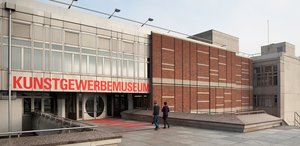 Kunstgewerbemuseum |
Berlim | 2 | Portrait of the designer Michael Sontag, Coat with Overcut Sleeves |
Portrait of the designer Michael Sontag
Nosso catálogo contém 2 obras de Michael Sontag.
Principalmente em Kunstgewerbemuseum (Berlim). A tabela de museus acima lista todos eles.
Portrait of the designer Michael Sontag e Coat with Overcut Sleeves: o Kunstgewerbemuseum, Berlim detém 2 das obras desta página.
Born in the vibrant, culturally rich atmosphere of Berlin, Germany, in 1987, Michael Sontag emerged from the heart of German fashion culture not merely as a designer, but as a philosopher of form. His early years in Berlin, a city defined by its historical layers and avant-garde spirit, instilled in him a profound reverence for the beauty found in restraint. This formative period cultivated an eye for clean lines and understated palettes, fostering a deep appreciation for how natural materials can be transformed through thoughtful design. Sontag’s creative journey is rooted in the belief that true elegance does not shout; rather, it whispers through texture, drape, and the intentional use of space.
His formal education at the prestigious Weißensee Kunsthochschule Berlin provided the technical rigor necessary to translate his minimalist visions into tangible reality. It was here that he honed his mastery over construction and silhouette, establishing a foundation built on precision and structural integrity. This academic training allowed him to bridge the gap between conceptual art and wearable design, setting the stage for a career defined by an unwavering commitment to the purity of aesthetic expression.
The work of Michael Sontag is deeply permeated by the enduring principles of the Bauhaus movement. One can perceive the echoes of geometric forms and functional aesthetics in every piece he creates, reflecting a desire to distill design down to its most essential elements. For Sontag, the removal of the superfluous is not an act of lack, but an act of liberation, allowing the inherent qualities of the medium to take center stage. This pursuit of functional beauty is matched by his meticulous selection of textiles, where he prioritizes organic cotton and linen to create a sensory experience that celebrates both movement and comfort.
His design philosophy can be summarized through several core pillars:
Sontag’s ascent in the fashion world was marked by a bold debut in 2013, when he presented his eponymous label at Berlin Fashion Week. This inaugural collection served as a manifesto for his minimalist approach, immediately capturing the attention of industry critics and enthusiasts alike. His ability to marry contemporary trends with timeless, classic sensibilities earned him significant acclaim, most notably receiving the German Design Award for Fashion in 2015. This prestigious recognition solidified his status as a leading voice in modern German design.
The impact of his work has resonated far beyond the runways of Berlin, finding its way into the pages of the world's most influential fashion chronicles, including Vogue, Harper's Bazaar, and Elle. Today, Michael Sontag continues to push the boundaries of contemporary style, actively participating in global fashion dialogues that emphasize sustainable practices and the enduring power of minimalist design. His legacy remains a testament to the idea that through simplicity, one can achieve a profound and lasting impact on the world of art and fashion.
