Maurice Leloir

1853 - 1940

Destaques

  • Nationality: França
  • Creative periods: renaissance
  • Top-ranked work: Winter romance
  • Works on this site: 29
  • Color intensity:
    • equilibrado
    • monocromático
  • Also known as:
    • m.ce leloir
    • m. leloir
    • Mce Leloir
  • Copyright status: Public domain

A Legacy of Detail: The Life and Art of Maurice Leloir

Maurice Leloir, born in Paris in 1853, emerged from a lineage steeped in artistic tradition—a heritage that profoundly shaped his meticulous approach to painting and illustration. His father, Auguste Leloir, was a painter himself, while his mother, Héloïse Suzanne Colin, carried on the family’s creative spirit as a skilled watercolorist, daughter of Alexandre-Marie Colin. This nurturing environment instilled in young Maurice not only technical skill but also an appreciation for the nuances of artistic expression. The influence extended to his brother, Alexandre-Louis Leloir, who also became a recognized painter and illustrator, creating a vibrant artistic atmosphere within their family circle. Leloir’s early training under his father laid a solid foundation, fostering a dedication to precision that would become a hallmark of his style. He married Céline Bourdier, and their daughter, Suzanne Leloir, continued the familial connection through marriage to Philippe Savari’s son in 1912, cementing a lasting legacy within artistic circles.

From Salon Recognition to the Crozant School

Leloir's talent quickly gained recognition within the French art establishment. He first exhibited at the prestigious Salon des Artistes Français, an important platform for emerging artists, and eventually rose to become its secretary—a testament to his standing among his peers. This early success propelled him towards further artistic exploration, leading to a pivotal association with the Crozant School. This collective of painters, drawn to the picturesque valleys of Creuse, focused on capturing the essence of rural life and landscapes. Working alongside these artists significantly influenced Leloir’s style, encouraging a deeper engagement with naturalism and atmospheric perspective. However, Leloir distinguished himself through his unique fascination with historical accuracy, meticulously researching costumes and settings to recreate scenes from bygone eras. He wasn't merely depicting history; he was reconstructing it with painstaking detail, often utilizing photographs as invaluable references—a relatively novel approach for the time.

A Prolific Illustrator and Historian of Costume

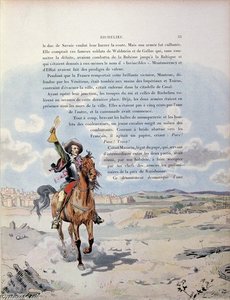
Leloir’s artistic output was remarkably diverse and prolific. While celebrated for his paintings, he truly flourished as an illustrator, particularly in the realm of children's literature. His illustrations brought classic tales to life with vibrant imagery and historical authenticity, most notably his work on Théodore Cahu’s adaptation of Alexandre Dumas’ *Richelieu*. This dedication to detail extended beyond narrative illustration; Leloir became highly sought after for depicting costumes and scenes from different periods, showcasing an exceptional ability to transport viewers through time. His paintings, such as the sadly stolen *La Maison Fournaise*, demonstrate his mastery of oil painting, while his watercolors reveal a delicate touch and sensitivity to light. He worked across various mediums—drawing, printmaking, and oil painting—demonstrating versatility and a commitment to exploring different artistic techniques. This passion for historical attire culminated in one of his most significant achievements: the founding of the Société de l'histoire du costume (Society for the History of Costume) in 1907. As its founding president, Leloir generously donated his family’s extensive collection of fashion prints, establishing a valuable resource for researchers and enthusiasts alike.

Hollywood Dreams and Lasting Influence

Even late in his career, Leloir continued to embrace new challenges and opportunities. In 1929, he received an invitation from the legendary Douglas Fairbanks to work on *The Iron Mask*, traveling to Hollywood to contribute his expertise in costume design and set decoration. He documented this experience in his memoir, *Five Months in Hollywood with Douglas Fairbanks*, offering a fascinating glimpse into the world of early cinema. Throughout his life, Leloir remained dedicated to scholarship, authoring several publications related to costume history and art, further solidifying his reputation as an authority in the field. Maurice Leloir passed away in 1940, leaving behind a rich artistic legacy characterized by meticulous detail, historical accuracy, and a profound appreciation for the beauty of the past. His work continues to captivate audiences today, serving as a testament to his skill, dedication, and enduring contribution to the world of art and costume history. His illustrations are not merely representations; they are windows into another time.

Perguntas e Respostas

Onde e quando nasceu Maurice Leloir?

Maurice Leloir nasceu em former 11th arrondissement of Paris, em 1853.

Em quais museus estão as pinturas de Maurice Leloir?

As pinturas de Maurice Leloir encontram-se em The Fan Museum.

Posso estudar o uso de cores de Maurice Leloir em todas as suas obras?

Veja as cores que Maurice Leloir mais utilizou, analisadas através das suas obras.

Posso explorar as obras de Maurice Leloir por tema?

Veja os temas que Maurice Leloir pintou, mapeados em todas as obras.

Quanto tempo viveu Maurice Leloir?

Maurice Leloir viveu cerca de 87 anos, de 1853 a 1940.

A qual período histórico pertence a obra de Maurice Leloir?

Maurice Leloir atuou no período Século XIX. Este período situa a atividade do artista na história.

Quais obras de Maurice Leloir são as mais visualizadas?

Veja as pinturas mais populares de Maurice Leloir, classificadas pelo número de visitas que recebem neste site.

A obra de Maurice Leloir está em domínio público?

Sim. Maurice Leloir faleceu em 1940, e as obras estão em domínio público.

Por quais pinturas Maurice Leloir é conhecido(a)?

Maurice Leloir é conhecido pelas obras listadas em as pinturas mais famosas de Maurice Leloir.