Retrato de Luca Carlevaris

Pinturas de Luca Carlevaris: As 67 mais famosas, sob o olhar de uma galeria

Atualizado em Novembro 2026 · classificado pela nossa pontuação de popularidade (pesquisas, visitas e pedidos de cada obra) · 67 obras de Luca Carlevaris em nosso catálogo

Em resumo

Aos olhos da galeria, a pintura mais famosa de Luca Carlevaris é Santa Maria della Carità (1703). Santi Giovanni e Paolo and the Scuola di San Marco (1704) e The Rialto Bridge (1703) completam o trio que todos reconhecem. Dos 67 trabalhos de Luca Carlevaris em nosso catálogo, a galeria apresenta abaixo as 67 obras mais famosas, cada uma original, com seu ano, seu museu e o que a torna única.

1663 – 1730, Udine Baroque Mais obras: Rijksmuseum

As 10 principais pinturas de Luca Carlevaris na galeria

1
Santa Maria della Carità (1703) de Luca Carlevaris

Santa Maria della Carità

1703 · Engraving

In this monochrome engraving, the Church of Santa Maria della Carità rises within the urban landscape of Venice, Italy. Created by Luca Carlevaris in 1703, the work captures the architectural presence of the church and its immediate surroundings. The scene focuses on the structural details of the building, presenting a clear view of the facade as it meets the street. Every line works to define the stone and the space…

2
Santi Giovanni e Paolo and the Scuola di San Marco (1704) de Luca Carlevaris

Santi Giovanni e Paolo and the Scuola di San Marco

1704 · Engraving

This 1704 engraving offers a precise view of the Venetian cityscape, focusing on the architectural relationship between the Scuola di San Marco and the church of Santi Giovanni e Paolo. The composition captures the heavy, geometric presence of these structures, which were among the most significant monuments of the city. A sense of urban life is present in the arrangement of the buildings and the space between them, providing a…

3
The Rialto Bridge (1703) de Luca Carlevaris

The Rialto Bridge

1703 · Engraving · Rijksmuseum, Amsterdã

The water of the Grand Canal ripples beneath the shadow of the Rialto Bridge, catching the light in a dance of silver and grey. In this detailed engraving, the air feels thick with the movement of a city that never rests. Pedestrians navigate the stone steps, their forms caught in mid-stride, while gondoliers maneuver their vessels through the narrow channels. The architecture rises with a mathematical precision, every arch and…

4
The Reception of Cardinal César d'Estrées (detail) (1701) de Luca Carlevaris

The Reception of Cardinal César d'Estrées (detail)

1701 · Oil On Canvas · Rijksmuseum, Amsterdã

The oil on canvas depicts a dense crowd gathered in an outdoor setting, likely a public market or a significant social event. Figures are arranged in a crowded composition that emphasizes a mass of people rather than deep spatial recession. The scene is characterized by a variety of period clothing, including men in frock coats and powdered wigs, and women wearing voluminous gowns and headdresses. The perspective is slightly flattened,…

5
A Gondola End View (1710) de Luca Carlevaris

A Gondola End View

1710 · Oil On Canvas

A close-up portrait emerges from a dark, ambiguous field of brown and black. The composition is tightly cropped, focusing on the contours of a head and a helmet. Visible brushstrokes and a rough, uneven texture suggest an aged surface, where light descends from above to define the planes of the face. The palette remains limited, relying on subtle hints of gold to break the heavy shadows. This approach creates a…

6
The Piazzetta and the Library (1720) de Luca Carlevaris

The Piazzetta and the Library

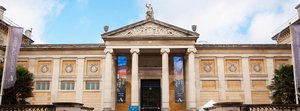
1720 · Oil · Ashmolean Museum, Oxford

The composition centers on a grand palazzo, its facade defined by a rhythmic series of arched windows and balconies that command the viewer's attention. Through a calculated use of linear perspective, the artist creates an exaggerated sense of depth, pulling the eye toward the architectural heart of the scene. The scale of the building dominates the frame, establishing a sense of monumental permanence against the fleeting movements of the figures…

7
The Bacino, Venice, with the Dogana and a Distant View of the Isola di San Giorgio (1709) de Luca Carlevaris

The Bacino, Venice, with the Dogana and a Distant View of the Isola di San Giorgio

1709 · Oil On Canvas · Metropolitan Museum of Art, Nova York

To gaze upon this magnificent veduta of Venice is to step directly into the golden heart of the eighteenth century. Luca Carlevaris has gifted us more than just a painting; he has preserved a moment—a vibrant, breathing tableau of life unfolding along the Grand Canal. The composition draws the eye deep into the scene, leading it from the immediate foreground where large vessels glide across the water, past the imposing…

8
The Molo, Looking toward the Doge's Palace (1710) de Luca Carlevaris

The Molo, Looking toward the Doge's Palace

1710 · Oil On Canvas · Museu Hermitage, São Petersburgo

The scene depicts the Molo in Venice, looking toward the Doge's Palace. In the foreground, the water occupies a significant portion of the lower frame, populated by various vessels. Some boats feature upright sails, while others sit low in the water near the stone edge. Numerous figures are distributed throughout the composition. Some individuals walk along the quay, while others are positioned in the mid-ground or near the boats. A…

9
A Gentleman (1710) de Luca Carlevaris

A Gentleman

1710 · Oil On Canvas

In this 1710 oil on canvas, a male figure is captured in a three-quarter pose, seated with a relaxed yet commanding presence. He wears a blue coat accented with white trim, the texture of which is rendered through meticulous attention to the folds of the fabric and the delicate lace at his shirt. His expression is one of calm confidence, a quiet composure that defines the character of the subject.…

10
Seascape (1690) de Luca Carlevaris

Seascape

1690 · Oil On Canvas

The sea churns with a violent energy, a restless expanse of water that seems to heave against the very canvas. Dark, heavy clouds hang low in a stormy sky, casting a somber mood over the entire scene. Waves crash with immense force against a rugged, rocky coastline, sending spray into the air as they collide with the shore. In the middle ground, the vastness of the ocean dominates, its surface…

Pinturas de Luca Carlevaris, classificadas de 11 a 67

11The Molo, Venice, Looking West (1709) de Luca CarlevarisThe Molo, Venice, Looking West1709 · Metropolitan Museum of Art 12Palazzo Coccina on the Grand Canal (1703) de Luca CarlevarisPalazzo Coccina on the Grand Canal1703 · Bayerische Staatsbibliothek 13Piazza San Marco, Venice (1709) de Luca CarlevarisPiazza San Marco, Venice1709 · Metropolitan Museum of Art 14The Sea Custom House with San Giorgio Maggiore (1700) de Luca CarlevarisThe Sea Custom House with San Giorgio Maggiore1700 15The Molo with the Ducal Palace (1710) de Luca CarlevarisThe Molo with the Ducal Palace1710 16The Sea Custom House with San Giorgio Maggiore (detail) (1700) de Luca CarlevarisThe Sea Custom House with San Giorgio Maggiore (detail)1700 17A Lady Seen from Behind (1710) de Luca CarlevarisA Lady Seen from Behind1710 18View of a River Port (1710) de Luca CarlevarisView of a River Port1710 19A Lady Holding a Fan (1710) de Luca CarlevarisA Lady Holding a Fan1710 20A Lady Seen in Profile (1710) de Luca CarlevarisA Lady Seen in Profile1710 21The Reception of Cardinal César d'Estrées (1701) de Luca CarlevarisThe Reception of Cardinal César d'Estrées1701 · Rijksmuseum 22The Arrival of the Earl of Manchester in Venice (1710) de Luca CarlevarisThe Arrival of the Earl of Manchester in Venice1710 · Birmingham Museum and Art Gallery 23A Lady Seen in Full Face (1710) de Luca CarlevarisA Lady Seen in Full Face1710 24A Lady Holding a Fan and a Mask (1710) de Luca CarlevarisA Lady Holding a Fan and a Mask1710 25A Hungarian Hussar (1710) de Luca CarlevarisA Hungarian Hussar1710 26A Lady Seen in Profile, Holding a Fan (1710) de Luca CarlevarisA Lady Seen in Profile, Holding a Fan1710 27A Man in a Dark Cloak (1710) de Luca CarlevarisA Man in a Dark Cloak1710 28A Man Seen from Behind (1710) de Luca CarlevarisA Man Seen from Behind1710 29A Seated Man Seen from Behind (1710) de Luca CarlevarisA Seated Man Seen from Behind1710 30Study of Two Gondolas and Figures (1710) de Luca CarlevarisStudy of Two Gondolas and Figures1710 · Birmingham Museum and Art Gallery 31The Upper Section of a Church with a Hexagonal Dome and Two Towers (1710) de Luca CarlevarisThe Upper Section of a Church with a Hexagonal Dome and Two Towers1710 32A Gentleman Wearing a White Coat (1710) de Luca CarlevarisA Gentleman Wearing a White Coat1710 33A Man Wearing an Apron (1710) de Luca CarlevarisA Man Wearing an Apron1710 34A Gondolier (1710) de Luca CarlevarisA Gondolier1710 35Two Studies of a Dog (1710) de Luca CarlevarisTwo Studies of a Dog1710 36A Man in a White Domino Seen from Behind (1710) de Luca CarlevarisA Man in a White Domino Seen from Behind1710 37A Man Wearing a Yellow Coat (1710) de Luca CarlevarisA Man Wearing a Yellow Coat1710 38Study of a Man (1710) de Luca CarlevarisStudy of a Man1710 39Study of a Fish (1710) de Luca CarlevarisStudy of a Fish1710 40A Man Wearing a Green Coat (1710) de Luca CarlevarisA Man Wearing a Green Coat1710 41A Masked Lady (1710) de Luca CarlevarisA Masked Lady1710 42A Man Wearing a Red Jacket (1710) de Luca CarlevarisA Man Wearing a Red Jacket1710 43A Man, Perhaps a Gondolier, Seen from Behind (1710) de Luca CarlevarisA Man, Perhaps a Gondolier, Seen from Behind1710 44A Carpenter (1710) de Luca CarlevarisA Carpenter1710 45A Man Wearing a Red Coat (1710) de Luca CarlevarisA Man Wearing a Red Coat1710 46A Man Wearing a Blue Cloak (1710) de Luca CarlevarisA Man Wearing a Blue Cloak1710 47A Lady Seen from Behind, Holding a Fan (1710) de Luca CarlevarisA Lady Seen from Behind, Holding a Fan1710 48A Man, Perhaps a Lawyer (1710) de Luca CarlevarisA Man, Perhaps a Lawyer1710 49Studies of Two Gentlemen (1710) de Luca CarlevarisStudies of Two Gentlemen1710 50Three Studies of Costume (1710) de Luca CarlevarisThree Studies of Costume1710 51A Seated Man (1710) de Luca CarlevarisA Seated Man1710 52Study of a Horse's Head (1710) de Luca CarlevarisStudy of a Horse's Head1710 53Three Studies of Men (1710) de Luca CarlevarisThree Studies of Men1710 54Two Studies of Men (1710) de Luca CarlevarisTwo Studies of Men1710 55Two Costume Studies (1710) de Luca CarlevarisTwo Costume Studies1710 56View of the Wharf from the Bacino di San Marco (1720) de Luca CarlevarisView of the Wharf from the Bacino di San Marco1720 57Piazza San Marco, Looking East (1722) de Luca CarlevarisPiazza San Marco, Looking East1722 58The Piazzetta, Venice (1729) de Luca CarlevarisThe Piazzetta, Venice1729 · The Ashmolean Museum of Art and Archaeology 59The Bridge for the Feast of the Madonna della Salute (1720) de Luca CarlevarisThe Bridge for the Feast of the Madonna della Salute1720 · Wadsworth Atheneum 60A Gondola (1710) de Luca CarlevarisA Gondola1710 61Seaport (1690) de Luca CarlevarisSeaport1690 · Ca' Zenobio 62A Lawyer (1710) de Luca CarlevarisA Lawyer1710 63A View of the Molo de Luca CarlevarisA View of the Molo 64The Dock Facing the Doge's Palace de Luca CarlevarisThe Dock Facing the Doge's PalaceGaleria de Pinturas Sanssouci 65Piazza San Marco with Jugglers de Luca CarlevarisPiazza San Marco with JugglersSchloss Sanssouci 66St. Mark's Square with Charlatans de Luca CarlevarisSt. Mark's Square with CharlatansGaleria de Pinturas Sanssouci 67The Wharf, Looking toward the Doge's Palace de Luca CarlevarisThe Wharf, Looking toward the Doge's PalaceSchloss Sanssouci

Os temas que cativaram o olhar de Luca Carlevaris

Os quatro temas que mais se repetem nestas obras originais, cada um com o seu melhor exemplo.

Os museus que guardam os originais de Luca Carlevaris

Os 8 museus que detêm a maioria das pinturas desta página.

Museus Cidade Obras de Luca Carlevaris Pinturas desta lista
Rijksmuseum, AmsterdãRijksmuseum Amsterdã 3 The Rialto Bridge, The Reception of Cardinal César d'Estrées (detail), The Reception of Cardinal César d'Estrées
Metropolitan Museum of Art, Nova YorkMetropolitan Museum of Art Nova York 3 The Bacino, Venice, with the Dogana and a Distant View of the Isola di San Giorgio, The Molo, Venice, Looking West, Piazza San Marco, Venice
Birmingham Museum and Art Gallery, BirminghamBirmingham Museum and Art Gallery Birmingham 2 The Arrival of the Earl of Manchester in Venice, Study of Two Gondolas and Figures
Galeria de Pinturas Sanssouci, PotsdamGaleria de Pinturas Sanssouci Potsdam 2 The Dock Facing the Doge's Palace, St. Mark's Square with Charlatans
Schloss Sanssouci, PotsdamSchloss Sanssouci Potsdam 2 Piazza San Marco with Jugglers, The Wharf, Looking toward the Doge's Palace
Ashmolean Museum, OxfordAshmolean Museum Oxford 1 The Piazzetta and the Library
Museu Hermitage, São PetersburgoMuseu Hermitage São Petersburgo 1 The Molo, Looking toward the Doge's Palace
Bayerische Staatsbibliothek, MuniqueBayerische Staatsbibliothek Munique 1 Palazzo Coccina on the Grand Canal

Luca Carlevaris, uma pintura emblemática por década

Obras por década

Escolha uma década para ver a obra original que a define.

Pinturas de Luca Carlevaris: a galeria responde

Qual pintura de Luca Carlevaris é a mais famosa de todas?Revelar a resposta

Santa Maria della Carità (1703). Santi Giovanni e Paolo and the Scuola di San Marco (1704) e The Rialto Bridge (1703) vêm a seguir.

Qual era a idade de Luca Carlevaris ao concluir Santa Maria della Carità?Revelar a resposta

40 anos: Santa Maria della Carità data de 1703, e Luca Carlevaris nasceu em 1663.

Quais são as 10 principais pinturas de Luca Carlevaris?Revelar a resposta

Santa Maria della Carità, Santi Giovanni e Paolo and the Scuola di San Marco, The Rialto Bridge, The Reception of Cardinal César d'Estrées (detail), A Gondola End View, The Piazzetta and the Library, The Bacino, Venice, with the Dogana and a Distant View of the Isola di San Giorgio, The Molo, Looking toward the Doge's Palace, A Gentleman e Seascape. O ranking acima apresenta o ano e o museu de cada uma.

Quantas obras Luca Carlevaris criou?Revelar a resposta

Nosso catálogo contém 67 obras de Luca Carlevaris, datadas de 1690 a 1729.

Onde estão expostos os originais mais famosos de Luca Carlevaris?Revelar a resposta

Principalmente em Rijksmuseum (Amsterdã), Metropolitan Museum of Art (Nova York) e Birmingham Museum and Art Gallery (Birmingham). A tabela de museus acima lista todos eles.

Quando é que Luca Carlevaris criou as suas pinturas mais famosas?Revelar a resposta

Em 1710s: 44 das 67 obras nesta página foram feitas então, sendo A Gondola End View delas.

Quais são as obras mais famosas de Luca Carlevaris no início e no fim de sua carreira?Revelar a resposta

Nesta página, a mais antiga é Seascape (1690) e a mais recente é The Piazzetta, Venice (1729).

Quais temas Luca Carlevaris mais explorou?Revelar a resposta

Man (18), Architecture (14) e People (12), entre as 67 obras nesta página.

Em qual técnica Luca Carlevaris mais trabalhou?Revelar a resposta

Oil, para 28 das 67 obras nesta página.

Com qual movimento Luca Carlevaris está associado(a)?Revelar a resposta

Baroque e Venetian renaissance, a julgar pelos originais nesta página.

Quais obras originais de Luca Carlevaris o Rijksmuseum possui?Revelar a resposta

The Rialto Bridge, The Reception of Cardinal César d'Estrées (detail) e The Reception of Cardinal César d'Estrées: o Rijksmuseum, Amsterdã detém 3 das obras desta página.

Luca Carlevaris: o artista

Luca Carlevaris: O Mestre Veneziano da Luz e da Sombra

Luca Carlevaris (1663-1730), um nome talvez menos familiar do que seus contemporâneos Canaletto ou Guardi, posiciona-se como uma figura fundamental no desenvolvimento da pintura de paisagens urbanas venezianas. Nascido em Udine, na Itália, ele estabeleceu-se como um artista de destaque em Veneza, onde passou a maior parte de sua carreira, deixando um legado de vistas primorosamente detalhadas e atmosféricas que capturaram a essência da vida vibrante e da beleza sutil da cidade. Sua obra representa uma ponte crucial entre a intensidade dramática da era Barroca e a subsequente ascensão do realismo topográfico, influenciando profundamente gerações de artistas venezianos.

Carlevaris obteve reconhecimento inicial através de sua associação com a Accademia di San Luca, em Roma, uma instituição prestigiada que fomentava a inovação artística. Lá, ele foi exposto às técnicas e filosofias dos Mestres Holandeses, particularmente Caspar van Wittel, cujo trabalho pioneiro nas vedute – paisagens urbanas detalhadas – serviu como uma inspiração significativa. A ênfase de Van Wittel na perspectiva, na luz e na representação do espaço urbano moldou profundamente a abordagem de Carlevaris em relação à pintura veneziana. Essa influência é prontamente perceptível em sua própria série de gravuras e pinturas de Veneza, que recriam meticulosamente a arquitetura intrincada da cidade, suas ruas movimentadas e seus canais cativantes.

Um Pioneiro da Veduta

Carlevaris distinguiu-se verdadeiramente como um pioneiro do gênero veduta em Veneza. Diferente de representações anteriores que frequentemente focavam em grandes monumentos ou vistas idealizadas, Carlevaris buscou capturar a realidade cotidiana da vida veneziana – os mercados lotados, os becos estreitos, os reflexos cintilantes nos canais. Suas pinturas são caracterizadas por uma atenção extraordinária aos detalhes, edifícios meticulosamente renderizados e um uso magistral de luz e sombra. Ele empregou uma técnica conhecida como chiaroscuro, manipulando habilmente os contrastes entre claro e escuro para criar profundidade, drama e uma sensação de atmosfera.

Suas obras mais célebres, como “A Piazzetta e a Biblioteca” (1720), exemplificam essa abordagem. A pintura retrata vividamente a movimentada Piazza San Marco, capturando não apenas sua grandeza arquitetônica, mas também a atividade vibrante de seus habitantes – mercadores, gondoleiros e turistas. O uso da perspectiva é particularmente notável, criando uma ilusão convincente de profundidade e atraindo o espectador para dentro da cena. A habilidade de Carlevaris em transmitir tanto a realidade física quanto a atmosfera emocional de Veneza consolidou sua reputação como um dos mais importantes pintores de paisagem da cidade.

Influências e Conexões Artísticas

A jornada artística de Carlevaris foi moldada por uma complexa rede de influências. Como mencionado, o trabalho de Van Wittel forneceu um modelo fundamental para sua abordagem à pintura de paisagens urbanas. No entanto, ele também buscou inspiração em Luca Signorelli, o mestre do Alto Renascimento conhecido por seus afrescos dramáticos e uso inovador do escorço. A ênfase de Signorelli na precisão anatômica e na composição dinâmica pode ser detectada nas figuras de Carlevaris, que frequentemente possuem um senso de movimento e vitalidade.

Além disso, Carlevaris manteve laços estreitos com outros artistas venezianos proeminentes de sua época, incluindo Canaletto e Francesco Guardi. Essas colaborações promoveram o intercâmbio de ideias e técnicas, contribuindo para o desenvolvimento da pintura veneziana como um todo. Acredita-se que esses mestres foram influenciados por seu trabalho, particularmente pelo seu uso inovador de perspectiva e luz.

Legado e Significância Histórica

A contribuição de Luca Carlevaris para a arte veneziana é inegável. Ele elevou o gênero veduta a novos patamares, estabelecendo um padrão de detalhe, precisão e renderização atmosférica que seria seguido por inúmeros artistas. Suas representações meticulosas de Veneza oferecem percepções inestimáveis sobre a história, a cultura e a vida cotidiana da cidade. Sua obra continua a cativar os espectadores nos dias de hoje com sua beleza, precisão e o retrato evocativo de uma era passada.

Além de suas conquistas artísticas, o legado de Carlevaris estende-se através de sua influência sobre as gerações subsequentes de pintores venezianos. Suas técnicas e abordagens serviram como base para o desenvolvimento da pintura topográfica em Veneza, garantindo que sua visão da cidade perdurasse muito após sua morte. Suas pinturas permanecem como obras de arte preciosas, oferecendo uma janela única para a alma de Veneza durante o século XVIII.