Retrato de Louis Bouché

Pinturas de Louis Bouché: As 10 mais famosas, sob o olhar de uma galeria

Atualizado em Novembro 2026 · classificado pela nossa pontuação de popularidade (pesquisas, visitas e pedidos de cada obra) · 10 obras de Louis Bouché em nosso catálogo

Em resumo

Aos olhos da galeria, a pintura mais famosa de Louis Bouché é Bathing Beauty (1920). Woman and Dog (1920) e Baseball Game, Long Island (1939) completam o trio que todos reconhecem. Dos 10 trabalhos de Louis Bouché em nosso catálogo, a galeria apresenta abaixo as 10 obras mais famosas, cada uma original, com seu ano, seu museu e o que a torna única.

1838 – 1911, Cidade de Nova York Cubism

As 10 principais pinturas de Louis Bouché na galeria

1
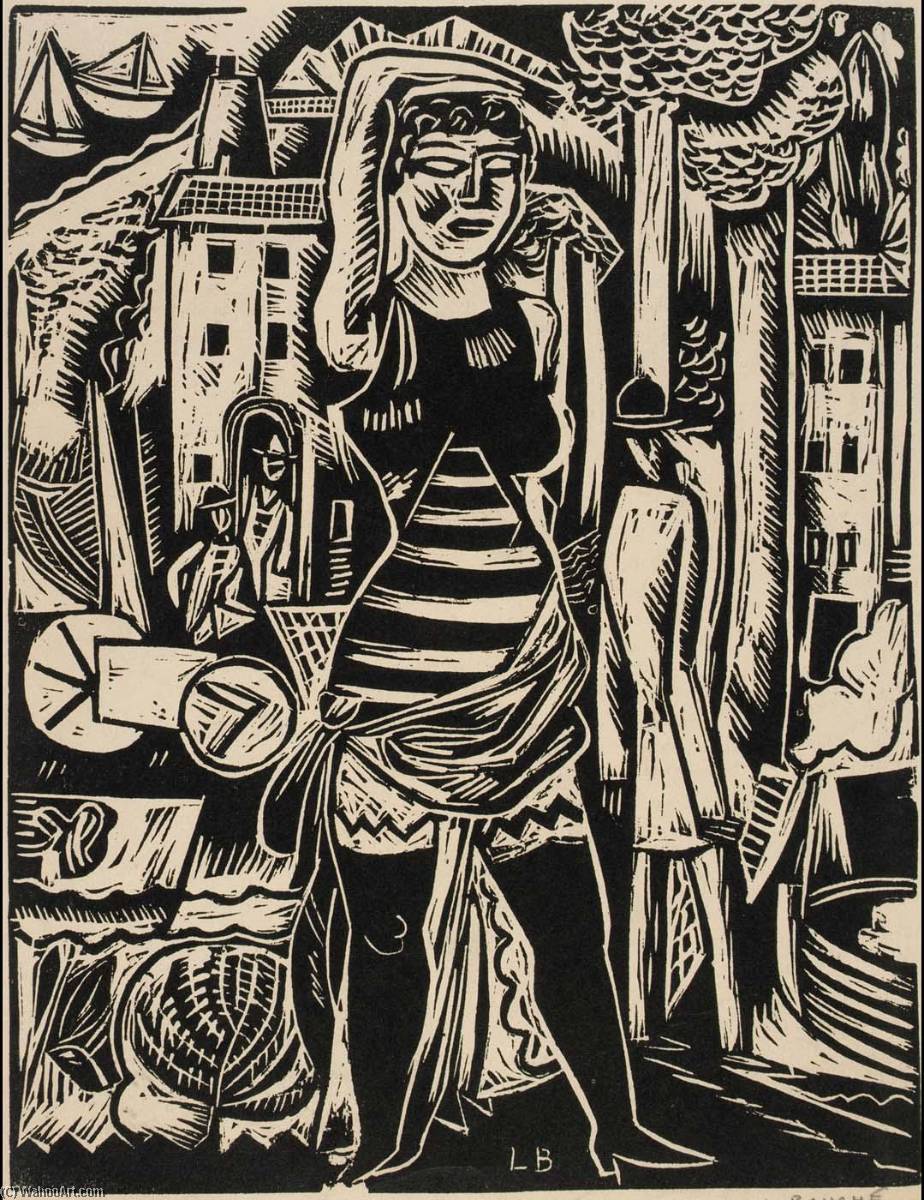
Bathing Beauty (1920) de Louis Bouché

Bathing Beauty

1920 · Painting

A woman stands as the central pillar of this 1920 composition, her hands raised to her head in a gesture of quiet repose. She wears a dress that catches the light, her long hair cascading down her back. Around her, the world is a collection of scattered figures and architectural lines. An umbrella rises from the crowd, a dark silhouette against the pale background, while a boat drifts in the…

2
Woman and Dog (1920) de Louis Bouché

Woman and Dog

1920 · Graphite

In this 1920 drawing, we find ourselves in a private, interior moment that feels both immediate and still. A woman occupies the center of the frame, her presence defined by a wide-brimmed hat and the subtle glint of a string of pearls. She holds a baby close to her chest, a gesture of protection that anchors the composition. At her feet, a dog sits in quiet companionship, completing a scene…

3
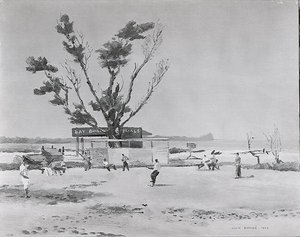
Baseball Game, Long Island (1939) de Louis Bouché

Baseball Game, Long Island

1939 · Oil On Canvas

The scene unfolds within Baseball Game, Long Island, an oil on canvas that captures a specific moment of American life. Created in 1939, this work by Louis Bouché invites the viewer into a coastal setting where the energy of a summer afternoon feels suspended in time. The canvas measures 20 x 25 1/2 in. (50.8 x 64.8 cm), offering a window into a world of leisure and community activity.

4
Ten Cents A Ride (1942) de Louis Bouché

Ten Cents A Ride

1942 · Oil On Canvas

The scene unfolds within the quiet, hollowed space of a public transit setting, a moment captured in Ten Cents A Ride. Created about 1942, this work by Louis Bouché invites the viewer into a stillness that feels suspended in time. The atmosphere carries the weight of a passing second, where the rush of travel has momentarily subsided into a calm, observational pause.

5
The Boy (1917) de Louis Bouché

The Boy

1917 · Etching

The presence of the mask transforms a simple portrait into a psychological study. It strips away the ability to read a subject through expression alone, forcing a reliance on the gaze. This tension between the revealed and the concealed creates a quiet, heavy atmosphere. The work remains a focused investigation into the boundaries of human presence and the secrets held behind a formal facade.

6
Cubist Still Life (1918) de Louis Bouché

Cubist Still Life

1918 · Oil

In this 1918 composition, we find ourselves observing a quiet arrangement of objects that seems to exist in a state of controlled tension. The scene is a still life, a collection of everyday items resting upon a table, yet they are viewed through a lens that refuses to settle on a single, stable perspective. Apples and oranges are scattered across the surface, their rounded forms interrupted by the sharp, geometric…

7
Stamford Gas Works (1933) de Louis Bouché

Stamford Gas Works

1933 · Oil

A stark, black and white composition captures the heavy atmosphere of an industrial landscape. Smoke stacks and factory buildings dominate the skyline, their silhouettes rising against a pale sky. Below, the water holds several boats, some appearing weathered or abandoned, resting near the industrial structures. Scattered figures, likely workers, move through the scene, grounding the mechanical scale in human presence. The monochromatic palette strips away the distraction of color, focusing…

8
Jane and Tuffy (1934) de Louis Bouché

Jane and Tuffy

1934 · Oil

In this 1934 work, we find a moment of stillness that feels almost private, as if we have stumbled upon a domestic scene intended only for the eyes of those within the room. A young girl sits upon the floor, her presence defined by the gentle weight of a dog resting in her lap. There is a profound sense of companionship in the way she holds the animal close, a…

9
How the Village Was Named (Study for Ellenville, New York Post Office Mural) (1942) de Louis Bouché

How the Village Was Named (Study for Ellenville, New York Post Office Mural)

1942 · Oil On Canvas

In this 1942 oil on canvas mounted on paperboard, Louis Bouché presents How the Village Was Named (Study for Ellenville, New York Post Office Mural). The work functions as a formal mural study, offering a glimpse into the artist's preparatory process for a larger public commission. It captures a specific moment of planning, where the scale and composition of a communal scene are first articulated on a more intimate surface.

10
New Lebanon Railroad Station de Louis Bouché

New Lebanon Railroad Station

The New Lebanon Railroad Station is a remarkable oil on canvas painting created by the talented artist Louis Bouché. Measuring 69 x 109 cm, this artwork is currently housed at the prestigious Smithsonian American Art Museum in the United States. As a masterpiece of American art, it showcases the daily life of people waiting at a train station, highlighting the hustle and bustle of the early 20th century. Composition and…

Os temas que cativaram o olhar de Louis Bouché

Os quatro temas que mais se repetem nestas obras originais, cada um com o seu melhor exemplo.

Pinturas de Louis Bouché: a galeria responde

Qual pintura de Louis Bouché é a mais famosa de todas?Revelar a resposta

Bathing Beauty (1920). Woman and Dog (1920) e Baseball Game, Long Island (1939) vêm a seguir.

Quais são as 10 principais pinturas de Louis Bouché?Revelar a resposta

Bathing Beauty, Woman and Dog, Baseball Game, Long Island, Ten Cents A Ride, The Boy, Cubist Still Life, Stamford Gas Works, Jane and Tuffy, How the Village Was Named (Study for Ellenville, New York Post Office Mural) e New Lebanon Railroad Station. O ranking acima apresenta o ano e o museu de cada uma.

Quantas obras Louis Bouché criou?Revelar a resposta

Nosso catálogo contém 10 obras de Louis Bouché.

Quais temas Louis Bouché mais explorou?Revelar a resposta

People (3), Woman (2) e Dog (2), entre as 10 obras nesta página.

Em qual técnica Louis Bouché mais trabalhou?Revelar a resposta

Oil On Canvas, para 3 das 10 obras nesta página.

Com qual movimento Louis Bouché está associado(a)?Revelar a resposta

Cubism, a julgar pelos originais nesta página.

Louis Bouché: o artista

Louis Bouché: Capturando o Espírito Americano Através da Natureza Morta e do Muralismo

Louis George Bouché (18 de março de 1896 – 7 de agosto de 1969) destaca-se como uma figura significativa na arte americana do início do século XX, sendo particularmente reconhecido por sua abordagem distinta da pintura de natureza morta cubista e por seus murais monumentais que documentam as realidades cotidianas da zona rural de New Lebanon, NY.

Nascido na cidade de Nova York, a jornada artística de Bouché teve seu início com anos formativos dedicados aos estudos em Paris. Ele aperfeiçoou suas habilidades em instituições prestigiadas como o Lycée Carnot, a Académie Colarossi e a Académie de la Grande Chaumière, mergulhando nas tradições Impressionista e Pós-Impressionista que moldariam profundamente seu estilo.

Ao retornar para Nova York em 1915, Bouché matriculou-se na Art Students League ao lado de luminares como Dimitri Romanovsky e Frank Vincent DuMond. Essa mentoria influente solidificou seu compromisso com a exploração artística e fomentou colaborações que contribuiriam para o florescente cenário da arte americana.

Influências Iniciais e Estilo Artístico

Os anos formativos de Louis Bouché em Paris expuseram-no às ideias revolucionárias de Picasso e Braque, despertando um interesse profundo pelo Cubismo – um movimento caracterizado por perspectivas fraturadas e múltiplos pontos de vista. Essa preocupação estilística tornar-se-ia central em sua obra, moldando sua atenção meticulosa aos detalhes e sua habilidade de transmitir emoções complexas através de composições aparentemente simples.

Suas pinturas retratam frequentemente cenas da vida rural — particularmente a New Lebanon Railroad Station — capturando a dignidade silenciosa de momentos comuns com uma mistura magistral de realismo e pinceladas impressionistas. As telas de Louis Bouché ressoam com uma nostalgia de uma era passada, refletindo sua profunda conexão com a paisagem americana e seus habitantes.

Obras Notáveis e Conquistas

Entre as conquistas mais celebradas de Louis Bouché, destaca-se, sem dúvida, “Baseball Game, Long Island” (1939), uma evocativa pintura a óleo e aquarela que exemplifica seu estilo autoral. As cores vibrantes e a superfície texturizada da obra transmitem a energia de uma tarde de verão — um testemunho da habilidade de Louis Bouché em transformar a observação em narrativas visuais cativantes.

Além disso, a contribuição de Louis Bouché para a arte pública é inegável. Seu mural para a New Lebanon Railroad Station permanece como um símbolo duradouro da identidade regional e da visão artística. Este projeto ambicioso demonstra sua destreza técnica e ressalta sua dedicação em enriquecer comunidades por meio de obras de arte monumentais.

“Ten Cents A Ride” (1942) exemplifica a capacidade de Louis Bouché de capturar a essência da vida cotidiana, retratando uma cena de estação de trem com um realismo notável e uma profundidade atmosférica impressionantes. O detalhe meticuloso e as pinceladas expressivas da pintura demonstram o domínio técnico de Louis Bouché — uma habilidade que o acompanharia com maestria ao longo de toda a sua carreira.

Legado e Significância

O legado de Louis Bouché estende-se para além das suas obras individuais; ele desempenhou um papel crucial no fomento do diálogo artístico dentro da Art Students League e na consolidação das Wanamaker’s Belmaison Galleries. A sua influência pode ser observada nas gerações subsequentes de artistas americanos que abraçaram os princípios cubistas e procuraram retratar as complexidades da vida moderna com sensibilidade e precisão.

Hoje, as pinturas de Louis Bouché continuam a inspirar admiração pela sua beleza contida e profunda ressonância emocional — um lembrete de que a arte pode iluminar a experiência humana e capturar o espírito de um tempo e lugar específicos. O seu trabalho permanece como uma contribuição fundamental para a História da Arte Americana.