Retrato de Lesser Ury

Pinturas de Lesser Ury: As 92 mais famosas, sob o olhar de uma galeria

Atualizado em Novembro 2026 · classificado pela nossa pontuação de popularidade (pesquisas, visitas e pedidos de cada obra) · 92 obras de Lesser Ury em nosso catálogo

Em resumo

Aos olhos da galeria, a pintura mais famosa de Lesser Ury é Nude Lying Down (1889), cuja obra original está exposta no Berlinische Galerie, em Berlim. Moses on Mount Nebo Looking at the Promised Land (1927) e Praying Jew (1931) completam o trio que todos reconhecem. Dos 92 trabalhos de Lesser Ury em nosso catálogo, a galeria apresenta abaixo as 92 obras mais famosas, cada uma original, com seu ano, seu museu e o que a torna única.

1861 – 1931, Międzychód Impressionism Mais obras: Berlinische Galerie

As 10 principais pinturas de Lesser Ury na galeria

1
Nude Lying Down (1889) de Lesser Ury

Nude Lying Down

1889 · Oil · Berlinische Galerie, Berlim

A woman rests upon a bed of deep red sheets. She lies on her side, her body a pale curve against the saturated fabric. The stillness of the room is heavy, held in place by the weight of shadows and the soft geometry of furniture. A chair sits near the edge of the frame, and a couch occupies the opposite side, anchoring the space in a domestic silence. High above,…

2
Moses on Mount Nebo Looking at the Promised Land (1927) de Lesser Ury

Moses on Mount Nebo Looking at the Promised Land

1927 · Pastel

We are looking at Moses on Mount Nebo Looking at the Promised Land, a significant work by the German artist Lesser Ury. Created about 1928, this piece captures a profound moment of biblical history. The subject matter focuses on Moses as he gazes upon the Promised Land from the heights of Mount Nebo.

3
Praying Jew (1931) de Lesser Ury

Praying Jew

1931 · Oil On Canvas · Museu Judaico, Nova Iorque

Lesser Ury's "Praying Jew," painted in 1931, is more than just a portrait; it’s a poignant meditation on faith, solitude, and the quiet dignity of an aging man. Born Leo Lesser Ury in Birnbaum, Prussia (now Międzychód, Poland), his early life was marked by profound loss – the untimely death of his father instilled within him a sensitivity to the transient nature of existence, a theme that would permeate much…

4
Bülowstraße high station (1922) de Lesser Ury

Bülowstraße high station

1922 · Oil

The scene depicts a city street at night, rendered in a black and white palette. Rain falls through the air, creating a sense of movement across the composition. On the asphalt road, several vehicles are positioned at varying distances from the viewer. A bus moves along the street, its form defined by the light and the wet surface of the road. Traffic lights are placed at intervals throughout the urban…

5
Strolling in the Forest (1923) de Lesser Ury

Strolling in the Forest

1923

A man and a woman walk a narrow path carved through the woods. They move together, their figures small against the vertical lines of the trees. The forest closes in on both sides, creating a corridor of shade and light. Further ahead, a third figure drifts along the trail, a quiet presence in the distance. The air feels still, caught in the soft, dappled light of the canopy. It is…

6
Interior with Children (the Silblings) (1883) de Lesser Ury

Interior with Children (the Silblings)

1883 · Oil · Bavarian State Painting Collections, Munique

In Interior with Children (the Silblings), Lesser Ury presents an intimate, quiet scene within a domestic setting. The composition is vertically oriented, drawing the viewer into a private moment shared by three siblings. The figures are arranged in a deliberate triangular formation that guides the eye through the room. At the base of this arrangement, a child sits on the floor in the foreground, facing the viewer directly. This placement…

7
Interior with Woman at the Piano (1888) de Lesser Ury

Interior with Woman at the Piano

1888 · Oil On Canvas

A dim hallway stretches into the distance, a narrow passage of receding walls that pulls the eye toward a doorway. The air feels heavy, thick with the quiet of a house at rest. A red sofa sits in the foreground, its saturated color anchoring the composition against a sea of dark tones. Light does not flood this space; it struggles through, creating sharp highlights and deep, velvet shadows that define…

8
Woman at a Desk (also known as At the Desk) (1898) de Lesser Ury

Woman at a Desk (also known as At the Desk)

1898 · Oil On Canvas · Alte Nationalgalerie, Berlim

The composition centers on a woman seated at a desk, positioned before a large window that divides the interior space from the exterior view. The scene is rendered in a grayscale palette, utilizing a range of black, white, and gray tones. The woman is oriented toward the desk, her posture suggesting she is engaged in reading or writing. To her side, a piano stool and various chairs are placed within…

9
Rebekka at the well (1908) de Lesser Ury

Rebekka at the well

1908 · Oil · Jewish Museum Berlin, Berlim

The air feels heavy with the stillness of a fading afternoon. A solitary woman stands poised by a stone well, her figure caught in a moment of quiet contemplation. She holds a water jug, her presence anchoring the composition slightly to the right of center. Around her, the world seems to soften into a haze of muted, earthy tones. Deep blues and dark browns ground the scene, while ochre and…

10
In the café - Woman in red (1911) de Lesser Ury

In the café - Woman in red

1911 · Oil · Alte Nationalgalerie, Berlim

A single figure anchors the composition, a woman draped in a saturated red garment that pulls the eye through the dimness of the café. She sits slightly off-center, her presence heavy and immediate, as if the viewer has just pulled up a chair at her table. Her blonde hair catches a soft, ambient light, contrasting against the pale skin of her face and the deep, murky tones of the background.…

Pinturas de Lesser Ury, classificadas de 11 a 92

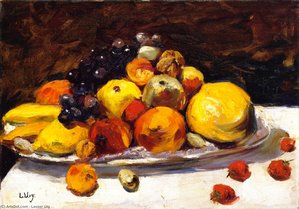
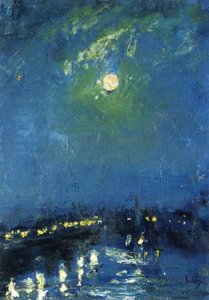
11Street scene at Night, Berlin (1920) de Lesser UryStreet scene at Night, Berlin1920 12Selfportrait (1921) de Lesser UrySelfportrait1921 13Café Scene in Paris (1928) de Lesser UryCafé Scene in Paris1928 14The Red Carpet (1894) de Lesser UryThe Red Carpet1894 · Museu de Israel 15On Lake Garda (1897) de Lesser UryOn Lake Garda1897 16The Pont Royal in Paris (1928) de Lesser UryThe Pont Royal in Paris1928 · Hamburger Kunsthalle 17Parisian Interior (1881) de Lesser UryParisian Interior1881 18Woman at the Kitchen Stove (1882) de Lesser UryWoman at the Kitchen Stove1882 19Flowers on the Mantel (1882) de Lesser UryFlowers on the Mantel1882 20Estaminet - Flämische Schenke (1884) de Lesser UryEstaminet - Flämische Schenke1884 · Alte Nationalgalerie 21Gargenlichtung am Zaun (1883) de Lesser UryGargenlichtung am Zaun1883 22Siblings (1883) de Lesser UrySiblings1883 23Self-Portrait (1881) de Lesser UrySelf-Portrait1881 24Newspaper Reader in a Café (also known as Woman in a Café or Café Interior) (1882) de Lesser UryNewspaper Reader in a Café (also known as Woman in a Café or Café Interior)1882 25In the Sunshine, near Volluvet (1884) de Lesser UryIn the Sunshine, near Volluvet1884 26Village Road at the Edge of the Forest (1884) de Lesser UryVillage Road at the Edge of the Forest1884 27Mountain Lake (1886) de Lesser UryMountain Lake1886 · Berlinische Galerie 28View into a Valley (1890) de Lesser UryView into a Valley1890 29The Coast of Rügen (1892) de Lesser UryThe Coast of Rügen1892 30Woman by the Chimney Fire (also known as Reverie by the Fireplace) (1890) de Lesser UryWoman by the Chimney Fire (also known as Reverie by the Fireplace)1890 31Rocky Shore at Capri (1890) de Lesser UryRocky Shore at Capri1890 32Young Lady with a Large Hat (1886) de Lesser UryYoung Lady with a Large Hat1886 33Leipzig Street (1889) de Lesser UryLeipzig Street1889 · Berlinische Galerie 34NIght Lights (1889) de Lesser UryNIght Lights1889 35Unter den Linden after the Rain (1888) de Lesser UryUnter den Linden after the Rain1888 36Lake Garda and Monte Baldo (1897) de Lesser UryLake Garda and Monte Baldo1897 37Old Man in a Fur Coat (1895) de Lesser UryOld Man in a Fur Coat1895 38Moonrise on the Grunewaldsee (1898) de Lesser UryMoonrise on the Grunewaldsee1898 39Evening at Café Bauer (1898) de Lesser UryEvening at Café Bauer1898 40Interior (also known as Interior Scene with Woman Reading on a Terrace) (1894) de Lesser UryInterior (also known as Interior Scene with Woman Reading on a Terrace)1894 41Reader with Magnifying Glass (1895) de Lesser UryReader with Magnifying Glass1895 42Sunset at Lake Grunewald (1900) de Lesser UrySunset at Lake Grunewald1900 43Ludwig Geiger (1905) de Lesser UryLudwig Geiger1905 44Eugen Schiffer (1905) de Lesser UryEugen Schiffer1905 45Landscape at Sunset (1900) de Lesser UryLandscape at Sunset1900 46View over Nollendorfplatz (1901) de Lesser UryView over Nollendorfplatz1901 47Otto Brahm in His Loge at the German Theater (1901) de Lesser UryOtto Brahm in His Loge at the German Theater1901 48Stroller in Tiergarten (1905) de Lesser UryStroller in Tiergarten1905 49Rainbow at Beelitzhof (also known as Brandenburg Landscape) (1899) de Lesser UryRainbow at Beelitzhof (also known as Brandenburg Landscape)1899 50On the Kurfurstendamm (1910) de Lesser UryOn the Kurfurstendamm1910 51Field workers in Thuringa (1911) de Lesser UryField workers in Thuringa1911 52Berlin street scene with horse-drawn cabs (1910) de Lesser UryBerlin street scene with horse-drawn cabs1910 53Berlin, Alexanderplatz (1910) de Lesser UryBerlin, Alexanderplatz1910 54Lake Garda Motif (1906) de Lesser UryLake Garda Motif1906 55Self-Portrait with Brush and Palette (1910) de Lesser UrySelf-Portrait with Brush and Palette1910 56Promontory on Lake Garda (1909) de Lesser UryPromontory on Lake Garda1909 57Sunset over the Grunewaldsee (1909) de Lesser UrySunset over the Grunewaldsee1909 58Rebecca at the Fountain (1908) de Lesser UryRebecca at the Fountain1908 59On a Canal (1912) de Lesser UryOn a Canal1912 60Lake Garda with Mount Baldo (1914) de Lesser UryLake Garda with Mount Baldo1914 61Self-Portrait with Dark Hat (1914) de Lesser UrySelf-Portrait with Dark Hat1914 62In Front of the Cafe (Berlin at Night) (1920) de Lesser UryIn Front of the Cafe (Berlin at Night)1920 63Lilac Bouquet (1922) de Lesser UryLilac Bouquet1922 64Street Scene with Woman, Berlin (1918) de Lesser UryStreet Scene with Woman, Berlin1918 65Newspaper Reader at the Café (also known as Gentleman at a Coffee House) (1920) de Lesser UryNewspaper Reader at the Café (also known as Gentleman at a Coffee House)1920 66Two Girls walking along the Street (1921) de Lesser UryTwo Girls walking along the Street1921 67Unter den Linden (1922) de Lesser UryUnter den Linden1922 68Vase of Flowers (1921) de Lesser UryVase of Flowers1921 69Champs-Elysees with Arc de Triomphe, Paris (1928) de Lesser UryChamps-Elysees with Arc de Triomphe, Paris1928 70Paris, Sunrise (1928) de Lesser UryParis, Sunrise1928 71Waterloo Bridge in the Fog (1926) de Lesser UryWaterloo Bridge in the Fog1926 72Eiffel Tower (1928) de Lesser UryEiffel Tower1928 73Nollendorfplazt at Night (1925) de Lesser UryNollendorfplazt at Night1925 74Lennéstraße (1925) de Lesser UryLennéstraße1925 75Traffic Jam at Potsdamer Platz (1925) de Lesser UryTraffic Jam at Potsdamer Platz1925 76Schloß Rheinstein am Rhein (1924) de Lesser UrySchloß Rheinstein am Rhein1924 77Charing Cross, London (1926) de Lesser UryCharing Cross, London1926 78Tiergarten Avenue with Siegessäule (1925) de Lesser UryTiergarten Avenue with Siegessäule1925 79Rainy Day in London, Thames Port (1926) de Lesser UryRainy Day in London, Thames Port1926 80Waterloo Bridge Emerging in the Sunlight (1926) de Lesser UryWaterloo Bridge Emerging in the Sunlight1926 81Paris, Rainy Day at the Quai Voltaire (1928) de Lesser UryParis, Rainy Day at the Quai Voltaire1928 82Untitled (Park Scene or Man in the Gray Suit) (1913) de Lesser UryUntitled (Park Scene or Man in the Gray Suit)1913 · Museu Judaico 83Morning Sun (1924) de Lesser UryMorning Sun1924 84A Jewish Man in His Prayer Shawl (1931) de Lesser UryA Jewish Man in His Prayer Shawl1931 85Still Life with Fruit on a White Table (1920) de Lesser UryStill Life with Fruit on a White Table1920 86Thames Bridges in the Twilight (also known as London Bridge) (1926) de Lesser UryThames Bridges in the Twilight (also known as London Bridge)1926 87Abendlicher Park bei Regenwetter de Lesser UryAbendlicher Park bei Regenwetter 88Tiergartenstrasse, Berlin de Lesser UryTiergartenstrasse, Berlin 89Landscape de Lesser UryLandscape 90Self Portrait with Spread Fingers de Lesser UrySelf Portrait with Spread Fingers 91The River Thames, London, Moonlight de Lesser UryThe River Thames, London, Moonlight 92The Fence (also known as Farmyard with Well) (1888) de Lesser UryThe Fence (also known as Farmyard with Well)1888

Pinturas famosas de Lesser Ury, período por período

Os temas que cativaram o olhar de Lesser Ury

Os quatro temas que mais se repetem nestas obras originais, cada um com o seu melhor exemplo.

Os museus que guardam os originais de Lesser Ury

Os 7 museus que detêm a maioria das pinturas desta página.

Museus Cidade Obras de Lesser Ury Pinturas desta lista
Berlinische Galerie, BerlimBerlinische Galerie Berlim 3 Nude Lying Down, Mountain Lake, Leipzig Street
Alte Nationalgalerie, BerlimAlte Nationalgalerie Berlim 3 Woman at a Desk (also known as At the Desk), In the café - Woman in red, Estaminet - Flämische Schenke
Museu Judaico, Nova IorqueMuseu Judaico Nova Iorque 2 Praying Jew, Untitled (Park Scene or Man in the Gray Suit)
Bavarian State Painting Collections, MuniqueBavarian State Painting Collections Munique 1 Interior with Children (the Silblings)
Jewish Museum Berlin, BerlimJewish Museum Berlin Berlim 1 Rebekka at the well
Museu de Israel, JerusalémMuseu de Israel Jerusalém 1 The Red Carpet
Hamburger Kunsthalle, HamburgoHamburger Kunsthalle Hamburgo 1 The Pont Royal in Paris

Lesser Ury, uma pintura emblemática por década

Obras por década

Escolha uma década para ver a obra original que a define.

Pinturas de Lesser Ury: a galeria responde

Qual pintura de Lesser Ury é a mais famosa de todas?Revelar a resposta

Nude Lying Down (1889), Berlinische Galerie, Berlim. Moses on Mount Nebo Looking at the Promised Land (1927) e Praying Jew (1931) vêm a seguir.

Qual era a idade de Lesser Ury ao concluir Nude Lying Down?Revelar a resposta

28 anos: Nude Lying Down data de 1889, e Lesser Ury nasceu em 1861.

Quais são as 10 principais pinturas de Lesser Ury?Revelar a resposta

Nude Lying Down, Moses on Mount Nebo Looking at the Promised Land, Praying Jew, Bülowstraße high station, Strolling in the Forest, Interior with Children (the Silblings), Interior with Woman at the Piano, Woman at a Desk (also known as At the Desk), Rebekka at the well e In the café - Woman in red. O ranking acima apresenta o ano e o museu de cada uma.

Quantas obras Lesser Ury criou?Revelar a resposta

Nosso catálogo contém 92 obras de Lesser Ury, datadas de 1881 a 1931.

Onde estão expostos os originais mais famosos de Lesser Ury?Revelar a resposta

Principalmente em Berlinische Galerie (Berlim), Alte Nationalgalerie (Berlim) e Museu Judaico (Nova Iorque). A tabela de museus acima lista todos eles.

Quando é que Lesser Ury criou as suas pinturas mais famosas?Revelar a resposta

Em 1920s: 29 das 92 obras nesta página foram feitas então, sendo Moses on Mount Nebo Looking at the Promised Land delas.

Quais são as obras mais famosas de Lesser Ury no início e no fim de sua carreira?Revelar a resposta

Nesta página, a mais antiga é Parisian Interior (1881) e a mais recente é Praying Jew (1931).

Quais temas Lesser Ury mais explorou?Revelar a resposta

Woman (8), Interior (7) e Night (6), entre as 92 obras nesta página.

Em qual técnica Lesser Ury mais trabalhou?Revelar a resposta

Oil On Canvas, para 8 das 92 obras nesta página.

Com qual movimento Lesser Ury está associado(a)?Revelar a resposta

Impressionism, a julgar pelos originais nesta página.

Quais obras originais de Lesser Ury o Berlinische Galerie possui?Revelar a resposta

Nude Lying Down, Mountain Lake e Leipzig Street: o Berlinische Galerie, Berlim detém 3 das obras desta página.

Lesser Ury: o artista

A Vida Pintada em Luz: O Mundo de Leo Lesser Ury

Leo Lesser Ury, um nome talvez menos instantaneamente reconhecível do que alguns de seus contemporâneos impressionistas, no entanto ocupa um espaço vital e evocativo na narrativa da pintura alemã. Nascido em 7 de novembro de 1861, em Birnbaum, Prussia – hoje Międzychód, Polônia – a jornada de Ury foi marcada tanto por triunfo artístico quanto por dificuldades pessoais. Sua vida inicial foi obscurecida pela perda; a morte de seu pai, um padeiro, em 1872, forçou uma mudança para Berlim com sua mãe. Esse deslocamento, talvez, tenha plantado dentro dele, talvez, uma sensibilidade vitalícia aos paisagens urbanas e à natureza transitória da vida moderna. Inicialmente aprendiz de um comerciante, a vocação artística de Ury provou ser muito forte para ser ignorada, levando-o à Kunstakademie Düsseldorf em 1879. Foi o início de um período extenso de exploração europeia – Bruxelas, Paris, Munique, Stuttgart, Karlsruhe – cada cidade contribuindo para a paleta e perspectiva evoluindo que definiria seu estilo único. Essas viagens não eram meramente geográficas; eram estudos imersivos em luz, atmosfera e na energia crescente da vida moderna.

Adoção do Impressionismo e Captura da Alma de uma Cidade

O desenvolvimento artístico de Ury esteve profundamente entrelaçado com as correntes da arte do final do século XIX. Embora inicialmente recebido com resistência – sua primeira exposição em 1889 provocando uma resposta hostil – ele encontrou um defensor no renomado Adolph Menzel, cujo apoio abriu portas na Academia de Berlim. Esse reconhecimento foi fundamental, permitindo que Ury refinasse ainda mais sua técnica e visão. Sua adoção do Impressionismo não era meramente estilística; era um meio de capturar os momentos fugazes da vida urbana moderna. Ele se juntou à Secession de Munique em 1893, alinhando-se com um grupo de artistas que desafiaram as convenções acadêmicas e buscaram novas formas de expressão. As telas de Ury começaram a brilhar com pinceladas vibrantes, aplicação de impasto criando textura e profundidade, e uma aguda sensibilidade à força transformadora da luz. Seus temas principais cristalizaram nesse período: paisagens imbuídas de atmosfera, ambientes interiores íntimos, mas notavelmente, as cenas vibrantes e frequentemente noturnas da vida urbana. Ele não estava simplesmente *depurando* Berlim; ele estava capturando sua própria essência – o brilho das lamparinas a gás nas ruas molhadas de chuva, a energia frenética dos cafés, a solidão silenciosa dos cantos sombreados.

Reconhecimento e Legado Complexo

Os primeiros anos do século XX viram Ury retornar a Berlim, onde rapidamente se tornou uma figura proeminente na cena artística da cidade. Sua participação em exposições com a Secession de Berlim a partir de 1915 aumentou gradualmente seu reconhecimento. Uma exposição marcante em 1922, apresentando 150 de suas pinturas e pastéis, consolidou sua reputação; o prefeito de Berlim o saudou como “o glorificador artístico da capital”. Este período marcou um ponto alto na carreira de Ury, impulsionado tanto pelo reconhecimento crítico quanto pelo sucesso comercial. Ele se tornou particularmente conhecido por seu domínio do pastel, utilizando o meio para criar obras de delicadeza e profundidade atmosférica excepcionais. No entanto, esse sucesso foi obscurecido por um aspecto complexo de sua prática. Para atender à crescente demanda, Ury começou a repetir composições, produzindo inúmeras cópias – algumas de qualidade inferior – que infelizmente diluíram sua reputação artística aos olhos de alguns críticos. Essa abordagem pragmática, embora financeiramente benéfica, contribuiu para uma avaliação um tanto ambivalente de seu oeuvre.

Influências e Estilo Distintivo

A influência de Ury foi moldada por uma variedade de fontes. Ele admirava os mestres da pintura acadêmica, mas também se inspirou na arte japonesa, particularmente nos estampas ukiyo-e que ele estudou em Paris. A atmosfera urbana de Berlim, com seus becos estreitos e edifícios imponentes, serviu como um tema recorrente em sua obra. Ury era conhecido por seu uso expressivo da cor, especialmente o pastel, que lhe permitia controlar a luz e a sombra com precisão. Suas pinturas frequentemente apresentam uma paleta de cores suaves e translúcidas, criando uma sensação de atmosfera e profundidade. Ele também era um mestre na representação da luz, capturando os efeitos da luz do sol e da lua em diferentes momentos do dia. Ury foi influenciado por artistas como Monet, Renoir e Degas, mas desenvolveu um estilo próprio que é caracterizado por sua sensibilidade emocional e seu olhar atento aos detalhes.

Significado Histórico e Apelo Duradouro

O significado histórico de Ury se estende além de sua habilidade técnica e sensibilidades estéticas. Ele é lembrado como um observador perspicaz e retratista evocativo da vida urbana moderna, particularmente as paisagens noturnas de Berlim que ressoavam com o público em busca de entender seu mundo moderno em rápida mudança. Sua obra oferece um vislumbre de um tempo e lugar específicos – uma cidade à beira da modernidade, lutando contra a industrialização, as mudanças sociais e as ansiedades de uma nova era. Além disso, como artista judeu navegando na sociedade alemã, o trabalho e a vida de Ury refletem aspectos da identidade cultural judaica e da experiência dentro de um cenário político e social complexo. Suas pinturas, embora não sejam sobrepostas com política, transmitem sutilmente um senso de pertencimento e alienação, oferecendo uma perspectiva única sobre os desafios enfrentados pelas comunidades judaicas na Alemanha durante este período. Embora ele tenha morrido em Berlim em 18 de outubro de 1931, e seja enterrado no cemitério judaico de Weissensee, sua influência continua a ser sentida hoje. Seu estilo distinto abriu o caminho para as gerações posteriores de artistas, e suas representações evocativas da vida urbana continuam a cativar os espectadores com sua beleza, atmosfera e sentido pungente de tempo e lugar.