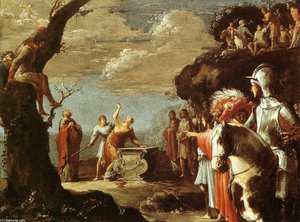
Retrato de Leonard Bramer

Pinturas de Leonard Bramer: As 65 mais famosas, sob o olhar de uma galeria

Atualizado em Novembro 2026 · classificado pela nossa pontuação de popularidade (pesquisas, visitas e pedidos de cada obra) · 68 obras de Leonard Bramer em nosso catálogo

Em resumo

Aos olhos da galeria, a pintura mais famosa de Leonard Bramer é Soldiers with Horses before a House (1655), cuja obra original está exposta no Museum Kunstpalast, em Düsseldorf. Adoration of the Magi (1639) e The Sacrifice of Iphigenia (1623) completam o trio que todos reconhecem. Dos 68 trabalhos de Leonard Bramer em nosso catálogo, a galeria apresenta abaixo as 65 obras mais famosas, cada uma original, com seu ano, seu museu e o que a torna única.

1596 – 1674, Delft Baroque art Mais obras: Nationalmuseum

As 10 principais pinturas de Leonard Bramer na galeria

1
Soldiers with Horses before a House (1655) de Leonard Bramer

Soldiers with Horses before a House

1655 · Oil On Canvas · Museum Kunstpalast, Düsseldorf

In the masterful oil painting "Soldiers with Horses before a House," Leonaert Bramer invites viewers into a meticulously crafted moment from the Dutch Golden Age. The scene, captured with profound anatomical accuracy, centers on two mounted soldiers who command the viewer's attention through their expressive poses and the palpable energy of their movement. Bramer employs a sophisticated technique of hatching and cross-hashing, particularly evident in the metallic sheen of the…

2
Adoration of the Magi (1639) de Leonard Bramer

Adoration of the Magi

1639 · Oil On Panel · Museu Hermitage, São Petersburgo

The darkness of a vast, desolate landscape presses in from every side, swallowing the horizon in a heavy, nocturnal shroud. In this quiet, shadowy realm, a sudden, intense glow emanates from the center of the scene, cutting through the gloom like a physical presence. This light does not merely illuminate; it transforms. It spills across the figures in the lower left, catching the textures of ornate, heavy garments and the…

3
The Sacrifice of Iphigenia (1623) de Leonard Bramer

The Sacrifice of Iphigenia

1623 · Oil On Copper · Het Prinsenhof, Delft

Leonaert Bramer produced The Sacrifice of Iphigenia during his time in Italy. This work is one of the few paintings known to have been executed by the artist in Rome. It represents a significant period of his development, occurring after his departure from Delft and his involvement with the Bentvueghels.

4
The Adoration of the Magi (1642) de Leonard Bramer

The Adoration of the Magi

1642 · Oil On Copper · Statens Museum For Kunst, Copenhague

The Adoration of the Magi emerges from the shadows of 1639, a moment frozen in oil where the sacred meets the earthly. Leonaert Bramer captures the Holy Family and the Magi in a quiet, intense encounter. The scene centers on the Wise Men as they approach to present their precious gifts to the Christ-child. Every figure exists within a heavy, atmospheric stillness, caught in the act of reverence.

5
Four Latin Fathers of the Church and Saints (verso) (1650) de Leonard Bramer

Four Latin Fathers of the Church and Saints (verso)

1650 · Oil On Canvas · British Museum, Londres

Leonaert Bramer's "Four Latin Fathers of the Church and Saints (verso)" isn’t merely a painting; it’s an intimate portrait of artistic process, a whispered secret revealed through layers of paint, time, and deliberate obscurity. This remarkable work, currently housed in the British Museum, offers a captivating journey into the mind of a pivotal 17th-century Dutch artist – a man often dubbed “Leonardo della Notte” for his mastery of nocturnal scenes…

6
Allegory of Vanity (Vanitas) (1650) de Leonard Bramer

Allegory of Vanity (Vanitas)

1650 · Oil On Canvas · Kunsthistorisches Museum, Viena

In this somber Dutch Golden Age composition, we find ourselves in a space defined by shadow and light. The scene is arranged in a triangular formation, drawing the eye toward a cluttered table where the objects of earthly pleasure lie scattered. A strong light source from the upper left cuts through the darkness, illuminating the polished wood of a lute and the metallic sheen of silver vessels. These textures—the soft…

7
Dying Vision of Mary Magdalene (1633) de Leonard Bramer

Dying Vision of Mary Magdalene

1633 · Oil On Panel · Museu Hermitage, São Petersburgo

The oil on panel titled Dying Vision of Mary Magdalene was created by Leonaert Bramer in 1633. This religious work captures a moment of spiritual revelation through the heavy application of pigment. The canvas holds the gaze of a woman kneeling in the shadows, her eyes turned toward a celestial light.

9
Crucifixion (1650) de Leonard Bramer

Crucifixion

1650 · Oil On Panel · Museu Hermitage, São Petersburgo

The air feels heavy, thick with the silence of a world gone dark. In this somber Baroque scene, the central figure of Christ hangs upon the cross, his body illuminated by a sudden, sharp light that cuts through the surrounding gloom. This light catches the pale tones of his flesh and the tension in his musculature, pulling him forward from a near-black background. Below him, the weight of grief takes…

10
Journey of the Three Magi to Bethlehem (1638) de Leonard Bramer

Journey of the Three Magi to Bethlehem

1638 · Oil On Canvas · New York Historical Society, Nova York

In the quiet, shadowed corridors of the Dutch Golden Age, few artists possessed the ability to conjure atmosphere as masterfully as Leonaert Bramer. His 1638 masterpiece, Journey of the Three Magi to Bethlehem, is not merely a depiction of a biblical pilgrimage; it is a profound immersion into a world of divine mystery and dramatic tension. As the viewer approaches this canvas, they are immediately swept into the urgent movement…

Pinturas de Leonard Bramer, classificadas de 11 a 65

11St Peter"s Denial, Leonaert Bramer, 1642 (1642) de Leonard BramerSt Peter"s Denial, Leonaert Bramer, 16421642 · Rijksmuseum 12Christ before Pilate (1635) de Leonard BramerChrist before Pilate1635 · Bavarian State Painting Collections 13The Finding of Pyramus and Thisbe (1624) de Leonard BramerThe Finding of Pyramus and Thisbe1624 · Gemäldegalerie 14Five men playing music in an interior (1633) de Leonard BramerFive men playing music in an interior1633 · Staatliche Kunsthalle Karlsruhe 15The Adoration of the Shepherds (1635) de Leonard BramerThe Adoration of the Shepherds1635 · Nationalmuseum 16The Martyrdom of the Prophet Isaiah (1625) de Leonard BramerThe Martyrdom of the Prophet Isaiah1625 17Abraham and the Three Angels (1640) de Leonard BramerAbraham and the Three Angels1640 · Museu do Prado 18The circumcision of the Christ-child by the priest in the temple (1640) de Leonard BramerThe circumcision of the Christ-child by the priest in the temple1640 · Groninger Museum 19Solomon's idolatry (1 Kings 11:7-8) (1642) de Leonard BramerSolomon's idolatry (1 Kings 11:7-8)1642 · Wallraf-Richartz-Museum 20Saphan reads the book of Law aloud to Josiah (2 Kings 8-10) (1642) de Leonard BramerSaphan reads the book of Law aloud to Josiah (2 Kings 8-10)1642 21The presentation in the temple (1642) de Leonard BramerThe presentation in the temple1642 · New York Historical Society 22The Betrayal of Christ (1637) de Leonard BramerThe Betrayal of Christ1637 23Marcus Curtius Leaping into the Abyss on His Horse (1657) de Leonard BramerMarcus Curtius Leaping into the Abyss on His Horse1657 24Quevedo Sees Chicotus in the Battle (1659) de Leonard BramerQuevedo Sees Chicotus in the Battle1659 · Staatliche Graphische Sammlung 25Figures in a Loggia (1660) de Leonard BramerFigures in a Loggia1660 · Victoria and Albert Museum 26Jacob's Dream (1657) de Leonard BramerJacob's Dream1657 · Koninklijke Tichelaar 27The Judgment of Solomon (detail) (1640) de Leonard BramerThe Judgment of Solomon (detail)1640 · Metropolitan Museum of Art 28Dinheiro Combate o Mundo, a Carne e o Diabo (1659) de Leonard BramerDinheiro Combate o Mundo, a Carne e o Diabo1659 · Staatliche Graphische Sammlung 29O Julgamento de Salomão (1640) de Leonard BramerO Julgamento de Salomão1640 · Metropolitan Museum of Art 30The Fall of Simon Magus (1623) de Leonard BramerThe Fall of Simon Magus1623 31The Quarrel between Ajax and Odysseus (1623) de Leonard BramerThe Quarrel between Ajax and Odysseus1623 · Het Prinsenhof 32Quevedo and the Skeletons of Juan de la Encina and King Perico (1659) de Leonard BramerQuevedo and the Skeletons of Juan de la Encina and King Perico1659 · Staatliche Graphische Sammlung 33Scene from the Metamorphoses (1660) de Leonard BramerScene from the Metamorphoses1660 34Scene from the Metamorphoses (1660) de Leonard BramerScene from the Metamorphoses1660 35Scenes from the Life of Christ (1660) de Leonard BramerScenes from the Life of Christ1660 36Allegory of Transitoriness (1640) de Leonard BramerAllegory of Transitoriness1640 · Kunsthistorisches Museum 37A Tentação de Cristo (1645) de Leonard BramerA Tentação de Cristo1645 · Hessisches Landesmuseum 38Design for a wall decoration (1645) de Leonard BramerDesign for a wall decoration1645 · Nasjonalgalleriet 39Pashur Smiting Jeremiah in the Temple, Leonaert Bramer, c. 1648 (1648) de Leonard BramerPashur Smiting Jeremiah in the Temple, Leonaert Bramer, c. 16481648 · Rijksmuseum 40Musicians in an Interior (1660) de Leonard BramerMusicians in an Interior1660 · Rijksmuseum 41The Trials of Job (1630) de Leonard BramerThe Trials of Job1630 · Courtauld Gallery 42Joseph and Potiphar's Wife (1630) de Leonard BramerJoseph and Potiphar's Wife1630 · Courtauld Gallery 43A Peasant and Two Soldiers Playing Dice de Leonard BramerA Peasant and Two Soldiers Playing DiceNationalmuseum 44Soldiers Arguing de Leonard BramerSoldiers ArguingNationalmuseum 45Musical Company de Leonard BramerMusical CompanyNationalmuseum 46Company around a Table de Leonard BramerCompany around a TableNationalmuseum 47Anchias Fleeing Troy with His Father and Son de Leonard BramerAnchias Fleeing Troy with His Father and Son 48the curious ones de Leonard Bramerthe curious ones 49Résurrection de Jésus de Leonard BramerRésurrection de Jésus 50SCENE DE SORCELLERIE de Leonard BramerSCENE DE SORCELLERIE 51L'Arrestation de Jésus Jésus au Jardin des Oliviers de Leonard BramerL'Arrestation de Jésus Jésus au Jardin des Oliviers 52Christ among the Doctors de Leonard BramerChrist among the Doctors 53Salome Presented with the Head of St John the Baptist de Leonard BramerSalome Presented with the Head of St John the BaptistMusée des Beaux-Arts 54Christ before Caiaphas de Leonard BramerChrist before CaiaphasBirmingham Museum and Art Gallery 55LE DRAGON DE CADMUS de Leonard BramerLE DRAGON DE CADMUS 56LA DECOUVERTE DES CORPS DE PYRAME ET DE THISBE de Leonard BramerLA DECOUVERTE DES CORPS DE PYRAME ET DE THISBEMuseu do Louvre 57portrait of a man de Leonard Bramerportrait of a man 58Peasants by a Fire de Leonard BramerPeasants by a Fire 59Scenes from the Life of Christ de Leonard BramerScenes from the Life of Christ 60The Adoration of the Magi de Leonard BramerThe Adoration of the MagiDetroit Institute of Arts 61Concert of Angels (recto) de Leonard BramerConcert of Angels (recto) 62Musicians on a Terrace de Leonard BramerMusicians on a Terrace 63The Liberation of Saint Peter de Leonard BramerThe Liberation of Saint PeterMuseu de Arte do Condado de Los Angeles 64Christ among the Doctors de Leonard BramerChrist among the Doctors 65Circumcision of Christ (1640) de Leonard BramerCircumcision of Christ1640 · Museu Nacional de Varsóvia

Pinturas famosas de Leonard Bramer, período por período

Os temas que cativaram o olhar de Leonard Bramer

Os quatro temas que mais se repetem nestas obras originais, cada um com o seu melhor exemplo.

Os museus que guardam os originais de Leonard Bramer

Os 8 museus que detêm a maioria das pinturas desta página.

Museus Cidade Obras de Leonard Bramer Pinturas desta lista
Nationalmuseum, EstocolmoNationalmuseum Estocolmo 5 The Adoration of the Shepherds, A Peasant and Two Soldiers Playing Dice, Soldiers Arguing
Museu Hermitage, São PetersburgoMuseu Hermitage São Petersburgo 3 Adoration of the Magi, Dying Vision of Mary Magdalene, Crucifixion
Rijksmuseum, AmsterdãRijksmuseum Amsterdã 3 St Peter"s Denial, Leonaert Bramer, 1642, Pashur Smiting Jeremiah in the Temple, Leonaert Bramer, c. 1648, Musicians in an Interior
Staatliche Graphische Sammlung, MuniqueStaatliche Graphische Sammlung Munique 3 Quevedo Sees Chicotus in the Battle, Dinheiro Combate o Mundo, a Carne e o Diabo, Quevedo and the Skeletons of Juan de la Encina and King Perico
Het Prinsenhof, DelftHet Prinsenhof Delft 2 The Sacrifice of Iphigenia, The Quarrel between Ajax and Odysseus
Kunsthistorisches Museum, VienaKunsthistorisches Museum Viena 2 Allegory of Vanity (Vanitas), Allegory of Transitoriness
New York Historical Society, Nova YorkNew York Historical Society Nova York 2 Journey of the Three Magi to Bethlehem, The presentation in the temple
Metropolitan Museum of Art, Nova YorkMetropolitan Museum of Art Nova York 2 The Judgment of Solomon (detail), O Julgamento de Salomão

Leonard Bramer, uma pintura emblemática por década

Obras por década

Escolha uma década para ver a obra original que a define.

Pinturas de Leonard Bramer: a galeria responde

Qual pintura de Leonard Bramer é a mais famosa de todas?Revelar a resposta

Soldiers with Horses before a House (1655), Museum Kunstpalast, Düsseldorf. Adoration of the Magi (1639) e The Sacrifice of Iphigenia (1623) vêm a seguir.

Qual era a idade de Leonard Bramer ao concluir Soldiers with Horses before a House?Revelar a resposta

59 anos: Soldiers with Horses before a House data de 1655, e Leonard Bramer nasceu em 1596.

Quais são as 10 principais pinturas de Leonard Bramer?Revelar a resposta

Soldiers with Horses before a House, Adoration of the Magi, The Sacrifice of Iphigenia, The Adoration of the Magi, Four Latin Fathers of the Church and Saints (verso), Allegory of Vanity (Vanitas), Dying Vision of Mary Magdalene, The Raising of Lazarus (John 11: 43-44), Crucifixion e Journey of the Three Magi to Bethlehem. O ranking acima apresenta o ano e o museu de cada uma.

Quantas obras Leonard Bramer criou?Revelar a resposta

Nosso catálogo contém 68 obras de Leonard Bramer, datadas de 1623 a 1660.

Onde estão expostos os originais mais famosos de Leonard Bramer?Revelar a resposta

Principalmente em Nationalmuseum (Estocolmo), Museu Hermitage (São Petersburgo) e Rijksmuseum (Amsterdã). A tabela de museus acima lista todos eles.

Quando é que Leonard Bramer criou as suas pinturas mais famosas?Revelar a resposta

Em 1640s: 15 das 65 obras nesta página foram feitas então, sendo The Adoration of the Magi delas.

Quais são as obras mais famosas de Leonard Bramer no início e no fim de sua carreira?Revelar a resposta

Nesta página, a mais antiga é The Sacrifice of Iphigenia (1623) e a mais recente é Figures in a Loggia (1660).

Quais temas Leonard Bramer mais explorou?Revelar a resposta

People (12), Figures (11) e Shadows (10), entre as 65 obras nesta página.

Em qual técnica Leonard Bramer mais trabalhou?Revelar a resposta

Oil On Canvas, para 10 das 65 obras nesta página.

Com qual movimento Leonard Bramer está associado(a)?Revelar a resposta

Baroque art e Dutch golden age, a julgar pelos originais nesta página.

Quais obras originais de Leonard Bramer o Nationalmuseum possui?Revelar a resposta

The Adoration of the Shepherds, A Peasant and Two Soldiers Playing Dice e Soldiers Arguing: o Nationalmuseum, Estocolmo detém 5 das obras desta página.

Leonard Bramer: o artista

Uma Vida Iluminada: O Mundo de Leonaert Bramer

Leonaert Bramer, um nome que ressoa com os ecos da Delft do século XVII, foi muito mais do que apenas um pintor; ele foi um aventureiro, um inovador e uma figura fundamental na Era de Ouro holandética. Nascido em 1596, sua vida desenrolou-se como uma narrativa envolvente, tecida com viagens extensas, experimentação artística e um profundo envolvimento no vibrante tapete cultural de sua época. O legado de Bramer não é definido simplesmente pelas telas que preencheu, mas pela perspectiva única que trouxe a elas – uma inclinação para cenas noturnas dramáticas, infundidas com detalhes exóticos que o diferenciavam de muitos de seus contemporâneos. Ele não estava apenas retratando a realidade; ele estava moldando mundos imersos em atmosfera e intriga, o que lhe rendeu o apelido evocativo de “Leonardo della Notte” ou "Leonardo da Noite" durante sua estada na Itália.

De Delft a Roma: Uma Jornada de Formação Artística

A jornada artística de Bramer começou com uma partida audaciosa de sua Delft natal aos dezoito anos, embarcando em um grande tour que moldaria suas sensibilidades estéticas. Esta não foi uma exploração de lazer, mas um aprendizado imersivo no coração dos centros artísticos europeus. Passando por cidades como Arras, Amiens e Paris, ele finalmente chegou a Roma em 1616, um cadinho para a ambição artística. Lá, ele juntou-se às fileiras dos Bentvueghels, uma sociedade de artistas do Norte que adotavam apelidos satíricos e participavam de debates intelectuais vívidos. Bramer tornou-se conhecido como “Nestelghat” (Inquieto), sugerindo uma energia impaciente que permeava tanto sua vida quanto sua arte. Seu tempo na Itália não foi isento de conflitos; relatos detalham um altercado físico com o renomado Claude Lorrain, demonstrando um espírito apaixonado e destemido diante da confrontação. No entanto, foi dentro deste ambiente dinâmico que Bente aperfeiçoou suas habilidades, dominando a pintura de afresco – uma técnica relativamente incomum no norte da Europa – enquanto absorvia a influência de mestres como Adam Elsheimer e Agostino Tassi. Ele viajou extensivamente pela Itália, visitando Mântua e Veneza, com cada local adicionando uma nova camada ao seu estilo em desenvolvimento.

O Retorno a Delft: Mecenato, Inovação e Versatilidade Artística

Ao retornar a Delft em 1628, Bramer integrou-se perfeitamente à cena artística local, juntando-se à Guilda de São Lucas em 1629. Ele rapidamente conquistou o patrocínio de figuras proeminentes, incluindo membros da Casa de Orange e influentes oficiais locais, garantindo uma base estável para seus empreendimentos artísticos. Mas Bramer não era um artista unidimensional; ele abraçou diversas atividades criativas além da pintura. Projetou padrões intrincados para empresas de tapeçaria, criando obras que adornavam lares por toda a Holanda. Além disso, assumiu projetos murais ambiciosos, empregando técnicas ilusionistas para transformar espaços interiores em ambientes imersivos. Infelizmente, muitos desses afrescos foram perdidos ao longo do tempo devido ao rigoroso clima holandês, mas sua existência testemunha a notável versatilidade de Bramer e sua disposição de expandir as fronteiras artísticas. Seu estilo único, caracterizado por uma energia nervosa e uma representação magistral do reflexo da luz, favorecia consistentemente temas italianizantes em detrimento das mais convencionais paisagens ou naturezas-mortas holandesas, marcando-o como um individualista em seu meio.

O Toque de um Mentor: A Influência e o Legado Duradouro de Bramer

A influência de Bramer estendeu-se para além de sua própria produção artística. Acredita-se que ele tenha desempenhado um papel crucial no início da carreira de Johannes Vermeer, defendendo o jovem artista quando sua futura sogra tentou impedir seu casamento. Este ato sugere uma relação próxima, levando muitos estudiosos a especularem que Bramer pode ter servido como mestre de Vermeer – embora evidências concretas permaneçam elusivas. Sua curiosidade intelectual foi demonstrada ainda mais através da criação do “Album Bramer” (1642-1654), uma coleção de desenhos que oferece percepções inestimáveis sobre as coleções de arte e as práticas artísticas prevalentes em Delft durante seu tempo. Leonaert Bramer faleceu em Delft antes de 10 de fevereiro de 1674, deixando para trás um corpo de trabalho que continua a cativar e intrigar. Embora sua fama tenha diminuído por um período após sua morte, pesquisas recentes despertaram um interesse renovado em sua vida e arte, consolidando sua posição como uma figura importante – e muitas vezes negligenciada – na história artística holandesa. Ele permanece como um testemunho do poder da visão individual e do fascínio duradouro de uma vida vivida em busca da excelência artística.