Retrato de Léon Lhermitte

As 100 Pinturas Mais Famosas de Léon Lhermitte, uma Seleção da Galeria

Atualizado em Novembro 2026 · classificado pela nossa pontuação de popularidade (pesquisas, visitas e pedidos de cada obra) · 217 obras de Léon Lhermitte em nosso catálogo

Em resumo

De todas as obras originais que Léon Lhermitte deixou, a mais famosa é Field with Geese (1897). Logo atrás vêm Le Pardon de Ploumanac'h (Finistère) e Apple Market, Landerneau, Brittany (1878). Nosso catálogo contém 217 obras de Léon Lhermitte; a galeria preservou as 100 que o mundo mais admira, cada uma exibida com sua data, seu museu e sua história.

1844 – 1925, Mont-Saint-Père Realism Mais obras: Brooklyn Museum

As 10 principais pinturas de Léon Lhermitte: a escolha da galeria

1
Field with Geese (1897) de Léon Lhermitte

Field with Geese

1897 · Oil

In Field with Geese by Léon Augustin Lhermitte, we find ourselves looking into a quiet, expansive landscape captured about 1897. The scene centers on a wide field where several geese are scattered throughout the composition. There is a gentle sense of movement in the way the birds are positioned; some are standing still on the ground, while others are caught in the middle of flight or resting quietly. This arrangement…

2
Le Pardon de Ploumanac'h (Finistère) de Léon Lhermitte

Le Pardon de Ploumanac'h (Finistère)

Oil On Canvas

The scene unfolds in the rugged, salt-aired landscape of the Finistère region in France. Here, the painting Le Pardon de Ploumanac'h (Finistère) captures a moment of profound communal devotion. A religious procession moves through this rural coastal setting, where the rhythm of faith meets the steady pulse of the Atlantic coast. The air feels heavy with the weight of tradition as the figures gather for this sacred pilgrimage.

3
Apple Market, Landerneau, Brittany (1878) de Léon Lhermitte

Apple Market, Landerneau, Brittany

1878 · Oil · Philadelphia Museum of Art, Filadélfia

We are looking at Apple Market, Landerneau, Brittany, a work by the French artist Léon Augustin Lhermitte. Painted in 1878, this piece captures a specific moment in the life of Landerneau, a town located in the Brittany region of France. It is a scene that reflects the quiet, organized bustle of a provincial marketplace during the late nineteenth century.

4
Haymaking (1887) de Léon Lhermitte

Haymaking

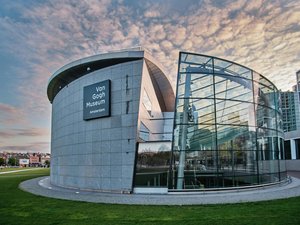
1887 · Oil · Van Gogh Museum, Amsterdã

In this 1887 depiction, we find ourselves in the midst of a seasonal necessity, observing a family bound to the land through the shared labor of the harvest. The scene unfolds in a wide field where five figures move in a coordinated, quiet choreography of toil. To the left, a solitary figure begins the work, while in the center and toward the right, others bend to their tasks, their movements…

5
La mort et le bûcheron, I, 16 de Léon Lhermitte

La mort et le bûcheron, I, 16

Oil On Canvas

La mort et le bûcheron, I, 16 is an oil on canvas by the French realist painter Léon Augustin Lhermitte. Executed about 1893, the work emerged during a period when the artist was establishing himself as a significant figure in the realist movement. Lhermitte, born in Mont-Saint-Père, France, dedicated much of his career to the sensitive portrayal of rural life and the dignity of the working class.

8
Procession near Ploumanac, Brittany (1879) de Léon Lhermitte

Procession near Ploumanac, Brittany

1879 · Oil On Canvas

Procession near Ploumanac, Brittany is an oil on canvas painted by Léon Augustin Lhermitte. Created about 1879, this work captures a moment of profound communal devotion within the rugged, salt-aired landscape of the Finistère region in France. The scene unfolds as a religious procession moves through this rural coastal setting, where the rhythm of faith meets the steady pulse of the Atlantic coast.

10
Wheatfield (Noonday Rest) (1886) de Léon Lhermitte

Wheatfield (Noonday Rest)

1886 · Oil · Museu de Belas Artes de Boston, Boston

Wheatfield (Noonday Rest) is an oil painting by Léon Augustin Lhermitte. The canvas captures a quiet pause in the rhythm of rural labor. Created in 1886, the work belongs to a period when the artist was establishing his presence within the realist movement. The scene focuses on the stillness of the midday sun upon the earth.

A seleção de Léon Lhermitte continua, de 11 a 100

111=''Old Harvester's Meal (1886) de Léon Lhermitte1=''Old Harvester's Meal1886 · Brooklyn Museum 12The Gleaners, End of the Day (1891) de Léon LhermitteThe Gleaners, End of the Day1891 13The Moated Wall (1893) de Léon LhermitteThe Moated Wall1893 · Haggin Museum 14Sundown, Return of the Cattle (1897) de Léon LhermitteSundown, Return of the Cattle1897 · Instituto de Arte de Dayton 15The Covered Vegetable Market, St Malo (no.2) (1893) de Léon LhermitteThe Covered Vegetable Market, St Malo (no.2)1893 16Among the Humble (1905) de Léon LhermitteAmong the Humble1905 · Metropolitan Museum of Art 17Fin de Belle Journée (1921) de Léon LhermitteFin de Belle Journée1921 · National Gallery of Ireland 18Death and the Woodcutter (1893) de Léon LhermitteDeath and the Woodcutter1893 · Musée d'Orsay 19Sortie de leglise Saint Melaine a Morlaix de Léon LhermitteSortie de leglise Saint Melaine a Morlaix 20Ploughing with Oxen (1871) de Léon LhermittePloughing with Oxen1871 21A Flood (1876) de Léon LhermitteA Flood1876 · Manchester Art Gallery 22Motherhood (1876) de Léon LhermitteMotherhood1876 23Le Pardon de Plourin, Brittany Peasants Leaving Church (1877) de Léon LhermitteLe Pardon de Plourin, Brittany Peasants Leaving Church1877 24The Market Place of Ploudalmézeau, Brittany (1877) de Léon LhermitteThe Market Place of Ploudalmézeau, Brittany1877 25Market Place of Ploudalmézeau, Brittany (1877) de Léon LhermitteMarket Place of Ploudalmézeau, Brittany1877 26The Grape Harvest (1884) de Léon LhermitteThe Grape Harvest1884 · Metropolitan Museum of Art 27The Harbor of Granville in the Evening (1892) de Léon LhermitteThe Harbor of Granville in the Evening1892 · Niedersächsisches Landesmuseum 28The Harvesters (1888) de Léon LhermitteThe Harvesters1888 · Art Institute of Chicago 29Supper at Emmaus - - (1892) de Léon LhermitteSupper at Emmaus - -1892 30Granville, Morning (1892) de Léon LhermitteGranville, Morning1892 31The Little Goose Girl of Mezy (1892) de Léon LhermitteThe Little Goose Girl of Mezy1892 32Evening Work (1888) de Léon LhermitteEvening Work1888 33Landscape with a Peasant Woman Milking a Cow (1887) de Léon LhermitteLandscape with a Peasant Woman Milking a Cow1887 34Supper at Emmaus (1892) de Léon LhermitteSupper at Emmaus1892 · Museu de Belas Artes de Boston 35Soup of the Child (1888) de Léon LhermitteSoup of the Child1888 36Haymaking Time (1897) de Léon LhermitteHaymaking Time1897 · Milwaukee Art Museum 37Landscape (1902) de Léon LhermitteLandscape1902 38Woman with Child and Two Children de Léon LhermitteWoman with Child and Two ChildrenSaint Louis Art Museum 39Two Peasant Girls de Léon LhermitteTwo Peasant Girls 40Peasant Woman in Front of the Hearth de Léon LhermittePeasant Woman in Front of the Hearth 41The Fisherman de Léon LhermitteThe FishermanKirkcaldy Galleries 42La Moisson pres de la Marne de Léon LhermitteLa Moisson pres de la Marne 43L_Hermitte Leon Augustin Figures by a Country Stream de Léon LhermitteL_Hermitte Leon Augustin Figures by a Country Stream 44La Leçon de Claude Bernard de Léon LhermitteLa Leçon de Claude Bernard 45Sainte Claire Deville de Léon LhermitteSainte Claire Deville 46Moissonneur buvant a la gourde ou la Soif de Léon LhermitteMoissonneur buvant a la gourde ou la SoifDahesh Museum of Art 47The Reaper's Rest (Le repos du faucheur) de Léon LhermitteThe Reaper's Rest (Le repos du faucheur) 48Glaneuses en avant de vieilles meules de Léon LhermitteGlaneuses en avant de vieilles meules 49The Gleaners de Léon LhermitteThe Gleaners 50Fountain at Châtelguyon (1906) de Léon LhermitteFountain at Châtelguyon1906 51The Family (1908) de Léon LhermitteThe Family1908 52Les laveuses à Chelles de Léon LhermitteLes laveuses à Chelles 53Gleaners near the Haystacks (1912) de Léon LhermitteGleaners near the Haystacks1912 54The Snack (1917) de Léon LhermitteThe Snack1917 55Fisherman and His Family (1912) de Léon LhermitteFisherman and His Family1912 56Pelerinage Pour L'Enfant Malade. Eglise De Plein-Pied, Bourges de Léon LhermittePelerinage Pour L'Enfant Malade. Eglise De Plein-Pied, Bourges 57Gleaning Women (1919) de Léon LhermitteGleaning Women1919 · Museu Nacional de Arte Ocidental 58Harvest, Mother Breastfeeding, Three Figures (1921) de Léon LhermitteHarvest, Mother Breastfeeding, Three Figures1921 59Le Dejeuner du Bucheron (1918) de Léon LhermitteLe Dejeuner du Bucheron1918 60The Gleaners (1922) de Léon LhermitteThe Gleaners1922 61Haystacks (1921) de Léon LhermitteHaystacks1921 62The Gleaners (1922) de Léon LhermitteThe Gleaners1922 63Harvesters near the Farm of Sambre (1920) de Léon LhermitteHarvesters near the Farm of Sambre1920 64The Baby’s Hour (1893) de Léon LhermitteThe Baby’s Hour1893 · Reading Public Museum 65Interior of a Butcher Shop (1881) de Léon LhermitteInterior of a Butcher Shop1881 · Cleveland Museum of Art 66La Lecon de lecture de Léon LhermitteLa Lecon de lecture 67Washerwomen by the Banks of the Marne de Léon LhermitteWasherwomen by the Banks of the Marne 68The Haymakers (1887) de Léon LhermitteThe Haymakers1887 69Le Passeur (1911) de Léon LhermitteLe Passeur1911 70By the Water's Edge de Léon LhermitteBy the Water's Edge 71Le Pardon de Ploumanac_h de Léon LhermitteLe Pardon de Ploumanac_h 72Figures by a Country Stream de Léon LhermitteFigures by a Country Stream 73washday de Léon Lhermittewashday 74untitled de Léon Lhermitteuntitled 75Washday de Léon LhermitteWashday 76Paysans discutant à Mont Saint père de Léon LhermittePaysans discutant à Mont Saint père 77Troupeau au bord de l'eau de Léon LhermitteTroupeau au bord de l'eau 78Breton Peasants Buying Fruit At Landerneau de Léon LhermitteBreton Peasants Buying Fruit At Landerneau 79La Lecon de Claude Bernard de Léon LhermitteLa Lecon de Claude Bernard 80Rue Haute de Mont Saint Père de Léon LhermitteRue Haute de Mont Saint Père 81a flood de Léon Lhermittea flood 82The Sower de Léon LhermitteThe Sower 83A Woman filling her bucket at a Well de Léon LhermitteA Woman filling her bucket at a Well 84les glaneuses de Léon Lhermitteles glaneuses 85harvesters country de Léon Lhermitteharvesters country 86Les Glaneuses de Léon LhermitteLes Glaneuses 87Taking in Foundlings de Léon LhermitteTaking in Foundlings 88La Moisson au Ru Chailly de Léon LhermitteLa Moisson au Ru Chailly 89les halles de Léon Lhermitteles hallesPetit Palais 90Mezy de Léon LhermitteMezy 91la famille de Léon Lhermittela famille 92Fishing along a river de Léon LhermitteFishing along a river 93Maternity de Léon LhermitteMaternity 94Laveuses au bord de la Marne de Léon LhermitteLaveuses au bord de la Marne 95The Reapers' Child de Léon LhermitteThe Reapers' Child 96Le jour des morts à Chartèves de Léon LhermitteLe jour des morts à Chartèves 97lavandieres au bord de la marne de Léon Lhermittelavandieres au bord de la marne 98Maternite ou L'Heureuse Famille de Léon LhermitteMaternite ou L'Heureuse Famille 99Moissonneurs a Mont Saint Pere de Léon LhermitteMoissonneurs a Mont Saint Pere 100Construction d'une Meule de Léon LhermitteConstruction d'une Meule

Os temas que cativaram o olhar de Léon Lhermitte

Os quatro temas que mais se repetem nestas obras originais, cada um com o seu melhor exemplo.

Os museus que guardam os originais de Léon Lhermitte

Os 8 museus que detêm a maioria das pinturas desta página.

Museus Cidade Obras de Léon Lhermitte Pinturas desta lista
Brooklyn Museum, BrooklynBrooklyn Museum Brooklyn 2 The Church of Saint-Eugène (L'Église de Saint-Eugène), 1=''Old Harvester's Meal
National Gallery of Ireland, DublinNational Gallery of Ireland Dublin 2 Harvesters at Rest, Fin de Belle Journée
Museu de Belas Artes de Boston, BostonMuseu de Belas Artes de Boston Boston 2 Wheatfield (Noonday Rest), Supper at Emmaus
Metropolitan Museum of Art, Nova YorkMetropolitan Museum of Art Nova York 2 Among the Humble, The Grape Harvest
Philadelphia Museum of Art, FiladélfiaPhiladelphia Museum of Art Filadélfia 2 Apple Market, Landerneau, Brittany
Musée d'Orsay, ParisMusée d'Orsay Paris 2 Death and the Woodcutter
Petit Palais, ParisPetit Palais Paris 2 les halles
Van Gogh Museum, AmsterdãVan Gogh Museum Amsterdã 1 Haymaking

Léon Lhermitte década a década: a obra original que define cada uma

Obras por década

Escolha uma década para ver a obra original que a define.

Perguntas de colecionadores sobre as pinturas de Léon Lhermitte

Por qual obra Léon Lhermitte é mais conhecido(a)?Revelar a resposta

Field with Geese (1897). Le Pardon de Ploumanac'h (Finistère) e Apple Market, Landerneau, Brittany (1878) vêm a seguir.

Qual era a idade de Léon Lhermitte quando Field with Geese foi feita?Revelar a resposta

53 anos: Field with Geese data de 1897, e Léon Lhermitte nasceu em 1844.

Quais são as dez pinturas mais famosas de Léon Lhermitte?Revelar a resposta

Field with Geese, Le Pardon de Ploumanac'h (Finistère), Apple Market, Landerneau, Brittany, Haymaking, La mort et le bûcheron, I, 16, The grandmother, The Church of Saint-Eugène (L'Église de Saint-Eugène), Procession near Ploumanac, Brittany, Harvesters at Rest e Wheatfield (Noonday Rest). O ranking acima apresenta o ano e o museu de cada uma.

Quantas pinturas Léon Lhermitte deixou?Revelar a resposta

Nosso catálogo contém 217 obras de Léon Lhermitte, datadas de 1871 a 1922.

Em quais museus estão expostas as obras-primas de Léon Lhermitte?Revelar a resposta

Principalmente em Brooklyn Museum (Brooklyn), National Gallery of Ireland (Dublin) e Museu de Belas Artes de Boston (Boston). A tabela de museus acima lista todos eles.

Em que anos Léon Lhermitte pintou as suas obras mais famosas?Revelar a resposta

Em 1880s: 13 das 100 obras nesta página foram feitas então, sendo Haymaking delas.

Quais são as primeiras e as últimas obras originais famosas de Léon Lhermitte?Revelar a resposta

Nesta página, a mais antiga é Ploughing with Oxen (1871) e a mais recente é The Gleaners (1922).

Quais temas Léon Lhermitte escolheu com mais frequência?Revelar a resposta

Landscape (9), French countryside (9) e Rural life (8), entre as 100 obras nesta página.

Qual técnica Léon Lhermitte mais utilizou?Revelar a resposta

Oil On Canvas, para 10 das 100 obras nesta página.

A qual movimento artístico pertence Léon Lhermitte?Revelar a resposta

Realism, a julgar pelos originais nesta página.

Quais obras de Léon Lhermitte estão expostas no Brooklyn Museum?Revelar a resposta

The Church of Saint-Eugène (L'Église de Saint-Eugène) e 1=''Old Harvester's Meal: o Brooklyn Museum, Brooklyn detém 2 das obras desta página.

Léon Lhermitte: vida e obra

Early Life and Artistic Beginnings

Léon Augustin L'Hermitte, a name synonymous with the poignant realism of 19th-century French art, was born on July 31st, 1844, in the tranquil village of Mont-Saint-Père, nestled within the Picardy region of France. This rural upbringing—a landscape of rolling fields and hardworking communities—would indelibly shape his artistic vision, becoming the very bedrock upon which he built his enduring legacy. His father, a dedicated schoolteacher, recognized his son’s innate talent for drawing early on, providing him with encouragement and fostering a love for observation that would prove crucial to L'Hermitte’s future success. Formal training commenced at the prestigious *École Spéciale des Dessins et de la Sculpture*, more commonly known as the “Petite École,” under the tutelage of Horace Lecoq de Boisbaudran, a renowned instructor who emphasized meticulous draftsmanship and a deep understanding of artistic fundamentals. This foundational period instilled in L'Hermitte a rigorous approach to his craft, laying the groundwork for his later mastery of technique. He subsequently continued his studies at the esteemed *École des Beaux-Arts* in Paris, immersing himself in the vibrant artistic milieu of the capital city.

The Rise of a Realist Master

L’Hermitte's breakthrough arrived with remarkable swiftness upon his debut at the Salon in 1864. His paintings immediately resonated with audiences and critics alike, capturing the essence of rural life with an unprecedented level of sensitivity and honesty. Unlike many artists of the time who favored grand historical narratives or idealized landscapes, L’Hermitte focused on the everyday realities of the working class—the farmers, laborers, and villagers whose lives unfolded amidst the fields and workshops of Picardy. This commitment to portraying the dignity and hardship of these individuals quickly established him as a leading figure within the burgeoning realist movement. His innovative use of pastels – capturing subtle nuances of light and texture with remarkable delicacy – further distinguished his work from its contemporaries. In 1884, he was honored with the prestigious French Legion of Honor, a testament to his growing reputation, followed by the Grand Prize at the Exposition Universelle in 1889, solidifying his position as one of France’s most celebrated artists.

Influences and Artistic Evolution

L'Hermitte’s artistic development was profoundly shaped by several key influences. Foremost among these was the work of Jean-François Millet, a master of depicting peasant life with unwavering empathy and realism. Like Millet, L'Hermitte sought to represent the world as it truly was—without embellishment or romanticism—focusing on the dignity and struggles of those who labored in the fields and workshops. He also drew inspiration from the broader realist movement, embracing its commitment to social commentary and its rejection of academic conventions. His early training instilled a meticulous attention to detail and a profound understanding of composition, which he skillfully applied to his distinctive pastel technique. The influence of Vincent van Gogh is notable; the Dutch painter admired L'Hermitte’s ability to capture emotion through color and form, often referencing his work in letters to his brother Theo.

Notable Works and Lasting Legacy

L'Hermitte’s oeuvre encompasses a diverse range of subjects, all united by his unwavering commitment to realism and his profound empathy for the human condition. Among his most celebrated works are *Interior d'une Boucherie* (Interior of a Butcher Shop), a meticulously detailed depiction of working-class life within a rural establishment; *Les Moissonneurs* (The Gleaners), a poignant portrayal of laborers harvesting after the harvest; *La Fenaison* (The Haymaking), capturing the communal spirit of agricultural work; *Le Passeur* (The Ferryman), illustrating a scene of everyday interaction and exchange; and *Pelerinage Pour L'Enfant Malade, Eglise De Plein-Pied, Bourges* (Pilgrimage for the Sick Child in a Plain-Footed Church), depicting a religious procession within a rural community. These works, along with many others, offer a compelling glimpse into 19th-century French society—a society grappling with rapid industrialization and social change. L'Hermitte’s legacy extends far beyond his individual achievements; he played a crucial role in shaping the realist movement and inspiring generations of artists to seek truth and beauty in the everyday lives of ordinary people. His paintings are now housed in prominent museums across Europe and North America, ensuring that his artistic vision continues to resonate with audiences today. He died on July 28th, 1925, leaving behind a body of work that stands as a testament to the power of observation, empathy, and artistic integrity.