Retrato de Lazzaro Bastiani

Pinturas de Lazzaro Bastiani: As 27 mais famosas, sob o olhar de uma galeria

Atualizado em Novembro 2026 · classificado pela nossa pontuação de popularidade (pesquisas, visitas e pedidos de cada obra) · 27 obras de Lazzaro Bastiani em nosso catálogo

Em resumo

Aos olhos da galeria, a pintura mais famosa de Lazzaro Bastiani é Bearded Man with a Falcon (1500), cuja obra original está exposta no Courtauld Gallery, em Londres. Joseph interpreting Pharoah's Dream (1485) e St. Lucy and Kneeling Donor (1485) completam o trio que todos reconhecem. Dos 27 trabalhos de Lazzaro Bastiani em nosso catálogo, a galeria apresenta abaixo as 27 obras mais famosas, cada uma original, com seu ano, seu museu e o que a torna única.

1429 – 1512, Pádua Early renaissance Mais obras: Gallerie dell'Accademia di Venezia

As 10 principais pinturas de Lazzaro Bastiani na galeria

1
Bearded Man with a Falcon (1500) de Lazzaro Bastiani

Bearded Man with a Falcon

1500 · Oil On Canvas · Courtauld Gallery, Londres

The portrait titled Bearded Man with a Falcon is an oil on canvas work attributed to the Venetian painter Lazzaro Bastiani. This piece, which dates to about 1500, offers a glimpse into the stylistic nuances of the late fifteenth and early sixteenth centuries. The subject is presented with a quiet dignity that reflects the social standing of the sitter. It is currently held within the collection of the Courtauld Gallery,…

2
Joseph interpreting Pharoah's Dream (1485) de Lazzaro Bastiani

Joseph interpreting Pharoah's Dream

1485 · Oil On Panel

In this oil on wood panel, we find ourselves within a highly structured, theatrical space that feels more like a stage than a mere setting. The scene captures the biblical moment where Joseph, having risen from his station of enslavement, stands before Pharaoh to interpret a dream. There is a profound sense of order here, dictated by the sharp lines of the architecture. Steps and columns create a hierarchy of…

3
St. Lucy and Kneeling Donor (1485) de Lazzaro Bastiani

St. Lucy and Kneeling Donor

1485 · Oil On Panel · Portland Art Museum, Portland

Lazzaro Bastiani captures a moment of celestial intersection in this late 15th-century oil on wood panel. The composition centers on the verticality of Saint Lucy, whose presence dominates the pictorial space. She is flanked by two angels who crown her with a golden diadem, while below, a kneeling donor gazes upward in prayerful submission. The scene is set against a vast, detailed landscape where atmospheric perspective draws the eye toward…

4
Adoration of the Magi (1470) de Lazzaro Bastiani

Adoration of the Magi

1470 · Tempera On Panel · The Frick Collection, Nova Iorque

In this 1470 tempera work, we find ourselves drawn into a dense, intimate scene of devotion. The composition is framed by a gentle arch, a structural choice that directs our gaze from the immediate presence of the Holy Family toward a receding, rugged landscape. Within this space, the Virgin Mary holds the Christ Child, surrounded by the Three Magi and their attendants. There is a profound sense of narrative depth…

5
The Mystical Marriage of Saint Catherine of Alexandria (1470) de Lazzaro Bastiani

The Mystical Marriage of Saint Catherine of Alexandria

1470 · Oil On Panel · National Trust, Aylesbury

The Mystical Marriage of Saint Catherine of Alexandria is a religious work by Lazzaro Bastiani. Painted about 1470, the image captures a moment of profound sanctity. It depicts a divine union through a vision, where a virgin saint enters into a mystical wedding ceremony with Christ. This sacred event is rendered with the quiet gravity of the late 15th-century Italian school.

6
The Relic of the Holy Cross is offered to the Scuola Grande di San Giovanni Evangelista (detail) (1494) de Lazzaro Bastiani

The Relic of the Holy Cross is offered to the Scuola Grande di San Giovanni Evangelista (detail)

1494 · Tempera · Gallerie dell'Accademia di Venezia, Veneza

The Relic of the Holy Cross is offered to the Scuola Grande di San Giovanni Evangelista (detail) is a work by Lazzaro Bastiani. Painted in 1494, this piece captures a specific moment of sacred ritual. It focuses on a religious ceremony held within the walls of the church of San Giovanni Evangelista in Venice.

7
Communion of St Jerome (1470) de Lazzaro Bastiani

Communion of St Jerome

1470 · Oil On Canvas · Gallerie dell'Accademia di Venezia, Veneza

In this large-scale composition from 1470, Lazzaro Bastiani invites us into a quiet, solemn moment of devotion. The scene centers on St. Jerome, captured in a state of profound spiritual communion. He is not alone; he is supported by his disciple Eusebius and surrounded by a gathering of brethren, creating a sense of communal reverence. The setting is intimate, a cell that feels both physically enclosed and spiritually expansive. A…

9
Funeral of St Jerome (1470) de Lazzaro Bastiani

Funeral of St Jerome

1470 · Oil On Canvas · Gallerie dell'Accademia di Venezia, Veneza

To stand before this depiction of the Funeral of St Jerome is to be enveloped in an atmosphere of profound, hushed reverence. Lazzaro Bastiani masterfully captures a moment suspended between earthly sorrow and divine promise. The scene unfolds as a somber procession, its weight palpable in the dark drapery of the mourners who gather around the central focus: the cross bearing the figure of Jesus Christ. This is not merely…

Pinturas de Lazzaro Bastiani, classificadas de 11 a 27

Pinturas famosas de Lazzaro Bastiani, período por período

Os temas que cativaram o olhar de Lazzaro Bastiani

Os quatro temas que mais se repetem nestas obras originais, cada um com o seu melhor exemplo.
Os museus que guardam os originais de Lazzaro Bastiani

Os 8 museus que detêm a maioria das pinturas desta página.

Museus Cidade Obras de Lazzaro Bastiani Pinturas desta lista
Gallerie dell'Accademia di Venezia, VenezaGallerie dell'Accademia di Venezia Veneza 6 The Relic of the Holy Cross is offered to the Scuola Grande di San Giovanni Evangelista (detail), Communion of St Jerome, St Veneranda Enthroned
Pinacoteca di Brera, MilãoPinacoteca di Brera Milão 3 The Death of St Jerome, St Jerome in the Desert, St Jerome Bringing the Lion to the Convent
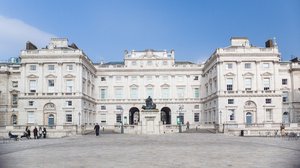
Courtauld Gallery, LondresCourtauld Gallery Londres 1 Bearded Man with a Falcon
Portland Art Museum, PortlandPortland Art Museum Portland 1 St. Lucy and Kneeling Donor
The Frick Collection, Nova IorqueThe Frick Collection Nova Iorque 1 Adoration of the Magi
National Trust, AylesburyNational Trust Aylesbury 1 The Mystical Marriage of Saint Catherine of Alexandria
Basílica de Santa Maria della Salute, VenezaBasílica de Santa Maria della Salute Veneza 1 Pentecost
Gemäldegalerie, BerlimGemäldegalerie Berlim 1 Lamentation of Christ

Lazzaro Bastiani, uma pintura emblemática por década

Obras por década

Escolha uma década para ver a obra original que a define.

Pinturas de Lazzaro Bastiani: a galeria responde

Qual pintura de Lazzaro Bastiani é a mais famosa de todas?Revelar a resposta

Bearded Man with a Falcon (1500), Courtauld Gallery, Londres. Joseph interpreting Pharoah's Dream (1485) e St. Lucy and Kneeling Donor (1485) vêm a seguir.

Qual era a idade de Lazzaro Bastiani ao concluir Bearded Man with a Falcon?Revelar a resposta

71 anos: Bearded Man with a Falcon data de 1500, e Lazzaro Bastiani nasceu em 1429.

Quais são as 10 principais pinturas de Lazzaro Bastiani?Revelar a resposta

Bearded Man with a Falcon, Joseph interpreting Pharoah's Dream, St. Lucy and Kneeling Donor, Adoration of the Magi, The Mystical Marriage of Saint Catherine of Alexandria, The Relic of the Holy Cross is offered to the Scuola Grande di San Giovanni Evangelista (detail), Communion of St Jerome, St Veneranda Enthroned, Funeral of St Jerome e Pentecost. O ranking acima apresenta o ano e o museu de cada uma.

Quantas obras Lazzaro Bastiani criou?Revelar a resposta

Nosso catálogo contém 27 obras de Lazzaro Bastiani, datadas de 1470 a 1500.

Onde estão expostos os originais mais famosos de Lazzaro Bastiani?Revelar a resposta

Principalmente em Gallerie dell'Accademia di Venezia (Veneza), Pinacoteca di Brera (Milão) e Courtauld Gallery (Londres). A tabela de museus acima lista todos eles.

Quando é que Lazzaro Bastiani criou as suas pinturas mais famosas?Revelar a resposta

Em 1470s: 6 das 27 obras nesta página foram feitas então, sendo Adoration of the Magi delas.

Quais são as obras mais famosas de Lazzaro Bastiani no início e no fim de sua carreira?Revelar a resposta

Nesta página, a mais antiga é Adoration of the Magi (1470) e a mais recente é Bearded Man with a Falcon (1500).

Quais temas Lazzaro Bastiani mais explorou?Revelar a resposta

Woman (4), Saints (4) e People (3), entre as 27 obras nesta página.

Em qual técnica Lazzaro Bastiani mais trabalhou?Revelar a resposta

Oil On Canvas, para 4 das 27 obras nesta página.

Com qual movimento Lazzaro Bastiani está associado(a)?Revelar a resposta

Early renaissance e Renaissance, a julgar pelos originais nesta página.

Quais obras originais de Lazzaro Bastiani o Gallerie dell'Accademia di Venezia possui?Revelar a resposta

The Relic of the Holy Cross is offered to the Scuola Grande di San Giovanni Evangelista (detail), Communion of St Jerome e St Veneranda Enthroned: o Gallerie dell'Accademia di Venezia, Veneza detém 6 das obras desta página.

Lazzaro Bastiani: o artista

O Legado Veneziano de Lazzaro Bastiani

Lazzaro Bastiani apresenta-se como uma figura significativa, embora um tanto enigmática, dentro do cenário artístico veneziano dos séculos XV e XVI. Nascido em Pádua, em 1429, ele emergiu como pintor durante um período marcado pelo florescimento dos ideais humanistas e por uma inovação artística sem precedentes — uma era em que Veneza reinava suprema como potência comercial e epicentro cultural. Embora sua produção não tenha sido tão prolífica ou celebrada quanto a de contemporâlos como Ticiano ou Bellini, Bastiani contribuiu substancialmente para a evolução estilística da pintura veneziana, particularmente dentro da Scuola Grande di San Marco e de seus ateliês associados.

A jornada artística de Bastiani teve início em Pádua, onde aperfeiçoou suas habilidades sob a tutela de Andrea Mantegna — um mestre cuja influência é palpável nas primeiras obras de Bastiani. Essa base no estilo rigoroso e escultural de Mantegna proporcionou-lhe uma precisão técnica que, mais tarde, fundir-se-ia perfeitamente com as qualidades mais suaves e atmosféricas da escola veneziana. Registros indicam que ele rapidamente se estabeleceu como pintor em Veneza por volta de 1460, garantindo encomendas de retábulos solicitados pelos Procuradores de San Marco, demonstrando uma compreensão imediata dos gostos artísticos predominantes e das expectativas da elite veneziana. Notavelmente, sua taxa de pagamento espelhava a de Giovanni Bellini na época, significando seu reconhecimento como um talento em ascensão dentro do influente ateliê Bellini — uma conexão que, sem dúvida, moldou seu desenvolvimento estilístico.

Um Espírito Colaborativo no Coração de Veneza

O envolvimento de Bastiani com a Scuola Grande di San Marco provou ser fundamental para sua carreira. A partir da década de 1480, ele colaborou estreitamente com Gentile Bellini, participando de projetos ambiciosos que visavam glorificar o orgulho cívico veneziano e comemorar eventos religiosos importantes. Essa parceria exemplifica o espírito colaborativo característico da pintura veneziana durante esta era — uma tradição onde ateliês compartilhados e encomendas coletivas permitiam um rico intercâmbio de ideias e técnicas. Por meio desses empreendimentos de grande escala, Bastiani ajudou a tecer a narrativa da identidade veneziana no próprio tecido de suas instituições religiosas e cívicas.

Sua maestria é talvez mais evidente em sua capacidade de equilibrar a solenidade sagrada com a emoção humana. Em obras como Santa Veneranda Entronizada e a Madonna da Humildade, pode-se observar um delicado jogo de luz e sombra que insufla vida aos temas divinos. Suas composições religiosas frequentemente serviam para mais do que mera decoração; eram profundas declarações teológicas desenhadas para inspirar devoção. Isso é particularmente evidente em suas representações detalhadas de cerimônias sagradas, como A Relíquia da Santa Cruz é oferecida à Scuola Grande di San Giovanni Evangelista, onde ele captura o ritualismo intrincado e o fervor comunitário do período com uma clareza notável.

Significância Artística e Influência Duradoura

Conforme sua carreira progredia, a obra de Bastiani tornou-se uma ponte entre as tradições lineares e estruturadas do início do Renascimento e a abordagem mais fluida e centrada na cor que eventualmente definiria o Alto Renascimento em Veneza. Sua habilidade de integrar a presença monumental das figuras mantegnescas com as qualidades luminosas e atmosféricas pioneiradas pela família Bellini permitiu-lhe criar obras que eram, ao mesmo tempo, fisicamente imponentes e espiritualmente ressonantes.

Embora a história muitas vezes foque nos titãs da escola veneziana, as contribuições de Lazzaro Bastiani permanecem vitais para compreender o movimento coeso da arte do século XV. Seu legado encontra-se em:

  • O desenvolvimento do retábulo veneziano: Refinando o uso da iconografia religiosa para servir tanto à igreja quanto ao estado.
  • Excelência colaborativa: Demonstrando como as parcerias de ateliê impulsionaram a inovação da era renascentista.
  • Síntese estilística: Fundindo a precisão paduana com a luminosidade veneziana, criando uma linguagem visual única para sua época.

Ao tempo de sua morte, em 1512, Bastiani havia deixado uma marca indelével nos ateliês de Veneza, garantindo que sua influência reverberasse através das gerações de pintores que o seguiram rumo à era de ouro do Renascimento veneziano.