Joseph Nicholls: A Maritime Visionary of the Eighteenth Century
The world of eighteenth-century British art often focuses on grand portraits and stately landscapes, yet within this established framework emerged a singular talent – Joseph Nicholls (1692–1760). A largely unsung figure despite his prolific output, Nicholls carved out a distinctive niche through his meticulously rendered scenes of maritime life, Roman ruins, and the burgeoning beauty of the English countryside. His work offers a fascinating glimpse into a period of significant change, reflecting both the practical realities of seafaring commerce and a growing appreciation for classical antiquity and the natural world.
Born in London, Nicholls’ early life remains somewhat shrouded in mystery. He received his artistic training at the Royal Academy, though details are scarce. His career began as an assistant to the renowned architect Thomas John Willson, a partnership that proved crucial to his development. This association exposed him to a wide range of architectural styles and techniques, but it was through Willson’s influence that Nicholls found his true calling – capturing the essence of the sea and its surrounding landscapes with remarkable detail and sensitivity.
The Maritime Master
Nicholls' fame rests primarily on his captivating depictions of ships. These are not merely technical drawings; they possess a palpable sense of movement, light, and atmosphere. He meticulously observed the nuances of rigging, hull construction, and the play of sunlight upon the water’s surface. His paintings frequently feature vessels engaged in trade – brigs laden with cargo, schooners navigating treacherous coastlines, and frigates battling storms at sea. These scenes are imbued with a sense of adventure and the vital role that maritime activity played in shaping Britain's economy and global reach.
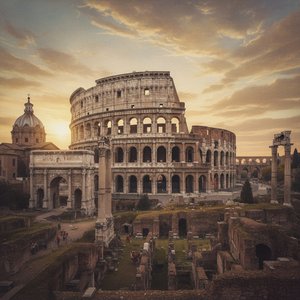
A particularly notable series showcases Roman ruins—particularly those along the coasts of Italy. Nicholls’ fascination with these remnants of antiquity is evident in his detailed renderings of crumbling walls, weathered columns, and overgrown landscapes. These works suggest a burgeoning interest in classical history and architecture within Britain, reflecting a broader cultural shift towards valuing ancient traditions and aesthetics. His ability to seamlessly integrate these historical elements into contemporary scenes demonstrates a remarkable artistic skill.
Technique and Style
Nicholls’ technique is characterized by its precision and realism. He employed oil paints with a masterful understanding of color, light, and shadow. His brushwork is often subtle yet conveys a sense of texture and depth. He meticulously layered colors to create the illusion of three-dimensionality, capturing the reflections on water and the intricate details of ship structures. While influenced by the prevailing styles of his time – particularly the Dutch Golden Age masters—Nicholls developed a unique approach that prioritized observation and detail over idealized representation.
His compositions are typically balanced and harmonious, reflecting a desire to create works that were both aesthetically pleasing and intellectually stimulating. He frequently incorporated elements of perspective and atmospheric effects to enhance the sense of realism and immerse the viewer in his scenes. Nicholls’ work is not flamboyant or dramatic; rather, it possesses a quiet dignity and understated beauty.
Legacy and Significance
Despite his considerable talent, Nicholls remained largely unknown during his lifetime. His works were primarily commissioned by private collectors and institutions, and he received little public recognition. However, in recent decades, scholars have begun to reassess his contribution to British art history. His meticulous attention to detail, combined with his evocative depictions of maritime life and classical antiquity, has earned him a growing appreciation as a significant figure in eighteenth-century painting.
Nicholls’ legacy lies not only in the beauty of his individual works but also in their ability to transport us back in time—to a world where seafaring commerce shaped nations, ancient ruins whispered tales of empires past, and artists like Joseph Nicholls sought to capture the essence of both the familiar and the extraordinary.