Retrato de Jörg Breu, O Velho

Pinturas de Jörg Breu, O Velho: As 24 mais famosas, sob o olhar de uma galeria

Atualizado em Novembro 2026 · classificado pela nossa pontuação de popularidade (pesquisas, visitas e pedidos de cada obra) · 26 obras de Jörg Breu, O Velho em nosso catálogo

Em resumo

Aos olhos da galeria, a pintura mais famosa de Jörg Breu, O Velho é Portrait of a Woman (1515), cuja obra original está exposta no Detroit Institute of Arts, em Detroit. Aggsbacher altarpiece: Flight into Egypt (1501) e Christ Carrying the Cross (1510) completam o trio que todos reconhecem. Dos 26 trabalhos de Jörg Breu, O Velho em nosso catálogo, a galeria apresenta abaixo as 24 obras mais famosas, cada uma original, com seu ano, seu museu e o que a torna única.

1475 – 1537, Augsburgo Northern renaissance Mais obras: Bavarian State Painting Collections

As 10 principais pinturas de Jörg Breu, O Velho na galeria

1
Portrait of a Woman (1515) de Jörg Breu, O Velho

Portrait of a Woman

1515 · Oil On Panel · Detroit Institute of Arts, Detroit

In this 1515 oil on panel, we encounter a woman captured in a moment of profound stillness. She is positioned in a three-quarter view, her gaze directed toward the left, away from the viewer, creating an air of private contemplation. The composition is centered and intimate, set against a dark, almost black background that pushes her figure forward. This deliberate use of contrast allows the viewer to focus entirely on…

2
Aggsbacher altarpiece: Flight into Egypt (1501) de Jörg Breu, O Velho

Aggsbacher altarpiece: Flight into Egypt

1501 · Oil · Germanisches Nationalmuseum, Nuremberg

The Aggsbacher altarpiece: Flight into Egypt emerges from the shadows of the early sixteenth century, a work that carries the weight of history within its wooden panels. Painted by Jörg Breu the Elder, this piece captures a moment of urgent movement. It is also recognized as the Aggsbacher Altar, a name that links it to its origins as a wing altar from Aggsbach. The scene unfolds with a sense of…

3
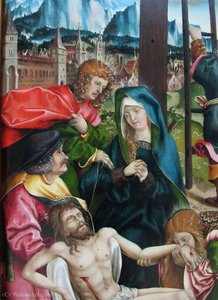
Christ Carrying the Cross (1510) de Jörg Breu, O Velho

Christ Carrying the Cross

A heavy, splintered beam presses against a shoulder. The wood is dark, weathered, and carries the physical gravity of the scene. Christ moves through a thicket of humanity, his body strained under the crushing burden of the cross. Around him, the air is thick with the presence of others. Roman soldiers in metallic armor and onlookers in heavy, textured fabrics press inward, creating a claustrophobic squeeze of limbs and gazes.…

4
Coronation of the holy virgin (1518) de Jörg Breu, O Velho

Coronation of the holy virgin

1518 · Oil On Panel

The heavens open in a vertical surge of light and shadow. At the center of this divine drama, the Virgin Mary receives her crown. Two figures, God the Father and Jesus Christ, reach through a mandorla of swirling clouds to bestow the diadem. A single dove descends, a white flicker of the Holy Spirit amidst the celestial movement. Below this luminous event, a dense crowd of saints gathers. They press…

5
Mary with the child, Saint Catherine, Saint Barbara and angels (1512) de Jörg Breu, O Velho

Mary with the child, Saint Catherine, Saint Barbara and angels

1512 · Oil On Panel · Gemäldegalerie, Berlim

The composition follows a hierarchical arrangement, positioning the Madonna and Christ Child as the central focus of the grouping. They are flanked by Saint Catherine and Saint Barbara, creating a structured sacred assembly. This central group is set against a vast, atmospheric landscape that extends toward the horizon. The arrangement of figures is balanced, with celestial beings occupying the upper and lower registers of the scene.

6
Mockery of Christ (1522) de Jörg Breu, O Velho

Mockery of Christ

1522 · Oil On Panel · Bavarian State Painting Collections, Munique

The painting presents a dense, crowded scene centered on the figure of Jesus, who is positioned in a state of passivity amidst a group of tormentors and soldiers. The composition is tightly packed, creating a shallow, stage-like space that pushes the figures into the immediate foreground. Light is applied through chiaroscuro, casting deep shadows that define the sculptural volume of the bodies and the heavy folds of their clothing. In…

7
The Last Judgment: Hell (1519) de Jörg Breu, O Velho

The Last Judgment: Hell

1519 · Oil On Panel · Bavarian State Painting Collections, Munique

In "The Last Judgment: Hell" by Jörg Breu the Elder, a terrifying and chaotic vision unfolds across a vertical panel. The scene captures a moment of absolute upheaval, focusing entirely on the harrowing depths of Hell. Every inch of the composition is densely packed with figures, creating a sense of overwhelming claustrophobia that seems to press against the viewer. There is no stillness here; instead, a frantic, swirling movement drives…

8
St. Lucy (1614) de Jörg Breu, O Velho

St. Lucy

1614 · Oil On Panel · Bavarian State Painting Collections, Munique

In St. Lucy by Jörg Breu the Elder, a solemn and highly detailed religious portrait emerges from a narrow, vertical composition. The saint stands in full length against a distant landscape, her presence commanding the space with a serene yet somber expression. A prominent halo surrounds her head, composed of fine, radiating lines that catch the light. She holds an open book in her hands, a quiet gesture of devotion…

9
Mary with Child and Goldfinch 1523 (1523) de Jörg Breu, O Velho

Mary with Child and Goldfinch 1523

1523 · Oil · Kunsthistorisches Museum, Viena

The oil painting depicts the Virgin Mary holding the Christ Child within a structural archway. The figures are positioned centrally, framed by the architectural opening that leads to a deep, receding landscape. Mary wears drapery in shades of deep black and teal, which contrasts with the soft blue of the sky in the background. Her head is adorned with a floral crown. The Christ Child holds a thin red thread…

10
The Suicide of Lucretia (1528) de Jörg Breu, O Velho

The Suicide of Lucretia

1528 · Fresco · Alte Pinakothek, Munique

To stand before this depiction of The Suicide of Lucretia is to be enveloped by an atmosphere so thick with dramatic tension, it feels almost palpable. Painted around 1528 by Jörg the Elder Breu, this fresco fragment captures a moment of profound historical and moral reckoning. The scene unfolds within what appears to be an intimate, yet dramatically charged chamber. At the heart of the composition lies the figure of…

Pinturas de Jörg Breu, O Velho, classificadas de 11 a 24

Os temas que cativaram o olhar de Jörg Breu, O Velho

Os quatro temas que mais se repetem nestas obras originais, cada um com o seu melhor exemplo.

Os museus que guardam os originais de Jörg Breu, O Velho

Os 8 museus que detêm a maioria das pinturas desta página.

Museus Cidade Obras de Jörg Breu, O Velho Pinturas desta lista
Bavarian State Painting Collections, MuniqueBavarian State Painting Collections Munique 5 Mockery of Christ, The Last Judgment: Hell, St. Lucy
Detroit Institute of Arts, DetroitDetroit Institute of Arts Detroit 1 Portrait of a Woman
Germanisches Nationalmuseum, NurembergGermanisches Nationalmuseum Nuremberg 1 Aggsbacher altarpiece: Flight into Egypt
Kroměříž Archdiocesan MuseumKroměříž Archdiocesan Museum 1 Christ Carrying the Cross
Gemäldegalerie, BerlimGemäldegalerie Berlim 1 Mary with the child, Saint Catherine, Saint Barbara and angels
Kunsthistorisches Museum, VienaKunsthistorisches Museum Viena 1 Mary with Child and Goldfinch 1523
Alte Pinakothek, MuniqueAlte Pinakothek Munique 1 The Suicide of Lucretia
Museu Thyssen-Bornemisza, MadridMuseu Thyssen-Bornemisza Madrid 1 Nuptial Portrait of Coloman Helmschmid and Agnes Breu

Jörg Breu, O Velho, uma pintura emblemática por década

Obras por década

Escolha uma década para ver a obra original que a define.

Pinturas de Jörg Breu, O Velho: a galeria responde

Qual pintura de Jörg Breu, O Velho é a mais famosa de todas?Revelar a resposta

Portrait of a Woman (1515), Detroit Institute of Arts, Detroit. Aggsbacher altarpiece: Flight into Egypt (1501) e Christ Carrying the Cross (1510) vêm a seguir.

Qual era a idade de Jörg Breu, O Velho ao concluir Portrait of a Woman?Revelar a resposta

40 anos: Portrait of a Woman data de 1515, e Jörg Breu, O Velho nasceu em 1475.

Quais são as 10 principais pinturas de Jörg Breu, O Velho?Revelar a resposta

Portrait of a Woman, Aggsbacher altarpiece: Flight into Egypt, Christ Carrying the Cross, Coronation of the holy virgin, Mary with the child, Saint Catherine, Saint Barbara and angels, Mockery of Christ, The Last Judgment: Hell, St. Lucy, Mary with Child and Goldfinch 1523 e The Suicide of Lucretia. O ranking acima apresenta o ano e o museu de cada uma.

Quantas obras Jörg Breu, O Velho criou?Revelar a resposta

Nosso catálogo contém 26 obras de Jörg Breu, O Velho, datadas de 1501 a 1530.

Onde estão expostos os originais mais famosos de Jörg Breu, O Velho?Revelar a resposta

Principalmente em Bavarian State Painting Collections (Munique), Detroit Institute of Arts (Detroit) e Germanisches Nationalmuseum (Nuremberg). A tabela de museus acima lista todos eles.

Quando é que Jörg Breu, O Velho criou as suas pinturas mais famosas?Revelar a resposta

Em 1510s: 5 das 24 obras nesta página foram feitas então, sendo Portrait of a Woman delas.

Quais são as obras mais famosas de Jörg Breu, O Velho no início e no fim de sua carreira?Revelar a resposta

Nesta página, a mais antiga é Aggsbacher altarpiece: Flight into Egypt (1501) e a mais recente é History Cycle: The Victory of P. Cornelius Scipio over Hannibal in the Battle of Zama (1530).

Quais temas Jörg Breu, O Velho mais explorou?Revelar a resposta

Woman (6), Landscape (5) e Soldiers (4), entre as 24 obras nesta página.

Em qual técnica Jörg Breu, O Velho mais trabalhou?Revelar a resposta

Oil On Panel, para 8 das 24 obras nesta página.

Com qual movimento Jörg Breu, O Velho está associado(a)?Revelar a resposta

Northern renaissance e German renaissance, a julgar pelos originais nesta página.

Quais obras originais de Jörg Breu, O Velho o Bavarian State Painting Collections possui?Revelar a resposta

Mockery of Christ, The Last Judgment: Hell e St. Lucy: o Bavarian State Painting Collections, Munique detém 5 das obras desta página.

Jörg Breu, O Velho: o artista

Jörg Breu, O Velho: Um Mestre do Renascimento de Augsburg

Nascido em Augsburg por volta de 1475, Jörg Breu, O Velho emergiu como uma figura de relevância no florescente cenário artístico da Alemanha do final do século XV. Sua vida inicial, envolta em uma relativa obscuridade — sendo filho de um tecelão — contrasta com a trajetória extraordinária que ele viria a traçar como pintor e mestre artesão. A jornada de Breu teve início com um aprendizado sob a tutela de Ulrich Apt, o Velho, um respeitado artista de Augsburg, que lhe proporcionou uma compreensão fundamental das técnicas tradicionais da pintura alemã. No entanto, não foi apenas a imitação que definiu seu desenvolvimento artístico; Breu possuía um olhar aguçado para o detalhe e uma disposição para a experimentação, estabelecendo-se, em última análise, como um membro fundamental do influente círculo de Lederer — um grupo conhecido por sua abordagem inovadora em relação à arte religiosa.

O início de sua carreira foi marcado por uma produção prolífica de retábulos e painéis devocionais, executados primordialmente com a paleta rica e em tons de joias característica da Escola do Danúbio. Sua obra durante este período demonstra um domínio magistral da perspectiva e um interesse crescente em incorporar elementos de naturalismo em suas composições. Um exemplo particularmente impressionante é o ‘Altar de Bernhard’, atualmente guardado no Städel Museum, em Frankfurt, que exibe sua habilidade ao retratar cenas da vida de São Bernardo com uma atenção notável aos detalhes e um uso sutil da perspectiva atmosférica. Os tons terrosos da pintura e a representação simbólica do trabalho — monges colhendo trigo — oferecem um vislumbre fascinante das preocupações sociais e religiosas de Augsburg naquela época.

Viagens e Influências: Itália e Além

O desenvolvimento artístico de Jörg Breu, O Velho, tomou um rumo significativo com suas viagens à Áustria entre 1500 e 1502, onde criou elaborados retábulos de múltiplos painéis para mosteiros como a Abadia de Melk. Esses primeiros encargos austríacos estabeleceram-no como um artista altamente requisitado, capaz de executar projetos complexos e ambiciosos. No entanto, a ambição de Breu estendia-se para além da região do Danúbio; ele empreendeu duas viagens significativas à Itália – uma por volta de 1508 e outra em 1514/15 – experiências que moldaram profundamente o seu estilo artístico.

Estas estadias italianas expuseram-no às inovações da arte renascentista, particularmente o trabalho de mestres como Masaccio e Botticelli. Ele absorveu as suas técnicas de perspectiva linear, precisão anatómica e uma maior ênfase na representação naturalista. Ao regressar a Augsburg, Breu integrou habilidosamente estas influências no seu próprio estilo, criando obras que mantinham a estética tradicional alemã, ao mesmo tempo que incorporavam elementos de dinamismo e elegância italianos. A pintura ‘Crucifixão’, disponível no OriginalUniqueArt.com, exemplifica esta síntese – ela exibe tanto a solenidade da iconografia medieval quanto uma compreensão nascente das técnicas espaciais do Renascimento.

Temas Religiosos e Estilo Artístico

A produção artística de Jörg Breu, O Velho, era predominantemente voltada para temas religiosos, refletindo o clima devocional que imperava em sua época. Ele retratava com frequência cenas da vida dos santos, narrativas bíblicas e representações da Virgem Maria – tudo renderizado com uma atenção meticulosa aos detalhes e uma compreensão profunda do simbolismo teológico. Suas composições frequentemente apresentam um arranjo equilibrado de figuras dentro de espaços cuidadosamente construídos, utilizando cores ricas e padrões intrincados para criar imagens visualmente impactantes.

Uma característica fundamental do estilo de Jörg Breu, O Velho, é o seu uso de xilogravuras e desenhos, particularmente para designs de vitrais. Essas obras demonstram sua versatilidade como artista e sua habilidade de traduzir ideias visuais complexas em formas concisas e eficazes. Seu trabalho na Capela Fugger, na Igreja de Santa Ana, exemplifica essa destreza, com desenhos de bordas intrincados que adicionam uma camada de riqueza decorativa ao design geral. Além disso, a crônica de Breu, meticulosamente mantida de 1512 até sua morte, oferece visões valiosas sobre o contexto social e religioso de Augsburg durante a era da Reforma, revelando um indivíduo complexo que lidava tanto com crenças tradicionais quanto com as ideias protestantes emergentes.

Legado e Linhagem Artística

A influência de Jörg Breu, O Velho, estendeu-se muito além de sua própria existência. Após sua morte em 1537, seu filho, Jörg Breu, o Jovem, continuou a liderar o workshop de Augsburg até seu próprio falecimento uma década depois. O filho de Breu preservou muitos dos princípios e técnicas artísticas de seu pai, garantindo a continuidade do legado familiar dentro da próspera cena artística da cidade.

A obra de Breu é hoje reconhecida como um elo crucial entre a tradição do Gótico tardio e o início do Renascimento na Alemanha. Suas pinturas oferecem uma janela valiosa para a vida cultural e religiosa de Augsburg durante um período de significativa transformação social e artística. Seu legado perdura através de suas obras sobreviventes, que estão expostas em museus por toda a Europa, e através do estudo contínuo de sua vida e arte por estudiosos que buscam compreender as complexidades da pintura renascentista alemã.