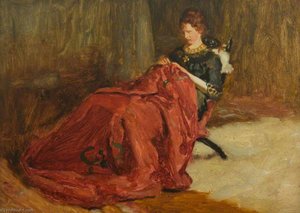
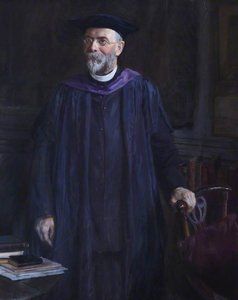
Retrato de John Henry Lorimer

As 59 Pinturas Mais Famosas de John Henry Lorimer, uma Seleção da Galeria

Atualizado em Novembro 2026 · classificado pela nossa pontuação de popularidade (pesquisas, visitas e pedidos de cada obra) · 59 obras de John Henry Lorimer em nosso catálogo

Em resumo

De todas as obras originais que John Henry Lorimer deixou, a mais famosa é Spring Moonlight (1896). Logo atrás vêm Conversation Piece, Hannah and Alice Lorimer (1879) e The Flight of the Swallows (1906). Nosso catálogo contém 59 obras de John Henry Lorimer; a galeria preservou as 59 que o mundo mais admira, cada uma exibida com sua data, seu museu e sua história.

1856 – 1936, Edimburgo Contemporary realism Mais obras: The National Trust For Scotland

As 10 principais pinturas de John Henry Lorimer: a escolha da galeria

1
Spring Moonlight (1896) de John Henry Lorimer

Spring Moonlight

1896 · Oil On Canvas

The room breathes with a gentle, hushed energy as a social gathering unfolds within its walls. A woman stands near a window, her long dress catching the pale glow of the moon, cradling a baby in her arms. This central figure anchors the scene, her presence a calm center amidst the subtle movement of others. Around her, people are scattered through the space—some seated in quiet conversation, others standing in…

2
Conversation Piece, Hannah and Alice Lorimer (1879) de John Henry Lorimer

Conversation Piece, Hannah and Alice Lorimer

1879 · Oil

The air in the room feels heavy with the scent of fresh blooms and the soft rustle of heavy fabric. Two women, Hannah and Alice, occupy the space with a quiet, shared purpose. Hannah stands to the left, her hand resting gently upon Alice's shoulder, a gesture that speaks of a deep, unspoken connection between sisters. They are framed by a table laden with flowers, their presence amidst the vases…

3
The Flight of the Swallows (1906) de John Henry Lorimer

The Flight of the Swallows

1906 · Oil

A family gathers within the quietude of a home, their attention drawn toward a large window. Through the glass, a group of swallows moves across the sky, marking a transition in the natural world. A woman holds a child close, while other figures—a man and two women—occupy the room, their postures reflecting a shared moment of observation. The scene is defined by the way natural light floods the interior, illuminating…

4
Lord Patrick Allan Fraser, Advocate (1877) de John Henry Lorimer

Lord Patrick Allan Fraser, Advocate

1877 · Oil

This oil painting, executed in 1877, presents a portrait of an elderly man contained within an oval-shaped frame. The subject is positioned centrally, his figure occupying the majority of the oval space. He is depicted from the upper body upwards, with his head and shoulders forming the primary focus. The man possesses a prominent, textured white beard and hair that catch the light, contrasting against the darker tones of his…

5
Antony Gibbs (1841–1907) (1879) de John Henry Lorimer

Antony Gibbs (1841–1907)

1879 · Oil On Canvas · National Trust, Bristol

In this 1879 portrait, we encounter Antony Gibbs, a man whose presence fills the frame with a quiet, settled authority. He is depicted in the prime of his life, his face framed by a full, well-groomed beard and mustache that speak to the dignity of his station. Dressed in dark, heavy clothing, he holds a rifle with a practiced ease, suggesting a life defined by the outdoors and the disciplined…

6
James Lorimer (1818–1890), Jurist and Political Philosopher (1890) de John Henry Lorimer

James Lorimer (1818–1890), Jurist and Political Philosopher

1890 · Oil On Canvas · Galeria Nacional de Retratos de Escócia, Edimburgo

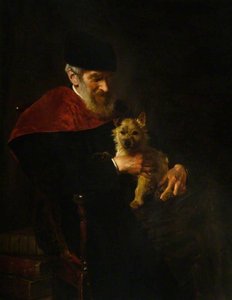
In this portrait, we find ourselves in the presence of an elderly man, seated with a stillness that suggests a lifetime of contemplation. He holds a small dog, a gesture that softens the gravity of his expression and introduces a sense of companionship into the frame. The lighting is heavily directional, casting deep shadows that define the contours of his face and the heavy folds of his clothing. This chiaroscuro…

7
Maternal Instinct (1892) de John Henry Lorimer

Maternal Instinct

1892 · Oil On Canvas · Royal Scottish Academy of Art - Architecture, Edimburgo

The composition centers on a domestic interior where three figures occupy a richly appointed room. An elderly woman sits in a chair, her form anchored within the space. A young girl kneels on the floor near her, while a younger boy sits nearby on the rug. The setting is defined by a fireplace and ornate furniture that frame the central interaction. Light enters from windows and the hearth, casting long…

A seleção de John Henry Lorimer continua, de 11 a 59

11Antony Gibbs (1841-1907) (1879) de John Henry LorimerAntony Gibbs (1841-1907)1879 · Tyntesfield 12Andrew Vans Dunlop (1805–1880) (1883) de John Henry LorimerAndrew Vans Dunlop (1805–1880)1883 13San Giovanni Crisogono Altarpiece (after Giovanni Bellini) (1880) de John Henry LorimerSan Giovanni Crisogono Altarpiece (after Giovanni Bellini)1880 · The National Trust For Scotland 14Charlotte M. Yonge (1823–1901) (1882) de John Henry LorimerCharlotte M. Yonge (1823–1901)1882 · National Trust 15Sir Thomas Sutherland (1834–1922), Chairman of P O Steamship Company (1882) de John Henry LorimerSir Thomas Sutherland (1834–1922), Chairman of P O Steamship Company1882 · Galeria Nacional de Retratos de Escócia 16Hannah Lorimer Embroidering a Bedcover (1885) de John Henry LorimerHannah Lorimer Embroidering a Bedcover1885 · The National Trust For Scotland 17Charles Rampini (1840–1907) (1883) de John Henry LorimerCharles Rampini (1840–1907)1883 · Lerwick Town Hall 18John Muir (1810–1882) (1889) de John Henry LorimerJohn Muir (1810–1882)1889 19Sir Samuel George Johnson (1831–1909), Kt (1891) de John Henry LorimerSir Samuel George Johnson (1831–1909), Kt1891 · Nottingham Castle Museum And Art Gallery 20Sir Robert Stodart Lorimer (1864–1929), Architect (1886) de John Henry LorimerSir Robert Stodart Lorimer (1864–1929), Architect1886 · Galeria Nacional de Retratos de Escócia 21T. W. Lorimer (1890) de John Henry LorimerT. W. Lorimer1890 · The National Trust For Scotland 22Sir Robert Stodart Lorimer (1864–1929) (1886) de John Henry LorimerSir Robert Stodart Lorimer (1864–1929)1886 · Riba Library Drawings And Archives Collections 23The Ordination of Elders in a Scottish Kirk (1891) de John Henry LorimerThe Ordination of Elders in a Scottish Kirk1891 · Scottish National Gallery 24Sir Joseph Lister (1827–1912) (1895) de John Henry LorimerSir Joseph Lister (1827–1912)1895 25Lyon Playfair (1818–1898), 1st Baron Playfair of St Andrews (1897) de John Henry LorimerLyon Playfair (1818–1898), 1st Baron Playfair of St Andrews1897 26Charles George Shaw of Ayr (1895) de John Henry LorimerCharles George Shaw of Ayr1895 · The Baird Institute 27Lord Lister (1827–1912), Professor of Surgery at the University of Glasgow (1897) de John Henry LorimerLord Lister (1827–1912), Professor of Surgery at the University of Glasgow1897 28Lady Russell Cotes (1835–1920) (1895) de John Henry LorimerLady Russell Cotes (1835–1920)1895 29Reverend Peter H. Waddell (1893) de John Henry LorimerReverend Peter H. Waddell1893 30Sir Merton Russell Cotes (1835–1921) (1895) de John Henry LorimerSir Merton Russell Cotes (1835–1921)1895 31Bishop Aeneas Chisholm (1836–1918) (1900) de John Henry LorimerBishop Aeneas Chisholm (1836–1918)1900 32Archibald Hamilton Charteris (1835–1908) de John Henry LorimerArchibald Hamilton Charteris (1835–1908) 33Alexander Lawson (1852–1921) de John Henry LorimerAlexander Lawson (1852–1921) 34Professor John Gray McKendrick (1841–1926), Professor of Physiology at the University of Glasgow (1908) de John Henry LorimerProfessor John Gray McKendrick (1841–1926), Professor of Physiology at the University of Glasgow1908 35Hush (1906) de John Henry LorimerHush1906 · Touchstones Rochdale 36The Finding of Moses (after Giovanni Battista Tiepolo) de John Henry LorimerThe Finding of Moses (after Giovanni Battista Tiepolo)The National Trust For Scotland 37Sunlight in the South Room, Kellie (1913) de John Henry LorimerSunlight in the South Room, Kellie1913 · The National Trust For Scotland 38The Long Shadows (1918) de John Henry LorimerThe Long Shadows1918 · The National Trust For Scotland 39A Beech Tree at Kellie (1881) de John Henry LorimerA Beech Tree at Kellie1881 · The National Trust For Scotland 40Walter John Francis Erskine de John Henry LorimerWalter John Francis ErskineNational Trust For Scotland 41View of Kellie Castle de John Henry LorimerView of Kellie Castle 42Le peintre des fleurs de John Henry LorimerLe peintre des fleursThe National Trust For Scotland 43A Still Life with a Vase of Flowers de John Henry LorimerA Still Life with a Vase of FlowersThe National Trust For Scotland 44Woodhenge de John Henry LorimerWoodhenge 45Reconstruction Drawing of Richborough Roman Town de John Henry LorimerReconstruction Drawing of Richborough Roman Town 46December Roses de John Henry LorimerDecember RosesThe National Trust For Scotland 47Ninian Patrick, Son of Lady and Lord Crichton Stuart de John Henry LorimerNinian Patrick, Son of Lady and Lord Crichton StuartThe National Trust For Scotland 48John Stuart Blackie (1809–1895) de John Henry LorimerJohn Stuart Blackie (1809–1895) 49A Gentleman Holding a Glove (after Titian) de John Henry LorimerA Gentleman Holding a Glove (after Titian)The National Trust For Scotland 50Reconstruction Drawing of the Gateway to Britannia de John Henry LorimerReconstruction Drawing of the Gateway to Britannia 51Striped Roses in a Ship Mug de John Henry LorimerStriped Roses in a Ship MugThe National Trust For Scotland 52Interior Iona de John Henry LorimerInterior Iona 53A Room at Twilight Kellie Castle de John Henry LorimerA Room at Twilight Kellie CastleRoyal Scottish Academy of Art - Architecture 54Sir John Scott, KCM, DCLC de John Henry LorimerSir John Scott, KCM, DCLCWigan Arts And Heritage Service 55Sundown in Spring, Kellie Castle de John Henry LorimerSundown in Spring, Kellie Castle 56Sir David Chalmers de John Henry LorimerSir David ChalmersThe National Trust For Scotland 57View through a Window de John Henry LorimerView through a WindowThe National Trust For Scotland 58Sir Robert Christison (1797–1882), Bt de John Henry LorimerSir Robert Christison (1797–1882), BtRoyal College of Physicians of Edinburgh 59The Madonna and Child with Two Musical Angels de John Henry LorimerThe Madonna and Child with Two Musical AngelsThe National Trust For Scotland

Os temas que cativaram o olhar de John Henry Lorimer

Os quatro temas que mais se repetem nestas obras originais, cada um com o seu melhor exemplo.

Os museus que guardam os originais de John Henry Lorimer

Os 8 museus que detêm a maioria das pinturas desta página.

Museus Cidade Obras de John Henry Lorimer Pinturas desta lista
The National Trust For Scotland, PittenweemThe National Trust For Scotland Pittenweem 15 San Giovanni Crisogono Altarpiece (after Giovanni Bellini), Hannah Lorimer Embroidering a Bedcover, T. W. Lorimer
Galeria Nacional de Retratos de Escócia, EdimburgoGaleria Nacional de Retratos de Escócia Edimburgo 3 James Lorimer (1818–1890), Jurist and Political Philosopher, Sir Thomas Sutherland (1834–1922), Chairman of P O Steamship Company, Sir Robert Stodart Lorimer (1864–1929), Architect
National Trust, BristolNational Trust Bristol 2 Antony Gibbs (1841–1907), Charlotte M. Yonge (1823–1901)
Royal Scottish Academy of Art - Architecture, EdimburgoRoyal Scottish Academy of Art - Architecture Edimburgo 2 Maternal Instinct, A Room at Twilight Kellie Castle
TyntesfieldTyntesfield 2 Charlotte M. Yonge (1823 - 1901), Antony Gibbs (1841-1907)
Lerwick Town Hall, KirkwallLerwick Town Hall Kirkwall 1 Charles Rampini (1840–1907)
Nottingham Castle Museum And Art Gallery, NottinghamNottingham Castle Museum And Art Gallery Nottingham 1 Sir Samuel George Johnson (1831–1909), Kt
Riba Library Drawings And Archives Collections, LondresRiba Library Drawings And Archives Collections Londres 1 Sir Robert Stodart Lorimer (1864–1929)

John Henry Lorimer década a década: a obra original que define cada uma

Obras por década

Escolha uma década para ver a obra original que a define.

Perguntas de colecionadores sobre as pinturas de John Henry Lorimer

Por qual obra John Henry Lorimer é mais conhecido(a)?Revelar a resposta

Spring Moonlight (1896). Conversation Piece, Hannah and Alice Lorimer (1879) e The Flight of the Swallows (1906) vêm a seguir.

Qual era a idade de John Henry Lorimer quando Spring Moonlight foi feita?Revelar a resposta

40 anos: Spring Moonlight data de 1896, e John Henry Lorimer nasceu em 1856.

Quais são as dez pinturas mais famosas de John Henry Lorimer?Revelar a resposta

Spring Moonlight, Conversation Piece, Hannah and Alice Lorimer, The Flight of the Swallows, Lord Patrick Allan Fraser, Advocate, Antony Gibbs (1841–1907), James Lorimer (1818–1890), Jurist and Political Philosopher, Maternal Instinct, Sir Robert Lorimer, ARA, as a Boy, James Lorimer (1818–1890) e Charlotte M. Yonge (1823 - 1901). O ranking acima apresenta o ano e o museu de cada uma.

Quantas pinturas John Henry Lorimer deixou?Revelar a resposta

Nosso catálogo contém 59 obras de John Henry Lorimer, datadas de 1875 a 1918.

Em quais museus estão expostas as obras-primas de John Henry Lorimer?Revelar a resposta

Principalmente em The National Trust For Scotland (Pittenweem), Galeria Nacional de Retratos de Escócia (Edimburgo) e National Trust (Bristol). A tabela de museus acima lista todos eles.

Em que anos John Henry Lorimer pintou as suas obras mais famosas?Revelar a resposta

Em 1890s: 13 das 59 obras nesta página foram feitas então, sendo Spring Moonlight delas.

Quais são as primeiras e as últimas obras originais famosas de John Henry Lorimer?Revelar a resposta

Nesta página, a mais antiga é Sir Robert Lorimer, ARA, as a Boy (1875) e a mais recente é The Long Shadows (1918).

Quais temas John Henry Lorimer escolheu com mais frequência?Revelar a resposta

Victorian era (6), Portrait (4) e Portraiture (4), entre as 59 obras nesta página.

Qual técnica John Henry Lorimer mais utilizou?Revelar a resposta

Oil On Canvas, para 4 das 59 obras nesta página.

A qual movimento artístico pertence John Henry Lorimer?Revelar a resposta

Contemporary realism, a julgar pelos originais nesta página.

Quais obras de John Henry Lorimer estão expostas no The National Trust For Scotland?Revelar a resposta

San Giovanni Crisogono Altarpiece (after Giovanni Bellini), Hannah Lorimer Embroidering a Bedcover e T. W. Lorimer: o The National Trust For Scotland, Pittenweem detém 15 das obras desta página.

John Henry Lorimer: vida e obra

A Alma da Tela Escocesa: A Vida e o Legado de John Henry Lorimer

Na era de ouro da pintura do final do período vitoriano e eduardiano, poucos artistas capturaram a dignidade silenciosa da domesticidade e a grandiosidade arquitetônica da Escócia com tanta graça quanto John Henry Lorimer. Nascido em Edimburgo em 1856, em uma família de profundo prestígio intelectual, Lorimer estava destinado a uma vida moldada tanto pelo rigor acadêmico quanto pela paixão criativa. Como filho de James Lorimer, um distinto professor da Universidade de Edimburgo, seus primeiros anos foram imersos na atmosfera erudita da capital escocesa. Essa base de disciplina e observação tornaria-se, mais tarde, o alicerce de sua técnica artística, permitindo-lhe abordar seus temas com um olhar meticuloso para o detalhe e um profundo respeito pelo peso histórico de seu entorno.

A formação formal de Lorimer foi tanto uma jornada através da tradição quanto uma exploração da luz moderna. Educado na Edinburgh Academy e, posteriormente, na Universidade de Edimburgo, ele buscou o refinamento nos prestigiados salões da Royal Scottish Academy. Sob a mentoria de mestres como Frank McTaggart e William Chalmers, Lorimer começou a dominar o delicado equilíbrio entre o realismo clássico e a influência emergente do impressionismo. Sua pincelada aprendeu a dançar com a luz, capturando não apenas a forma física de um objeto, mas a própria atmosfera que o envolvia. Este período de desenvolvimento foi ainda mais enriquecido por suas extensas viagens pela Europa; das paisagens ensolaradas da Espanha e da Itália às vistas vibrantes e culturalmente diversas da Argélia, Lorimer absorveu um vocabulário visual global que mais tarde teceria na trama de suas cenas escocesas.

Uma Simbiose de Arte e Arquitetura

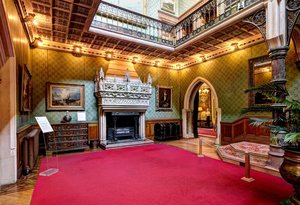
Um dos aspectos mais encantadores da carreira de Lorimer foi a profunda sinergia criativa que ele compartilhava com seu irmão, o celebrado arquiteto Robert Lorimer. O relacionamento deles transcendeu o mero vínculo familiar, evoluindo para um legado colaborativo que ajudou a definir a estética de sua era. Em nenhum lugar isso é mais evidente do que na magnífica restauração do Castelo de Kellie. Enquanto Robert trabalhava para transformar a ruína em um triunfo do patrimônio arquitetônico, John estava lá para infundir vida em suas paredes através de suas pinturas. Suas representações do castelo e de suas propriedades circundantes não eram meros registros de pedra e argamassa, mas celebrações poéticas de uma identidade escocesa revitalizada.

Esta parceria permitiu a John Henry Lorimer explorar temas de permanência e nostalgia. Através de seus olhos, vemos a intersecção entre a grandiosidade feita pelo homem e o mundo natural. Sua habilidade em renderizar as texturas da alvenaria antiga ao lado da luz suave e efêmera de um interior doméstico criou uma sensação de atemporalidade que permanece cativante para os espectadores modernos. Esta posição única — no coração tanto do renascimento arquitetônico quanto da pintura de gênero — garantiu seu lugar na narrativa histórica da arte escocesa.

Maestria em Retrato e Cenas de Gênero

Além das grandes paisagens e estudos arquitetônicos, Lorimer era um mestre da narrativa humana. Ele possuía uma habilidade rara de capturar a profundidade psicológica de seus modelos, tornando-se um retratista muito requisitado por algumas das figuras mais notáveis de seu tempo. Seus retratos, incluindo os de Lyon Playfair e do pioneiro cirurgião Joseph Lister, são caracterizados por um profundo senso de caráter e dignidade. Ele não pintava apenas rostos; ele pintava legados.

Em suas pinturas de gênero, Lorimer voltou sua atenção para os ritmos íntimos da vida cotidiana. Estas obras frequentemente apresentam:

  • Intimidade Doméstica: Cenas que evocam o calor e a quietude do lar escocês.
  • Lirismo do Realismo: Uma técnica que combina precisão anatômica e estrutural com uma luz suave e emotiva.
  • Documentação Cultural: Capturando as nuances sociais e as modas do final do século XIX.

O volume de suas contribuições para o mundo da arte é evidenciado por suas frequentes exposições na Royal Scottish Academy e na Royal Academy em Londres. Com mais de cem obras exibidas na primeira, Lorimer estabeleceu-se como um pilar da comunidade da arte escocesa. Sua morte em 1936 marcou o fim de uma era, mas sua influência persiste através da beleza duradoura de suas telas, que continuam a servir como janelas para um mundo desaparecido de elegância, tradição e profunda devoção artística.