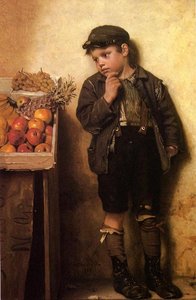
Retrato de John George Brown

Pinturas de John George Brown: As 100 mais famosas, sob o olhar de uma galeria

Atualizado em Novembro 2026 · classificado pela nossa pontuação de popularidade (pesquisas, visitas e pedidos de cada obra) · 329 obras de John George Brown em nosso catálogo

Em resumo

Aos olhos da galeria, a pintura mais famosa de John George Brown é Claiming the Shot - A Group of Portraits after the Hunt in the Adirondacks (1865), cuja obra original está exposta no Detroit Institute of Arts, em Detroit. Curling, - A Scottish Game, at Central Park (1862) e The Country Gallants (1876) completam o trio que todos reconhecem. Dos 329 trabalhos de John George Brown em nosso catálogo, a galeria apresenta abaixo as 100 obras mais famosas, cada uma original, com seu ano, seu museu e o que a torna única.

1831 – 1913, Durham Mais obras: Metropolitan Museum of Art

As 10 principais pinturas de John George Brown na galeria

1
Claiming the Shot - A Group of Portraits after the Hunt in the Adirondacks (1865) de John George Brown

Claiming the Shot - A Group of Portraits after the Hunt in the Adirondacks

1865 · Oil On Canvas · Detroit Institute of Arts, Detroit

John George Brown's "Claiming the Shot – A Group of Portraits after the Hunt in the Adirondacks," painted in 1865, isn’t merely a depiction of a hunting scene; it’s a carefully constructed tableau of American masculinity and the burgeoning spirit of frontier life. More than just a record of a successful hunt, the painting captures a potent blend of camaraderie, triumph, and the quiet dignity of men engaged in a…

2
Curling, - A Scottish Game, at Central Park (1862) de John George Brown

Curling, - A Scottish Game, at Central Park

1862 · Oil On Canvas · Museum of Fine Arts, Houston

John George Brown’s “Curling, - A Scottish Game, at Central Park” isn’t merely a depiction of a sporting event; it’s a meticulously crafted tableau of 19th-century leisure and the burgeoning spirit of American life. Painted in 1862, this oil on canvas transports us to a crisp winter afternoon within the verdant embrace of Central Park, capturing a scene brimming with both rustic charm and understated elegance. Brown, a British expatriate…

3
The Country Gallants (1876) de John George Brown

The Country Gallants

1876 · Oil On Canvas · Toledo Museum of Art, Toledo

Five gentlemen linger upon a rustic bridge, their presence anchored to a quiet afternoon by the weight of shared conversation. The scene unfolds along a tranquil river, where the water catches the light in soft, shifting patterns. One figure stands near the left edge, while others gather toward the center and right, creating a sense of natural, unforced companionship. A simple handbag rests on the ground near one man, a…

4
Swinging on a Gate, Southampson, New York (1878) de John George Brown

Swinging on a Gate, Southampson, New York

1878 · Oil On Canvas

The painting titled Swinging on a Gate, Southampson, New York, was executed by the artist John George Brown. This work dates to 1878. The composition focuses on a specific moment in a rural setting, capturing a scene from the late nineteenth century.

5
Sorry He Spoke (1863) de John George Brown

Sorry He Spoke

1863 · Oil

The painting depicts a group of children engaged in activity outside a building. Four children occupy the central and peripheral spaces of the composition. One child stands on the far left, while another is positioned on the far right. Two additional children are situated closer to the center of the scene. Three adults are also present: one stands near the left edge, one is on the right side, and a…

6
Resting in the Woods (1866) de John George Brown

Resting in the Woods

1866 · Oil

A woman sits beneath the canopy of a tree, positioned within a wooded setting. She wears a pink dress that provides a distinct point of color against the surrounding natural tones. Her posture suggests a state of rest or quiet contemplation. Near her, a handbag rests on the ground, indicating a temporary pause in her movement. The scene is populated by subtle details, including two birds located in the background—one…

7
Gathering Autumn Leaves (1875) de John George Brown

Gathering Autumn Leaves

1875 · Oil

Gathering Autumn Leaves, painted by John George Brown in 1875, captures a group of people amidst a wooded landscape. The scene focuses on a moment of seasonal transition, where the foliage of the trees and the forest floor are covered in fallen leaves. Within this setting, several individuals, including adults and children, are scattered throughout the woods. In the foreground, a woman holds a child who reaches toward the branches…

8
Shoeshine Boy with a Rose (1885) de John George Brown

Shoeshine Boy with a Rose

1885 · Oil

A young boy sits upon the ground, his legs crossed in a posture of stillness. He wears a hat, and a smile rests upon his face, softening the edges of his labor. In one hand, he holds a pair of shoes; his other hand rests lightly upon his knee. The scene is composed of simple, grounded elements: a chair tucked into the lower corner, another chair resting in the background,…

9
Lad with Flowers (1881) de John George Brown

Lad with Flowers

1881 · Oil

The scene unfolds through Lad with Flowers, a work painted by John George Brown in 1881. This portrait captures a specific moment in time, freezing a young boy in a quiet, serious pose. The boy holds a single rose, his gaze steady as he stands against a textured brick wall. In the background, the presence of two other figures adds a sense of depth to this urban setting, suggesting a…

10
The Wounded Playfellow (1884) de John George Brown

The Wounded Playfellow

1884 · Oil

The street is alive with the sudden, quiet drama of play. Four children, two boys and two girls, gather in a tight circle, their attention pulled toward a central point of shared concern. One boy cradles a dog in his lap, his small hands steadying the animal, while another boy leans in, gesturing toward something only the group can see. There is a sense of urgent, youthful empathy in the…

Pinturas de John George Brown, classificadas de 11 a 100

11A Street Fair (1879) de John George BrownA Street Fair1879 12Two Girls on a Swing (1872) de John George BrownTwo Girls on a Swing1872 13Daisy McComb Holding a Pink Rose (1888) de John George BrownDaisy McComb Holding a Pink Rose1888 14Newsboy de John George BrownNewsboy 15News Boy de John George BrownNews Boy 16Shoeshine Boy with His Dog de John George BrownShoeshine Boy with His Dog 17Meditation (1900) de John George BrownMeditation1900 · Metropolitan Museum of Art 18Delivery Boy (1863) de John George BrownDelivery Boy1863 19Watching the Woodpecker (1866) de John George BrownWatching the Woodpecker1866 20The Fur Muff (1864) de John George BrownThe Fur Muff1864 21Coming Home from School (1876) de John George BrownComing Home from School1876 22Not to be Trifled With (1877) de John George BrownNot to be Trifled With1877 23Meditation (1881) de John George BrownMeditation1881 · Indianapolis Museum of Art 24Sympathy (1885) de John George BrownSympathy1885 25Sunshine (1879) de John George BrownSunshine1879 26Paddy's Valentine (1885) de John George BrownPaddy's Valentine1885 27A Leisure Hour (1881) de John George BrownA Leisure Hour1881 28Eying the Fruit Stand (1884) de John George BrownEying the Fruit Stand1884 29A Story of the Sea (1883) de John George BrownA Story of the Sea1883 30Plotting Mischief (1883) de John George BrownPlotting Mischief1883 31Weighed at the Mill (1883) de John George BrownWeighed at the Mill1883 32The Longshoremen's Noon (1879) de John George BrownThe Longshoremen's Noon1879 · National Gallery of Art 33Waiting for a Bite, Central Park (1886) de John George BrownWaiting for a Bite, Central Park1886 · Reading Public Museum 34Takin' It Easy (1904) de John George BrownTakin' It Easy1904 · Rhode Island School of Design Museum of Art 35Taking a Break (1904) de John George BrownTaking a Break1904 36This Corner Don’t Pay (1875) de John George BrownThis Corner Don’t Pay1875 · Birmingham Museum of Art 37Teaching Tricks (also known as Training the Dog) (1892) de John George BrownTeaching Tricks (also known as Training the Dog)1892 38Hiding in the Old Oak (1874) de John George BrownHiding in the Old Oak1874 39Fishing - Fort Lee, New Jersey (1870) de John George BrownFishing - Fort Lee, New Jersey1870 40The Three Tomboys (1868) de John George BrownThe Three Tomboys1868 41Crossing the Brook (1874) de John George BrownCrossing the Brook1874 42The Running Brook (1873) de John George BrownThe Running Brook1873 43Cowgirl de John George BrownCowgirl 44Lazy Bones de John George BrownLazy Bones 45Street Gallantry (1884) de John George BrownStreet Gallantry1884 · San Antonio Museum of Art 46The Music Lesson (1870) de John George BrownThe Music Lesson1870 · Metropolitan Museum of Art 47Tuckered OUt (1888) de John George BrownTuckered OUt1888 · Museu de Belas Artes de Boston 48Sunset, New York Harbor (1863) de John George BrownSunset, New York Harbor1863 49Marching Along (1863) de John George BrownMarching Along1863 50Look out for the Engine while the Bell Rings (1863) de John George BrownLook out for the Engine while the Bell Rings1863 51Learning to Curtsey (1863) de John George BrownLearning to Curtsey1863 52Early on the Stump (1862) de John George BrownEarly on the Stump1862 53Coming Thro' the Rye (1860) de John George BrownComing Thro' the Rye1860 54Young Recruits (1861) de John George BrownYoung Recruits1861 55Putting on Airs (1862) de John George BrownPutting on Airs1862 56The Picnic (1861) de John George BrownThe Picnic1861 57A Newspaper Boy Hitching a Ride (also known as Colored People Not Allowed on This LIne) (1863) de John George BrownA Newspaper Boy Hitching a Ride (also known as Colored People Not Allowed on This LIne)1863 58Thoughts by the Wayside (1861) de John George BrownThoughts by the Wayside1861 59Pay Toll (1862) de John George BrownPay Toll1862 60The Teacher (1866) de John George BrownThe Teacher1866 61Waiting for a Job (1871) de John George BrownWaiting for a Job1871 62Flying Kites (1867) de John George BrownFlying Kites1867 63Waiting for Her Suiter (1871) de John George BrownWaiting for Her Suiter1871 64Young Girl with Flowers (1871) de John George BrownYoung Girl with Flowers1871 65A Young Girl by the Window (1868) de John George BrownA Young Girl by the Window1868 66The Reluctant Bride (1869) de John George BrownThe Reluctant Bride1869 67Thus Perish the Memory of Our Love (1865) de John George BrownThus Perish the Memory of Our Love1865 68Hide and Seek (1867) de John George BrownHide and Seek1867 69Three Girls on a Swing (1868) de John George BrownThree Girls on a Swing1868 70Little Girl with Ermine Coat (1869) de John George BrownLittle Girl with Ermine Coat1869 71Winter Games (1871) de John George BrownWinter Games1871 72The Young Artist (1867) de John George BrownThe Young Artist1867 73When Greek Meets Greek, Then Comes the Tug of War (1866) de John George BrownWhen Greek Meets Greek, Then Comes the Tug of War1866 74Deerhunter in the Woods (1868) de John George BrownDeerhunter in the Woods1868 75The Peacemaker (1867) de John George BrownThe Peacemaker1867 76Silver Birches (1864) de John George BrownSilver Birches1864 77Young Girl in a New York Garden (1871) de John George BrownYoung Girl in a New York Garden1871 78The Tin Cup (also known as At the Well) (1864) de John George BrownThe Tin Cup (also known as At the Well)1864 79Little Miss Autumn (1865) de John George BrownLittle Miss Autumn1865 80Heading Out (1878) de John George BrownHeading Out1878 81Dress Parade (1878) de John George BrownDress Parade1878 · Norman Rockwell Museum 82What's Your Namr. (1876) de John George BrownWhat's Your Namr.1876 83Great Risk for Small Gains (1878) de John George BrownGreat Risk for Small Gains1878 84Grand Manan Fisherman Bringing Home His Oars (1878) de John George BrownGrand Manan Fisherman Bringing Home His Oars1878 85Coming over the Hills (1874) de John George BrownComing over the Hills1874 86The Crossing Sweeper (1874) de John George BrownThe Crossing Sweeper1874 87Walk In (1874) de John George BrownWalk In1874 88A Joint Investment (1878) de John George BrownA Joint Investment1878 89A Sure Thing (1876) de John George BrownA Sure Thing1876 90The Little Shoe-Shine Boy (1878) de John George BrownThe Little Shoe-Shine Boy1878 91The Cherry Picker (1875) de John George BrownThe Cherry Picker1875 92Casting the Net (1877) de John George BrownCasting the Net1877 93The Young Apple Salesman (1878) de John George BrownThe Young Apple Salesman1878 94Cleaning the Catch (1877) de John George BrownCleaning the Catch1877 95The Tomboy (1873) de John George BrownThe Tomboy1873 96I Won't Go! (1873) de John George BrownI Won't Go!1873 97School Bound (1873) de John George BrownSchool Bound1873 98The Flower Girl (1877) de John George BrownThe Flower Girl1877 99Pull for the Shore (1878) de John George BrownPull for the Shore1878 100Eating the Profits (1878) de John George BrownEating the Profits1878

Pinturas famosas de John George Brown, período por período

Os temas que cativaram o olhar de John George Brown

Os quatro temas que mais se repetem nestas obras originais, cada um com o seu melhor exemplo.

Os museus que guardam os originais de John George Brown

Os 8 museus que detêm a maioria das pinturas desta página.

Museus Cidade Obras de John George Brown Pinturas desta lista
Metropolitan Museum of Art, Nova YorkMetropolitan Museum of Art Nova York 3 Meditation, The Music Lesson
Detroit Institute of Arts, DetroitDetroit Institute of Arts Detroit 2 Claiming the Shot - A Group of Portraits after the Hunt in the Adirondacks
Museum of Fine Arts, HoustonMuseum of Fine Arts Houston 2 Curling, - A Scottish Game, at Central Park
Birmingham Museum of Art, BirminghamBirmingham Museum of Art Birmingham 2 This Corner Don’t Pay
Museu de Belas Artes de Boston, BostonMuseu de Belas Artes de Boston Boston 2 Tuckered OUt
Toledo Museum of Art, ToledoToledo Museum of Art Toledo 1 The Country Gallants
Indianapolis Museum of Art, IndianapolisIndianapolis Museum of Art Indianapolis 1 Meditation
National Gallery of Art, WashingtonNational Gallery of Art Washington 1 The Longshoremen's Noon

John George Brown, uma pintura emblemática por década

Obras por década

Escolha uma década para ver a obra original que a define.

Pinturas de John George Brown: a galeria responde

Qual pintura de John George Brown é a mais famosa de todas?Revelar a resposta

Claiming the Shot - A Group of Portraits after the Hunt in the Adirondacks (1865), Detroit Institute of Arts, Detroit. Curling, - A Scottish Game, at Central Park (1862) e The Country Gallants (1876) vêm a seguir.

Qual era a idade de John George Brown ao concluir Claiming the Shot - A Group of Portraits after the Hunt in the Adirondacks?Revelar a resposta

34 anos: Claiming the Shot - A Group of Portraits after the Hunt in the Adirondacks data de 1865, e John George Brown nasceu em 1831.

Quais são as 10 principais pinturas de John George Brown?Revelar a resposta

Claiming the Shot - A Group of Portraits after the Hunt in the Adirondacks, Curling, - A Scottish Game, at Central Park, The Country Gallants, Swinging on a Gate, Southampson, New York, Sorry He Spoke, Resting in the Woods, Gathering Autumn Leaves, Shoeshine Boy with a Rose, Lad with Flowers e The Wounded Playfellow. O ranking acima apresenta o ano e o museu de cada uma.

Quantas obras John George Brown criou?Revelar a resposta

Nosso catálogo contém 329 obras de John George Brown, datadas de 1860 a 1904.

Onde estão expostos os originais mais famosos de John George Brown?Revelar a resposta

Principalmente em Metropolitan Museum of Art (Nova York), Detroit Institute of Arts (Detroit) e Museum of Fine Arts (Houston). A tabela de museus acima lista todos eles.

Quando é que John George Brown criou as suas pinturas mais famosas?Revelar a resposta

Em 1870s: 41 das 100 obras nesta página foram feitas então, sendo The Country Gallants delas.

Quais são as obras mais famosas de John George Brown no início e no fim de sua carreira?Revelar a resposta

Nesta página, a mais antiga é Coming Thro' the Rye (1860) e a mais recente é Takin' It Easy (1904).

Quais temas John George Brown mais explorou?Revelar a resposta

Victorian era (8), Boy (7) e Girl (6), entre as 100 obras nesta página.

Em qual técnica John George Brown mais trabalhou?Revelar a resposta

Oil On Canvas, para 32 das 100 obras nesta página.

Quais obras originais de John George Brown o Metropolitan Museum of Art possui?Revelar a resposta

Meditation e The Music Lesson: o Metropolitan Museum of Art, Nova York detém 2 das obras desta página.

John George Brown: o artista

A Life Etched in Childhood: The World of John George Brown

John George Brown, um nome talvez menos imediatamente reconhecível do que alguns de seus contemporâneos, no entanto ocupa uma nicho significativo e profundamente comovente dentro da paisagem da arte americana do século XIX. Nascido em Durham, Inglaterra, em 1831, sua jornada foi uma de determinação em aprimorar-se e observação perspicaz, culminando em uma carreira que capturava as realidades pungentes – e frequentemente sentimentais – que cercavam a infância durante um período de rápidas mudanças sociais. A história de Brown não é simplesmente sobre talento artístico; é sobre a ambição de um imigrante, um olhar atento aos detalhes e uma compreensão astuta do mercado de arte americano em ascensão. Sua vida inicial foi marcada pela necessidade, não pelo privilégio. Aprendiz de fábrica de vidro aos quatorze anos, ele se esforçou para sustentar sua família, mas mesmo entre o trabalho exigente, uma paixão por desenhar persistiu. Essa dedicação levou-o a aulas noturnas na School of Design em Newcastle, e posteriormente, estudos adicionais na Trustees Academy em Edimburgo – experiências formativas que lançaram as bases para seus futuros empreendimentos artísticos. Em 1853, Brown cruzou bravamente o Atlântico, estabelecendo-se em Brooklyn, Nova York, uma cidade prestes a se tornar tanto sua casa quanto sua musa. Ele continuou sua educação na Graham Art School e na National Academy of Design, aperfeiçoando suas habilidades sob a orientação de instrutores como Thomas Seir Cummings, preparando-se para uma vida dedicada a capturar a essência da experiência americana.

From Portraiture to the Streets: Finding His Voice

Inicialmente estabelecendo-se como pintor de retratos, Brown logo descobriu que sua verdadeira vocação residia em outro lugar – no vibrante, muitas vezes negligenciado mundo da vida cotidiana. Ele começou a se concentrar em cenas de gênero e foi através de suas representações de crianças de rua que ele realmente encontrou sua voz. Os anos 1860 testemunharam a ascensão das pinturas de "crianças de rua" de Brown, imagens que ressoaram profundamente com um público fascinado – e talvez simultaneamente perturbado – pelas realidades da pobreza urbana. Essas imagens não eram meras representações sentimentalistas; eram estudos cuidadosos de caráter, capturando a resiliência, a engenhosidade e a dignidade silenciosa das crianças navegando em circunstâncias difíceis. Bootblacks diligentemente polindo sapatos, notícias vendendo jornais em esquinas movimentadas, vendedores de flores oferecendo suas mercadorias – esses cenários se tornaram sua marca registrada, imbuidos de um nível notável de detalhe e empatia. Seu trabalho não nasceu no isolamento; foi influenciado pela Barbizon school, particularmente sua ênfase no realismo e nas representações da vida cotidiana, assim como o uso dramático da luz e da cor defendido por artistas como J.M.W. Turner. No entanto, Brown sintetizou essas influências em um estilo exclusivamente americano, um que falava com a especificidade das condições sociais e das ansiedades culturais de sua terra adotiva.

A Master of Sentiment and Commerce

Brown não era apenas um artista, mas também um empresário notavelmente astuto. Reconhecendo o apelo de seu trabalho, ele estrategicamente patenteou muitas de suas pinturas mais populares, permitindo a reprodução em massa como cromolitos e impressões fotográficas. Esse movimento inteligente aumentou sua fama e sucesso financeiro, tornando-o um dos pintores de gênero mais ricos nos Estados Unidos durante sua vida. No entanto, esse sucesso comercial não diminuiu o mérito artístico de seu trabalho. Pinturas como “The Net Mender” e “The First Point” exemplificam sua capacidade de capturar momentos de beleza silenciosa e profundidade emocional. "Claiming the Shot - A Group of Portraits after the Hunt in the Adirondacks" demonstra uma gama mais ampla, mostrando sua habilidade em retratar cenas de grupo com um realismo notável. Suas pinturas ofereceram mais do que apenas prazer estético; elas forneceram insights valiosos sobre a sociedade americana do século XIX, particularmente sobre a vida das crianças trabalhadores e a paisagem urbana em transformação. Frequentemente imbuidas de sutis conotações morais, o trabalho de Brown refletia sua crença na importância do trabalho duro, da honestidade e da resiliência – valores que ressoaram profundamente com o público vitoriano.

Shifting Focus: From Youth to Age

À medida que Brown amadureceu como artista, sua matéria-prima evoluiu também. Em seus anos posteriores, ele mudou seu foco de retratar a energia e a vitalidade da infância para representar a dignidade silenciosa e a solidão da velhice. Essas pinturas frequentemente apresentavam indivíduos idosos em ambientes rurais, evocando uma sensação de nostalgia por um passado mais simples. Embora essa mudança pareça dramática, era uma progressão natural para um artista profundamente preocupado em capturar a condição humana em toda a sua complexidade. Ele continuou a ser membro ativo de várias instituições de arte, servindo como vice-presidente da National Academy of Design de 1899 a 1904, demonstrando seu compromisso contínuo com a comunidade artística. Suas obras posteriores, embora diferentes em assunto, mantiveram a atenção meticulosa aos detalhes e a sensibilidade emocional que caracterizaram suas pinturas anteriores.

A Lasting Legacy: Echoes of Childhood

John George Brown faleceu em Nova York em 1913, deixando para trás um corpo de trabalho substancial que continua a cativar e emocionar o público hoje. Suas pinturas são mantidas em coleções prestigiosas em todo o mundo, incluindo a National Gallery em Londres e o Detroit Institute of Arts, testemunho de sua importância artística duradoura. Ele é lembrado não apenas por sua habilidade técnica, mas também por sua capacidade de capturar a essência de um tempo e lugar específicos – a América vitoriana – com honestidade, empatia e um toque de romantismo. *Sua obra serve como um lembrete pungente dos desafios enfrentados pelas crianças no século XIX, ao mesmo tempo em que celebra sua resiliência e espírito.* Brown’s legacy extends beyond his paintings; he represents a fascinating intersection of artistic talent, entrepreneurial acumen, and social commentary – a true chronicler of American life. His ability to transform everyday scenes into enduring works of art ensures that his vision will continue to resonate with generations to come.