Retrato de John Frederick Lewis

As 100 Pinturas Mais Famosas de John Frederick Lewis, uma Seleção da Galeria

Atualizado em Novembro 2026 · classificado pela nossa pontuação de popularidade (pesquisas, visitas e pedidos de cada obra) · 263 obras de John Frederick Lewis em nosso catálogo

Em resumo

De todas as obras originais que John Frederick Lewis deixou, a mais famosa é Interior of the Residence of the Pasha, New Orsova (1838). Logo atrás vêm Lilium Auratum (1871) e John Clark with the Animals at Sandpit Gate (1825). Nosso catálogo contém 263 obras de John Frederick Lewis; a galeria preservou as 100 que o mundo mais admira, cada uma exibida com sua data, seu museu e sua história.

1805 – 1876, Londres Orientalist painting Mais obras: Yale Center for British Art

As 10 principais pinturas de John Frederick Lewis: a escolha da galeria

1
Interior of the Residence of the Pasha, New Orsova (1838) de John Frederick Lewis

Interior of the Residence of the Pasha, New Orsova

1838 · Lithograph

Interior of the Residence of the Pasha, New Orsova is a work by John Frederick Lewis, executed in 1838. This piece belongs to the Orientalism style, reflecting the artist's engagement with the domestic and architectural realities of the Ottoman-influenced regions he encountered during his travels.

2
Lilium Auratum (1871) de John Frederick Lewis

Lilium Auratum

1871 · Oil On Canvas · Birmingham Museums And Art Gallery, Birmingham

John Frederick Lewis's "Lilium Auratum," painted in 1871, is more than just a depiction of two women amidst a profusion of flowers; it’s a meticulously crafted window into the opulent sensibilities and burgeoning Orientalist movement of Victorian England. This captivating work, housed within the broader context of Lewis’s extensive travels through the Mediterranean and North Africa, offers a rare glimpse into a world of leisure, beauty, and carefully constructed narratives.…

3
John Clark with the Animals at Sandpit Gate (1825) de John Frederick Lewis

John Clark with the Animals at Sandpit Gate

1825 · Oil On Canvas · Royal Collection, Londres

In the lush, verdant expanse of Windsor Great Park, specifically at the historic Sandpit Gate, John Frederick Lewis captures a moment that transcends mere landscape painting to become a profound tableau of 19-century British life. Completed around 1825, John Clark with the Animals at Sandpit Gate is much more than a portrait of a man; it is an exquisite celebration of the harmonious, albeit curated, relationship between humanity and the…

4
A Gondolier, Venice (1835) de John Frederick Lewis

A Gondolier, Venice

1835 · Oil On Canvas

In A Gondolier, Venice by John Frederick Lewis, the viewer is placed at eye level, standing upon a quay as if sharing a quiet moment of repose. The composition is vertically oriented, drawing the eye upward from the immediate foreground toward the historic architecture of the city. A man stands prominently in the foreground, positioned slightly off-center to the right, his presence grounding the scene. At his feet, a resting…

5
Return of the Sultan Mahmoud from the Mosque (1838) de John Frederick Lewis

Return of the Sultan Mahmoud from the Mosque

1838 · Engraving

The engraving titled Return of the Sultan Mahmoud from the Mosque was created by the artist John Frederick Lewis. This work is a monochromatic print produced through the technique of incising lines into a metal plate, such as copper or steel, to create the final image on paper. The piece dates to about 1838.

6
Sketches of a trip to Spain: Capilla de Villaviciosa (1836) de John Frederick Lewis

Sketches of a trip to Spain: Capilla de Villaviciosa

1836 · Engraving

This monochromatic engraving, titled Sketches of a trip to Spain: Capilla de Villaviciosa, offers a quiet glimpse into the architectural history of Spain. Created by the English artist John Frederick Lewis, the work dates to 1836. It emerged from a period when Lewis was deeply engaged with the Mediterranean, specifically during his travels through Spain and Morocco between 1832 and 1834.

7
Bulgarian Village (1838) de John Frederick Lewis

Bulgarian Village

1838 · Graphite

The scene unfolds within the quietude of a Bulgarian village, a moment captured by the artist John Frederick Lewis in 1838. This work presents a detailed view of a rural settlement, where the architecture of the period takes center stage. A traditional building with a distinctive overhanging roof dominates the view, anchoring the composition amidst a landscape of rolling hills. The atmosphere feels still, as if the viewer has stumbled…

8
the Port of Constantinople (1838) de John Frederick Lewis

the Port of Constantinople

1838 · Ink On Paper

The Port of Constantinople is a work by the English Orientalist painter John Frederick Lewis, dating to about 1838. Born in London, United Kingdom, Lewis developed a specialized focus on Mediterranean and Oriental scenes, often capturing the architectural and maritime life of the Ottoman Empire. This particular piece reflects his interest in the topographical details of the region during his travels.

9
Sweet Waters (in Asia) (1838) de John Frederick Lewis

Sweet Waters (in Asia)

1838 · Charcoal

In Sweet Waters (in Asia), John Frederick Lewis organizes a quiet, observational landscape that draws the eye through a series of layered planes. The central focus is an ornate pavilion, positioned slightly off-center to create a natural, unforced balance. To the left, a body of water occupies a significant portion of the frame, its surface broken only by the presence of a small boat. This aquatic element provides a sense…

10
Turkish Female (1838) de John Frederick Lewis

Turkish Female

1838 · Charcoal

is a work by the English artist John Frederick Lewis. Created about 1838, this piece reflects the artist's engagement with the Mediterranean and Ottoman worlds during a period of significant travel and stylistic development.

A seleção de John Frederick Lewis continua, de 11 a 100

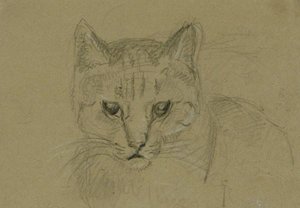
11A Café on the Bosphorus (1838) de John Frederick LewisA Café on the Bosphorus1838 12New Orsova; Exterior of the Pasha'a Residence (1838) de John Frederick LewisNew Orsova; Exterior of the Pasha'a Residence1838 13Yeni Jami, (or Mosque of the New Tomb) (1838) de John Frederick LewisYeni Jami, (or Mosque of the New Tomb)1838 14Tophana (1838) de John Frederick LewisTophana1838 15Asking for Alms (1833) de John Frederick LewisAsking for Alms1833 16Portrait of John Ponsonby, 1st Viscount Ponsonby (1841) de John Frederick LewisPortrait of John Ponsonby, 1st Viscount Ponsonby1841 17Easter Day at Rome (1840) de John Frederick LewisEaster Day at Rome1840 18Sheik Hussein of Gebel Tor and His Son (1843) de John Frederick LewisSheik Hussein of Gebel Tor and His Son1843 · Yale Center for British Art 19The Pipe Bearer (1856) de John Frederick LewisThe Pipe Bearer1856 · Birmingham Museum and Art Gallery 20A Syrian Sheik, Egypt (1856) de John Frederick LewisA Syrian Sheik, Egypt1856 · Fitzwilliam Museum 21The Doubtful Coin (1869) de John Frederick LewisThe Doubtful Coin1869 · Birmingham Museum and Art Gallery 22The Harem (1876) de John Frederick LewisThe Harem1876 · Birmingham Museum and Art Gallery 23On the Banks of the Nile, Upper Egypt (1876) de John Frederick LewisOn the Banks of the Nile, Upper Egypt1876 · Yale Center for British Art 24Arabian Nights (1876) de John Frederick LewisArabian Nights1876 25Seated Turk (1841) de John Frederick LewisSeated Turk1841 · Yale Center for British Art 26Arab School (1851) de John Frederick LewisArab School1851 · Metropolitan Museum of Art 27Study of a Lion and Study of a Lioness' Head (1820) de John Frederick LewisStudy of a Lion and Study of a Lioness' Head1820 · Yale Center for British Art 28The Courtyard of the Coptic Patriarch's House in Cairo (1864) de John Frederick LewisThe Courtyard of the Coptic Patriarch's House in Cairo1864 · Tate Britain 29Girl with Two Caged Doves de John Frederick LewisGirl with Two Caged Doves 30Highland Hospitality de John Frederick LewisHighland Hospitality 31A Head Keeper, Windsor Castle (1826) de John Frederick LewisA Head Keeper, Windsor Castle1826 · Yale Center for British Art 32The Bazaar of the Ghûriyah from the Steps of the Mosque of El-Ghûri, Cairo de John Frederick LewisThe Bazaar of the Ghûriyah from the Steps of the Mosque of El-Ghûri, Cairo 33A Street Scene in Granada on the Day of the Bullfight (1833) de John Frederick LewisA Street Scene in Granada on the Day of the Bullfight1833 · Yale Center for British Art 34A View Of The Street And Morque Of Ghorreyah, Cairo de John Frederick LewisA View Of The Street And Morque Of Ghorreyah, Cairo 35The Siesta de John Frederick LewisThe Siesta 36Head of a cow de John Frederick LewisHead of a cow 37The Ramesseum at Thebes (1851) de John Frederick LewisThe Ramesseum at Thebes1851 · Yale Center for British Art 38?A Sketch for `Foresters Stalking Deer' (1824) de John Frederick Lewis?A Sketch for `Foresters Stalking Deer'1824 · Yale Center for British Art 39The Head of a Tigress (felis Tigris). Etching with Engraving (1825) de John Frederick LewisThe Head of a Tigress (felis Tigris). Etching with Engraving1825 40Saint Sophia and Distant View of Sultan Achmet (mosques) (1838) de John Frederick LewisSaint Sophia and Distant View of Sultan Achmet (mosques)1838 41A Turkish Araba Drawn by Two White Oxen (1841) de John Frederick LewisA Turkish Araba Drawn by Two White Oxen1841 · Yale Center for British Art 42Seraglio Point (1838) de John Frederick LewisSeraglio Point1838 43Artillery Barracks, Tophana (1838) de John Frederick LewisArtillery Barracks, Tophana1838 44An Interior (1834) de John Frederick LewisAn Interior1834 45Four Women in ann Interior, Brussa, Turkey (1841) de John Frederick LewisFour Women in ann Interior, Brussa, Turkey1841 46The Harem Introduction of an Abyssinian slave (1860) de John Frederick LewisThe Harem Introduction of an Abyssinian slave1860 47An Intercepted Correspondence (1869) de John Frederick LewisAn Intercepted Correspondence1869 48Interior of An Eastern House (1851) de John Frederick LewisInterior of An Eastern House1851 · Yale Center for British Art 49Study for the Proclamation of Don Carlos (1838) de John Frederick LewisStudy for the Proclamation of Don Carlos1838 · Yale Center for British Art 50A hunting scene de John Frederick LewisA hunting scene 51Self-portrait sketch 1 de John Frederick LewisSelf-portrait sketch 1 52Portrait sketch of Mrs Birch de John Frederick LewisPortrait sketch of Mrs Birch 53Face of a lion de John Frederick LewisFace of a lion 54Self-portrait of the artist as a boy de John Frederick LewisSelf-portrait of the artist as a boy 55Head of a lioness 1 de John Frederick LewisHead of a lioness 1 56Sleeping Lion 1 de John Frederick LewisSleeping Lion 1 57Head of a man in profile de John Frederick LewisHead of a man in profile 58A hunting scene in winter de John Frederick LewisA hunting scene in winter 59Portrait sketch of Edwin Landseer de John Frederick LewisPortrait sketch of Edwin Landseer 60Portrait drawing of the artist's grandmother de John Frederick LewisPortrait drawing of the artist's grandmother 61J.F. Lewis by himself on the Rhine de John Frederick LewisJ.F. Lewis by himself on the Rhine 62Earl Grey and his daughter Lady Elizabeth Bulteel de John Frederick LewisEarl Grey and his daughter Lady Elizabeth Bulteel 63A group of three figures, one kneeling, possibly before a shrine de John Frederick LewisA group of three figures, one kneeling, possibly before a shrine 64A sleeping child de John Frederick LewisA sleeping child 65A huntsman with dead deer de John Frederick LewisA huntsman with dead deer 66Head and shoulders of a young woman de John Frederick LewisHead and shoulders of a young woman 67Sheet of rough sketches including a caricature of a monk's head de John Frederick LewisSheet of rough sketches including a caricature of a monk's head 68A woman seated in a rustic interior de John Frederick LewisA woman seated in a rustic interior 69A farm horse de John Frederick LewisA farm horse 70Puma and pug at Exeter Change de John Frederick LewisPuma and pug at Exeter Change 71Scutari de John Frederick LewisScutari 72Portrait sketch of Charles George Lewis de John Frederick LewisPortrait sketch of Charles George Lewis 73A sleeping lion de John Frederick LewisA sleeping lion 74A lion at the 'Old Exeter Change' de John Frederick LewisA lion at the 'Old Exeter Change' 75Sleeping Lion de John Frederick LewisSleeping Lion 76A lioness at the Old Exeter Change de John Frederick LewisA lioness at the Old Exeter Change 77Great Mosque at Brusa de John Frederick LewisGreat Mosque at Brusa 78A man and a boy in rustic dress de John Frederick LewisA man and a boy in rustic dress 79A lioness de John Frederick LewisA lioness 80Sleeping Lion and Lioness de John Frederick LewisSleeping Lion and Lioness 81A man sawing timber de John Frederick LewisA man sawing timber 82The Leaning Tower of Saragoza de John Frederick LewisThe Leaning Tower of Saragoza 83J. F. Lewis by himself de John Frederick LewisJ. F. Lewis by himself 84A young girl de John Frederick LewisA young girl 85Contrabandistas (1836) de John Frederick LewisContrabandistas1836 · British Museum 86At Uncle Charles the Binder de John Frederick LewisAt Uncle Charles the Binder 87Windsor Castle de John Frederick LewisWindsor Castle 88Fountain from the Gate of the Seraglio de John Frederick LewisFountain from the Gate of the Seraglio 89Mule and Muleteer de John Frederick LewisMule and Muleteer 90Head of a lion 1 de John Frederick LewisHead of a lion 1 91Cannon Foundry, Tophane de John Frederick LewisCannon Foundry, Tophane 92Head of a cat de John Frederick LewisHead of a cat 93The Coffee Bearer de John Frederick LewisThe Coffee BearerManchester Art Gallery 94Farm workers resting de John Frederick LewisFarm workers resting 95The entrance to the Great Mosque at Bursa, Turkey de John Frederick LewisThe entrance to the Great Mosque at Bursa, Turkey 96Portrait de John Frederick LewisPortrait 97Brusa de John Frederick LewisBrusa 98Study of three Turks at Bursa de John Frederick LewisStudy of three Turks at Bursa 99Arab School de John Frederick LewisArab School 100A Halt in the Desert de John Frederick LewisA Halt in the Desert

Pinturas famosas de John Frederick Lewis, período por período

Os temas que cativaram o olhar de John Frederick Lewis

Os quatro temas que mais se repetem nestas obras originais, cada um com o seu melhor exemplo.

Os museus que guardam os originais de John Frederick Lewis

Os 8 museus que detêm a maioria das pinturas desta página.

Museus Cidade Obras de John Frederick Lewis Pinturas desta lista
Yale Center for British Art, New HavenYale Center for British Art New Haven 28 Sheik Hussein of Gebel Tor and His Son, On the Banks of the Nile, Upper Egypt, Seated Turk
Birmingham Museum and Art Gallery, BirminghamBirmingham Museum and Art Gallery Birmingham 4 The Pipe Bearer, The Doubtful Coin, The Harem
Metropolitan Museum of Art, Nova YorkMetropolitan Museum of Art Nova York 3 Arab School
Tate Britain, LondresTate Britain Londres 2 The Courtyard of the Coptic Patriarch's House in Cairo
British Museum, LondresBritish Museum Londres 2 Contrabandistas
Birmingham Museums And Art Gallery, BirminghamBirmingham Museums And Art Gallery Birmingham 1 Lilium Auratum
Royal Collection, LondresRoyal Collection Londres 1 John Clark with the Animals at Sandpit Gate
Fitzwilliam MuseumFitzwilliam Museum 1 A Syrian Sheik, Egypt

John Frederick Lewis década a década: a obra original que define cada uma

Obras por década

Escolha uma década para ver a obra original que a define.

Perguntas de colecionadores sobre as pinturas de John Frederick Lewis

Por qual obra John Frederick Lewis é mais conhecido(a)?Revelar a resposta

Interior of the Residence of the Pasha, New Orsova (1838). Lilium Auratum (1871) e John Clark with the Animals at Sandpit Gate (1825) vêm a seguir.

Qual era a idade de John Frederick Lewis quando Interior of the Residence of the Pasha, New Orsova foi feita?Revelar a resposta

33 anos: Interior of the Residence of the Pasha, New Orsova data de 1838, e John Frederick Lewis nasceu em 1805.

Quais são as dez pinturas mais famosas de John Frederick Lewis?Revelar a resposta

Interior of the Residence of the Pasha, New Orsova, Lilium Auratum, John Clark with the Animals at Sandpit Gate, A Gondolier, Venice, Return of the Sultan Mahmoud from the Mosque, Sketches of a trip to Spain: Capilla de Villaviciosa, Bulgarian Village, the Port of Constantinople, Sweet Waters (in Asia) e Turkish Female. O ranking acima apresenta o ano e o museu de cada uma.

Quantas pinturas John Frederick Lewis deixou?Revelar a resposta

Nosso catálogo contém 263 obras de John Frederick Lewis, datadas de 1820 a 1876.

Em quais museus estão expostas as obras-primas de John Frederick Lewis?Revelar a resposta

Principalmente em Yale Center for British Art (New Haven), Birmingham Museum and Art Gallery (Birmingham) e Metropolitan Museum of Art (Nova York). A tabela de museus acima lista todos eles.

Em que anos John Frederick Lewis pintou as suas obras mais famosas?Revelar a resposta

Em 1830s: 20 das 100 obras nesta página foram feitas então, sendo Interior of the Residence of the Pasha, New Orsova delas.

Quais são as primeiras e as últimas obras originais famosas de John Frederick Lewis?Revelar a resposta

Nesta página, a mais antiga é Study of a Lion and Study of a Lioness' Head (1820) e a mais recente é The Harem (1876).

Quais temas John Frederick Lewis escolheu com mais frequência?Revelar a resposta

Animals (11), Figures (8) e Buildings (8), entre as 100 obras nesta página.

Qual técnica John Frederick Lewis mais utilizou?Revelar a resposta

Watercolor, para 10 das 100 obras nesta página.

A qual movimento artístico pertence John Frederick Lewis?Revelar a resposta

Orientalist painting, a julgar pelos originais nesta página.

Quais obras de John Frederick Lewis estão expostas no Yale Center for British Art?Revelar a resposta

Sheik Hussein of Gebel Tor and His Son, On the Banks of the Nile, Upper Egypt e Seated Turk: o Yale Center for British Art, New Haven detém 11 das obras desta página.

John Frederick Lewis: vida e obra

John Frederick Lewis: Um Legado de Cores e Encantos Orientais

John Frederick Lewis, um nome que ressoa com a beleza exótica do Oriente no século XIX, foi mais do que apenas um pintor; ele foi um observador atento, um meticuloso documentarista e, acima de tudo, um mestre em capturar a alma de culturas distantes. Nascido em Londres, em 14 de julho de 1804, filho de Frederick Christian Lewis, um gravador e pintor paisagista, ele herdou uma paixão pela arte que o levaria a embarcar em jornadas extraordinárias e a criar obras-primas inesquecíveis. Sua trajetória artística é um testemunho da influência familiar, do rigor do treinamento inicial e da coragem de se aventurar em terras desconhecidas.

Seu início na arte foi moldado pela tutela de Sir Thomas Lawrence, onde aprimorou suas habilidades técnicas e aprendeu os princípios da composição. Essa base sólida o preparou para as viagens que transformariam sua visão do mundo e seu estilo artístico. A partir de 1827, Lewis iniciou uma extensa peregrinação por toda a Europa, um período crucial em seu desenvolvimento como artista. Foi durante essa fase que ele começou a experimentar com a aquarela, descobrindo a versatilidade desse meio para capturar a luz e as nuances das paisagens mediterrâneas.

As Jornadas pelo Mediterrâneo e o Norte da África

Em 1832, Lewis embarcou em uma aventura que mudaria sua vida: uma viagem ao longo da Península Ibérica e ao norte da África. A Espanha e Marrocos se tornaram fontes inesgotáveis de inspiração, revelando a riqueza da arquitetura islâmica, as cores vibrantes dos tecidos e a beleza singular das paisagens áridas. Foi nesse período que ele produziu uma série de desenhos e litografias que, posteriormente, foram publicados em livros como “Sketches and Drawings of the Alhambra” e “Lewis’s Sketches of Spain and Spanish Character”. Essas obras capturam a essência da cultura espanhola e marroquina com um realismo impressionante e uma sensibilidade poética.

O Fascinante Encontro com o Egito

A partir de 1841, Lewis mergulhou no coração do Oriente Médio: o Egito. Sua estadia em Cairo, que durou até 1851, foi um período de intensa produtividade e transformação artística. Ali, ele aprimorou seu estilo Orientalista, criando obras-primas que celebram a beleza da arquitetura islâmica, os costumes locais e a vida cotidiana do povo egípcio. Seus quadros retratam cenas urbanas vibrantes, interiores luxuosos e figuras em trajes tradicionais com uma atenção meticulosa aos detalhes. A influência de artistas como Jean-Léon Gérôme, que também se dedicou ao estudo do Oriente Médio, é evidente na busca de Lewis por realismo e precisão histórica.

Um Estilo Distintivo: Detalhe, Cores e Perspectivas Inusitadas

O estilo de John Frederick Lewis é inconfundível. Sua obra se distingue pela meticulosa atenção aos detalhes, que se manifesta na representação precisa das texturas, padrões e ornamentos. As cores são vibrantes e cuidadosamente selecionadas para evocar a atmosfera exótica do Oriente. Além disso, Lewis frequentemente utilizava perspectivas incomuns e ângulos inusitados, criando composições dinâmicas e envolventes. Ele repetia as mesmas composições em diferentes mídias – aquarela, óleo e litografia – demonstrando sua paixão pela técnica e seu desejo de explorar a beleza de cada cena sob diferentes luzes.

O Legado de um Artista Visionário

John Frederick Lewis deixou um legado duradouro na história da arte. Suas pinturas não são apenas representações estéticas do Oriente, mas também documentos visuais que revelam a riqueza e a complexidade das culturas que ele estudou. Suas obras influenciaram gerações de artistas e contribuíram para popularizar a imagem do Oriente como um lugar de beleza exótica e mistério. As coleções do Yale Center for British Art, em New Haven, abrigam algumas de suas obras mais famosas, incluindo “A Bedouin”, “The Ramesseum at Thebes” e “A Young Turkish Woman”, que são testemunhos da genialidade e da sensibilidade artística de John Frederick Lewis. Sua arte continua a inspirar e encantar admiradores em todo o mundo.