Retrato de J. F. Herring

Pinturas de J. F. Herring: As 100 mais famosas, sob o olhar de uma galeria

Atualizado em Outubro 2026 · classificado pela nossa pontuação de popularidade (pesquisas, visitas e pedidos de cada obra) · 180 obras de J. F. Herring em nosso catálogo

Em resumo

Aos olhos da galeria, a pintura mais famosa de J. F. Herring é Black Tom, a black hunter, beside a stable, in a wooded river landscape. Three horses at a water trough e The Edinburgh and London Royal Mail completam o trio que todos reconhecem. Dos 180 trabalhos de J. F. Herring em nosso catálogo, a galeria apresenta abaixo as 100 obras mais famosas, cada uma original, com seu ano, seu museu e o que a torna única.

1795 – 1865, Londres Academic art Mais obras: Yale Center for British Art

As 10 principais pinturas de J. F. Herring na galeria

2
Three horses at a water trough de J. F. Herring

Three horses at a water trough

Engraving

Three horses at a water trough is an engraving by the British artist John Frederick Herring, Sr. Born in London, United Kingdom, in 1795, Herring developed a diverse professional background as a painter, sign maker, and coachman. His practical experience observing horses during his time as a coachman informed the anatomical precision found in his animal studies. He remained active in the art community until his death on September 23,…

3
The Edinburgh and London Royal Mail de J. F. Herring

The Edinburgh and London Royal Mail

Oil On Canvas

The artwork titled The Edinburgh and London Royal Mail is an English painting by the artist John Frederick Herring, Sr. This piece depicts a historical stagecoach scene, specifically focusing on a road coach traveling through a landscape. The subject matter centers on a coach and horses in motion along a winding road, a theme consistent with the artist's focus on equine subjects and 19th-century transportation.

4
The London-to-Leeds stage coach changing horses at the Swan Inn, Bottisham, Cambridge de J. F. Herring

The London-to-Leeds stage coach changing horses at the Swan Inn, Bottisham, Cambridge

Oil

The London-to-Leeds stage coach changing horses at the Swan Inn, Bottisham, Cambridge is a painting by John Frederick Herring, Sr. This work depicts a grand horse-drawn coach procession traveling down a country lane. The scene focuses on an elite group of men in formal attire traveling in a luxurious carriage, accompanied by horses, attendants, and dogs. The composition centers on the coach itself, positioned slightly off-center towards the left, while…

5
'Elis', a Chestnut Horse, ridden by J. Day (1836) de J. F. Herring

'Elis', a Chestnut Horse, ridden by J. Day

1836 · Oil · Shugborough Hall, Stoke-on-Trent

In this intimate portrait, we find 'Elis', a Chestnut Horse, ridden by J. Day. Painted by John Frederick Herring, Sr. about 1836, the work captures a specific moment of connection between horse and rider. The subject is a well-groomed chestnut horse named 'Elis', presented alongside its rider, J. Day.

6
'Margrave' with James Robinson Up (1833) de J. F. Herring

'Margrave' with James Robinson Up

1833 · Oil On Canvas · Yale Center for British Art, New Haven

The scene captures a moment of quiet dignity in 'Margrave' with James Robinson Up. Painted by John Frederick Herring, Sr. about 1833, the work presents a single brown racehorse and its jockey in profile. They exist together against a vast, open landscape that stretches toward a dramatic sky. The horse stands with a certain stillness, its sleek musculature defined against the earthy tones of the terrain. It is a portrait…

8
Foxhunting: Clearing a Ditch (1839) de J. F. Herring

Foxhunting: Clearing a Ditch

1839 · Oil On Canvas · Yale Center for British Art, New Haven

Foxhunting: Clearing a Ditch is a work by the British painter and animal artist John Frederick Herring, Sr. Created about 1839, the painting captures a singular moment of tension. The canvas holds the weight of a mid-nineteenth-century sporting tradition. It is a study of muscle and movement frozen in oil.

9
Foxhunting: Encouraging Hound (1839) de J. F. Herring

Foxhunting: Encouraging Hound

1839 · Oil On Panel · Yale Center for British Art, New Haven

The pulse of the chase beats through Foxhunting: Encouraging Hound, a work that captures a fleeting moment of high energy. This scene, painted in 1839, finds its origin in the hands of John Frederick Herring, Sr., a British painter who brought the spirit of the English countryside to life. The air seems to hold its breath as the rider and hounds move through the landscape, a moment frozen in time…

10
Autumn (1846) de J. F. Herring

Autumn

1846 · Oil On Canvas · Art Gallery of South Australia, Adelaide

In "Autumn" by John Frederick Herring, Sr., a quiet moment of rest settles over the rural landscape. Created about 1846, the scene captures a pause in the rhythm of the countryside. Several horses occupy the foreground, their heavy forms anchoring the viewer within this seasonal setting. Riders and various figures dressed in period clothing move through the middle ground, their presence suggesting a community tied closely to the land and…

Pinturas de J. F. Herring, classificadas de 11 a 100

11Steeplechase cracks: Allen McDonough on Brunette, Tom Oliver on Discount, and Jem Mason on Lottery (1847) de J. F. HerringSteeplechase cracks: Allen McDonough on Brunette, Tom Oliver on Discount, and Jem Mason on Lottery1847 · Yale Center for British Art 12A Chat with the Milkmaid (1854) de J. F. HerringA Chat with the Milkmaid1854 · Tyntesfield 13Earl of Zetland's 'Voltigeur' (1850) de J. F. HerringEarl of Zetland's 'Voltigeur'1850 14Said (1856) de J. F. HerringSaid1856 · Royal Collection 15Untitled (AQRQGK) (2013) de J. F. HerringUntitled (AQRQGK)2013 16A Clydesdale Stallion (1820) de J. F. HerringA Clydesdale Stallion1820 · Yale Center for British Art 17White Bull, Fulbourn, Cambridgeshire, 1830 (1830) de J. F. HerringWhite Bull, Fulbourn, Cambridgeshire, 18301830 · Anglesey Abbey 18Memnon, with William Scott Up (1825) de J. F. HerringMemnon, with William Scott Up1825 · Yale Center for British Art 19Fighting Cocks: a Dark-Breasted Fighting Cock, Facing Left (1829) de J. F. HerringFighting Cocks: a Dark-Breasted Fighting Cock, Facing Left1829 · Yale Center for British Art 20Fighting Cocks: a Pale-Breasted Fighting Cock, Facing Rght (1829) de J. F. HerringFighting Cocks: a Pale-Breasted Fighting Cock, Facing Rght1829 · Yale Center for British Art 21Manuella (1825) de J. F. HerringManuella1825 22A Bay Horse and Pony in a Landscape (1833) de J. F. HerringA Bay Horse and Pony in a Landscape1833 · Trerice 23A Charger on the Parade Ground of Albany Barracks, London (1839) de J. F. HerringA Charger on the Parade Ground of Albany Barracks, London1839 · Anglesey Abbey 24don john the winner of the st leger with william scott up (1838) de J. F. Herringdon john the winner of the st leger with william scott up1838 25Eight Circular Farmyard Scenes (1. Pigs; 2. Mare and Foal; 3. Cows; 4. Sheep; 5. Chickens; 6. Ducks; 7. Rabbits; 8. Donkey) (1840) de J. F. HerringEight Circular Farmyard Scenes (1. Pigs; 2. Mare and Foal; 3. Cows; 4. Sheep; 5. Chickens; 6. Ducks; 7. Rabbits; 8. Donkey)1840 · Upton House 26Eight Circular Foxhunting Scenes (I. Huntsman and Hounds; 2. Hunting in Covert; 3. Full Cry; 4. The Kill; 5. Earth Stopping at Night; 6.Three Hounds resting; 7. Hound in a Landscape; 8. Fox in Landscape) (1840) de J. F. HerringEight Circular Foxhunting Scenes (I. Huntsman and Hounds; 2. Hunting in Covert; 3. Full Cry; 4. The Kill; 5. Earth Stopping at Night; 6.Three Hounds resting; 7. Hound in a Landscape; 8. Fox in Landscape)1840 · Upton House 27A Grey Horse and Ducks in a Landscape (1846) de J. F. HerringA Grey Horse and Ducks in a Landscape1846 · Trerice 28Bagdad (1846) de J. F. HerringBagdad1846 · Royal Collection 29Tajar and Hammon (1845) de J. F. HerringTajar and Hammon1845 · Royal Collection 30Horse (1842) de J. F. HerringHorse1842 · Minneapolis Institute of Art 31Mr. Johnstone's Charles XII in a Stable (1843) de J. F. HerringMr. Johnstone's Charles XII in a Stable1843 32A Chestnut Horse in a Stable (1849) de J. F. HerringA Chestnut Horse in a Stable1849 · Lyme Park 33‘Lady Liverpool’, a Bay Horse in a Stable (1849) de J. F. Herring‘Lady Liverpool’, a Bay Horse in a Stable1849 · Arlington Court 34A Hound and a Bearded Collie seated on a Hunting Coat (1855) de J. F. HerringA Hound and a Bearded Collie seated on a Hunting Coat1855 · Yale Center for British Art 35Farmyard (1852) de J. F. HerringFarmyard1852 36Horses, Pigs and Poultry (1852) de J. F. HerringHorses, Pigs and Poultry1852 37On the Scent de J. F. HerringOn the Scent 38Mazeppa Surrounded by Horses de J. F. HerringMazeppa Surrounded by Horses 39Meopham Horse Fair de J. F. HerringMeopham Horse Fair 40The meet de J. F. HerringThe meet 41Morning, preparing to plough de J. F. HerringMorning, preparing to plough 42Barge horses by a lock de J. F. HerringBarge horses by a lock 43The Hunting Stud de J. F. HerringThe Hunting Stud 44ack Spigot, a dark bay racehorse with jockey up de J. F. Herringack Spigot, a dark bay racehorse with jockey up 45Sheep de J. F. HerringSheep 46Birmingham with Patrick Conolly Up, and his Owner, John Beardsworth de J. F. HerringBirmingham with Patrick Conolly Up, and his Owner, John Beardsworth 47A farmyard scene with milkmaid and a farm labourer de J. F. HerringA farmyard scene with milkmaid and a farm labourer 48Monreith, with Tom Shepherd up de J. F. HerringMonreith, with Tom Shepherd up 49Mr O'Brien's Jonathan Wild, with jockey up de J. F. HerringMr O'Brien's Jonathan Wild, with jockey up 50Bessy Bedlam, a bay racehorse with T. Nicholson up, on a racecourse de J. F. HerringBessy Bedlam, a bay racehorse with T. Nicholson up, on a racecourse 51Jennie asleep at a kitchen table de J. F. HerringJennie asleep at a kitchen table 52The Colonel with William Scott up and John Scott de J. F. HerringThe Colonel with William Scott up and John Scott 53A mare and foal in a landscape de J. F. HerringA mare and foal in a landscape 54Saint James in a stable de J. F. HerringSaint James in a stable 55Matilda, a bay racehorse with her groom in a loosebox de J. F. HerringMatilda, a bay racehorse with her groom in a loosebox 56Margrave with J. Robinson de J. F. HerringMargrave with J. Robinson 57Bessy Bedlam, a brown racehorse with Tommy Lye up, in a landscape de J. F. HerringBessy Bedlam, a brown racehorse with Tommy Lye up, in a landscape 58The Road Anterior to Rails de J. F. HerringThe Road Anterior to Rails 59A bay racehorse with jockey up de J. F. HerringA bay racehorse with jockey up 60Dr. Syntax, a brown racehorse with Robert Johnson up, in an extensive landscape de J. F. HerringDr. Syntax, a brown racehorse with Robert Johnson up, in an extensive landscape 61A barn interior with figures and livestock de J. F. HerringA barn interior with figures and livestock 62A chestnut hunter and a groom in a landscape de J. F. HerringA chestnut hunter and a groom in a landscape 63Mr. Dixon's Mountaineer, a chestnut colt, held by a groom outside a stable de J. F. HerringMr. Dixon's Mountaineer, a chestnut colt, held by a groom outside a stable 64A racehorse in a stable with a groom de J. F. HerringA racehorse in a stable with a groom 65The Halt de J. F. HerringThe Halt 66At the Ford de J. F. HerringAt the Ford 67The Royal Mail - Changing Horses outside the Red Lion de J. F. HerringThe Royal Mail - Changing Horses outside the Red Lion 68The Hop Pickers de J. F. HerringThe Hop Pickers 69A carriage horse and groom in a stable de J. F. HerringA carriage horse and groom in a stable 70The Interior of a Smithy de J. F. HerringThe Interior of a Smithy 71Horses feeding de J. F. HerringHorses feeding 72Memnon, a bay racehorse with William Scott up in the colours of Richard Watt, on Doncaster racecourse de J. F. HerringMemnon, a bay racehorse with William Scott up in the colours of Richard Watt, on Doncaster racecourse 73Queen of Trumps in a stable, with two grooms de J. F. HerringQueen of Trumps in a stable, with two grooms 74The Quarry de J. F. HerringThe Quarry 75Lop-eared rabbits de J. F. HerringLop-eared rabbits 76Feeding the Arab de J. F. HerringFeeding the Arab 77Waiting for the Ferry de J. F. HerringWaiting for the Ferry 78A Letter of Intent de J. F. HerringA Letter of Intent 79Sir Mark Wood with his dark brown filly Vespa, winner of the Oaks in 1833, her trainer H Scott and a groom with a grey hack de J. F. HerringSir Mark Wood with his dark brown filly Vespa, winner of the Oaks in 1833, her trainer H Scott and a groom with a grey hack 80Merry Monarch, a bay mare, in a stable de J. F. HerringMerry Monarch, a bay mare, in a stable 81Farrier's Shop de J. F. HerringFarrier's ShopNew York Historical Society 82The Farmyard de J. F. HerringThe FarmyardTe Whare O Rehua Sarjeant Gallery 83The Farmyard de J. F. HerringThe Farmyard 84The Frugal Meal de J. F. HerringThe Frugal Meal 85Ducks by a riverbank de J. F. HerringDucks by a riverbank 86DUCK AND DUCKLINGS de J. F. HerringDUCK AND DUCKLINGS 87Surrey pastures de J. F. HerringSurrey pastures 88A pointer on a moor de J. F. HerringA pointer on a moor 89Cows de J. F. HerringCows 90Head of a grey Arab de J. F. HerringHead of a grey Arab 91The head of a grey hunter de J. F. HerringThe head of a grey hunter 92The Streatlam Stud, Mares and Foals de J. F. HerringThe Streatlam Stud, Mares and Foals 93The return from deer stalking de J. F. HerringThe return from deer stalking 94Head of a grey arab 1 de J. F. HerringHead of a grey arab 1 95Two cats de J. F. HerringTwo cats 96Maleburn, a Foxhound in a Wooded Landscape de J. F. HerringMaleburn, a Foxhound in a Wooded Landscape 97Horses feeding with two ornamental pigeons at a manger de J. F. HerringHorses feeding with two ornamental pigeons at a manger 98Pacelot, a bay stallion, in a stable de J. F. HerringPacelot, a bay stallion, in a stable 99A mare and foal by a bothy de J. F. HerringA mare and foal by a bothy 100A chestnut in a stable de J. F. HerringA chestnut in a stable

Os temas que cativaram o olhar de J. F. Herring

Os quatro temas que mais se repetem nestas obras originais, cada um com o seu melhor exemplo.

Os museus que guardam os originais de J. F. Herring

Os 8 museus que detêm a maioria das pinturas desta página.

Museus Cidade Obras de J. F. Herring Pinturas desta lista
Yale Center for British Art, New HavenYale Center for British Art New Haven 10 'Margrave' with James Robinson Up, The Suffolk Hunt: Going to Cover near Herringswell, Foxhunting: Clearing a Ditch
Royal Collection, LondresRoyal Collection Londres 3 Said, Bagdad, Tajar and Hammon
Anglesey AbbeyAnglesey Abbey 2 White Bull, Fulbourn, Cambridgeshire, 1830, A Charger on the Parade Ground of Albany Barracks, London
TrericeTrerice 2 A Bay Horse and Pony in a Landscape, A Grey Horse and Ducks in a Landscape
Upton House, BanburyUpton House Banbury 2 Eight Circular Farmyard Scenes (1. Pigs; 2. Mare and Foal; 3. Cows; 4. Sheep; 5. Chickens; 6. Ducks; 7. Rabbits; 8. Donkey), Eight Circular Foxhunting Scenes (I. Huntsman and Hounds; 2. Hunting in Covert; 3. Full Cry; 4. The Kill; 5. Earth Stopping at Night; 6.Three Hounds resting; 7. Hound in a Landscape; 8. Fox in Landscape)
Shugborough Hall, Stoke-on-TrentShugborough Hall Stoke-on-Trent 1 'Elis', a Chestnut Horse, ridden by J. Day
Art Gallery of South Australia, AdelaideArt Gallery of South Australia Adelaide 1 Autumn
TyntesfieldTyntesfield 1 A Chat with the Milkmaid

J. F. Herring, uma pintura emblemática por década

Obras por década

Escolha uma década para ver a obra original que a define.

Pinturas de J. F. Herring: a galeria responde

Qual pintura de J. F. Herring é a mais famosa de todas?Revelar a resposta

Black Tom, a black hunter, beside a stable, in a wooded river landscape. Three horses at a water trough e The Edinburgh and London Royal Mail vêm a seguir.

Quais são as 10 principais pinturas de J. F. Herring?Revelar a resposta

Black Tom, a black hunter, beside a stable, in a wooded river landscape, Three horses at a water trough, The Edinburgh and London Royal Mail, The London-to-Leeds stage coach changing horses at the Swan Inn, Bottisham, Cambridge, 'Elis', a Chestnut Horse, ridden by J. Day, 'Margrave' with James Robinson Up, The Suffolk Hunt: Going to Cover near Herringswell, Foxhunting: Clearing a Ditch, Foxhunting: Encouraging Hound e Autumn. O ranking acima apresenta o ano e o museu de cada uma.

Quantas obras J. F. Herring criou?Revelar a resposta

Nosso catálogo contém 180 obras de J. F. Herring, datadas de 1820 a 1856.

Onde estão expostos os originais mais famosos de J. F. Herring?Revelar a resposta

Principalmente em Yale Center for British Art (New Haven), Royal Collection (Londres) e Anglesey Abbey. A tabela de museus acima lista todos eles.

Quando é que J. F. Herring criou as suas pinturas mais famosas?Revelar a resposta

Em 1840s: 11 das 100 obras nesta página foram feitas então, sendo Autumn delas.

Quais são as obras mais famosas de J. F. Herring no início e no fim de sua carreira?Revelar a resposta

Nesta página, a mais antiga é A Clydesdale Stallion (1820) e a mais recente é Said (1856).

Quais temas J. F. Herring mais explorou?Revelar a resposta

Landscape (13), Horse (12) e Horses (9), entre as 100 obras nesta página.

Em qual técnica J. F. Herring mais trabalhou?Revelar a resposta

Oil On Canvas, para 6 das 100 obras nesta página.

Com qual movimento J. F. Herring está associado(a)?Revelar a resposta

Academic art, a julgar pelos originais nesta página.

Quais obras originais de J. F. Herring o Yale Center for British Art possui?Revelar a resposta

'Margrave' with James Robinson Up, The Suffolk Hunt: Going to Cover near Herringswell e Foxhunting: Clearing a Ditch: o Yale Center for British Art, New Haven detém 10 das obras desta página.

J. F. Herring: o artista

John Frederick Herring Sr.: A Life in Art and Sport

John Frederick Herring Sr., born September 12, 1795, in London, England, was a British painter whose legacy endures as one of the most celebrated equine artists of the Victorian era. From his earliest days, he possessed an innate fascination for horses and a palpable aversion to the bustle of urban life—a dichotomy that would profoundly shape his artistic trajectory and ultimately define his contribution to British art history.

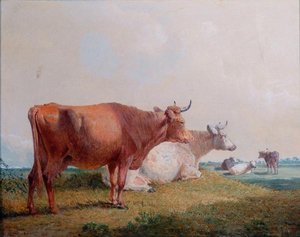
Early Life and Career

Herring’s father, a London merchant with Dutch roots, instilled in him a spirit of independence and observation. This formative influence fueled Herring's lifelong passion for drawing and culminated in an early fascination with the animal kingdom—specifically horses. Recognizing this talent, he abandoned the conventional path of commerce to pursue his artistic ambitions. In 1814, at eighteen, he relocated to Doncaster, Yorkshire, where he initially found employment as a night coachman. This role wasn’t merely a means of sustenance; it provided invaluable firsthand experience observing horses in their natural habitat—a crucial element informing his future paintings. Simultaneously, Herring honed his skills as a sign maker, further refining his artistic sensibilities and establishing connections within the local gentry who soon commissioned him for portraits of prominent hunters and racehorses. The demand for equine depictions reflected the burgeoning enthusiasm for sport and leisure during the Victorian period, cementing Herring’s position at the forefront of artistic innovation.

Development as an Artist

Herring's artistic development benefited from a brief mentorship under Abraham Cooper, a respected animal painter whose techniques undoubtedly influenced his own style. However, it was in 1836 that Herring formally distinguished himself from his son, John Frederick Herring Jr., by appending “Sr.” to his signature—a deliberate act signifying seniority and establishing a familial artistic lineage. This distinction underscored the importance of tradition alongside burgeoning talent. Herring’s reputation soared as royal patronage flowed into his studio, securing commissions from Queen Victoria and bolstering his standing within the artistic community. Notably, he undertook a transformative journey to Paris in 1840-1841 at the invitation of the Duc d’Orleans—a trip that broadened his artistic horizons and exposed him to the vibrant influences of Japanese art. Herring's subject matter expanded beyond equestrian portraits to encompass captivating scenes of rural life and dramatic narratives, demonstrating a versatility rarely encountered in artists of his time.

Major Achievements and Style

Herring achieved unparalleled renown as an animal painter—a title earned through tireless dedication and masterful execution. He exhibited prolifically at the Royal Academy (1818–1865), British Institution (1830–1865), and Society of British Artists (1836-1852), ensuring his work reached a vast audience and securing its place in art history. The widespread reproduction of his paintings through engravings amplified his popularity, transforming him into an icon of Victorian sporting art. Herring’s distinctive style—characterized by breathtaking realism, meticulous detail, and dynamic depictions of horses in motion—captured the essence of equine grace and power with remarkable precision. He skillfully conveyed movement and emotion, transporting viewers directly into the exhilarating world of hunting expeditions and racing events. His canvases pulsate with life, reflecting his profound understanding of animal anatomy and behavior.

Historical Significance

John Frederick Herring Sr.’s contribution to British art transcends mere aesthetic beauty; he served as a chronicler of Victorian society’s passion for sport and leisure—a pivotal role in documenting the cultural landscape of his era. Alongside Sir Edwin Landseer, Herring stands as one of the most influential animal painters of the 19th century, shaping artistic conventions and inspiring generations of artists to come. His family legacy extended beyond his own accomplishments, with his sons and daughters pursuing artistic careers—a testament to the enduring power of familial inspiration and a celebration of British creativity. Ultimately, Herring’s paintings continue to captivate audiences today, reminding us of the transformative capacity of art to capture both the grandeur of nature and the spirit of human endeavor.