Retrato de Johann Harper

As 68 Pinturas Mais Famosas de Johann Harper, Cada Uma Única

Atualizado em Novembro 2026 · classificado pela nossa pontuação de popularidade (pesquisas, visitas e pedidos de cada obra) · 68 obras de Johann Harper em nosso catálogo

Em resumo

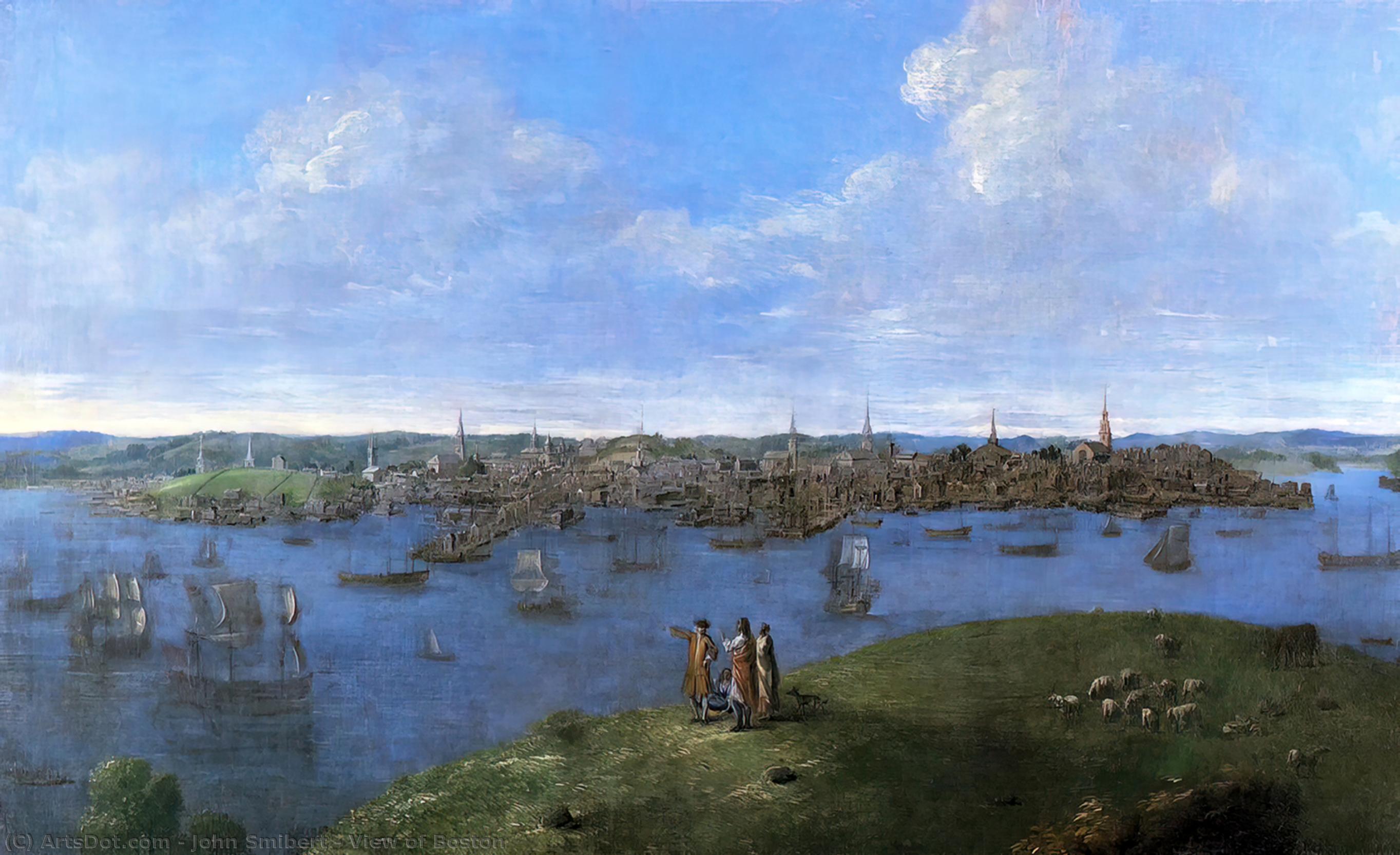
View of Boston (1738) é a pintura de Johann Harper que mais atrai olhares. Depois disso, o olhar recai sobre Portrait of a Man (1720) e Benjamin Moreland, High Master of St. Paul's School (1724). Entre as 68 obras de Johann Harper em nosso catálogo, estas 68 são as mais famosas, cada uma uma original única apresentada com o seu ano, o seu museu e a razão pela qual perdura.

1688 – 1746, Estocolmo Baroque Mais obras: Museu de Belas Artes de Boston

As 10 principais pinturas de Johann Harper, sob o olhar da galeria

1
View of Boston (1738) de Johann Harper

View of Boston

1738 · Oil On Canvas

The water of the Boston harbor stretches out in a pale, steady light. Small boats dot the surface, some drifting near the shoreline while others find their place further out in the bay. Figures move upon these vessels, tiny silhouettes of life amidst the salt and tide. Along the grassy edge of the coast, a group of sheep grazes in silence. The scene holds a quiet balance between the industry…

2
Portrait of a Man (1720) de Johann Harper

Portrait of a Man

1720 · Oil On Canvas · Metropolitan Museum of Art, Nova York

The sitter occupies a central position within a heavy, upholstered chair, a placement that asserts his social standing and authority. A draped curtain hangs behind him, creating a sense of depth and private seclusion. The composition relies on geometric stability, where the rectangular lines of an open book and the structured frame of the chair mirror the precise contours of the man's face. This formal arrangement reflects the early eighteenth-century…

3
Benjamin Moreland, High Master of St. Paul's School (1724) de Johann Harper

Benjamin Moreland, High Master of St. Paul's School

1724 · Oil On Canvas · Yale Center for British Art, New Haven

In this 1724 portrait, we encounter Benjamin Moreland, the High Master of St. Paul's School, presented with a quiet, commanding dignity. He is seated in an ornate wooden armchair, his form draped in heavy, reddish-brown silk robes that catch the light with a subtle, satin-like sheen. The weight of the fabric is palpable, suggesting both the physical comfort and the social gravity of his position. He sits slightly off-center, a…

4
Mrs. James Pitts (1735) de Johann Harper

Mrs. James Pitts

1735 · Oil On Canvas · Detroit Institute of Arts, Detroit

The portrait of Mrs. James Pitts by Johann Harper emerges through layers of oil on canvas, capturing a presence that feels immediate and tangible. The medium allows for a delicate handling of light across the subject's features, where the pigment settles into the weave to create a sense of soft, living skin. Every brushstroke contributes to the weight of her attire, suggesting the heavy drape of fabric through subtle shifts…

5
George Berkeley (1726) de Johann Harper

George Berkeley

1726 · Oil On Canvas · National Portrait Gallery, Londres

In the quietude of John Smibert’s 1726 masterpiece, George Berkeley, we encounter more than just a formal portrait; we are invited into the very sanctuary of a profound mind. The painting presents the future Bishop of Cloyne in a moment of deep, introspective repose. Seated with his hand delicately pressed against his chin, Berkeley’s posture serves as a visual metaphor for the contemplative weight of his philosophical inquiries. There is…

6
Sir Francis Grant, Lord Cullen, 1658 - 1726. Judge (1720) de Johann Harper

Sir Francis Grant, Lord Cullen, 1658 - 1726. Judge

1720 · Oil On Canvas · Galeria Nacional de Retratos de Escócia, Edimburgo

The composition organizes a multi-generational group within a formal interior. This formal family grouping is arranged in a balanced configuration of standing and seated figures, including men, women, and children. The physical proximity of these family members creates a sense of togetherness throughout the scene. The subjects are positioned in a structured manner that emphasizes their social presence and familial connection.

7
Captain John Garish (1737) de Johann Harper

Captain John Garish

1737 · Oil On Canvas · Art Institute of Chicago, Chicago

A heavy brown waistcoat anchors the frame, its fabric absorbing the light in deep, earthy shadows. Above the collar, a white cravat cuts a sharp, bright line through the darkness, a stark verticality against the muted tones of the subject's attire. The man’s face emerges from a dark, indeterminate background, caught in a soft chiaroscuro that defines the ridge of a nose and the curve of a cheek. His wig,…

8
A Member of the Livingston Family (1740) de Johann Harper

A Member of the Livingston Family

1740 · Oil · Smithsonian American Art Museum, Washington, D.C.

A Member of the Livingston Family by Johann Harper is a formal 18th-century oil portrait of a man, executed about 1740. The composition is a half-length portrait presented within an oval vignette. The subject is a middle-aged man positioned slightly off-center in the frame. He maintains a calm, direct gaze toward the viewer. He wears a powdered white wig characterized by tight curls that frame his face. A white cravat…

9
Mrs. Nathaniel Cunningham (1730) de Johann Harper

Mrs. Nathaniel Cunningham

1730 · Oil On Canvas · Toledo Museum of Art, Toledo

Mrs. Nathaniel Cunningham, painted by Johann Harper in 1730, presents a formal portrait of Ann Boucher. The subject is depicted in a three-quarter length pose, capturing her social standing through the specific textures of her attire and her poised demeanor. This oil on canvas work provides a detailed study of 18th-century fashion and character.

10
Sir John Rushout, Bt. (1726) de Johann Harper

Sir John Rushout, Bt.

1726 · Oil · Yale Center for British Art, New Haven

In this 1726 portrait, Johann Harper captures the presence of Sir John Rushout, Bt., a man whose life is defined by duty and political influence. The subject, Sir John Rushout, 4th Baronet, gazes out from the canvas with a quiet, steady dignity. He carries the weight of a significant public life, having served as a British army officer and a Whig politician. His steady gaze suggests the composure required of…

Pinturas famosas de Johann Harper, números 11 a 68

11Rev. Joseph Sewall (1730) de Johann HarperRev. Joseph Sewall1730 · Yale University Art Gallery 12Nathaniel Byfield (1730) de Johann HarperNathaniel Byfield1730 · Metropolitan Museum of Art 13Mrs. Edward Nightingale (1727) de Johann HarperMrs. Edward Nightingale1727 · Dallas Museum of Art 14Cardinal Guido Bentivoglio (after Anthony Van Dyke) (1719) de Johann HarperCardinal Guido Bentivoglio (after Anthony Van Dyke)1719 · Fogg Art Museum 15Edward Nightingale (1723) de Johann HarperEdward Nightingale1723 · Dallas Museum of Art 16The Bermuda Group (1730) de Johann HarperThe Bermuda Group1730 · National Gallery of Ireland 17Portrait of a Man in a Dressing Gown (1730) de Johann HarperPortrait of a Man in a Dressing Gown1730 · Slovak National Gallery 18Edward Winslow (1699-1753) (1730) de Johann HarperEdward Winslow (1699-1753)1730 · Yale University Art Gallery 19Mrs. William Dudley (Elizabeth Davenport) (1729) de Johann HarperMrs. William Dudley (Elizabeth Davenport)1729 · Museu de Belas Artes de Boston 20William Dudley (1729) de Johann HarperWilliam Dudley1729 · Museu de Belas Artes de Boston 21Judge Samuel Sewall (1729) de Johann HarperJudge Samuel Sewall1729 · Museu de Belas Artes de Boston 22Mrs. Tyng (1729) de Johann HarperMrs. Tyng1729 · Museu de Belas Artes de Boston 23Mrs. James MacSparran (Hannah Gardiner) (1732) de Johann HarperMrs. James MacSparran (Hannah Gardiner)1732 · Museu de Belas Artes de Boston 24Portrait of John Cotton (1693-1757) Minister of the Newton (Mass) Church; PORTRAIT OF JOHN COTTON (1693-1757), MINISTER OF THE NEWTON, MASSACHUSETTS CHURCH (1735) de Johann HarperPortrait of John Cotton (1693-1757) Minister of the Newton (Mass) Church; PORTRAIT OF JOHN COTTON (1693-1757), MINISTER OF THE NEWTON, MASSACHUSETTS CHURCH1735 · Gilcrease Museum 25Portrait of a Woman (Judith Colman Bulfinch?) (1734) de Johann HarperPortrait of a Woman (Judith Colman Bulfinch?)1734 · Cleveland Museum of Art 26Portrait of Samuel Pemberton (1734) de Johann HarperPortrait of Samuel Pemberton1734 · Museum of Fine Arts 27Portrait of Mary Pemberton (1717–1763) (1734) de Johann HarperPortrait of Mary Pemberton (1717–1763)1734 · Museum of Fine Arts 28Judge Charles Chambers (1743) de Johann HarperJudge Charles Chambers1743 · Museu de Belas Artes de Boston 29John Turner (1737) de Johann HarperJohn Turner1737 · Museu de Belas Artes de Boston 30Judge Edmund Quincy (1737) de Johann HarperJudge Edmund Quincy1737 · Museu de Belas Artes de Boston 31Herkules and Omphales (1738) de Johann HarperHerkules and Omphales1738 · Nationalmuseum 32Benjamin Colman (1740) de Johann HarperBenjamin Colman1740 · New Britain Museum of American Art 33Portrait of the Clark Children (1746) de Johann HarperPortrait of the Clark Children1746 · Rhode Island School of Design Museum of Art 34The Bermuda Group (Dean Berkeley and His Entourage) (1750) de Johann HarperThe Bermuda Group (Dean Berkeley and His Entourage)1750 · Yale University Art Gallery 35Okänd kvinna de Johann HarperOkänd kvinnaNationalmuseum 36Richard Bill (1733) de Johann HarperRichard Bill1733 · Art Institute of Chicago 37Francis Brinley (1729) de Johann HarperFrancis Brinley1729 · Metropolitan Museum of Art 38Mrs. Francis Brinley and Son Francis (1729) de Johann HarperMrs. Francis Brinley and Son Francis1729 · Metropolitan Museum of Art 39Portrait of Sir Francis Grant, Lord Cullen, and His Family (1751) de Johann HarperPortrait of Sir Francis Grant, Lord Cullen, and His Family1751 · SCAD Museum of Art 40John Nelson (1732) de Johann HarperJohn Nelson1732 · Fine Arts Museums of San Francisco 41Hannah Pemberton (1734) de Johann HarperHannah Pemberton1734 · Metropolitan Museum of Art 42Sir Francis Grand and His Family (1718) de Johann HarperSir Francis Grand and His Family1718 43Unidentified Man (1720) de Johann HarperUnidentified Man1720 44Sir John St. Aubyn (1724) de Johann HarperSir John St. Aubyn1724 45Colonel James Otaway (1724) de Johann HarperColonel James Otaway1724 46Daniel, Peter, and Andrew Oliver (1732) de Johann HarperDaniel, Peter, and Andrew Oliver1732 · Museu de Belas Artes de Boston 47Mrs. John Ervin (Abigail Phillipsa) (1733) de Johann HarperMrs. John Ervin (Abigail Phillipsa)1733 48Major Jean Paul Mascarene (1729) de Johann HarperMajor Jean Paul Mascarene1729 · Museu de Arte do Condado de Los Angeles 49The Continence of Scipio (after Nicholas Poussin) (1726) de Johann HarperThe Continence of Scipio (after Nicholas Poussin)1726 50Sir Archibald and Lady Grant (1727) de Johann HarperSir Archibald and Lady Grant1727 51Jane Clark (1732) de Johann HarperJane Clark1732 52Samuel Browne (1734) de Johann HarperSamuel Browne1734 53William Browne (1734) de Johann HarperWilliam Browne1734 54James Bowdoin II (1736) de Johann HarperJames Bowdoin II1736 55Mrs. John Pitts (1735) de Johann HarperMrs. John Pitts1735 · Detroit Institute of Arts 56Lady in Blue (1735) de Johann HarperLady in Blue1735 · Georgia Museum of Art 57Sir William Pepperrell (1746) de Johann HarperSir William Pepperrell1746 · Peabody Essex Museum 58Frederick William I, King of Prussia, Elector of Brandenburg de Johann HarperFrederick William I, King of Prussia, Elector of BrandenburgNationalmuseum 59Parting of Hector and Andromache de Johann HarperParting of Hector and AndromacheMuseu de Belas Artes de Boston 60Self-portrait de Johann HarperSelf-portraitNationalmuseum 61Portrait of a gentleman de Johann HarperPortrait of a gentleman 62Colonel George Douglas, Later 12th Earl of Morton de Johann HarperColonel George Douglas, Later 12th Earl of MortonScottish National Gallery 63Thomas hill (formerly harwood) de Johann HarperThomas hill (formerly harwood)Attingham Park 64Allan ramsay de Johann HarperAllan ramsay 65Portrait of mary dudley wainwright atkins de Johann HarperPortrait of mary dudley wainwright atkins 66Portrait of elizabeth kettle de Johann HarperPortrait of elizabeth kettle 67Lady Christian Dalrymple, Wife of Sir James Dalrymple, Bt, Daughter of Thomas, 6th Earl of Haddington de Johann HarperLady Christian Dalrymple, Wife of Sir James Dalrymple, Bt, Daughter of Thomas, 6th Earl of Haddington 68Portrait of an Unknown Man de Johann HarperPortrait of an Unknown ManFitzwilliam Museum

Pinturas famosas de Johann Harper, período por período

Os temas que cativaram o olhar de Johann Harper

Os quatro temas que mais se repetem nestas obras originais, cada um com o seu melhor exemplo.

Os museus que guardam os originais de Johann Harper

Os 8 museus que detêm a maioria das pinturas desta página.

Museus Cidade Obras de Johann Harper Pinturas desta lista
Museu de Belas Artes de Boston, BostonMuseu de Belas Artes de Boston Boston 10 Mrs. William Dudley (Elizabeth Davenport), William Dudley, Judge Samuel Sewall
Metropolitan Museum of Art, Nova YorkMetropolitan Museum of Art Nova York 5 Portrait of a Man, Nathaniel Byfield, Francis Brinley
Nationalmuseum, EstocolmoNationalmuseum Estocolmo 4 Herkules and Omphales, Okänd kvinna, Frederick William I, King of Prussia, Elector of Brandenburg
Yale Center for British Art, New HavenYale Center for British Art New Haven 2 Benjamin Moreland, High Master of St. Paul's School, Sir John Rushout, Bt.
Detroit Institute of Arts, DetroitDetroit Institute of Arts Detroit 2 Mrs. James Pitts, Mrs. John Pitts
Art Institute of Chicago, ChicagoArt Institute of Chicago Chicago 2 Captain John Garish, Richard Bill
Dallas Museum of Art, DallasDallas Museum of Art Dallas 2 Mrs. Edward Nightingale, Edward Nightingale
Yale University Art Gallery, New HavenYale University Art Gallery New Haven 2 Edward Winslow (1699-1753), The Bermuda Group (Dean Berkeley and His Entourage)

Johann Harper ao longo das décadas: uma obra original única para cada uma

Obras por década

Escolha uma década para ver a obra original que a define.

Pinturas de Johann Harper: perguntas para a galeria

Qual é a obra mais famosa de Johann Harper?Revelar a resposta

View of Boston (1738). Portrait of a Man (1720) e Benjamin Moreland, High Master of St. Paul's School (1724) vêm a seguir.

Com que idade Johann Harper criou View of Boston?Revelar a resposta

50 anos: View of Boston data de 1738, e Johann Harper nasceu em 1688.

Quais são as dez pinturas mais famosas de Johann Harper?Revelar a resposta

View of Boston, Portrait of a Man, Benjamin Moreland, High Master of St. Paul's School, Mrs. James Pitts, George Berkeley, Sir Francis Grant, Lord Cullen, 1658 - 1726. Judge, Captain John Garish, A Member of the Livingston Family, Mrs. Nathaniel Cunningham e Sir John Rushout, Bt.. O ranking acima apresenta o ano e o museu de cada uma.

Quantas obras de Johann Harper são conhecidas?Revelar a resposta

Nosso catálogo contém 68 obras de Johann Harper, datadas de 1718 a 1746.

Onde se pode ver os originais mais famosos de Johann Harper?Revelar a resposta

Principalmente em Museu de Belas Artes de Boston (Boston), Metropolitan Museum of Art (Nova York) e Nationalmuseum (Estocolmo). A tabela de museus acima lista todos eles.

Em que período Johann Harper criou as suas pinturas mais conhecidas?Revelar a resposta

Em 1730s: 28 das 68 obras nesta página foram feitas então, sendo View of Boston delas.

Qual pintura famosa de Johann Harper é a mais antiga e qual é a mais recente?Revelar a resposta

Nesta página, a mais antiga é Sir Francis Grand and His Family (1718) e a mais recente é Portrait of the Clark Children (1746).

Quais temas Johann Harper preferia?Revelar a resposta

Man (27), Wig (17) e Woman (14), entre as 68 obras nesta página.

Com quais materiais Johann Harper mais pintou?Revelar a resposta

Oil On Canvas, para 37 das 68 obras nesta página.

A qual movimento pertence a obra de Johann Harper?Revelar a resposta

Baroque, a julgar pelos originais nesta página.

Quais originais de Johann Harper posso ver no Museu de Belas Artes de Boston?Revelar a resposta

Mrs. William Dudley (Elizabeth Davenport), William Dudley e Judge Samuel Sewall: o Museu de Belas Artes de Boston, Boston detém 10 das obras desta página.

Johann Harper: um retrato do artista

Um Legado da Retratística Colonial

John Smibert ergue-se como uma figura monumental na história da arte americana, reconhecido como o primeiro artista de formação académica a levar as suas habilidades refinadas para as Treze Colónias. Nascido em Edimburgo, a sua jornada, de um jovem aprendiz na Escócia a um célebre retratista no Novo Mundo, é uma narrativa de profunda migração artística. Os seus primeiros anos foram moldados pelas exigências práticas do ofício, tendo sido aprendiz de um pintor de casas e estucador antes de se mudar para Londres. Foi na vibrante atmosfera artística de Londres que Smibert começou verdadeiramente a refinar a sua visão, trabalhando como pintor de carruagens e copista, acabando por estudar sob a tutela do estimado Sir Godfrey Kneller na Great Queen Street Academy. Esta base académica rigorosa conferiu-lhe a destreza técnica que viria a definir a sua carreira.

As suas viagens pela Europa enriqueceram ainda mais a sua sensibilidade estética. Entre 1719 e 1722, Smibert viajou para a Itália, onde se mergulhou no estudo dos Mestres Antigos. Ao copiar obras da coleção do Grão-Duque da Toscana, absorveu as nuances de luz, sombra e composição clássica. Este período de observação intensa permitiu-lhe desenvolver um estilo caracterizado pelo detalhe meticuloso e um domínio magistral do chiaroscuro, criando retratos que possuíam tanto precisão física como uma profunda ressonância psicológica.

A Chegada à América e a Maturidade Artística

A trajetória da vida de Smibert mudou irrevogavelmente quando foi instado pelo Bispo Berkeley a acompanhá-lo para a América. Embora o ambicioso plano de estabelecer uma faculdade nas Bermudas nunca se tenha concretizado, a mudança levou Smibert a estabelecer-se em Boston, onde deixaria uma marca indelével na paisagem colonial. Neste novo cenário, ele tornou-se um pilar da emergente cena artística americana, estabelecendo uma tradição de retratística que influenciaria gerações de artistas, incluindo o seu filho, Nathaniel Smibert.

A obra de Smibert em Boston foi marcada pela capacidade de capturar a dignidade e o estatuto social dos seus modelos. Os seus retratos, como os de Rev. Joseph Sewall e Richard Bill, são mais do que meros semblantes; são estudos cuidadosamente construídos de caráter e posição. Nestas obras, pode-se observar:

  • O uso de cores ricas e texturas que transmitem a elegância do traje do século XVIII.
  • Um comando sofisticado de luz e sombra para imbuir os sujeitos com um sentido de realismo e profundidade.
  • Uma composição equilibrada que utiliza frequentemente gestos subtis e elementos de fundo para sugerir a posição social e a contemplação interior do sujeito.

Uma das suas conquistas mais influentes permanece sendo Dean George Berkeley and His Entourage, também conhecido como The Bermuda Group. Esta pintura serve como um documento histórico vital, capturando um momento específico de ambição colonial e a interconectividade do mundo atlântico. Através do seu pincel, Smibert não pintou apenas rostos; ele capturou a própria essência de uma era, unindo a tradição académica europeia à identidade emergente da América colonial.