Retrato de Jan Van Os

Pinturas de Jan Van Os: As 51 mais famosas, sob o olhar de uma galeria

Atualizado em Novembro 2026 · classificado pela nossa pontuação de popularidade (pesquisas, visitas e pedidos de cada obra) · 52 obras de Jan Van Os em nosso catálogo

Em resumo

Aos olhos da galeria, a pintura mais famosa de Jan Van Os é Still Life with Flowers, Fruit and Birds (1774), cuja obra original está exposta no Rijksmuseum, em Amsterdã. Still Life with Friut and Flowers (1790) e Flowers and Fruits on a Stone Cornice, with Mouse and Lizard (1771) completam o trio que todos reconhecem. Dos 52 trabalhos de Jan Van Os em nosso catálogo, a galeria apresenta abaixo as 51 obras mais famosas, cada uma original, com seu ano, seu museu e o que a torna única.

1744 – 1808, Middelharnis Rococo Mais obras: Fitzwilliam Museum

As 10 principais pinturas de Jan Van Os na galeria

1
Still Life with Flowers, Fruit and Birds (1774) de Jan Van Os

Still Life with Flowers, Fruit and Birds

1774 · Oil On Canvas · Rijksmuseum, Amsterdã

Still Life with Flowers, Fruit and Birds is a work by the Dutch painter Jan Van Os. He was born in Middelharnis, Netherlands. This painting emerged from a lineage of creators, as he was a member of the Van Os family of artists. The canvas captures a dense arrangement of botanical and organic life, centered around a pyramidal cluster of flora and fauna.

2
Still Life with Friut and Flowers (1790) de Jan Van Os

Still Life with Friut and Flowers

1790 · Oil On Canvas · Speed Art Museum, Louisville

Still Life with Friut and Flowers is an oil on canvas work by the Dutch painter Jan Van Os. Created about 1790, this composition reflects the artist's long-standing dedication to the meticulous study of botanical and organic subjects. Van Os, who was born in Middelharnis, Netherlands, brought a specific technical precision to his depictions of nature that became a hallmark of his practice.

3
Flowers and Fruits on a Stone Cornice, with Mouse and Lizard (1771) de Jan Van Os

Flowers and Fruits on a Stone Cornice, with Mouse and Lizard

1771 · Oil On Canvas

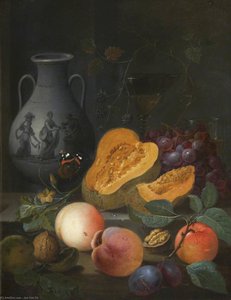
A heavy stone cornice anchors the composition, its gritty surface catching a sharp, directional light. Upon this ledge, a pineapple sits with its rough, patterned skin, its warm orange hues contrasting against the deep shadows of the background. Beside it, a cluster of grapes spills downward, some translucent and pale green, others a bruised, dark purple. A sliced melon reveals its moist, glistening interior, its flesh catching the light like…

4
Still Life with Flowers and Fruit (1775) de Jan Van Os

Still Life with Flowers and Fruit

1775 · Oil On Canvas · Centraal Museum, Utrecht

This work, titled Still Life with Flowers and Fruit, was painted by Jan Van Os around 1775. The artist, who was born in Middelharnis, Netherlands, on 23 February 1744, developed a specific command over the textures of the natural world. His practice often focused on the quiet, detailed observation of botanical and organic life, moving away from his earlier interest in seascapes to find a more intimate subject matter.

5
river-landscape with sheep (1769) de Jan Van Os

river-landscape with sheep

1769 · Oil On Canvas

In this monochrome, black and white reproduction of an 18th-century landscape oil painting, Jan Van Os captures a serene river scene. The work, titled river-landscape with sheep, was created about 1769. A small flock of sheep grazes upon a grassy bank in the foreground, some standing while others rest in the quietude. To the left, a dark, thatched-roof cottage sits near the water's edge, while a large, leafy tree anchors…

6
Winter Landscape de Jan Van Os

Winter Landscape

Oil On Panel

The painting titled Winter Landscape belongs to the hand of Jan Van Os. Born in 1744 in Middelharnis, Netherlands, the artist established a presence within a significant Dutch artistic lineage. His life spanned the transition of the eighteenth century, concluding in 1808.

8
Boats and Sailboats on a Quiet Sea (1780) de Jan Van Os

Boats and Sailboats on a Quiet Sea

1780 · Oil · Städel Museum, Frankfurt

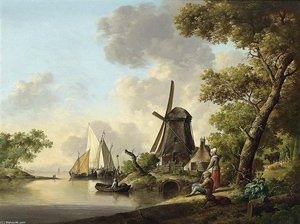
In this oil painting, titled Boats and Sailboats on a Quiet Sea, we encounter a serene maritime scene composed by Jan Van Os. Created in 1780, the work captures a moment of stillness upon the water. It belongs to a period in the artist's career when he focused on the expansive horizons of seascapes, a pursuit that preceded his later, more celebrated focus on floral and fruit still lifes.

9
Flowers (1780) de Jan Van Os

Flowers

1780 · Oil On Canvas · Art Gallery of South Australia, Adelaide

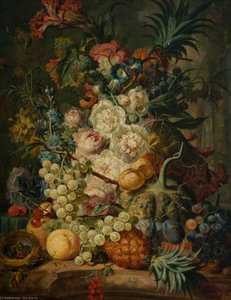
In this 1780 oil painting, Jan van Os presents a dense, lush arrangement of botanical life that feels almost heavy with its own vitality. A large, ornate ceramic vase sits at the center, overflowing with a variety of blooms that spill outward in a controlled yet organic chaos. The composition draws the eye through a collection of roses, tulips, and anemones, their petals rendered with a meticulous attention to texture…

10
Still life of Plants, Flowers and Fruit (1787) de Jan Van Os

Still life of Plants, Flowers and Fruit

1787 · Watercolor · Rijksmuseum, Amsterdã

Still life of Plants, Flowers and Fruit is a work by Jan Van Os. Created in 1787, this composition captures a dense arrangement of botanical life. The artist, Jan Van Os, focused his attention on the quiet presence of nature through this specific grouping. It is a study of organic forms resting together in a singular moment.

Pinturas de Jan Van Os, classificadas de 11 a 51

11Dutch Ships Under the Breeze (1800) de Jan Van OsDutch Ships Under the Breeze1800 12Still Life with Dead Birds, Camellia and Fruit (1800) de Jan Van OsStill Life with Dead Birds, Camellia and Fruit1800 13Flowers, grapes, plums, walnuts and a melon on a stone ledge (1800) de Jan Van OsFlowers, grapes, plums, walnuts and a melon on a stone ledge1800 14Still Life with Fruit (1808) de Jan Van OsStill Life with Fruit1808 · The Frick Pittsburgh 15Flowers de Jan Van OsFlowersMuseu Nacional de Cracóvia 16Dutch Vessels in a Calm Water de Jan Van OsDutch Vessels in a Calm WaterSzépművészeti Múzeum 17Dutch Vessels in a Calm Water de Jan Van OsDutch Vessels in a Calm WaterSzépművészeti Múzeum 18Still life with Flowers and Fruit de Jan Van OsStill life with Flowers and FruitMuseum Mayer van den Bergh 19Blomsterstycke de Jan Van OsBlomsterstyckeNationalmuseum 20Flowers de Jan Van OsFlowers 21Flowers And Fruit de Jan Van OsFlowers And FruitFitzwilliam Museum 22Flowers And Fruit - de Jan Van OsFlowers And Fruit - 23Dutch Vessels In Calm Water de Jan Van OsDutch Vessels In Calm WaterNational Gallery 24Fruit, Flowers And A Fish de Jan Van OsFruit, Flowers And A FishNational Gallery 25Still Life Of Flowers de Jan Van OsStill Life Of Flowers 26Still Life Of Summer Flowers de Jan Van OsStill Life Of Summer Flowers 27Fruit And Flowers In A Terracotta Vase de Jan Van OsFruit And Flowers In A Terracotta VaseNational Gallery 28Flower Piece de Jan Van OsFlower Piece 29Vase Of Flowers And Fruit de Jan Van OsVase Of Flowers And FruitFitzwilliam Museum 30Still Life - Grapes And Peaches In A Basket de Jan Van OsStill Life - Grapes And Peaches In A Basket 31Roses, Peony, Auricula And Fritillary In A Vase de Jan Van OsRoses, Peony, Auricula And Fritillary In A VaseDudmaston Hall 32Still Life With Dead Bird, Fruit And Flowers de Jan Van OsStill Life With Dead Bird, Fruit And Flowers 33Fruit de Jan Van OsFruit 34Flowers, Grapes And Dove On A Stone Ledge de Jan Van OsFlowers, Grapes And Dove On A Stone Ledge 35Still Life Of Fruit And Flowers With Bird's Nest On A Marble Ledge de Jan Van OsStill Life Of Fruit And Flowers With Bird's Nest On A Marble Ledge 36Still Life With Roses, Larkspur And Fruit, With A Partridge de Jan Van OsStill Life With Roses, Larkspur And Fruit, With A PartridgeDudmaston Hall 37A Vase Of Flowers de Jan Van OsA Vase Of FlowersFitzwilliam Museum 38Still Life With Fruit, Flowers And Fish de Jan Van OsStill Life With Fruit, Flowers And FishFitzwilliam Museum 39Fruit Piece de Jan Van OsFruit PieceFitzwilliam Museum 40Still-Life de Jan Van OsStill-Life 41Summer Landscape de Jan Van OsSummer Landscape 42Still Life de Jan Van OsStill Life 43Fruits And Flowers de Jan Van OsFruits And FlowersFitzwilliam Museum 44Still Life Of Flowers And Fruit de Jan Van OsStill Life Of Flowers And Fruit 45Flowers In A Goldfish Bowl In A Landscape With A Tower de Jan Van OsFlowers In A Goldfish Bowl In A Landscape With A Tower 46Still Life With Fruit And Flowers de Jan Van OsStill Life With Fruit And Flowers 47Still Life - Flowers And Fruit - de Jan Van OsStill Life - Flowers And Fruit - 48Roses, Tulips And Crown Imperial In A Vase With A Bird's Nest de Jan Van OsRoses, Tulips And Crown Imperial In A Vase With A Bird's NestDudmaston Hall 49Still Life - Flowers And Fruit de Jan Van OsStill Life - Flowers And Fruit 50Flower Piece - de Jan Van OsFlower Piece - 51River Landscape de Jan Van OsRiver Landscape

Pinturas famosas de Jan Van Os, período por período

Os temas que cativaram o olhar de Jan Van Os

Os quatro temas que mais se repetem nestas obras originais, cada um com o seu melhor exemplo.

Os museus que guardam os originais de Jan Van Os

Os 8 museus que detêm a maioria das pinturas desta página.

Museus Cidade Obras de Jan Van Os Pinturas desta lista
Fitzwilliam MuseumFitzwilliam Museum 6 Flowers And Fruit, Vase Of Flowers And Fruit, A Vase Of Flowers
National Gallery, LondresNational Gallery Londres 3 Dutch Vessels In Calm Water, Fruit, Flowers And A Fish, Fruit And Flowers In A Terracotta Vase
Dudmaston HallDudmaston Hall 3 Roses, Peony, Auricula And Fritillary In A Vase, Still Life With Roses, Larkspur And Fruit, With A Partridge, Roses, Tulips And Crown Imperial In A Vase With A Bird's Nest
Rijksmuseum, AmsterdãRijksmuseum Amsterdã 2 Still Life with Flowers, Fruit and Birds, Still life of Plants, Flowers and Fruit
Szépművészeti Múzeum, BudapesteSzépművészeti Múzeum Budapeste 2 Dutch Vessels in a Calm Water, Dutch Vessels in a Calm Water
Speed Art Museum, LouisvilleSpeed Art Museum Louisville 1 Still Life with Friut and Flowers
Centraal Museum, UtrechtCentraal Museum Utrecht 1 Still Life with Flowers and Fruit
Bavarian State Painting Collections, MuniqueBavarian State Painting Collections Munique 1 Still Life of Flowers

Jan Van Os, uma pintura emblemática por década

Obras por década

Escolha uma década para ver a obra original que a define.

Pinturas de Jan Van Os: a galeria responde

Qual pintura de Jan Van Os é a mais famosa de todas?Revelar a resposta

Still Life with Flowers, Fruit and Birds (1774), Rijksmuseum, Amsterdã. Still Life with Friut and Flowers (1790) e Flowers and Fruits on a Stone Cornice, with Mouse and Lizard (1771) vêm a seguir.

Qual era a idade de Jan Van Os ao concluir Still Life with Flowers, Fruit and Birds?Revelar a resposta

30 anos: Still Life with Flowers, Fruit and Birds data de 1774, e Jan Van Os nasceu em 1744.

Quais são as 10 principais pinturas de Jan Van Os?Revelar a resposta

Still Life with Flowers, Fruit and Birds, Still Life with Friut and Flowers, Flowers and Fruits on a Stone Cornice, with Mouse and Lizard, Still Life with Flowers and Fruit, river-landscape with sheep, Winter Landscape, Still Life of Flowers, Boats and Sailboats on a Quiet Sea, Flowers e Still life of Plants, Flowers and Fruit. O ranking acima apresenta o ano e o museu de cada uma.

Quantas obras Jan Van Os criou?Revelar a resposta

Nosso catálogo contém 52 obras de Jan Van Os, datadas de 1769 a 1808.

Onde estão expostos os originais mais famosos de Jan Van Os?Revelar a resposta

Principalmente em Fitzwilliam Museum, National Gallery (Londres) e Dudmaston Hall. A tabela de museus acima lista todos eles.

Quando é que Jan Van Os criou as suas pinturas mais famosas?Revelar a resposta

Em 1770s: 4 das 51 obras nesta página foram feitas então, sendo Still Life with Flowers, Fruit and Birds delas.

Quais são as obras mais famosas de Jan Van Os no início e no fim de sua carreira?Revelar a resposta

Nesta página, a mais antiga é river-landscape with sheep (1769) e a mais recente é Still Life with Fruit (1808).

Quais temas Jan Van Os mais explorou?Revelar a resposta

Flowers (29), Grapes (15) e Fruit (10), entre as 51 obras nesta página.

Em qual técnica Jan Van Os mais trabalhou?Revelar a resposta

Oil On Canvas, para 14 das 51 obras nesta página.

Com qual movimento Jan Van Os está associado(a)?Revelar a resposta

Rococo, a julgar pelos originais nesta página.

Quais obras originais de Jan Van Os o Fitzwilliam Museum possui?Revelar a resposta

Flowers And Fruit, Vase Of Flowers And Fruit e A Vase Of Flowers: o Fitzwilliam Museum detém 6 das obras desta página.

Jan Van Os: o artista

O Legado de Jan Van Os

Jan Van Os destaca-se como uma figura central numa extraordinária dinastia artística holandesa, um pintor cuja vida e obra estiveram profundamente entrelaçadas com as ricas tradições da sua terra natal. Nascido em Middelharnis, Países Baixos, ele emergiu de uma linhagem de criadores que deixaria uma marca indelével na história da pintura de natureza-morta. A sua formação inicial sob a tutela de Aert Schouman, em Haia, proporcionou-lhe um domínio fundamental que lhe permitiu navegar pelos gustos em constante evolução do século XVIII. Embora a sua jornada profissional tenha começado com os horizontes expansivos das marinhas, ele acabou por encontrar a sua verdadeira vocação no mundo íntimo e meticulosamente detalhado das composições florais e de frutos.

A vida pessoal do artista era tão parte da paisagem artística quanto as suas telas. Em 1775, casou-se com Susanna de La Croix, uma talentosa pastelista e filha do retratista Pieter Frederik de la Century. Esta união não só consolidou o seu lugar numa comunidade de artesãos habilidosos, como também estabeleceu um ambiente doméstico onde a arte era a linguagem primordial. Através desta ligação, Jan Van Os tornou-se o patriarca de uma família de pintores, servindo como mestre para os seus filhos, incluindo Maria Margaretha van Os e Pieter Gerardus van Os, garantindo que a sua precisão técnica e sensibilidade estética fossem transmitidas através das gerações.

A Maestria da Natureza-Morta

O brilhantismo de Jan Van Os reside na sua capacidade de infundir vida ao que é inanimado. Inspirando-se no lendário Jan van Huysum, ele aperfeiçoou um estilo caracterizado por um realismo arrebatador e um uso vibrante da cor. As suas composições florais são frequentemente apresentadas com uma elegância teatral, repousando muitas vezes sobre um parapeito de mármore contra um profundo fundo verde que permite às pétalas brilharem com uma luz quase sobrenatural. Cada elemento da sua obra — desde a textura delicada de uma pétala ao brilho denso de um fruto maduro — era renderizado com uma atenção obsessiva ao detalhe que cativava o espectador.

Para além da mera decoração, as suas obras capturavam frequentemente uma sensação de beleza fugaz e a passagem do tempo. Em obras-primas como Still Life With Dead Bird, Fruit And Flowers, ele fundiu a exuberância da natureza com elementos mais pungentes e sombrios, criando um diálogo entre a vida e a decadência. Esta capacidade de equilibrar a vitalidade exuberante de uma rosa em flor com a imobilidade de um pássaro taxidermizado demonstra uma profunda profundidade emocional. A sua técnica não se limitava à imitação, mas sim à captura da própria essência dos seus temas, tornando cada composição uma janela para um mundo meticulosamente observado.

Significado Histórico

A importância de Jan Van Os estende-se muito além das suas conquistas individuais como pintor e poeta. Ele foi um pilar da família de artistas Van Os, um grupo que ajudou a sustentar o prestígio da pintura holandesa durante um período de transição significativa. Ao registar a sua entrada na confraria de pintores em 1773, ele integrou-se formalmente numa linhagem de profissionais dedicados à elevação do seu ofício. A sua influência é visível não apenas na sua própria obra, mas também nos sucessos subsequentes dos seus filhos, que levaram a sua abordagem meticulosa para o século XIX.

A sua contribuição para o género da natureza-morta permanece como um testemunho do poder duradouro da observação. Através do seu trabalho, as tradições da Idade de Ouro Holandesa foram preservadas e reinterpretadas para uma nova era, fundindo influências clássicas com uma elegância refinada do final do século XVIII. Hoje, as suas pinturas servem como elos vitais para um período em que o domínio da luz, da textura e da composição atingiu o auge da sofisticação, deixando um legado de beleza que continua a ressoar nos corredores da história da arte.