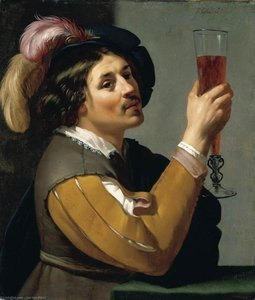
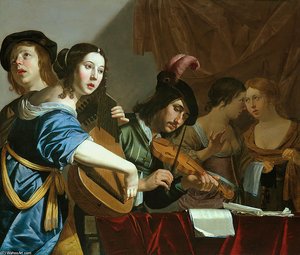
Retrato de Jan Van Bijlert

As 61 Pinturas Mais Famosas de Jan Van Bijlert, uma Seleção da Galeria

Atualizado em Novembro 2026 · classificado pela nossa pontuação de popularidade (pesquisas, visitas e pedidos de cada obra) · 63 obras de Jan Van Bijlert em nosso catálogo

Em resumo

De todas as obras originais deixadas por Jan Van Bijlert, a mais famosa é Portrait of Beatrix Gibels van Linschoten. (1650), da coleção do Museu Nacional de Varsóvia, em Varsóvia. Logo atrás vêm Portrait of Jan Strick van Linschoten (1647) e Young man tuning his violin (1630). Nosso catálogo contém 63 obras de Jan Van Bijlert; a galeria preservou as 61 que o mundo mais admira, cada uma exibida com sua data, seu museu e sua história.

1597 – 1671, Utreque Baroque Mais obras: Centraal Museum

As 10 principais pinturas de Jan Van Bijlert: a escolha da galeria

1
Portrait of Beatrix Gibels van Linschoten. (1650) de Jan Van Bijlert

Portrait of Beatrix Gibels van Linschoten.

1650 · Oil · Museu Nacional de Varsóvia, Varsóvia

This 1650 oil portrait presents a formal and dignified bust-length depiction of an elderly woman, identified as Beatrix Gibels van Linschoten. Positioned slightly off-center, the subject faces toward the viewer's left, though her gaze is directed toward the observer. She is dressed in formal or mourning attire, which includes a black headpiece and a translucent black veil that drapes behind her. A crisp, white collar provides a sharp geometric contrast…

2
Portrait of Jan Strick van Linschoten (1647) de Jan Van Bijlert

Portrait of Jan Strick van Linschoten

1647 · Oil On Panel · Museu Nacional de Varsóvia, Varsóvia

The man sits before us, caught in a moment of quiet dignity that feels as though it might break at any second. He is Jan Strick van Linschoten, and his gaze meets the viewer with a calm, composed steadying force. The light, sweeping in from the upper left, carves his features out of a deep, indeterminate darkness, casting soft shadows that trace the lines of his face and the texture…

4
Portrait of Beatrix Gibels van Linschoten (1650) de Jan Van Bijlert

Portrait of Beatrix Gibels van Linschoten

1650 · Oil On Canvas · Museu Nacional de Varsóvia, Varsóvia

An elderly woman gazes toward the viewer from a position slightly off-center, her presence defined by a somber and formal composure. The composition is a bust-length portrait, rendered with the precision characteristic of the Dutch Golden Age. A dark, indistinct background pushes the subject forward, allowing the play of light to define her features. Directional light enters from the upper left, casting soft shadows across the right side of her…

5
Girl with a flute (1630) de Jan Van Bijlert

Girl with a flute

1630 · Oil On Canvas · Art Gallery of New South Wales, Sydney

A young woman leans forward toward the viewer, her body arranged in a diagonal composition that creates a sense of immediate presence. She holds a wooden flute to her lips, her fingers positioned upon the instrument. The lighting originates from the upper left, casting a strong glow across her face, chest, and hands, while leaving the background in deep, near-black shadow. This use of chiaroscuro defines the contours of her…

6
Dice Players (1620) de Jan Van Bijlert

Dice Players

In this intimate scene from 1620, we find ourselves pulled directly into a quiet, tense corner of a tavern or a private room. Four figures are gathered around a table, their attention fixed entirely on the small, decisive movement of dice. The composition is tight, almost claustrophobic, which forces us to become silent observers of this gambling game. A man leans forward, his posture suggesting a heavy investment in the…

7
Calling of Matthew (1627) de Jan Van Bijlert

Calling of Matthew

1627 · Oil On Canvas · Museum Catharijneconvent, Utrecht

In this oil on canvas, Jan van Bijlert presents the biblical scene of the Calling of Matthew. Painted around 1627, the work captures a moment of profound transition. The composition centers on a group of men gathered around a wooden table, their attention drawn to a central figure whose gesture of invitation initiates the narrative. It is a scene of immediate, theatrical action, where the quietude of contemplation meets the…

8
Saint John the Evangelist (1625) de Jan Van Bijlert

Saint John the Evangelist

1625 · Oil · Centraal Museum, Utrecht

In Saint John the Evangelist, Jan van Bijlert presents a medium shot that focuses on the upper body of the subject. The composition is centered on the figure of the saint, who is positioned slightly to the right of the frame. He is depicted with his hands clasped, looking upward toward an unseen light source. On a table before him lies an open book, while an eagle is situated in…

9
Fortune-teller with Young Couple (1630) de Jan Van Bijlert

Fortune-teller with Young Couple

1630 · Oil On Canvas · Gemäldegalerie, Berlim

We are looking at Fortune-teller with Young Couple, a work from 1630 by the Dutch artist Jan van Bijlert. This oil painting captures a quiet, tense moment of interaction between four figures. The scene is centered on an elderly woman who acts as a fortune-teller, holding the hand of a young woman. A man leans in closely to observe the exchange, while a small child clings to the woman's back.

10
Man in Armour Holding a Pike (1630) de Jan Van Bijlert

Man in Armour Holding a Pike

1630 · Oil On Canvas · Norton Simon Museum, Pasadena

A single light source strikes from the upper left, carving a face out of the darkness. The man turns, his gaze meeting the viewer with a calm, commanding stillness. He is encased in polished dark armor, the metal reflecting the room in cold, silvered glints. A golden-yellow sash cinches his waist, a sharp puncture of color against the deep blacks of his breastplate. He holds a pike, its long diagonal…

A seleção de Jan Van Bijlert continua, de 11 a 61

11Venus Chastising Cupid (1628) de Jan Van BijlertVenus Chastising Cupid1628 · Museum of Fine Arts 12Family Group as Cornelia, Mother of the Gracchi, Showing Her Children - c.1635 (1635) de Jan Van BijlertFamily Group as Cornelia, Mother of the Gracchi, Showing Her Children - c.16351635 · Musée des Beaux-Arts d'Orléans 13Portrait of a man from the Van Soesdijk family, probably Steven Jansz. van Soesdijk (ca. 1560-1646) (1630) de Jan Van BijlertPortrait of a man from the Van Soesdijk family, probably Steven Jansz. van Soesdijk (ca. 1560-1646)1630 · Centraal Museum 14The Rejected Offer (1635) de Jan Van BijlertThe Rejected Offer1635 · Centraal Museum 15The camp follower (1630) de Jan Van BijlertThe camp follower1630 · Centraal Museum 16Venus trying to prevent Adonis from going hunting (fragment) (1630) de Jan Van BijlertVenus trying to prevent Adonis from going hunting (fragment)1630 · Centraal Museum 17Merry Company (1630) de Jan Van BijlertMerry Company1630 · Walters Art Museum 18Girl Teasing a Cat (1630) de Jan Van BijlertGirl Teasing a Cat1630 · Walters Art Museum 19The procuress (1626) de Jan Van BijlertThe procuress1626 · Herzog Anton Ulrich Museum 20Charity (1630) de Jan Van BijlertCharity1630 · Musée des Beaux-Arts de Quimper 21The Feast of Alexander and Kleitos (1635) de Jan Van BijlertThe Feast of Alexander and Kleitos1635 · Gemäldegalerie 22Mercury (1627) de Jan Van BijlertMercury1627 · Gemäldegalerie 23Vanitas (1640) de Jan Van BijlertVanitas1640 · Centraal Museum 24The Black King (1645) de Jan Van BijlertThe Black King1645 25Fantasied portrait of Emperor Hendrik IV (1050-1106) (1641) de Jan Van BijlertFantasied portrait of Emperor Hendrik IV (1050-1106)1641 · Centraal Museum 26Heraclitus and Democritus (1640) de Jan Van BijlertHeraclitus and Democritus1640 · Centraal Museum 27Pastoral (1640) de Jan Van BijlertPastoral1640 · Centraal Museum 28A Concert. (1637) de Jan Van BijlertA Concert.1637 · Museu Nacional de Varsóvia 29At the procuress. (1637) de Jan Van BijlertAt the procuress.1637 · Museu Nacional de Varsóvia 30Finding of Moses (1640) de Jan Van BijlertFinding of Moses1640 · Gemäldegalerie 31Portrait of Hendrik van Leeuwen ( -1657) (1652) de Jan Van BijlertPortrait of Hendrik van Leeuwen ( -1657)1652 · Rijksmuseum Twenthe 32Portrait of a man (1650) de Jan Van BijlertPortrait of a man1650 · Centraal Museum 33Portrait of an unknown woman (1650) de Jan Van BijlertPortrait of an unknown woman1650 · Centraal Museum 34Vanity (1650) de Jan Van BijlertVanity1650 · Centraal Museum 35Paris and Oenone (1650) de Jan Van BijlertParis and Oenone1650 · Centraal Museum 36Saint Sebastian attended by Saint Irene (1650) de Jan Van BijlertSaint Sebastian attended by Saint Irene1650 37An allegory of the sense of smell (1671) de Jan Van BijlertAn allegory of the sense of smell1671 38The Concert (1635) de Jan Van BijlertThe Concert1635 39Venus and Amor and an Old Woman (1630) de Jan Van BijlertVenus and Amor and an Old Woman1630 · Musée des Beaux-Arts 40Young Man Drinking a Glass of Wine (1635) de Jan Van BijlertYoung Man Drinking a Glass of Wine1635 41Shepherd Holding a Flute (1630) de Jan Van BijlertShepherd Holding a Flute1630 42The Lute Player, Jan van Bijlert, c. 1630 - c. 1640 (1640) de Jan Van BijlertThe Lute Player, Jan van Bijlert, c. 1630 - c. 16401640 · Rijksmuseum 43Saint Marc the Evangelist de Jan Van BijlertSaint Marc the Evangelist 44Saint Matthew the Evangelist de Jan Van BijlertSaint Matthew the Evangelist 45The Holy Family de Jan Van BijlertThe Holy Family 46The Five Senses de Jan Van BijlertThe Five SensesNiedersächsisches Landesmuseum 47A Bagpipe Player de Jan Van BijlertA Bagpipe Player 48The concert (Den Haag) de Jan Van BijlertThe concert (Den Haag)Kunstmuseum Den Haag 49Young Man Playing the Lute (1625) de Jan Van BijlertYoung Man Playing the Lute1625 · Museu Thyssen-Bornemisza 50Virgin and Child (1635) de Jan Van BijlertVirgin and Child1635 · Herzog Anton Ulrich Museum 51Portrait of a Woman, Jan van Bijlert, c. 1650 (1650) de Jan Van BijlertPortrait of a Woman, Jan van Bijlert, c. 16501650 · Rijksmuseum 52A Woman Holding Pancakes de Jan Van BijlertA Woman Holding Pancakes 53Ulysses and Circe de Jan Van BijlertUlysses and Circe 54A Shepherdess de Jan Van BijlertA Shepherdess 55Musical Company de Jan Van BijlertMusical Company 56Empresa de Música (1629) de Jan Van BijlertEmpresa de Música1629 · Academia de Belas Artes de Viena 57Portraits of the Inhabitants at St Jobsgasthuis in Utrecht (1630) de Jan Van BijlertPortraits of the Inhabitants at St Jobsgasthuis in Utrecht1630 · Centraal Museum 58Adoration of the kings: the Wise Men present their gifts to the Christ-child (1630) de Jan Van BijlertAdoration of the kings: the Wise Men present their gifts to the Christ-child1630 · Centraal Museum 59Pulling the Pretzel (1630) de Jan Van BijlertPulling the Pretzel1630 · Centraal Museum 60in the brothel de Jan Van Bijlertin the brothelNational Museum in Wrocław 61Portrait of an Elderly Man and Two Women de Jan Van BijlertPortrait of an Elderly Man and Two WomenNational Gallery

Pinturas famosas de Jan Van Bijlert, período por período

Os temas que cativaram o olhar de Jan Van Bijlert

Os quatro temas que mais se repetem nestas obras originais, cada um com o seu melhor exemplo.

Os museus que guardam os originais de Jan Van Bijlert

Os 8 museus que detêm a maioria das pinturas desta página.

Museus Cidade Obras de Jan Van Bijlert Pinturas desta lista
Centraal Museum, UtrechtCentraal Museum Utrecht 16 Saint John the Evangelist, Portrait of a man from the Van Soesdijk family, probably Steven Jansz. van Soesdijk (ca. 1560-1646), The Rejected Offer
Museu Nacional de Varsóvia, VarsóviaMuseu Nacional de Varsóvia Varsóvia 5 Portrait of Beatrix Gibels van Linschoten., Portrait of Jan Strick van Linschoten, Portrait of Beatrix Gibels van Linschoten
Gemäldegalerie, BerlimGemäldegalerie Berlim 4 Fortune-teller with Young Couple, The Feast of Alexander and Kleitos, Mercury
Walters Art Museum, BaltimoreWalters Art Museum Baltimore 2 Merry Company, Girl Teasing a Cat
Herzog Anton Ulrich Museum, BrunswickHerzog Anton Ulrich Museum Brunswick 2 The procuress, Virgin and Child
Rijksmuseum, AmsterdãRijksmuseum Amsterdã 2 The Lute Player, Jan van Bijlert, c. 1630 - c. 1640, Portrait of a Woman, Jan van Bijlert, c. 1650
Museu Hermitage, São PetersburgoMuseu Hermitage São Petersburgo 1 Young man tuning his violin
Art Gallery of New South Wales, SydneyArt Gallery of New South Wales Sydney 1 Girl with a flute

Jan Van Bijlert década a década: a obra original que define cada uma

Obras por década

Escolha uma década para ver a obra original que a define.

Perguntas de colecionadores sobre as pinturas de Jan Van Bijlert

Por qual obra Jan Van Bijlert é mais conhecido(a)?Revelar a resposta

Portrait of Beatrix Gibels van Linschoten. (1650), Museu Nacional de Varsóvia, Varsóvia. Portrait of Jan Strick van Linschoten (1647) e Young man tuning his violin (1630) vêm a seguir.

Qual era a idade de Jan Van Bijlert quando Portrait of Beatrix Gibels van Linschoten. foi feita?Revelar a resposta

53 anos: Portrait of Beatrix Gibels van Linschoten. data de 1650, e Jan Van Bijlert nasceu em 1597.

Quais são as dez pinturas mais famosas de Jan Van Bijlert?Revelar a resposta

Portrait of Beatrix Gibels van Linschoten., Portrait of Jan Strick van Linschoten, Young man tuning his violin, Portrait of Beatrix Gibels van Linschoten, Girl with a flute, Dice Players, Calling of Matthew, Saint John the Evangelist, Fortune-teller with Young Couple e Man in Armour Holding a Pike. O ranking acima apresenta o ano e o museu de cada uma.

Quantas pinturas Jan Van Bijlert deixou?Revelar a resposta

Nosso catálogo contém 63 obras de Jan Van Bijlert, datadas de 1620 a 1671.

Em quais museus estão expostas as obras-primas de Jan Van Bijlert?Revelar a resposta

Principalmente em Centraal Museum (Utrecht), Museu Nacional de Varsóvia (Varsóvia) e Gemäldegalerie (Berlim). A tabela de museus acima lista todos eles.

Em que anos Jan Van Bijlert pintou as suas obras mais famosas?Revelar a resposta

Em 1630s: 23 das 61 obras nesta página foram feitas então, sendo Young man tuning his violin delas.

Quais são as primeiras e as últimas obras originais famosas de Jan Van Bijlert?Revelar a resposta

Nesta página, a mais antiga é Dice Players (1620) e a mais recente é An allegory of the sense of smell (1671).

Quais temas Jan Van Bijlert escolheu com mais frequência?Revelar a resposta

Woman (24), Man (23) e Dark background (7), entre as 61 obras nesta página.

Qual técnica Jan Van Bijlert mais utilizou?Revelar a resposta

Oil, para 22 das 61 obras nesta página.

A qual movimento artístico pertence Jan Van Bijlert?Revelar a resposta

Baroque, a julgar pelos originais nesta página.

Quais obras de Jan Van Bijlert estão expostas no Centraal Museum?Revelar a resposta

Saint John the Evangelist, Portrait of a man from the Van Soesdijk family, probably Steven Jansz. van Soesdijk (ca. 1560-1646) e The Rejected Offer: o Centraal Museum, Utrecht detém 16 das obras desta página.

Jan Van Bijlert: vida e obra

Jan Van Bijlert: A Visão Dramática de um Caravaggista de Utrecht

Jan Hermansz van Bijlert, nascido em Utrecht por volta de 1598 e falecido na mesma cidade em 1671, ergue-se como uma figura fundamental na vibrante paisagem artística da Era de Ouro Holandesa. Inicialmente influenciado pelo realismo intenso e pela iluminação dramática de Caravaggio, Van Bijlert evoluiu para se tornar um dos praticantes mais proeminentes do que ficou conhecido como o Caravaggismo de Utrecht – um estilo distintamente regional que combinava os princípios do Barroco italiano com uma sensibilidade unicamente holandesa. Sua produção prolífica, que soma aproximadamente 200 pinturas, oferece um vislumbre fascinante de um período de experimentação artística e da crescente influência dos mestres italianos na arte do Norte da Europa. Os primeiros anos de Van Bijlert permanecem, de certa forma, envoltos em mistério, embora se acredite que ele tenha recebido seus primeiros treinamentos com seu pai, Herman Beernts van Bijlert, um habilidoso mestre em vitrais. Essa experiência fundacional provavelmente instilou nele um profundo apreço pelo detalhe e pelo artesanato – qualidades que mais tarde se manifestariam poderosamente em suas telas. Posteriormente, ele estudou sob a tutela de Abraham Bloemaert, um respeitado pintor de Utrecht conhecido por suas representações meticulosas de cenas mitológicas e retratos. Crucialmente, a jornada artística de Van Bijlert estendeu-se para além das fronteiras dos Países Baixos, com períodos significativos passados na França e na Itália. Essas experiências revelaram-se transformadoras, expondo-o às técnicas revolucionárias e à intensidade dramática defendidas por Caravaggio, cuja influência moldaria irrevocavelmente seu estilo.

O Círculo Bentvueghel e os Primeiros Anos em Roma

A chegada de Van Bijlamento a Roma, em 1621, marcou um ponto de virada significativo. Ele rapidamente se integrou aos Bentvueghels, um círculo de artistas — holandeses, flamengos e italianos — notoriamente conivial, que estabeleceu uma identidade compartilhada através de apelidos adotados. Van Bijlert escolheu “Eneias”, uma referência ao herói romano conhecido por sua força e resiliência. Os Bentvueghels não eram meramente colaboradores artísticos; eram também entusiastas da vida social, trocando versos espirituosos, gravuras satíricas e, é claro, pinturas. Esse ambiente fomentou uma atmosfera de intenso intercâmbio e experimentação, permitindo que os artistas desafiassem limites e desenvolvessem seus estilos individuais. Durante este período em Roma, Van Bijlert aperfeiçoou suas habilidades, dominando as técnicas emblemáticas de Caravaggio: o contraste marcante entre luz e sombra (o chiaroscuro), o corte dramático das composições para criar uma sensação de imediatismo e um compromisso inabalável com a representação realista. Suas obras iniciais desta era são caracterizadas por esses elementos, retratando cenas de intensa emoção e frequentemente apresentando figuras capturadas em momentos de ação ou contemplação.

Uma Transição para o Classicismo e as Cenas de Gênero

Por volta de 1630, a trajetória artística de Van Bijlert sofreu uma mudança perceptível. Embora mantivesse os princípios fundamentais do Caravaggismo – particularmente o uso dramático da luz – ele começou a incorporar elementos de um estilo classicizante, possivelmente influenciado pelo colega de Utrecht, Cornelis van Poelenburch. Essa evolução manifestou-se em uma paleta mais clara e em uma transição para temas mais elevados, incluindo cenas religiosas e composições alegóricas. Curiosamente, este período também testemunhou o surgimento da fascinação de Van Bijlert pelas cenas de gênero. Ele produziu uma série de pinturas que retratavam momentos íntimos do cotidiano – bordéis, reuniões musicais e cenas de taverna – muitas vezes povoadas por pequenas figuras renderizadas com um detalhe notável e profundidade psicológica. Essas obras, que remetem às criadas por Jacob Duck, ofereciam um vislumbre do tecido social da sociedade de Utrecht e demonstravam a habilidade de Van Bijlert em capturar a emoção e a interação humana com uma graça sutil.

Vida de Guilda, Mecenato e Legado

A vida de Van Bijlert estava profundamente entrelaçada com as instituições cívicas e religiosas de Utrecht. Ele ingressou na schutterij (uma milícia cidadã) em 1625 e tornou-se membro da Guilda de São Lucas de Utrecht em 1630, servindo como diácono de 1632 a 1637 e sendo posteriormente nomeado regente do Sint-Jobsgasthuis em 1634. Seu envolvimento estendeu-se além das buscas artísticas; ele desempenhou um papel fundamental na fundação do “Schilders-College” (escola de pintores) em 1639, atuando como seu regente e mentorando uma nova geração de artistas, incluindo Bartram de Fouchier e Ludolf Leendertsz de Jongh. Essa dedicação tanto à arte quanto à comunidade sublinha sua posição como uma figura respeitada dentro da elite cultural de Utrecht. O legado de Jan Van Bijlert está firmemente enraizado no movimento Caravaggista de Utrecht. Suas pinturas, caracterizadas pela iluminação dramática, representações realistas de figuras humanas e exploração da intensidade emocional, continuam a cativar os espectadores até hoje. Sua obra permanece como um testemunho do intercâmbio dinâmico de ideias artísticas que floresceu durante a Era de Ouro Holandesa – um período em que os princípios do Barroco italiano foram abraçados, adaptados e, finalmente, transformados em um estilo unicamente do Norte da Europa. Suas aproximadamente 200 pinturas fornecem um registro rico e detalhado desta fascinante evolução artística.