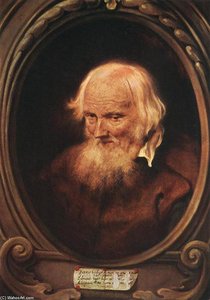
Retrato de Jan Lievens

Pinturas de Jan Lievens: As 100 mais famosas, sob o olhar de uma galeria

Atualizado em Novembro 2026 · classificado pela nossa pontuação de popularidade (pesquisas, visitas e pedidos de cada obra) · 172 obras de Jan Lievens em nosso catálogo

Em resumo

Aos olhos da galeria, a pintura mais famosa de Jan Lievens é The Lamentation of Christ (1640), cuja obra original está exposta no Alte Pinakothek, em Munique. Portrait of Maarten Harpertszoon Tromp (1598-1653) (copy) (1650) e Saint John the Evangelist (1626) completam o trio que todos reconhecem. Dos 172 trabalhos de Jan Lievens em nosso catálogo, a galeria apresenta abaixo as 100 obras mais famosas, cada uma original, com seu ano, seu museu e o que a torna única.

1607 – 1674, Leiden Baroque Mais obras: Bavarian State Painting Collections

As 10 principais pinturas de Jan Lievens na galeria

1
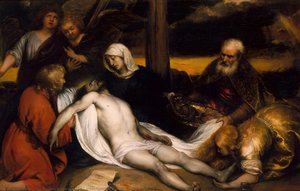
The Lamentation of Christ (1640) de Jan Lievens

The Lamentation of Christ

1640 · Oil On Canvas · Alte Pinakothek, Munique

Jan Andrea Lievens’ “The Lamentation of Christ,” painted around 1640, isn't merely a depiction of sorrow; it’s an immersion into the profound grief that permeated Renaissance and Baroque Europe. This powerful scene, rendered in rich oil on canvas measuring 141 x 216 cm, transcends simple mourning to become a meditation on loss, faith, and the ultimate sacrifice. Lievens, working within the shadow of Rembrandt's influence – both stylistic and perhaps…

2
Portrait of Maarten Harpertszoon Tromp (1598-1653) (copy) (1650) de Jan Lievens

Portrait of Maarten Harpertszoon Tromp (1598-1653) (copy)

1650 · Oil On Canvas · Amsterdam Museum, Amsterdão

The air in the room feels heavy, thick with the scent of old oil and the silent gravity of a man who has weathered many storms. Maarten Harpertszoon Tromp sits before us, his presence commanding the space despite the dark, indistinct void that surrounds him. He does not look away; his gaze is fixed directly forward, meeting the viewer with a resolute, unyielding expression that speaks of a life spent…

3
Saint John the Evangelist (1626) de Jan Lievens

Saint John the Evangelist

1626 · Oil · Bavarian State Painting Collections, Munique

A heavy, reddish-brown drapery clings to the shoulder of the figure, a weight of fabric that anchors the composition. Saint John the Evangelist leans into the silence, his head resting upon a hand in a gesture of profound contemplation. The light is a sharp, singular force, carving his features out of a deep, shadowy background through the use of chiaroscuro. This illumination catches the curve of a cheek and the…

4
Old Woman Reading (1622) de Jan Lievens

Old Woman Reading

1622 · Oil On Panel · Philadelphia Museum of Art, Filadélfia

The room falls away into a deep, atmospheric darkness, leaving only the subject in a pool of soft, directional light. An elderly woman sits in a moment of profound stillness, her attention entirely consumed by the pages of a book. The light, streaming from the upper left, catches the delicate, thin wire of her spectacles and the weathered texture of her skin. Every wrinkle tells a story of years passed,…

5
Bust of an Old Man (1630) de Jan Lievens

Bust of an Old Man

1630 · Oil On Canvas · Staatliches Museum Schwerin, Schwerin

A somber portrait of an elderly man emerges from a deep, atmospheric darkness. The composition focuses on a close-up bust, centering on the weathered anatomy of a face marked by time. Light enters from the upper left, casting heavy shadows across the right side of the neck and face. This directional lighting creates a strong sense of three-dimensional volume, sculpting the subject out of the gloom. The subject's gaze is…

6
St. Paul writing to the Thessalonians (1629) de Jan Lievens

St. Paul writing to the Thessalonians

1629 · Oil On Canvas · Kunsthalle Bremen, Bremen

An elderly man sits in a state of intense concentration, his weathered face illuminated by a singular, unseen light source. He is captured in a moment of profound intellectual and spiritual labor, poised with a quill above a parchment. The composition follows a sharp diagonal, drawing the eye from the bright, illuminated writing materials up to the textures of his flowing white beard and the deep creases of his skin.…

7
Self Portrait (1650) de Jan Lievens

Self Portrait

1650 · Oil On Canvas · National Gallery, Londres

The man meets our eye with an air of quiet confidence, his presence filling the space with a certain swagger. He sits in a three-quarter pose, slightly off-center, creating a sense of movement even in his stillness. A strong light source strikes him from the upper left, carving out the sharp line of his cheekbone and illuminating the smooth texture of his skin. His dark hair falls in wavy, flowing…

8
Portrait of a Young Man in Flower Garland (1643) de Jan Lievens

Portrait of a Young Man in Flower Garland

1643 · Oil On Panel · Kunsthistorisches Museum, Viena

A central figure of a young man occupies the middle of this oil on panel painting. His face and upper torso are framed by a dense, circular garland of botanical elements. The subject possesses light skin tones and a direct gaze. He wears dark clothing that blends into a deep brown and black background. A strong light source from the side illuminates his profile and the foreground petals, while much…

9
A Child's Head (1632) de Jan Lievens

A Child's Head

1632 · Oil On Panel · Museum Boijmans Van Beuningen, Roterdã

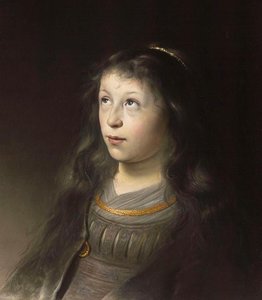
A soft, luminous glow emerges from a deep, dark background, catching the fullness of a young child's cheek. The light strikes the right side of the face, tracing the bridge of a small nose and the delicate curves of a youthful profile. Every curl of the voluminous hair seems to hold a fragment of gold, rendered with thick, tactile applications of paint that catch the light in a way that…

10
Old Man (1625) de Jan Lievens

Old Man

1625 · Oil On Canvas · Kunsthistorisches Museum, Viena

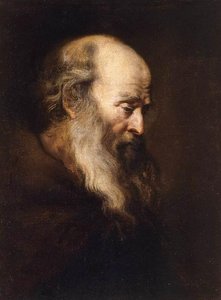
An elderly man is captured in profile, his features emerging from a deep, indistinct darkness. The lighting is highly directional, striking the forehead, ear, and bridge of the nose from the upper left. This technique creates a sculptural depth, casting the back of the head and neck into heavy shadow. The skin appears weathered, marked by visible wrinkles and folds that suggest the passage of time.

Pinturas de Jan Lievens, classificadas de 11 a 100

11Young Man with Red Beret (1629) de Jan LievensYoung Man with Red Beret1629 · Norton Simon Museum 12The Violin Player (1625) de Jan LievensThe Violin Player1625 · Museum de Lakenhal 13Head of an Old Man (1640) de Jan LievensHead of an Old Man1640 14Bust of a bearded grey-haired man (1629) de Jan LievensBust of a bearded grey-haired man1629 · Herzog Anton Ulrich Museum 15Old Man in Oriental Garb (1628) de Jan LievensOld Man in Oriental Garb1628 · Schloss Sanssouci 16Self-Portrait (1640) de Jan LievensSelf-Portrait1640 · Bavarian State Painting Collections 17Portrait of a Young Man (1640) de Jan LievensPortrait of a Young Man1640 · Bavarian State Painting Collections 18Studies after the Model (1660) de Jan LievensStudies after the Model1660 · Kunstpalast 19Profile Head of an Old Woman (“Rembrandt’s Mother”) (1629) de Jan LievensProfile Head of an Old Woman (“Rembrandt’s Mother”)1629 · Agnes Etherington Art Center 20Tronie of an Old Woman (1633) de Jan LievensTronie of an Old Woman1633 21An Unknown Woman in a Green Velvet Hood (1628) de Jan LievensAn Unknown Woman in a Green Velvet Hood1628 · Castle Ward 22Still-Life with Books (1628) de Jan LievensStill-Life with Books1628 · Bavarian State Painting Collections 23Saint Jerome as a hermit (1631) de Jan LievensSaint Jerome as a hermit1631 · Museum de Lakenhal 24Portrait of a young man with floppy pleated lace collar (1629) de Jan LievensPortrait of a young man with floppy pleated lace collar1629 · Richard Green Fine Paintings 25Portrait of a boy, head and shoulders, wearing a gorget (1626) de Jan LievensPortrait of a boy, head and shoulders, wearing a gorget1626 · Wallraf-Richartz-Museum 26A soldier with a wineglass and pipe (1627) de Jan LievensA soldier with a wineglass and pipe1627 · Gemäldegalerie 27Bearded Old Man with a Brown Cloak (1631) de Jan LievensBearded Old Man with a Brown Cloak1631 28English The Raising of Lazarus (1631) de Jan LievensEnglish The Raising of Lazarus1631 29Head of an Old Man in thought (1640) de Jan LievensHead of an Old Man in thought1640 · Gebruder Douwes 30Fighting Cardplayers and Death (1638) de Jan LievensFighting Cardplayers and Death1638 31The Visitation (1650) de Jan LievensThe Visitation1650 32Portrait of a Girl (1660) de Jan LievensPortrait of a Girl1660 · Museum der bildenden Künste 33Portrait of a man (1650) de Jan LievensPortrait of a man1650 · Galeria Nacional da Arménia 34Nicolaas Calkoen (1612-1687) (1654) de Jan LievensNicolaas Calkoen (1612-1687)1654 35Elisabeth Danckerts (1613-1670) (1654) de Jan LievensElisabeth Danckerts (1613-1670)1654 36Portrait of Maerten Harpertsz. Tromp (1598-1653) (1653) de Jan LievensPortrait of Maerten Harpertsz. Tromp (1598-1653)1653 · Het Scheepvaartmuseum 37Self-portrait (1662) de Jan LievensSelf-portrait1662 · Castelo Real de Wawel 38Saint Mark the Evangelist (1626) de Jan LievensSaint Mark the Evangelist1626 · Bavarian State Painting Collections 39Christ Washing the Disciples' Feet (1632) de Jan LievensChrist Washing the Disciples' Feet1632 · Art Institute of Chicago 40'Tronie' of an Old Man (1650) de Jan Lievens'Tronie' of an Old Man1650 · Mauritshuis 41Saint Matthew the Evangelist (1626) de Jan LievensSaint Matthew the Evangelist1626 · Bavarian State Painting Collections 42A Magus at a Table (1631) de Jan LievensA Magus at a Table1631 · Upton House 43Samson and Delilah (1635) de Jan LievensSamson and Delilah1635 · Rijksmuseum 44Self-Portrait (1635) de Jan LievensSelf-Portrait1635 · Statens Museum For Kunst 45Old man in a skullcap (1623) de Jan LievensOld man in a skullcap1623 · Museu Nacional de Varsóvia 46Robert Kerr, 1st Earl of Ancram, 1578 - 1654. Courtier and politician (1654) de Jan LievensRobert Kerr, 1st Earl of Ancram, 1578 - 1654. Courtier and politician1654 · Galeria Nacional de Retratos de Escócia 47O Violinista (1625) de Jan LievensO Violinista1625 · Stedelijk Museum De Lakenhal 48Jogadores de Cartas (1625) de Jan LievensJogadores de Cartas1625 · The Leiden Collection 49Portrait of Petrus Egidius de Morrion (1637) de Jan LievensPortrait of Petrus Egidius de Morrion1637 · Szépművészeti Múzeum 50Os Quatro Elementos e Idades do Homem: Fogo e Infância (1668) de Jan LievensOs Quatro Elementos e Idades do Homem: Fogo e Infância1668 · Staatliche Museen 51Portrait of a Girl (1630) de Jan LievensPortrait of a Girl1630 · Szépművészeti Múzeum 52The Sacrifice of Isaac (1638) de Jan LievensThe Sacrifice of Isaac1638 · Herzog Anton Ulrich Museum 53A young girl (1632) de Jan LievensA young girl1632 · Yale University Art Gallery 54Saint Luke (1626) de Jan LievensSaint Luke1626 · Bavarian State Painting Collections 55Untitled (AQQCHJ) (1631) de Jan LievensUntitled (AQQCHJ)1631 · Getty Center 56An old man (Rabbi). (1630) de Jan LievensAn old man (Rabbi).1630 · Museu Nacional de Varsóvia 57Bust of an Old Man (1650) de Jan LievensBust of an Old Man1650 · Museum der bildenden Künste 58Os Quatro Elementos e Idades do Homem: Ar e Juventude (1668) de Jan LievensOs Quatro Elementos e Idades do Homem: Ar e Juventude1668 · Staatliche Museen 59Os Quatro Elementos e Idades do Homem: Terra e Maturidade (1668) de Jan LievensOs Quatro Elementos e Idades do Homem: Terra e Maturidade1668 · Staatliche Museen 60Boy in a Cape and Turban (Portrait of Prince Rupert of the Palatinate) (1631) de Jan LievensBoy in a Cape and Turban (Portrait of Prince Rupert of the Palatinate)1631 · The Leiden Collection 61Saint Mark the Evangelist (1600) de Jan LievensSaint Mark the Evangelist1600 · Birmingham Museum of Art 62Head of an Old Woman: (1628) de Jan LievensHead of an Old Woman:1628 · The Leiden Collection 63Untitled (AQQCJ2) (1622) de Jan LievensUntitled (AQQCJ2)1622 64Trees in the evening (1632) de Jan LievensTrees in the evening1632 65Untitled (AQQCH2) (1628) de Jan LievensUntitled (AQQCH2)1628 66Untitled (AQQCHU) (1629) de Jan LievensUntitled (AQQCHU)1629 67Job (1631) de Jan LievensJob1631 68Portrait of an Old Man (1630) de Jan LievensPortrait of an Old Man1630 69Guy of Lusignan and Saladin (1625) de Jan LievensGuy of Lusignan and Saladin1625 70English Saladin and Guy de Lusignan Nederlands Saladin en Guy de Lusignan (1625) de Jan LievensEnglish Saladin and Guy de Lusignan Nederlands Saladin en Guy de Lusignan1625 71Head of a Young Girl (1631) de Jan LievensHead of a Young Girl1631 · Szépművészeti Múzeum 72Man Kindling a Torch (1625) de Jan LievensMan Kindling a Torch1625 · Muzeum Palacu Króla Jana Iii w Wilanowie 73Study of an Old Man (1630) de Jan LievensStudy of an Old Man1630 74Study of an Old Man (1630) de Jan LievensStudy of an Old Man1630 75Untitled (AQQCHW) (1624) de Jan LievensUntitled (AQQCHW)1624 76Bust of a Young Girl (1630) de Jan LievensBust of a Young Girl1630 77Rembrandt van Rijn with Gorget (1629) de Jan LievensRembrandt van Rijn with Gorget1629 78Prince Charles Louis with His Tutor, as Alexander Instructed by Aristotle (1631) de Jan LievensPrince Charles Louis with His Tutor, as Alexander Instructed by Aristotle1631 79Dune landscape with trees (1642) de Jan LievensDune landscape with trees1642 · Museum Boijmans Van Beuningen 80River Landscape with a Resting Traveller (1640) de Jan LievensRiver Landscape with a Resting Traveller1640 · Agnes Etherington Art Center 81Untitled (AQQCHE) (1640) de Jan LievensUntitled (AQQCHE)1640 82Landscape with Willows (1642) de Jan LievensLandscape with Willows1642 · Fondation Custodia 83Hilly Landscape with Resting Peasants (1644) de Jan LievensHilly Landscape with Resting Peasants1644 · Kremer Collection 84A Wooded Walk (1650) de Jan LievensA Wooded Walk1650 85Evening Landscape (1650) de Jan LievensEvening Landscape1650 · Gemäldegalerie 86Portrait of Ephraim Bueno (1650) de Jan LievensPortrait of Ephraim Bueno1650 87Quintus Fabius Maximus (1656) de Jan LievensQuintus Fabius Maximus1656 · Palácio Real de Amsterdã 88De Oorlog (War ) (1664) de Jan LievensDe Oorlog (War )1664 89Paisagem com o descanso durante a huida a Egipto (1645) de Jan LievensPaisagem com o descanso durante a huida a Egipto1645 · Museu Thyssen-Bornemisza 90Young Man in a Yellow Robe (1630) de Jan LievensYoung Man in a Yellow Robe1630 · National Gallery of Scotland 91The Lute Player (1629) de Jan LievensThe Lute Player1629 · Walters Art Museum 92Portrait of Ephraim Bonus, physician de Jan LievensPortrait of Ephraim Bonus, physician 93Landscape with figures de Jan LievensLandscape with figures 94St. Jerome de Jan LievensSt. Jerome 95The Third Oriental Head de Jan LievensThe Third Oriental Head 96Landscape with a Shepherd and His Flock de Jan LievensLandscape with a Shepherd and His Flock 97Daniel Heinsius de Jan LievensDaniel Heinsius 98Card Players and Death de Jan LievensCard Players and Death 99Portrait of an Old Man Seen from the Front de Jan LievensPortrait of an Old Man Seen from the Front 100The Raising of Lazarus de Jan LievensThe Raising of Lazarus

Pinturas famosas de Jan Lievens, período por período

Os temas que cativaram o olhar de Jan Lievens

Os quatro temas que mais se repetem nestas obras originais, cada um com o seu melhor exemplo.

Os museus que guardam os originais de Jan Lievens

Os 8 museus que detêm a maioria das pinturas desta página.

Museus Cidade Obras de Jan Lievens Pinturas desta lista
Bavarian State Painting Collections, MuniqueBavarian State Painting Collections Munique 7 Saint John the Evangelist, Self-Portrait, Portrait of a Young Man
The Leiden Collection, Nova YorkThe Leiden Collection Nova York 4 Jogadores de Cartas, Boy in a Cape and Turban (Portrait of Prince Rupert of the Palatinate), Head of an Old Woman:
Szépművészeti Múzeum, BudapesteSzépművészeti Múzeum Budapeste 3 Portrait of Petrus Egidius de Morrion, Portrait of a Girl, Head of a Young Girl
Staatliche Museen, KasselStaatliche Museen Kassel 3 Os Quatro Elementos e Idades do Homem: Fogo e Infância, Os Quatro Elementos e Idades do Homem: Ar e Juventude, Os Quatro Elementos e Idades do Homem: Terra e Maturidade
Kunsthistorisches Museum, VienaKunsthistorisches Museum Viena 2 Portrait of a Young Man in Flower Garland, Old Man
Museum Boijmans Van Beuningen, RoterdãMuseum Boijmans Van Beuningen Roterdã 2 A Child's Head, Dune landscape with trees
Museum de Lakenhal, LeidenMuseum de Lakenhal Leiden 2 The Violin Player, Saint Jerome as a hermit
Herzog Anton Ulrich Museum, BrunswickHerzog Anton Ulrich Museum Brunswick 2 Bust of a bearded grey-haired man, The Sacrifice of Isaac

Jan Lievens, uma pintura emblemática por década

Obras por década

Escolha uma década para ver a obra original que a define.

Pinturas de Jan Lievens: a galeria responde

Qual pintura de Jan Lievens é a mais famosa de todas?Revelar a resposta

The Lamentation of Christ (1640), Alte Pinakothek, Munique. Portrait of Maarten Harpertszoon Tromp (1598-1653) (copy) (1650) e Saint John the Evangelist (1626) vêm a seguir.

Qual era a idade de Jan Lievens ao concluir The Lamentation of Christ?Revelar a resposta

33 anos: The Lamentation of Christ data de 1640, e Jan Lievens nasceu em 1607.

Quais são as 10 principais pinturas de Jan Lievens?Revelar a resposta

The Lamentation of Christ, Portrait of Maarten Harpertszoon Tromp (1598-1653) (copy), Saint John the Evangelist, Old Woman Reading, Bust of an Old Man, St. Paul writing to the Thessalonians, Self Portrait, Portrait of a Young Man in Flower Garland, A Child's Head e Old Man. O ranking acima apresenta o ano e o museu de cada uma.

Quantas obras Jan Lievens criou?Revelar a resposta

Nosso catálogo contém 172 obras de Jan Lievens, datadas de 1622 a 1668.

Onde estão expostos os originais mais famosos de Jan Lievens?Revelar a resposta

Principalmente em Bavarian State Painting Collections (Munique), The Leiden Collection (Nova York) e Szépművészeti Múzeum (Budapeste). A tabela de museus acima lista todos eles.

Quando é que Jan Lievens criou as suas pinturas mais famosas?Revelar a resposta

Em 1620s: 30 das 100 obras nesta página foram feitas então, sendo Saint John the Evangelist delas.

Quais são as obras mais famosas de Jan Lievens no início e no fim de sua carreira?Revelar a resposta

Nesta página, a mais antiga é Old Woman Reading (1622) e a mais recente é Os Quatro Elementos e Idades do Homem: Fogo e Infância (1668).

Quais temas Jan Lievens mais explorou?Revelar a resposta

Man (46), Dark background (21) e Beard (18), entre as 100 obras nesta página.

Em qual técnica Jan Lievens mais trabalhou?Revelar a resposta

Oil On Canvas, para 40 das 100 obras nesta página.

Com qual movimento Jan Lievens está associado(a)?Revelar a resposta

Baroque, a julgar pelos originais nesta página.

Quais obras originais de Jan Lievens o Bavarian State Painting Collections possui?Revelar a resposta

Saint John the Evangelist, Self-Portrait e Portrait of a Young Man: o Bavarian State Painting Collections, Munique detém 7 das obras desta página.

Jan Lievens: o artista

Ascensão ao Protagonismo e Sucesso Precoce

A precocidade de Jan Lievens era evidente quase desde o início. Aos doze anos, ele já havia se estabelecido como um artista independente em Leiden, um feito extraordinário para uma criança de tal idade. Essa independência precoce não era apenas uma questão de habilidade técnica, mas o sinal de um talento que exigia reconhecimento imediato. Sua capacidade de navegar pelo competitivo cenário artístico dos Países Baixos consolidou-se quando sua obra começou a atrair o olhar dos mais altos níveis da nobreza holandesa.

Uma cópia de Demócrito e Heráclito de Cornelis van Haarlem atraiu a atenção de Maurício de Nassau, Príncipe de Orange. Esse interesse real foi reforçado por um retrato de sua mãe, Machtelt Jans van Noortzant, que também chegou ao conhecimento do Príncipe. Tal patronato precoce proporcionou uma base de prestígio que o acompanharia por toda a sua carreira. Sua reputação cresceu de forma constante, transcendendo os círculos locais de Leiden para alcançar patamares internacionais. Aos trinta e um anos, sua posição era tamanha que recebeu um convite para a corte britânica, marcando sua transição de um talento local para uma figura de relevância europeia.

Colaborações e o Ateliê em Amsterdã

Os primeiros anos da carreira de Jan Lievens foram definidos por uma profunda proximidade criativa com Rembrandt van Rijn. Após o período de formação em Amsterdã, os dois artistas compartilharam um ateliê por cerca de cinco anos, um período de intensa influência mútua que perdurou até 1631. Este foi um tempo de ambição compartilhada e experimentação técnica. A parceria entre eles não era apenas uma questão de proximidade; era uma colaboração funcional que os levou a produzir juntos mais de duas dúzias de pinturas, desenhos e gravuras. O volume expressivo de sua produção conjunta criou uma história complexa para muitas obras desta era, uma vez que as fronteiras entre as mãos individuais de cada um frequentemente se confundiam.

Jan Lievens frequentemente recorria ao seu amigo e colega para servir como modelo, utilizando os traços familiares de seu par para explorar o caráter e a expressão humana. Essa intimidade no ateliê permitia uma troca rápida de ideias sobre composição e luz. Embora a colaboração fosse produtiva, foi também um período de intensa competição. Os dois homens trabalhavam lado a lado, cada um esforçando-se para refinar um estilo que, eventualmente, os levaria por caminhos distintos em Londres, Antuérpia e além. O tempo que passaram em Amsterdã permanece como um capítulo significativo de desenvolvimento compartilhado, marcado pela energia vibrante de dois jovens talentos encontrando seu lugar na Era de Ouro Holandesa.

Patronos, Encomendas e uma Carreira Internacional

O talento de Jan Lievens atraiu um nível de atenção que exigia uma vida de constante movimento. Seu sucesso precoce em Leiden, marcado pela admiração de Maurício de Nassau, Príncipe de Orange, estabeleceu um precedente para uma carreira definida pelo patrocínio de alto nível. Esse reconhecimento inicial abriu portas para os escalões mais elevados da sociedade europeia, conduzindo-o para longe dos círculos familiares de Amsterdã em direção a uma existência mais cosmopolita. Ele tornou-se uma figura muito requisitada por aqueles que buscavam tanto o retrato formal quanto as grandes narrativas históricas.

Sua trajetória profissional foi marcada por mudanças significativas através dos principais centros europeus. Ele viajou para Londres e Antuérpia, acabando por servir como pintor da corte tanto em Haia quanto em Berlim. Esses cargos colocaram-no ao serviço da realeza, de prefeitos e de diversas câmaras municipais, consolidando sua posição dentro do tecido político e social da época. Sua habilidade em se adaptar às exigências desses diversos patronos permitiu-lhe manter um fluxo constante de encomendas ao longo de suas viagens.

A amplitude de sua obra refletia os variados gostos de sua clientela. Seja trabalhando para a nobreza em Berlim ou cumprindo deveres cívicos na Holanda, Jan Lievens navegou pelas complexidades da demanda internacional. Sua presença nessas diferentes cortes garantiu que seu estilo não ficasse confinado a uma única tradição regional, mas fosse, em vez disso, moldado pelas correntes culturais mutáveis das cidades em que residiu.

Técnica e Estilo Artístico

Jan Lievens possuía uma destreza técnica que o permitia navegar pelas estéticas mutáveis do século XVII. Sua obra fundia, com frequência, os detalhes concretos do realismo com os floreios dramáticos do Barroco. Ele era particularmente mestre no uso do chiaroscuro, um método que empregava contrastes agudos entre luz e sombra para criar uma sensação de volume e presença psicológica. Essa abordagem, profundamente influenciada pelos Caravaggistas, permitia-lhe esculpir rostos e texturas a partir de uma escuridão profunda e atmosférica. Sua habilidade em manipular a luz não servia apenas para o efeito dramático; era uma ferramenta utilizada para definir a própria essência de seus temas.

Em sua execução, Jan Lievens era um mestre do meio a óleo. Ele utilizava técnicas sofisticadas de veladura para construir camadas de cor, alcançando uma qualidade luminosa e gradações sutis de tom que conferiam às suas superfícies uma sensação de profundidade. Esse meticulosismo estendia-se à sua capacidade de trabalhar em grande escala, demonstrando um talento para pintar em dimensões de tamanho real. Seja ao renderizar o brilho suave de um tecido ou a pele envelhecida de um homem idoso, sua mão permanecia precisa e controlada. Suas composições buscavam frequentemente um sentido de harmonia e equilíbrio, mesmo ao lidar com a iluminação intensa característica de sua era.

Obras Notáveis e Obras-Primas

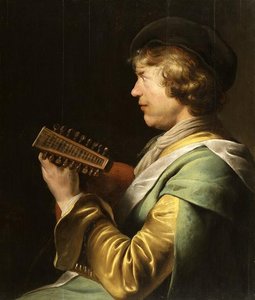
A produção inicial de Jan Lievens revela uma graça quase musical, capturada através da quietude profunda de seus temas. Em 1625, ele deu vida a The Violin Player, uma obra que reflete a precisão técnica de seus anos formativos. Por volta de 1629, seu interesse por tais temáticas continuou com The Lute Player. Estas composições demonstram uma habilidade magistral em manipular a luz e a forma muito antes de seu nome se tornar amplamente reconhecido por toda a Europa.

O ano de 1631 marcou um período de intensa competição criativa e experimentação estilística. Sua representação a óleo sobre tela de The Raising of Lazarus permanece como uma conquista significativa desta era. A pintura é caracterizada por uma paleta sombria e um profundo senso de mistério, utilizando uma luz pálida para perfurar a escuridão densa. É uma obra de contenção, que foca na tensão espiritual da cena em vez de gestos grandiosos ou amplos.

Em seus anos tardios, Jan Lievens voltou-se para temas alegóricos mais complexos. A série The Four Elements and Ages of Man inclui Fire and Childhood, datada de 1668, que demonstra um domínio contínuo de textura e atmosfera. Sua capacidade de adaptar seu estilo para atender às exigências de diversos patronos permitiu que ele mantivesse uma presença constante no mundo da arte, desde as ruas de Leiden até as cortes de Berlim.

Legado e Influência Histórica

Jan Lievens ocupou uma posição singular dentro da Era de Ouro Holandesa, um período definido por uma intensa competição artística e uma rápida evolução estilística. Sua carreira esteve inextricavelmente ligada à sombra de Rembrandt van Rijn, um relacionamento que se provou tanto profissionalmente frutífero quanto historicamente complicado. Embora a colaboração inicial de ambos em Leiden e Amsterdã tenha ajudado a moldar a linguagem visual da época, a proximidade de seus talentos criou uma ambiguidade duradoura nos registros da história da arte. Durante séculos, a distinção entre as mãos de ambos foi frequentemente obscurecida, levando a um declínio significativo em seu reconhecimento individual após sua morte.

Essa perda de identidade deveu-se, em grande parte, à atribuição errônea de suas telas. Muitas de suas obras foram reivindicadas por outros mestres, mais notavelmente por Rembrandt, à medida que colecionadores e herdeiros buscavam maximizar o valor de seus acervos. Tal confusão significou que as contribuições específicas de Jan Lievens foram frequentemente subsumidas na narrativa mais ampla de seus contemporâneos. Foi apenas em meados do século XIX que sua mão distinta foi redescoberta por aqueles que buscavam desvendar a complexa teia da pintura holandesa do século XVII. Essa reavaliação permitiu uma compreensão mais clara de sua habilidade em navegar entre o realismo dos Países Baixos e as influências sensuais das tradições flamenga e veneziana.

  • The Raising of Lazarus (1631)
  • Self-Portrait (c. 1629–1630)
  • Young Man in a Yellow Robe (1630)

Onde Ver Suas Obras Hoje

A presença física da arte de Jan Lievens permanece dispersa por diversas instituições internacionais, refletindo uma carreira que outrora transitou entre os grandes centros da Era de Ouro Holandesa. Na Holanda, sua mão é visível no Mauritshuis, onde suas contribuições para a linguagem visual da época são preservadas. Sua presença no país é sentida também através de várias coleções de museus que guardam suas pinturas e desenhos, mantendo uma conexão viva com suas raízes em Leiden.

Nos Estados Unidos, seu trabalho está presente em várias coleções de destaque. The Leiden Collection, em Nova York, mantém um número significativo de suas peças, oferecendo um olhar concentrado sobre sua produção artística. Em outros lugares, o Norton Simon Museum, em Pasadena, abriga seu trabalho de paisagem, especificamente uma vista de uma cidade. Esse acervo permite o estudo de sua habilidade em transitar tanto pelo retrato íntimo quanto por cenários expansivos.

Outras obras significativas encontraram lares permanentes em galerias especializadas. O Brighton Museum & Art Gallery é o guardião de sua representação de 1631 de A Ressurreição de Lázaro, uma obra que outrora compartilhou o espaço de um estúdio com seu contemporâneo mais famoso. Para contemplar toda a sua versatilidade, pode-se buscar estas localizações específicas:

  • A Ressurreição de Lázaro, Brighton Museum & Art Gallery
  • Paisagem com Vista de uma Cidade, Norton Simon Museum
  • Diversas obras, The Leiden Collection, Nova York