Retrato de Jacob Vrel

Pinturas de Jacob Vrel: As 17 mais famosas, sob o olhar de uma galeria

Atualizado em Novembro 2026 · classificado pela nossa pontuação de popularidade (pesquisas, visitas e pedidos de cada obra) · 19 obras de Jacob Vrel em nosso catálogo

Em resumo

Aos olhos da galeria, a pintura mais famosa de Jacob Vrel é Street Scene (1658), cuja obra original está exposta no J. Paul Getty Museum, em Los Angeles. An Old Woman by a Fireplace (1550) e Old woman seated with a young girl before a window (1645) completam o trio que todos reconhecem. Dos 19 trabalhos de Jacob Vrel em nosso catálogo, a galeria apresenta abaixo as 17 obras mais famosas, cada uma original, com seu ano, seu museu e o que a torna única.

1630 – 1681, Delfte Dutch golden age Mais obras: Museu Hermitage

As 10 principais pinturas de Jacob Vrel na galeria

1
Street Scene (1658) de Jacob Vrel

Street Scene

1658 · Oil · J. Paul Getty Museum, Los Angeles

is a somber and atmospheric Dutch Golden Age street scene dating from 1658. The composition utilizes a vertical orientation to emphasize the height of the surrounding architecture, creating a sense of enclosure within a narrow, cobblestone alleyway. This urban setting is lined with tall, weathered brick buildings that recede into the shadows through a one-point perspective, providing a sense of depth.

2
An Old Woman by a Fireplace (1550) de Jacob Vrel

An Old Woman by a Fireplace

1550 · Oil · Museu Hermitage, São Petersburgo

In the quiet shadows of a rural dwelling, An Old Woman by a Fireplace brings a solitary moment of domestic life into view. This work by Jacob Vrel captures a portrait of an old woman, her presence felt through the stillness of her surroundings. The scene unfolds around the warmth of a hearth, a fireplace scene that anchors the entire composition. It is a glimpse into a private, unhurried existence,…

3
Old woman seated with a young girl before a window (1645) de Jacob Vrel

Old woman seated with a young girl before a window

1645 · Oil On Canvas

In a quiet corner of history, the painting Old woman seated with a young girl before a window brings a domestic moment to life. This work, created by the Dutch artist Jacob Vrel, captures a gentle interaction between two generations. The scene unfolds within a dimly lit interior, where the presence of the two figures creates a sense of immediate, lived experience. It is a work that likely finds its…

4
An Old Woman by a Fireplace (1550) de Jacob Vrel

An Old Woman by a Fireplace

1550 · Oil · Museu Hermitage, São Petersburgo

An elderly woman sits positioned before the hearth, seeking warmth from the glowing embers. The composition captures a private instance of domestic life, where the soft light of the fire illuminates her features and the surrounding room. Two bowls rest near her, suggesting a simple meal or drink, while a bottle stands nearby in the shadows. A clock hangs upon the wall above the mantel, its presence marking the steady…

5
The Little Nurse (1655) de Jacob Vrel

The Little Nurse

1655 · Oil On Panel · National Gallery of Art, Washington

The Little Nurse is an oil on panel painting executed by the artist Jacob Vrel. This work dates to 1655 and originates from the Dutch Golden Age. The piece is currently held within the collection at the Ashmolean Museum in Oxford, United Kingdom.

6
Women at the window de Jacob Vrel

Women at the window

In the quiet stillness of a domestic interior, Women at the window unfolds before us. This painting, created by the Dutch artist Jacob Vrel, captures a moment of profound introspection. A woman sits at her desk, her gaze drifting toward the world beyond a barred window, while the presence of others in the room adds a layer of lived-in complexity to the scene. The air feels heavy with a sense…

7
View of a street (1633) de Jacob Vrel

View of a street

1633 · Oil On Panel · Bavarian State Painting Collections, Munique

In "View of a street" by Jacob Vrel, the composition is defined by a strong verticality. Tall, narrow buildings flank a central cobblestone alleyway, creating an enclosed urban environment. This arrangement utilizes a one-point linear perspective that directs the eye toward the center of the street. The architectural contours of the gabled houses follow diagonal lines that recede into the background, establishing a sense of depth within the narrow space.

8
Interior Scene (Woman Seated by a Hearth) (1654) de Jacob Vrel

Interior Scene (Woman Seated by a Hearth)

1654 · Oil On Canvas · Museu Thyssen-Bornemisza, Madrid

A single beam of light enters from a large window positioned in the upper portion of the composition, cutting through the dimness of a Dutch interior. This light falls upon a woman who is bent over a washbasin, her form defined by the sharp contrast between the illuminated surfaces and the deep shadows of the room. The setting is a structured space characterized by linear perspective, where the receding lines…

9
Sleeping Woman (The Convalescent) (1654) de Jacob Vrel

Sleeping Woman (The Convalescent)

1654 · Oil

The room holds its breath. A woman sits deeply recessed in a chair, her body surrendered to the heavy pull of sleep. She is a figure in repose, caught in that fragile moment between consciousness and the deep stillness of rest. Beside her, the fireplace breathes a soft, steady warmth into the space, its brickwork casting gentle shadows against the walls. The scene feels private, almost stolen, as if we…

10
Interior with a Woman Combing a Little Girl's Hair (1662) de Jacob Vrel

Interior with a Woman Combing a Little Girl's Hair

1662 · Oil · Detroit Institute of Arts, Detroit

The air in the room feels heavy with the scent of aged wood and the soft, rhythmic sound of a comb passing through fine strands. A woman sits poised in her chair, her focus entirely absorbed by the small child before her. The little girl remains still, a silent participant in this intimate ritual of grooming. Sunlight filters through the space, catching the textures of the wooden walls and the…

Pinturas de Jacob Vrel, classificadas de 11 a 17

Os temas que cativaram o olhar de Jacob Vrel

Os quatro temas que mais se repetem nestas obras originais, cada um com o seu melhor exemplo.

Os museus que guardam os originais de Jacob Vrel

Os 8 museus que detêm a maioria das pinturas desta página.

Museus Cidade Obras de Jacob Vrel Pinturas desta lista
Museu Hermitage, São PetersburgoMuseu Hermitage São Petersburgo 2 An Old Woman by a Fireplace, An Old Woman by a Fireplace
Museu Thyssen-Bornemisza, MadridMuseu Thyssen-Bornemisza Madrid 2 Interior Scene (Woman Seated by a Hearth), Interior with a Woman Seated by a Hearth
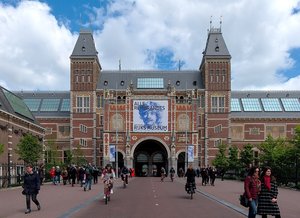
Rijksmuseum, AmsterdãRijksmuseum Amsterdã 2 Woman at the hearth, City view
J. Paul Getty Museum, Los AngelesJ. Paul Getty Museum Los Angeles 1 Street Scene
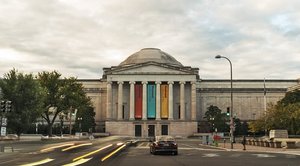
National Gallery of Art, WashingtonNational Gallery of Art Washington 1 The Little Nurse
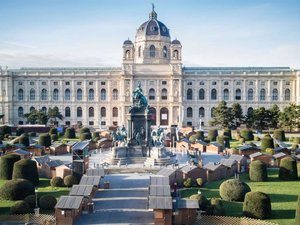
Kunsthistorisches Museum, VienaKunsthistorisches Museum Viena 1 Women at the window
Bavarian State Painting Collections, MuniqueBavarian State Painting Collections Munique 1 View of a street
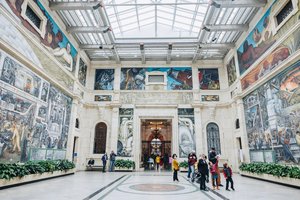
Detroit Institute of Arts, DetroitDetroit Institute of Arts Detroit 1 Interior with a Woman Combing a Little Girl's Hair

Jacob Vrel, uma pintura emblemática por década

Obras por década

Escolha uma década para ver a obra original que a define.

Pinturas de Jacob Vrel: a galeria responde

Qual pintura de Jacob Vrel é a mais famosa de todas?Revelar a resposta

Street Scene (1658), J. Paul Getty Museum, Los Angeles. An Old Woman by a Fireplace (1550) e Old woman seated with a young girl before a window (1645) vêm a seguir.

Qual era a idade de Jacob Vrel ao concluir Street Scene?Revelar a resposta

28 anos: Street Scene data de 1658, e Jacob Vrel nasceu em 1630.

Quais são as 10 principais pinturas de Jacob Vrel?Revelar a resposta

Street Scene, An Old Woman by a Fireplace, Old woman seated with a young girl before a window, An Old Woman by a Fireplace, The Little Nurse, Women at the window, View of a street, Interior Scene (Woman Seated by a Hearth), Sleeping Woman (The Convalescent) e Interior with a Woman Combing a Little Girl's Hair. O ranking acima apresenta o ano e o museu de cada uma.

Quantas obras Jacob Vrel criou?Revelar a resposta

Nosso catálogo contém 19 obras de Jacob Vrel, datadas de 1645 a 1662.

Onde estão expostos os originais mais famosos de Jacob Vrel?Revelar a resposta

Principalmente em Museu Hermitage (São Petersburgo), Museu Thyssen-Bornemisza (Madrid) e Rijksmuseum (Amsterdã). A tabela de museus acima lista todos eles.

Quando é que Jacob Vrel criou as suas pinturas mais famosas?Revelar a resposta

Em 1650s: 5 das 17 obras nesta página foram feitas então, sendo Street Scene delas.

Quais são as obras mais famosas de Jacob Vrel no início e no fim de sua carreira?Revelar a resposta

Nesta página, a mais antiga é Old woman seated with a young girl before a window (1645) e a mais recente é Interior with a Woman Combing a Little Girl's Hair (1662).

Quais temas Jacob Vrel mais explorou?Revelar a resposta

Woman (8), Chair (6) e Fireplace (5), entre as 17 obras nesta página.

Em qual técnica Jacob Vrel mais trabalhou?Revelar a resposta

Oil On Panel, para 7 das 17 obras nesta página.

Com qual movimento Jacob Vrel está associado(a)?Revelar a resposta

Dutch golden age, a julgar pelos originais nesta página.

Quais obras originais de Jacob Vrel o Museu Hermitage possui?Revelar a resposta

An Old Woman by a Fireplace e An Old Woman by a Fireplace: o Museu Hermitage, São Petersburgo detém 2 das obras desta página.

Jacob Vrel: o artista

Jacobus Vrel: O Pintor das Sombras que Iluminou o Legado de Vermeer

Jacobus Vrel (c. 1617 – 1681) permanece como um artista envolto em mistério, uma figura cuja brilhância foi, em grande parte, eclipsada pela presença monumental de Johannes Vermeer durante a sua vida e, posteriormente, obscurecida por debates acadêmicos sobre a sua linhagem artística. Apesar da confusão inicial em torno da sua identidade — frequentemente confundido com um imitador de Vermeer — investigações recentes estabeleceram definitivamente Jacob Vrel como um verdadeiro inovador, um precursor de Vermeer que remodelou sutilmente o panorama da pintura barroca holandesa. Esta redescoberta marca um momento crucial na história da arte, levando historiadores e críticos a reconsiderarem a nossa compreensão sobre as influências artísticas e os processos criativos.

Pouco se sabe sobre a data de nascimento ou a origem de Jacob Vrel. Registros indicam que ele nasceu por volta de 1617 em Delft, nos Países Baixos — uma cidade renomada pelo seu mecenato artístico durante a Idade de Ouro. No entanto, provas definitivas sobre a sua ascendência familiar permanecem elusivas, alimentando especulações e impulsionando investigações contínuas sobre as suas raízes.

Os anos formativos de Vrel foram passados sob a tutela de Rembrandt Harmenszoon van Rijn, indiscutivelmente o pintor mais celebrado da sua era. Esta associação impactou profundamente o estilo artístico de Jacob Vrel, conferindo-lhe uma atenção meticulosa ao detalhe e fomentando um apreço pela iluminação dramática — características que viriam a tornar-se marcas registradas da obra de Vermeer. Para além de Rembrandt, Vrel absorveu influências de Pieter Janssens Elinga e Gerard Ter Borch, artistas que defenderam a cena de gênero e contribuíram para moldar o vocabulário visual do seu tempo.

Um Estilo Distintivo: Interiores e Perspectiva Atmosférica

A visão artística de Jacob Vrel centrava-se na captura da essência da vida doméstica — particularmente em interiores banhados por uma luz suave — uma preocupação estilística que antecipou as explorações revolucionárias de Vermeer sobre a ilusão espacial e o realismo psicológico. Ao contrário de Rembrandt, que favorecia grandes narrativas e composições teatrais, Jacob Vrel optou por uma elegância contida, priorizando nuances sutis de cor e textura para transmitir humor e atmosfera. Suas pinturas são caracterizadas por uma sensibilidade notável à iluminação natural, alcançada através do uso magistral do chiaroscuro — o jogo entre luz e sombra — uma técnica que Vermeer aperfeiçoou com uma precisão sem igual.

Cenas de Gênero: Jacob Vrel destacou-se na representação de cenas de gênero — fragmentos da vida cotidiana — apresentando mulheres envolvidas em atividades domésticas, como cozinhar, costurar e cuidar de crianças. Estas pinturas são imbuídas de um sentido palpável de intimidade e imediatismo, refletindo a fascinação de Jacob Vrel em capturar as sutilezas da emoção humana e do comportamento.

Perspectiva Atmosférica: Jacob Vrel empregou habilmente a perspectiva atmosférica — o desfoque gradual de objetos distantes devido à névoa — para criar profundidade e realismo tanto em suas paisagens quanto em seus interiores. Esta técnica demonstra o domínio de Jacob Vrel sobre os princípios ópticos e sublinha o seu compromisso em transmitir uma ilusão convincente de espaço.

Redescoberta e Reconhecimento: A Conexão com Vermeer

A atribuição das pinturas de Jacob Vrel a Vermeer desencadeou, inicialmente, uma controvérsia considerável no seio da comunidade de historiadores da arte. No entanto, análises dendrocronológicas meticulosas — a datação de painéis de madeira através dos padrões dos anéis de crescimento das árvores — provaram conclusivamente que Jacob Vrel precedeu Vermeer por vários anos. Esta descoberta revolucionária transformou a nossa compreensão da cronologia artística e desafiou as suposições predominantes sobre o desenvolvimento estilístico de Vermeer.

O papel fundamental desempenhado por Théophile Thoré e Cornelis Hofstede de Groot no estabelecimento da identidade de Jacob Vrel é imensurável. Thoré, ao reconhecer as semelhanças entre as obras de Jacob Vrel e o trabalho de Vermeer — particularmente o uso da perspectiva atmosférica — desafiou o senso comum de que Vermeer era meramente um seguidor de Rembrandt. Mais tarde, Hofstede de Groot consolidou ainda mais a reputação de Jacob Vrel ao publicar um artigo influente em 1903, que refutou definitivamente a atribuição a Vermeer, marcando um momento divisor de águas no estudo da história da arte.

Legado e Significado: Um Gênio Silencioso à Frente de Seu Tempo

Apesar de sua obscuridade durante a vida, Jacob Vrel emergiu como uma figura celebrada na história da arte contemporânea — um testemunho do poder duradouro da inovação artística e da importância de revisitar obras-primas negligenciadas. Suas pinturas continuam a cativar os espectadores com sua beleza serena, profundidade psicológica e um domínio sutil da técnica — qualidades que ressoam poderosamente com o legado de Vermeer. Jacob Vrel posiciona-se como um exemplar da pintura barroca holandesa, demonstrando uma compreensão profunda da experiência humana e uma habilidade notável de transmitir emoção através da imagem visual — um gênio silencioso que iluminou o caminho para a conquista artística incomparável de Vermeer.

Obras Notáveis