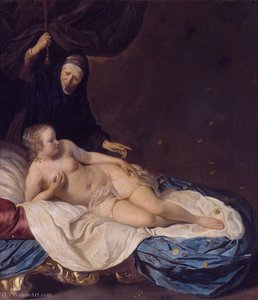
Retrato de Jacob Van Loo

Pinturas de Jacob Van Loo: As 51 mais famosas, sob o olhar de uma galeria

Atualizado em Novembro 2026 · classificado pela nossa pontuação de popularidade (pesquisas, visitas e pedidos de cada obra) · 53 obras de Jacob Van Loo em nosso catálogo

Em resumo

Aos olhos da galeria, a pintura mais famosa de Jacob Van Loo é Allegory of Fortune (1655), cuja obra original está exposta no Bavarian State Painting Collections, em Munique. Bacchus and Ariadne (1650) e Portrait of Thomas Corneille (1660) completam o trio que todos reconhecem. Dos 53 trabalhos de Jacob Van Loo em nosso catálogo, a galeria apresenta abaixo as 51 obras mais famosas, cada uma original, com seu ano, seu museu e o que a torna única.

1614 – 1670, Sluis Baroque Mais obras: Rijksmuseum

As 10 principais pinturas de Jacob Van Loo na galeria

1
Allegory of Fortune (1655) de Jacob Van Loo

Allegory of Fortune

1655 · Oil · Bavarian State Painting Collections, Munique

In Allegory of Fortune, Jacob van Loo presents a dense gathering of figures within a dark, lush woodland. The scene is a complex arrangement of movement and light, where the shadows of the forest press against the illuminated bodies of the subjects. At the heart of this chaotic abundance, a central nude figure appears to float or dance, caught in a moment of weightless grace. This figure anchors a composition…

2
Bacchus and Ariadne (1650) de Jacob Van Loo

Bacchus and Ariadne

1650 · Oil On Canvas · Yale University Art Gallery, New Haven

In Bacchus and Ariadne, Jacob van Loo captures a sudden collision of myth and flesh. Created about 1650, the oil painting freezes the precise moment of a mythological encounter. Bacchus lunges from the left, his movement driven by a sudden discovery. He reaches toward the reclining Ariadne, whose form rests upon the right. The scene is a flash of passion caught against a dark, turbulent sky.

3
Portrait of Thomas Corneille (1660) de Jacob Van Loo

Portrait of Thomas Corneille

1660 · Oil On Canvas · Musée Condé, Chantilly

The gaze of an elderly man meets us in the Portrait of Thomas Corneille, a work that captures a quiet moment of contemplation. Created by the artist Jacob van Loo, this oil on canvas presents a single subject, an aged male whose presence fills the frame. His long, wispy hair and weathered features suggest a life of significant experience, frozen here in a moment of serene stillness. The portraiture genre…

4
Portrait of a Young Girl (1650) de Jacob Van Loo

Portrait of a Young Girl

1650 · Oil On Panel · Minneapolis Institute of Art, Minneapolis

The Portrait of a Young Girl by Jacob van Loo brings a quiet presence into the room. Painted about 1650, this work captures a moment of stillness in the life of a child. The subject sits with a poised dignity, her gaze meeting the viewer from across the centuries. There is a sense of a life paused, a single breath held in the soft light of the Dutch Golden Age.

5
Amorous Couple (1650) de Jacob Van Loo

Amorous Couple

1650 · Oil On Canvas · Mauritshuis, Haia

The work before us is titled Amorous Couple, a painting by the Dutch artist Jacob van Loo. Created around 1650, this oil on canvas captures a quiet, private moment between two figures. It is a piece that reflects the artist's specific interest in the nuances of human interaction and the subtle play of light across different textures.

6
Susannah and the Elders (1658) de Jacob Van Loo

Susannah and the Elders

1658 · Oil On Canvas · Kelvingrove Art Gallery and Museum, Glasgow

The scene unfolds in a moment of profound tension within the painting titled Susannah and the Elders. Created by the artist Jacob van Loo, this oil on canvas captures a heavy, dramatic instance of religious art. The work is signed and dated in the bottom right corner, where the hand of the painter leaves the mark "J; van Loo fecit 1658."

7
Portrait of a Lady (1647) de Jacob Van Loo

Portrait of a Lady

1647 · Oil On Canvas · Mauritshuis, Haia

The oil on canvas work titled Portrait of a Lady was executed by the artist Jacob van Loo in 1647. This half-length portrait depicts a woman seated in a high-backed chair. The subject is positioned against a dark, indistinct background that emphasizes her presence and the details of her attire. The composition focuses on the sitter from the waist up, establishing a direct connection through her orientation toward the viewer.

8
Family Portrait of Rutger van Weert and Maria Beels (1644) de Jacob Van Loo

Family Portrait of Rutger van Weert and Maria Beels

1644 · Oil On Canvas

Jacob van Loo’s Family Portrait of Rutger van Weert and Maria Beels presents a formal and dignified arrangement of seven family members within an outdoor setting. The subjects are organized in a loose pyramidal structure, a composition that establishes a sense of stability and familial unity. This group portrait relies on a rhythmic pattern created by the sharp contrast between somber, dark tones—primarily blacks and deep browns in the clothing—and…

9
Diana and her nymphs, resting after the hunt (1648) de Jacob Van Loo

Diana and her nymphs, resting after the hunt

1648 · Oil On Canvas · Gemäldegalerie, Berlim

Jacob van Loo painted "Diana and her nymphs, resting after the hunt" about 1648. The oil painting depicts a group of women situated within a mythological setting. These figures are identified as the goddess Diana and her nymphs. The scene captures a specific moment of repose following a hunt, moving away from the active pursuit of prey toward a state of rest.

10
Allegory of Wealth (1650) de Jacob Van Loo

Allegory of Wealth

1650 · Oil On Canvas · Musée Condé, Chantilly

The scene unfolds within the Allegory of Wealth, an oil on canvas created by the Dutch painter Jacob van Loo. This work emerges from around 1650, capturing a moment of profound abundance. The figures exist in a space defined by their interactions, a hallmark of the artist's approach to narrative painting. Every gesture and glance contributes to the unfolding story of prosperity and its allure.

Pinturas de Jacob Van Loo, classificadas de 11 a 51

11Portrait of Sophia Huydecoper, née Coymans (1655) de Jacob Van LooPortrait of Sophia Huydecoper, née Coymans1655 12Portrait of Joan Huydecoper (1655) de Jacob Van LooPortrait of Joan Huydecoper1655 13Portrait of Jan Hinlopen and Leonora Huydecoper (1657) de Jacob Van LooPortrait of Jan Hinlopen and Leonora Huydecoper1657 · Szépművészeti Múzeum 14Boy with a Top and Dog (1650) de Jacob Van LooBoy with a Top and Dog1650 15A Glass and Coral Factory (1649) de Jacob Van LooA Glass and Coral Factory1649 · Statens Museum For Kunst 16Allegory of feeding the poor (1657) de Jacob Van LooAllegory of feeding the poor1657 · Amsterdam Museum 17Group portrait of the regents of the Aalmoezeniers, Arm- and Werkhuis in Haarlem, 1659 (1659) de Jacob Van LooGroup portrait of the regents of the Aalmoezeniers, Arm- and Werkhuis in Haarlem, 16591659 · Museu Frans Hals 18Portrait of Lodewijk Huygens (1631-1699) (1649) de Jacob Van LooPortrait of Lodewijk Huygens (1631-1699)1649 19Young Man Reading (1650) de Jacob Van LooYoung Man Reading1650 20Musician with a wine-glass (1651) de Jacob Van LooMusician with a wine-glass1651 · Wallraf-Richartz-Museum 21Portrait of a boy with a dog (1658) de Jacob Van LooPortrait of a boy with a dog1658 · Musee Baron Martin 22Mother with two children (1657) de Jacob Van LooMother with two children1657 · Gemäldegalerie 23Three Men in a Wine Cellar (1664) de Jacob Van LooThree Men in a Wine Cellar1664 24Portrait of Michel Corneille (1661-1664) (1663) de Jacob Van LooPortrait of Michel Corneille (1661-1664)1663 25Portrait of a woman (1662) de Jacob Van LooPortrait of a woman1662 · Frederik Muller & Co 26Diana resting and bathing with her nymphs (1665) de Jacob Van LooDiana resting and bathing with her nymphs1665 · Herzog Anton Ulrich Museum 27Amarillis crowning Blueberry. de Jacob Van LooAmarillis crowning Blueberry. 28Indulgent Old Lady (1654) de Jacob Van LooIndulgent Old Lady1654 · Museu Hermitage 29Venus and Cupid (1649) de Jacob Van LooVenus and Cupid1649 · Statens Museum For Kunst 30Concert (1650) de Jacob Van LooConcert1650 · Museu Hermitage 31Self Portrait, circa 1660, Jacob van Loo, 1655 - 1665 (1665) de Jacob Van LooSelf Portrait, circa 1660, Jacob van Loo, 1655 - 16651665 · Rijksmuseum 32Young Woman Going to Bed de Jacob Van LooYoung Woman Going to BedGrand Palais 33Danae (1660) de Jacob Van LooDanae1660 · The Kremer Collection 34Amaryllis of the Annunciation (1649) de Jacob Van LooAmaryllis of the Annunciation1649 · Gemäldegalerie 35Portrait of a Man, thought to be Christoffel van Gangelt, Second Husband of Lucretia Boudaen, Jacob van Loo (attributed to), 1640 - 1670 (1670) de Jacob Van LooPortrait of a Man, thought to be Christoffel van Gangelt, Second Husband of Lucretia Boudaen, Jacob van Loo (attributed to), 1640 - 16701670 · Museu Nacional de Varsóvia 36Portrait of Scientist de Jacob Van LooPortrait of ScientistArt Museum Riga Bourse 37interior - a nude woman - Rhodope de Jacob Van Loointerior - a nude woman - Rhodope 38A Bacchanal de Jacob Van LooA Bacchanal 39Ariadne. de Jacob Van LooAriadne. 40Portrait of Lucretia Boudaen de Jacob Van LooPortrait of Lucretia Boudaen 41Melancholy de Jacob Van LooMelancholy 42Lovers. de Jacob Van LooLovers.Rijksmuseum 43Portrait of a Woman, thought to be Lucretia Boudaen (1616-1663), Wife of Jean Ortt and Second Wife of Christoffel van Gangelt, Jacob van Loo (attributed to), 1640 - 1670 (1670) de Jacob Van LooPortrait of a Woman, thought to be Lucretia Boudaen (1616-1663), Wife of Jean Ortt and Second Wife of Christoffel van Gangelt, Jacob van Loo (attributed to), 1640 - 16701670 · Rijksmuseum 44Diana and Her Nymphs (1654) de Jacob Van LooDiana and Her Nymphs1654 · Statens Museum For Kunst 45Portrait of a Gentleman de Jacob Van LooPortrait of a Gentleman 46Group portrait of the regentesses of Aalmoezeniers de Jacob Van LooGroup portrait of the regentesses of AalmoezeniersMuseu Frans Hals 47Danae de Jacob Van LooDanae 48Portrait of Johan Ort de Jacob Van LooPortrait of Johan Ort 49Study of a woman de Jacob Van LooStudy of a woman 50Bacchic scene de Jacob Van LooBacchic sceneRijksmuseum 51Portrait of the Meebeeck Cruywagen family near the gate of their country home on the Uitweg near Amsterdam. de Jacob Van LooPortrait of the Meebeeck Cruywagen family near the gate of their country home on the Uitweg near Amsterdam.

Os temas que cativaram o olhar de Jacob Van Loo

Os quatro temas que mais se repetem nestas obras originais, cada um com o seu melhor exemplo.

Os museus que guardam os originais de Jacob Van Loo

Os 8 museus que detêm a maioria das pinturas desta página.

Museus Cidade Obras de Jacob Van Loo Pinturas desta lista
Rijksmuseum, AmsterdãRijksmuseum Amsterdã 4 Self Portrait, circa 1660, Jacob van Loo, 1655 - 1665, Lovers., Portrait of a Woman, thought to be Lucretia Boudaen (1616-1663), Wife of Jean Ortt and Second Wife of Christoffel van Gangelt, Jacob van Loo (attributed to), 1640 - 1670
Gemäldegalerie, BerlimGemäldegalerie Berlim 3 Diana and her nymphs, resting after the hunt, Mother with two children, Amaryllis of the Annunciation
Statens Museum For Kunst, CopenhagueStatens Museum For Kunst Copenhague 3 A Glass and Coral Factory, Venus and Cupid, Diana and Her Nymphs
Musée Condé, ChantillyMusée Condé Chantilly 2 Portrait of Thomas Corneille, Allegory of Wealth
Mauritshuis, HaiaMauritshuis Haia 2 Amorous Couple, Portrait of a Lady
Museu Frans Hals, HarenMuseu Frans Hals Haren 2 Group portrait of the regents of the Aalmoezeniers, Arm- and Werkhuis in Haarlem, 1659, Group portrait of the regentesses of Aalmoezeniers
Museu Hermitage, São PetersburgoMuseu Hermitage São Petersburgo 2 Indulgent Old Lady, Concert
Bavarian State Painting Collections, MuniqueBavarian State Painting Collections Munique 1 Allegory of Fortune

Jacob Van Loo, uma pintura emblemática por década

Obras por década

Escolha uma década para ver a obra original que a define.

Pinturas de Jacob Van Loo: a galeria responde

Qual pintura de Jacob Van Loo é a mais famosa de todas?Revelar a resposta

Allegory of Fortune (1655), Bavarian State Painting Collections, Munique. Bacchus and Ariadne (1650) e Portrait of Thomas Corneille (1660) vêm a seguir.

Qual era a idade de Jacob Van Loo ao concluir Allegory of Fortune?Revelar a resposta

41 anos: Allegory of Fortune data de 1655, e Jacob Van Loo nasceu em 1614.

Quais são as 10 principais pinturas de Jacob Van Loo?Revelar a resposta

Allegory of Fortune, Bacchus and Ariadne, Portrait of Thomas Corneille, Portrait of a Young Girl, Amorous Couple, Susannah and the Elders, Portrait of a Lady, Family Portrait of Rutger van Weert and Maria Beels, Diana and her nymphs, resting after the hunt e Allegory of Wealth. O ranking acima apresenta o ano e o museu de cada uma.

Quantas obras Jacob Van Loo criou?Revelar a resposta

Nosso catálogo contém 53 obras de Jacob Van Loo, datadas de 1644 a 1670.

Onde estão expostos os originais mais famosos de Jacob Van Loo?Revelar a resposta

Principalmente em Rijksmuseum (Amsterdã), Gemäldegalerie (Berlim) e Statens Museum For Kunst (Copenhague). A tabela de museus acima lista todos eles.

Quando é que Jacob Van Loo criou as suas pinturas mais famosas?Revelar a resposta

Em 1650s: 19 das 51 obras nesta página foram feitas então, sendo Allegory of Fortune delas.

Quais são as obras mais famosas de Jacob Van Loo no início e no fim de sua carreira?Revelar a resposta

Nesta página, a mais antiga é Family Portrait of Rutger van Weert and Maria Beels (1644) e a mais recente é Portrait of a Man, thought to be Christoffel van Gangelt, Second Husband of Lucretia Boudaen, Jacob van Loo (attributed to), 1640 - 1670 (1670).

Quais temas Jacob Van Loo mais explorou?Revelar a resposta

Woman (15), Man (12) e Dark background (9), entre as 51 obras nesta página.

Em qual técnica Jacob Van Loo mais trabalhou?Revelar a resposta

Oil On Canvas, para 21 das 51 obras nesta página.

Com qual movimento Jacob Van Loo está associado(a)?Revelar a resposta

Baroque, a julgar pelos originais nesta página.

Quais obras originais de Jacob Van Loo o Rijksmuseum possui?Revelar a resposta

Self Portrait, circa 1660, Jacob van Loo, 1655 - 1665, Lovers. e Portrait of a Woman, thought to be Lucretia Boudaen (1616-1663), Wife of Jean Ortt and Second Wife of Christoffel van Gangelt, Jacob van Loo (attributed to), 1640 - 1670: o Rijksmuseum, Amsterdã detém 4 das obras desta página.

Jacob Van Loo: o artista

Jacob van Loo: O Mestre dos Agrupamentos Conversacionais

Nascido em Sluis, uma vibrante cidade portuária da República Holandesa em 1614, a vida de Jacob van Loo esteve intrinsecamente ligada às correntes artísticas pulsantes de sua época. Seus primeiros anos foram moldados por seu pai, Jan van Loo, um pintor que lhe instilou uma compreensão fundamental de técnica e maestria. Embora os detalhes sobre seus anos formativos permaneçam parcialmente obscurecidos devido à destruição de arquivos municipais durante guerras, é evidente que a jornada artística de Van Loo floresceu no rico tapete da Era de Ouro Holandesa – uma era célebre por seus estilos de pintura inovadores e artistas prolíficos. Sua história familiar é de suma importância; seu pai era pintor, e essa linhagem viria a estabelecer uma verdadeira dinastia de pintores, impactando para sempre a arte europeia.

Em 1635, Amsterdã tornou-se rapidamente o lar adotivo de Van Loo, mergulhando-o em um círculo artístico dinâmico que incluía luminares como Rembrandt, Frans Hals e Bartholomeus van der Helst. Este ambiente fomentou uma intensa competição e colaboração, expandindo as fronteiras da expressão artística. A atmosfera agitada da cidade sem dúvida alimentou sua criatividade, proporcionando um fluxo constante de inspiração e desafiando-o a refinar suas habilidades. Em 1642, casou-se com Anna Lengele, uma união que trouxe estabilidade e contribuiu para a crescente influência da família no mundo das artes. Seu lar floresceu com seis filhos, incluindo os talentosos pintores Jean-Baptiste van Loo e Louis-Abraham van Loo – estabelecendo um legado que se estenderia muito além de sua própria existência.

Uma Abordagem Revolucionária à Composição

Van Loo distinguiu-se pelo seu domínio magistral dos ‘agrupamentos conversacionais’, uma técnica que revolucionou o gênero da pintura histórica. Ao contrário das representações anteriores, que frequentemente apresentavam cenas mitológicas ou bíblicas como eventos estáticos e formais, Van Lulo povoava suas telas com figuras vivas e envolventes, capturadas em momentos de interação – diálogos, gestos e expressões que sopravam vida à narrativa. Esta abordagem não era meramente decorativa; ela imbuía as pinturas com um senso de imediatismo e realismo, atraindo os espectadores diretamente para dentro da cena.

Sua habilidade estendia-se particularmente às suas representações de nus, um tema frequentemente considerado audacioso para a sua época. Enquanto as figuras femininas de Rembrandt eram celebradas por sua profundidade psicológica e ressonância emocional, os nus de Van Loo ganharam uma popularidade considerável entre o público. Alguns críticos contemporâneos chegaram a sugerir que suas formas femininas eram mais apreciadas do que as de seu rival de Amsterdã. Esta preferência revela o apreço do público por sua virtuosidade técnica e pela beleza idealizada que ele capturava na tela. Notavelmente, durante sua vida, suas figuras femininas eram consideradas superiores e mais populares que as de Rembrandt.

Influências e Desenvolvimento Artístico

O desenvolvimento artístico de Van Loo foi inegavelmente moldado por várias influências fundamentais. Conexões precoces com Thomas de Keyser e Jacob Adriaensz Backer proporcionaram-lhe uma base sólida em técnicas clássicas e composição. Esses encontros expuseram-no aos princípios da arte renascentista, que ele integrou habilmente ao seu próprio estilo. O movimento Barroco, originário de Roma, também exerceu um impacto significativo, contribuindo para a iluminação dramática, as cores ricas e as poses dinâmicas características de sua obra.

Sua passagem por Paris provou ser um divisor de águas, marcando uma transição em direção a uma maior elegância e refinamento. Em 1663, foi aceito na Académie royale de peinture et de sculpture, consolidando sua posição no estabelecimento artístico francês. Este movimento sinalizou não apenas um avanço profissional, mas também um aprofundamento de seu engajamento com os gostos e convenções em constante evolução do mundo da arte parisiense.

Legado e Dinastia

A influência de Jacob van Loo estendeu-se muito além de sua própria vida. Seu sucesso estabeleceu a ‘família de pintores Van Loo’, uma dinastia que impactou profundamente a pintura europeia por séculos. Seu filho, Jean-Baptiste van Loo, continuou a tradição familiar, produzindo obras de qualidade excepcional e estabelecendo um estilo artístico distinto. Seu neto, Charles-André van Loo, expandiu ainda mais o legado da família, tornando-se um dos pintores franceses mais celebrados do século XVIII.

A influência da dinastia Van Loo pode ser vista nas obras de gerações subsequentes, demonstrando uma evolução e adaptação contínuas das técnicas inovadoras de seu patriarca. A abordagem pioneira de Jacob van Loo à composição, seu tratamento magistral dos nus e o estabelecimento de uma linhagem artística duradoura consolidaram seu lugar como uma figura central na história da arte holandesa e francesa. Suas pinturas continuam a ser estudadas e admiradas por sua beleza, dinamismo e apelo eterno.

Obras Notáveis

  • Diana e suas Ninfas (1648): Um exemplo primordial dos agrupamentos conversacionais de Van Loo, demonstrando sua capacidade de capturar uma cena vibrante com figuras envolventes. Ver Obra
  • Autorretrato, circa 1660: Uma representação marcante do próprio artista, revelando seu estilo refinado e postura confiante. Ver Obra
  • Retrato de Grupo da Família Meebeeck Cruywagen no Portão de sua Casa de Campo em Uitweg, perto de Amsterdã (atribuído a): Demonstra sua habilidade em capturar uma cena social com detalhe e realismo. Ver Obra

Informações adicionais sobre Jacob van Loo podem ser encontradas no Banco de Dados de Artistas e em uma entrada detalhada na Wikipedia: Wikipedia.