


1


Atualizado em Novembro 2026 · classificado pela nossa pontuação de popularidade (pesquisas, visitas e pedidos de cada obra) · 33 obras de Harry Brodsky em nosso catálogo
Em resumo
De todas as obras originais que Harry Brodsky deixou, a mais famosa é Unemployed Rally (1931). Logo atrás vêm The City e Hanging out the Wash. Nosso catálogo contém 33 obras de Harry Brodsky; a galeria preservou as 33 que o mundo mais admira, cada uma exibida com sua data, seu museu e sua história.


 Under the Boardwalk
12
 Daffodils
13
 The Erlking
14
 The Shirt
15
 The Abandoned House
16
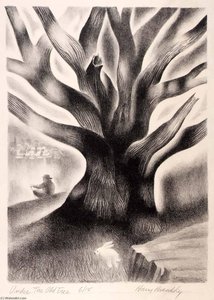 Under the Old Tree
17
 Head
18
 Summer Night
19
 Wine and Song
20
 Bottles no. 2
21
 Storm over Kensington
22
 City Night
23
 The Mad Rider
24
 Studio Interior
25
 Still Life with Grapefruit
26
 The River Front
27
 Still Life no. 2
28
 The Red Chair
29
 Tiger, Tiger Burning Bright
30
 Still Life with Scissors
31
 The Tailor
32
 Bottles
33The Forest1955
Escolha uma década para ver a obra original que a define.
Unemployed Rally (1931). The City e Hanging out the Wash vêm a seguir.
23 anos: Unemployed Rally data de 1931, e Harry Brodsky nasceu em 1908.
Unemployed Rally, The City, Hanging out the Wash, From My Kitchen Window, Projection, Pantomine Clown, Nowhere to Go, In the Park, In the Lamplight e Tomatoe Pickers. O ranking acima apresenta o ano e o museu de cada uma.
Nosso catálogo contém 33 obras de Harry Brodsky, datadas de 1931 a 1955.
Em 1930s: 3 das 33 obras nesta página foram feitas então, sendo Unemployed Rally delas.
Nesta página, a mais antiga é Unemployed Rally (1931) e a mais recente é The Forest (1955).
Social realism, a julgar pelos originais nesta página.
Harry Brodsky (1908-1997) wasn’t a name immediately recognized by the public, yet his work stands as a quietly powerful testament to the social and economic realities of mid-20th century America. Born in Newark, New Jersey, into a working-class family, Brodsky's artistic journey was deeply intertwined with the labor movement and the struggles faced by ordinary people. He wasn’t chasing fame or grand narratives; instead, he sought to capture the dignity and hardship of everyday life, particularly within the context of the Great Depression and its aftermath – a commitment that solidified his place as a key figure in Social Realism.
Brodsky's early artistic training at the Philadelphia College of Art laid the groundwork for his distinctive style. However, it was his experiences working with vocational schools and later as a commercial artist—designing posters and advertisements—that truly shaped his perspective. These roles exposed him to the realities of industrial labor and the lives of those employed in factories and workshops. This direct engagement with the subject matter became central to his artistic practice. He wasn’t simply depicting scenes; he was documenting the human cost of economic systems, often focusing on the faces of working-class individuals – men and women alike – rendered with a remarkable sensitivity and empathy.
Brodsky's technique evolved significantly throughout his career. Initially, he experimented with decorative work for movie theaters, honing his skills in draftsmanship and color theory. But it was during the 1930s and 40s that he truly found his voice, embracing lithography as his primary medium. The process of creating these prints – meticulously transferring images from stone to paper – demanded a level of precision and control, mirroring Brodsky’s desire to capture detail and nuance in his subjects. His early works often featured scenes of Philadelphia's industrial landscape, capturing the grit and grime alongside moments of quiet dignity. As time progressed, he began incorporating abstraction into his work, reflecting a shift towards exploring formal elements while retaining his commitment to social commentary.
At the heart of Brodsky's artistic vision lay a profound concern for labor and its impact on individuals and communities. His prints weren’t romanticized depictions of working life; they were unflinching portrayals of hardship, fatigue, and the often-exploitative conditions faced by laborers. Images like “The Forest” (a lithograph depicting a weary worker returning home) and "Under the Old Tree" powerfully convey the physical and emotional toll of manual labor. These works aren’t simply about showing someone working; they're about revealing the human cost, the quiet desperation etched on faces, the weariness in posture.
Furthermore, Brodsky’s art frequently engaged with themes of social justice and inequality. He depicted scenes of poverty, unemployment, and displacement, implicitly critiquing the economic systems that perpetuated these conditions. His work resonated deeply with the spirit of the New Deal era, reflecting a desire to document and advocate for the rights of working people. He wasn’t an overtly political artist in the traditional sense, but his art served as a powerful visual record of social struggles and a poignant reminder of the human consequences of economic policies.
Despite not achieving widespread fame during his lifetime, Harry Brodsky’s work has gained increasing recognition in recent decades. His prints are now held in numerous museum collections across North America and Europe, a testament to the enduring value of his artistic vision. The Rutgers Center for Innovative Print and Paper, established under the leadership of Judith K. Brodsky (his wife), continues to champion his legacy and promote the art of printmaking.
Brodsky’s influence extends beyond his own artwork. His commitment to depicting the lives of ordinary people with honesty and empathy has inspired generations of artists working in Social Realism and documentary photography. His work serves as a crucial reminder that art can be a powerful tool for social commentary, documenting history and advocating for justice. The collection at UCSB’s ADA Museum offers a comprehensive overview of his career, highlighting the breadth and depth of his artistic output.
Understanding Harry Brodsky requires acknowledging the context of his life – a working-class upbringing in Newark, New Jersey, and his dedication to teaching art at vocational schools. These experiences profoundly shaped his artistic perspective, grounding him in the realities of everyday life and fostering a deep respect for the dignity of labor. His wife, Judith K. Brodsky, was also a significant force in his career, contributing her own expertise as an artist and curator.
Brodsky’s artistic philosophy centered on observation and empathy. He believed that artists had a responsibility to document the world around them with honesty and integrity. He wasn't interested in creating idealized images; he sought to capture the complexities of human experience, both the joys and the sorrows. His work stands as a powerful reminder that art can be a vehicle for social change, fostering dialogue and promoting understanding.