Retrato de Giorgio Vasari

As 100 Pinturas Mais Famosas de Giorgio Vasari, Cada Uma Única

Atualizado em Novembro 2026 · classificado pela nossa pontuação de popularidade (pesquisas, visitas e pedidos de cada obra) · 122 obras de Giorgio Vasari em nosso catálogo

Em resumo

O Julgamento Final (detalhe) (1572) é a pintura de Giorgio Vasari que mais atrai olhares; a obra original pertence ao Duomo, Florença. Depois disso, o olhar recai sobre Allegory of Justice (1543) e The Last Judgment (detail) (1572). Entre as 122 obras de Giorgio Vasari em nosso catálogo, estas 100 são as mais famosas, cada uma uma original única apresentada com o seu ano, o seu museu e a razão pela qual perdura.

1511 – 1574, Arezzo Maneirismo Mais obras: Palazzo Vecchio

As 10 principais pinturas de Giorgio Vasari, sob o olhar da galeria

1
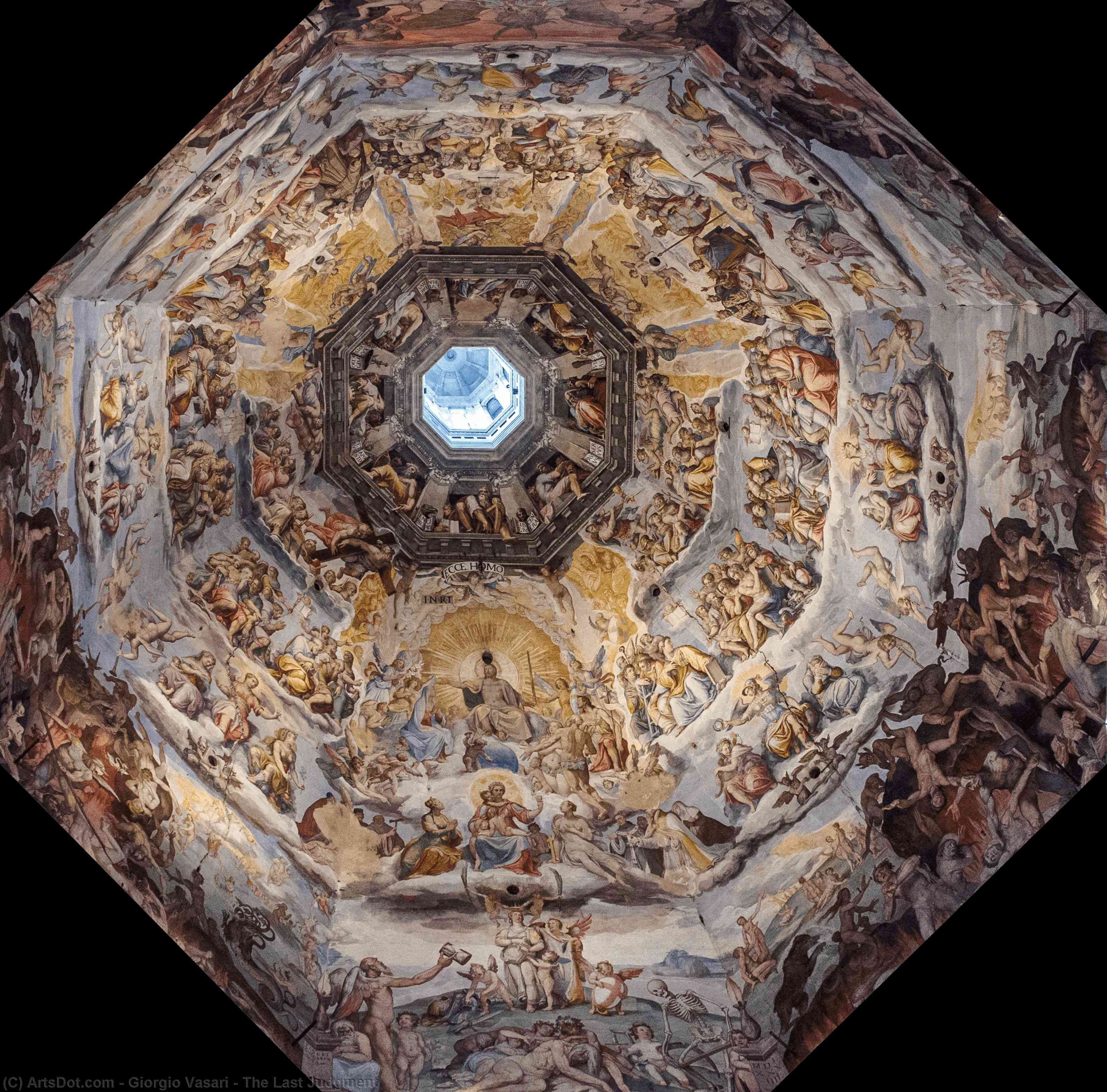
O Julgamento Final (detalhe) (1572) de Giorgio Vasari

O Julgamento Final (detalhe)

1572 · Afresco · Duomo, Florença

é uma obra de arte de Giorgio Vasari. Esta seção específica oferece uma visão focada de um fresco muito maior e monumental. Ela captura um momento de profundo significado espiritual, centrando-se no tema do Juízo Final. A obra data de aproximadamente 1572.

2
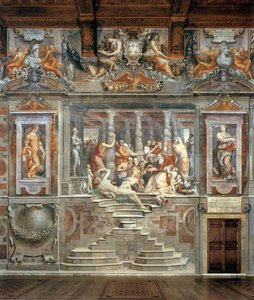
Allegory of Justice (1543) de Giorgio Vasari

Allegory of Justice

1543 · Acrylic On Canvas · Museo di Capodimonte, Nápoles

Giorgio Vasari's 1543 fresco, “Allegory of Justice and Truth,” residing within the Palazzo Cancelleria in Rome, is far more than a mere decorative panel; it’s a meticulously constructed visual sermon on virtue, governance, and the very foundations of Renaissance ideals. Commissioned by Cardinal Alessandro Farnese, this monumental work transcends its initial purpose as a room decoration to become a profound meditation on the principles that underpinned the burgeoning power of…

3
The Last Judgment (detail) (1572) de Giorgio Vasari

The Last Judgment (detail)

1572 · Acrylic On Canvas · Duomo, Florença

Within the soaring dome of Florence’s Duomo, a monumental fresco unfolds – Giorgio Vasari and Federico Zuccari's “The Last Judgment,” completed between 1572 and 1579. More than just a depiction of biblical narrative, it is an immersive experience, a theatrical tableau of judgment, salvation, and the eternal consequences of earthly choices. The sheer scale—over 3,600 square meters—immediately overwhelms the viewer, drawing them into a world of swirling figures, dramatic light,…

4
Marriage at Cana (1566) de Giorgio Vasari

Marriage at Cana

1566 · Oil On Canvas · Szépművészeti Múzeum, Budapeste

The air in the room feels heavy with the scent of spilled wine and the heat of a crowded celebration. At the center of the commotion, a quiet miracle unfolds. Jesus Christ sits amidst the revelry, a calm presence in a sea of moving bodies and draped fabrics. Around him, the disciples and guests are caught in a moment of transition, their faces turned toward the sudden abundance of the…

5
Triumphant entrance of Leone X in Florence (1563) de Giorgio Vasari

Triumphant entrance of Leone X in Florence

1563 · Oil On Canvas · Palazzo Vecchio, Florença

A Florentine Spectacle: Witnessing Power and Faith Giorgio Vasari’s *Triumphant Entrance of Leone X in Florence* (1563) is a monumental oil painting that bursts with the energy of a civic celebration. This isn't merely a depiction of a procession; it’s a carefully constructed narrative of papal authority reasserting itself within the heart of Renaissance Florence. The scene unfolds with a deliberate chaos, teeming with figures – from the Pope himself…

6
Annunciation (1570) de Giorgio Vasari

Annunciation

1570 · Acrylic On Canvas · Móra Ferenc Múzeum, Szeged

Giorgio Vasari’s 1570 Annunciation, housed within the serene confines of the Morgan Library and Museum in New York City, isn't merely a depiction of a biblical narrative; it’s a profound meditation on divine grace, humility, and the transformative power of faith. Painted during the height of the Italian Renaissance, this fresco embodies the era’s fascination with classical ideals blended seamlessly with deeply rooted Christian symbolism. Vasari, a pivotal figure in…

7
Cosimo il Vecchio as San Cosma (1559) de Giorgio Vasari

Cosimo il Vecchio as San Cosma

1559 · Oil On Canvas · Palazzo Vecchio, Florença

The year is 1559, and Florence pulses with the ambition of the Renaissance under the shrewd guidance of Cosimo I de’ Medici. Within the walls of the Palazzo Vecchio, a masterpiece emerges – Giorgio Vasari’s “Cosimo il Vecchio as San Cosma,” a portrait that transcends mere likeness to become a potent symbol of power, piety, and the enduring legacy of the Medici dynasty. This isn't simply a depiction of a…

8
O Julgamento Final (1572) de Giorgio Vasari

O Julgamento Final

1572 · Acrílico sobre tela · Duomo, Florença

No coração pulsante de Florença, no majestoso Duomo – Catedral de Santa Maria del Fiore –, reside uma obra-prima que transcende o tempo e a técnica: *A Última Julgamento* (Il Giudizio Universale) de Giorgio Vasari e Federico Zuccari. Mais do que um simples afresco, esta monumental composição é um portal para a alma humana, um testemunho da fé renascentista e uma demonstração impressionante da maestria artística dos seus criadores. Iniciada…

9
The Resurrection (1545) de Giorgio Vasari

The Resurrection

1545 · Oil On Canvas · Museo di Capodimonte, Nápoles

Giorgio Vasari's "The Resurrection," painted in 1545, isn’t merely a depiction of a biblical event; it’s a visceral embodiment of faith and the promise of rebirth. Created during the height of the Italian Renaissance, this oil-on-canvas work transcends simple religious illustration, plunging the viewer into a world of intense drama and profound spiritual significance. Vasari, already establishing himself as a pivotal figure in art history through his “Lives of Artists,”…

10
Cosimo cercato dagli artisti e dallo studio (1558) de Giorgio Vasari

Cosimo cercato dagli artisti e dallo studio

1558 · Afresco · Palazzo Vecchio, Florença

Uma Celebração da Arte e do Poder Medici A obra "Cosimo I de Medici cercado por artistas e estudiosos", atribuída ao renomado pintor Giorgio Vasari, é um testemunho magnífico da estética manierista que floresceu em Florença durante o reinado de Cosimo I – um período marcado pela ambição intelectual e artística da família Medici. Pintada em 1555, esta monumental fresco encontra-se alojada na Sala Grande da Casa Vasari, uma instituição…

Pinturas famosas de Giorgio Vasari, números 11 a 100

11Perseus and Andromeda (1570) de Giorgio VasariPerseus and Andromeda1570 · Palazzo Vecchio 12Allegory of the Immaculate Conception (1541) de Giorgio VasariAllegory of the Immaculate Conception1541 · Galleria degli Uffizi 13Cosimo I de Medici surrounded by his Architects, Engineers and Sculptors (1555) de Giorgio VasariCosimo I de Medici surrounded by his Architects, Engineers and Sculptors1555 · Palazzo Vecchio 14Façade on the Lungarno (1560) de Giorgio VasariFaçade on the Lungarno1560 · Galleria degli Uffizi 15Ercole fanciullo strozza i serpenti (1557) de Giorgio VasariErcole fanciullo strozza i serpenti1557 · Palazzo Vecchio 16Lorenzo il Magnifico among philosophers and scholars (1558) de Giorgio VasariLorenzo il Magnifico among philosophers and scholars1558 · Palazzo Vecchio 17Tribute of the Nations to Paul III (1546) de Giorgio VasariTribute of the Nations to Paul III1546 · Palazzo della Cancellaria 18Interor view (1542) de Giorgio VasariInteror view1542 · Casa Vasari 19Martyrdom of St Stephen (1560) de Giorgio VasariMartyrdom of St Stephen1560 · Pinacoteca Vaticana 20Interor view (1555) de Giorgio VasariInteror view1555 · Palazzo Vecchio 21Filippo Brunelleschi e Lorenzo Ghiberti apresentam o modelo da igreja de São Lourenço para Cosimo (1558) de Giorgio VasariFilippo Brunelleschi e Lorenzo Ghiberti apresentam o modelo da igreja de São Lourenço para Cosimo1558 · Palazzo Vecchio 22First fruits offered to Saturn (1557) de Giorgio VasariFirst fruits offered to Saturn1557 · Palazzo Vecchio 23Sala del Cinquecento de Giorgio VasariSala del CinquecentoPalazzo Vecchio 24Ceiling of the Sala del Cinquecento (detail) de Giorgio VasariCeiling of the Sala del Cinquecento (detail)Palazzo Vecchio 25View of the Studiolo (1570) de Giorgio VasariView of the Studiolo1570 · Palazzo Vecchio 26Ceiling decoration (1556) de Giorgio VasariCeiling decoration1556 · Palazzo Vecchio 27Holy Family with Saint Francis in a Landscape (1542) de Giorgio VasariHoly Family with Saint Francis in a Landscape1542 · Museu de Arte do Condado de Los Angeles 28Judith and Holofernes (1554) de Giorgio VasariJudith and Holofernes1554 · Saint Louis Art Museum 29Self-Portrait (1550) de Giorgio VasariSelf-Portrait1550 · Galleria degli Uffizi 30Saint Jerome in Meditation (1550) de Giorgio VasariSaint Jerome in Meditation1550 · Musée Fesch 31Portrait of Bernardetto de' Medici (1549) de Giorgio VasariPortrait of Bernardetto de' Medici1549 · Bode Museum 32Ceiling decoration (1556) de Giorgio VasariCeiling decoration1556 · Palazzo Vecchio 33Piero de' Medici called the Gouty (1556) de Giorgio VasariPiero de' Medici called the Gouty1556 · Palazzo Vecchio 34Allegory of Romagna (1660) de Giorgio VasariAllegory of Romagna1660 · Palazzo Vecchio 35Portrait of an old lady. (1540) de Giorgio VasariPortrait of an old lady.1540 · Museu Nacional de Varsóvia 36Clement VII crowns Charles V in San Petronio in Bologna (1559) de Giorgio VasariClement VII crowns Charles V in San Petronio in Bologna1559 · Palazzo Vecchio 37The Temptation of Saint Jerome (1544) de Giorgio VasariThe Temptation of Saint Jerome1544 · Art Institute of Chicago 38Apotheosis of Cosimo I (1565) de Giorgio VasariApotheosis of Cosimo I1565 39The Adoration of the Magi (1567) de Giorgio VasariThe Adoration of the Magi1567 · Scottish National Gallery 40Holy Family with John the Baptist as child (1547) de Giorgio VasariHoly Family with John the Baptist as child1547 · Bavarian State Painting Collections 41Holy family with little John the Baptist (1545) de Giorgio VasariHoly family with little John the Baptist1545 · Bavarian State Painting Collections 42Musicians (1545) de Giorgio VasariMusicians1545 · Isabella Stewart Gardner Museum 43Holy Family (1546) de Giorgio VasariHoly Family1546 · Kunsthistorisches Museum 44Battle of Barbagianni, nearby Pisa (1564) de Giorgio VasariBattle of Barbagianni, nearby Pisa1564 · Palazzo Vecchio 45Volcano's forge (1555) de Giorgio VasariVolcano's forge1555 46The rout of the Pisans at Torre San Vincenzo (1550) de Giorgio VasariThe rout of the Pisans at Torre San Vincenzo1550 47The birth of Venus (1555) de Giorgio VasariThe birth of Venus1555 48Don Giovanni and Don Garzia de' Medici (1556) de Giorgio VasariDon Giovanni and Don Garzia de' Medici1556 49Allegory of Volterra; to the bottom, view of Lucignano (1556) de Giorgio VasariAllegory of Volterra; to the bottom, view of Lucignano1556 50Allegory of Prato; to the bottom, view of Livorno (1557) de Giorgio VasariAllegory of Prato; to the bottom, view of Livorno1557 51Allegory of Pistoia; to the bottom, view of Piombino (1557) de Giorgio VasariAllegory of Pistoia; to the bottom, view of Piombino1557 52Allegory of Pisa; to the bottom, view of Siena (1557) de Giorgio VasariAllegory of Pisa; to the bottom, view of Siena1557 53Allegory of Cortona; to the bottom, view of Montecarlo (1557) de Giorgio VasariAllegory of Cortona; to the bottom, view of Montecarlo1557 54Allegory of Borgo San Sepolcro; to the bottom, view of Scarperia (1557) de Giorgio VasariAllegory of Borgo San Sepolcro; to the bottom, view of Scarperia1557 55Allegory of Arezzo; to the bottom, view of Florence (1557) de Giorgio VasariAllegory of Arezzo; to the bottom, view of Florence1557 56Portrait of Cosimo I de' Medici (1558) de Giorgio VasariPortrait of Cosimo I de' Medici1558 · Palazzo Vecchio 57Lorenzo the Magnificent receives the tribute of the ambassadors (1556) de Giorgio VasariLorenzo the Magnificent receives the tribute of the ambassadors1556 58Jacob's Dream (1557) de Giorgio VasariJacob's Dream1557 · Walters Art Museum 59The Calling of Saints Peter and Andrew (1551) de Giorgio VasariThe Calling of Saints Peter and Andrew1551 60Apostles Peter and John Blessing the People of Samaria (1557) de Giorgio VasariApostles Peter and John Blessing the People of Samaria1557 · Gemäldegalerie 61The Head of a Bishop (possibly St Ambrose or St Donato) (1569) de Giorgio VasariThe Head of a Bishop (possibly St Ambrose or St Donato)1569 62Marriage at Cana (1566) de Giorgio VasariMarriage at Cana1566 · Szépművészeti Múzeum 63The storming of the fortress near Porta Camollia in Siena (1570) de Giorgio VasariThe storming of the fortress near Porta Camollia in Siena1570 64The storming of the fortress of Stampace in Pisa (1569) de Giorgio VasariThe storming of the fortress of Stampace in Pisa1569 · Palazzo Vecchio 65The emperor Massimiliano lifts the siege from Livorno (1569) de Giorgio VasariThe emperor Massimiliano lifts the siege from Livorno1569 66The battle of Marciano in Val di Chiana (1570) de Giorgio VasariThe battle of Marciano in Val di Chiana1570 67Capture of Porto Ercole (1569) de Giorgio VasariCapture of Porto Ercole1569 68Cerere loooks for Proserpina (1558) de Giorgio VasariCerere loooks for Proserpina1558 · Palazzo Vecchio 69Entombment (1532) de Giorgio VasariEntombment1532 · Casa Vasari 70Paul III Farnese Names Cardinals and Distributes Benefices (1546) de Giorgio VasariPaul III Farnese Names Cardinals and Distributes Benefices1546 · Palazzo della Cancellaria 71Three river gods de Giorgio VasariThree river godsKupferstichkabinett 72The Annunciation (1850) de Giorgio VasariThe Annunciation1850 73Calliope (1558) de Giorgio VasariCalliope1558 · Palazzo Vecchio 74Perseus and Andromeda (detail) (1570) de Giorgio VasariPerseus and Andromeda (detail)1570 · Palazzo Vecchio 75Death of Saint Peter martyr de Giorgio VasariDeath of Saint Peter martyrKunsthistorisches Museum 76Portrait of Duke Alessandro de' Medici (detail) (1534) de Giorgio VasariPortrait of Duke Alessandro de' Medici (detail)1534 77Temptations of St Jerome (1541) de Giorgio VasariTemptations of St Jerome1541 78Deposition from the Cross (1540) de Giorgio VasariDeposition from the Cross1540 · Santi Donato e Ilariano 79Façade of the Palazzo dei Cavalieri (1562) de Giorgio VasariFaçade of the Palazzo dei Cavalieri1562 · Piazza dei Cavalieri 80Saint Mark (1571) de Giorgio VasariSaint Mark1571 · National Gallery of Art 81Saint Luke (1571) de Giorgio VasariSaint Luke1571 · National Gallery of Art 82Palazzo delle Logge (1573) de Giorgio VasariPalazzo delle Logge1573 83Façade (1560) de Giorgio VasariFaçade1560 · Galleria degli Uffizi 84Summer (1557) de Giorgio VasariSummer1557 · Palazzo Vecchio 85Incredulity of St Thomas (1572) de Giorgio VasariIncredulity of St Thomas1572 · Basílica de Santa Croce 86Pope Leo X Appointing Cardinals (1556) de Giorgio VasariPope Leo X Appointing Cardinals1556 · Szépművészeti Múzeum 87The Nativity (1546) de Giorgio VasariThe Nativity1546 · Galleria Borghese 88Monument to Michelangelo (1570) de Giorgio VasariMonument to Michelangelo1570 · Basílica de Santa Croce 89Justice (1542) de Giorgio VasariJustice1542 · Gallerie dell'Accademia di Venezia 90Childhood of Jupiter (1556) de Giorgio VasariChildhood of Jupiter1556 · Palazzo Vecchio 91The Studio of the Painter (detail) (1563) de Giorgio VasariThe Studio of the Painter (detail)1563 · Casa Vasari 92Paul III Farnese Directing the Continuance of St Peter's (1546) de Giorgio VasariPaul III Farnese Directing the Continuance of St Peter's1546 · Palazzo della Cancellaria 93Winter (1557) de Giorgio VasariWinter1557 · Palazzo Vecchio 94The Virgin and Child with Saints Elizabeth and John the Baptist de Giorgio VasariThe Virgin and Child with Saints Elizabeth and John the BaptistNational Gallery of Ireland 95Martyrdom of St Sigismund de Giorgio VasariMartyrdom of St Sigismund 96The 1530 Siege of Florence (1558) de Giorgio VasariThe 1530 Siege of Florence1558 · Palazzo Vecchio 97Patience (1542) de Giorgio VasariPatience1542 · Gallerie dell'Accademia di Venezia 98Annunciation (1570) de Giorgio VasariAnnunciation1570 · Biblioteca e Museu Morgan 99Foundation of Florentia, a Roman settlement de Giorgio VasariFoundation of Florentia, a Roman settlementPalazzo Vecchio 100O Estúdio do Pintor (1563) de Giorgio VasariO Estúdio do Pintor1563 · Casa Vasari

Pinturas famosas de Giorgio Vasari, período por período

Os temas que cativaram o olhar de Giorgio Vasari

Os quatro temas que mais se repetem nestas obras originais, cada um com o seu melhor exemplo.

Os museus que guardam os originais de Giorgio Vasari

Os 8 museus que detêm a maioria das pinturas desta página.

Museus Cidade Obras de Giorgio Vasari Pinturas desta lista
Palazzo Vecchio, FlorençaPalazzo Vecchio Florença 30 Triumphant entrance of Leone X in Florence, Cosimo il Vecchio as San Cosma, Cosimo cercato dagli artisti e dallo studio
Galleria degli Uffizi, FlorençaGalleria degli Uffizi Florença 7 Allegory of the Immaculate Conception, Façade on the Lungarno, Self-Portrait
Duomo, FlorençaDuomo Florença 3 O Julgamento Final (detalhe), The Last Judgment (detail), O Julgamento Final
Szépművészeti Múzeum, BudapesteSzépművészeti Múzeum Budapeste 3 Marriage at Cana, Marriage at Cana, Pope Leo X Appointing Cardinals
Palazzo della Cancellaria, RomaPalazzo della Cancellaria Roma 3 Tribute of the Nations to Paul III, Paul III Farnese Names Cardinals and Distributes Benefices, Paul III Farnese Directing the Continuance of St Peter's
Museo di Capodimonte, NápolesMuseo di Capodimonte Nápoles 2 Allegory of Justice, The Resurrection
Casa Vasari, ArezzoCasa Vasari Arezzo 2 Interor view, Entombment
Bavarian State Painting Collections, MuniqueBavarian State Painting Collections Munique 2 Holy Family with John the Baptist as child, Holy family with little John the Baptist

Giorgio Vasari ao longo das décadas: uma obra original única para cada uma

Obras por década

Escolha uma década para ver a obra original que a define.

Pinturas de Giorgio Vasari: perguntas para a galeria

Qual é a obra mais famosa de Giorgio Vasari?Revelar a resposta

O Julgamento Final (detalhe) (1572), Duomo, Florença. Allegory of Justice (1543) e The Last Judgment (detail) (1572) vêm a seguir.

Com que idade Giorgio Vasari criou O Julgamento Final (detalhe)?Revelar a resposta

61 anos: O Julgamento Final (detalhe) data de 1572, e Giorgio Vasari nasceu em 1511.

Quais são as dez pinturas mais famosas de Giorgio Vasari?Revelar a resposta

O Julgamento Final (detalhe), Allegory of Justice, The Last Judgment (detail), Marriage at Cana, Triumphant entrance of Leone X in Florence, Annunciation, Cosimo il Vecchio as San Cosma, O Julgamento Final, The Resurrection e Cosimo cercato dagli artisti e dallo studio. O ranking acima apresenta o ano e o museu de cada uma.

Quantas obras de Giorgio Vasari são conhecidas?Revelar a resposta

Nosso catálogo contém 122 obras de Giorgio Vasari, datadas de 1532 a 1573.

Onde se pode ver os originais mais famosos de Giorgio Vasari?Revelar a resposta

Principalmente em Palazzo Vecchio (Florença), Galleria degli Uffizi (Florença) e Duomo (Florença). A tabela de museus acima lista todos eles.

Em que período Giorgio Vasari criou as suas pinturas mais conhecidas?Revelar a resposta

Em 1550s: 38 das 100 obras nesta página foram feitas então, sendo Cosimo il Vecchio as San Cosma delas.

Qual pintura famosa de Giorgio Vasari é a mais antiga e qual é a mais recente?Revelar a resposta

Nesta página, a mais antiga é Entombment (1532) e a mais recente é Palazzo delle Logge (1573).

Quais temas Giorgio Vasari preferia?Revelar a resposta

Renaissance (25), Man (24) e Woman (15), entre as 100 obras nesta página.

Com quais materiais Giorgio Vasari mais pintou?Revelar a resposta

Fresco, para 23 das 100 obras nesta página.

A qual movimento pertence a obra de Giorgio Vasari?Revelar a resposta

Maneirismo, a julgar pelos originais nesta página.

Quais originais de Giorgio Vasari posso ver no Palazzo Vecchio?Revelar a resposta

Triumphant entrance of Leone X in Florence, Cosimo il Vecchio as San Cosma e Cosimo cercato dagli artisti e dallo studio: o Palazzo Vecchio, Florença detém 29 das obras desta página.

Giorgio Vasari: um retrato do artista

A Life Woven into the Renaissance Fabric

Giorgio Vasari, born in Arezzo, Tuscany, on July 30, 1511, was more than simply a painter; he was a quintessential embodiment of the Italian Renaissance spirit. His life unfolded as a vibrant tapestry woven with threads of artistic creation, architectural innovation, insightful historical writing, and an unwavering dedication to celebrating the masters who came before him. From his earliest training under Guglielmo da Marsiglia, a skilled artisan in stained glass, young Giorgio’s path was steered towards visual artistry. However, it was his move to Florence at sixteen that truly ignited his potential. Immersing himself within the dynamic circle of Andrea del Sarto and absorbing the influences of Rosso Fiorentino and Jacopo Pontormo, Vasari began a journey that would see him become one of the most influential figures of his era. His formative years were also deeply marked by the patronage and friendship of the powerful Medici family, a relationship that would shape both his career and his perspective on art’s role in society.

The Artist's Hand and Eye

Vasari’s artistic style is often categorized as Mannerist, reflecting the prevailing aesthetic trends of the mid-16th century. His paintings are characterized by elongated figures, dynamic compositions, and a sophisticated use of color—qualities highly admired during his lifetime. While perhaps not achieving the same level of enduring fame as some of the artists he chronicled, Vasari’s skill was undeniable. Notable works such as *The Studio of the Painter*, a fresco housed in Casa Vasari in Arezzo, offer a fascinating glimpse into the artistic practices of the time. The sheer scale and ambition of his frescoes for the Palazzo Vecchio in Florence, undertaken between 1555 and 1572, demonstrate his mastery of large-scale decorative schemes. His final monumental undertaking, *The Last Judgement*, adorning the cupola of Florence Cathedral—completed after his death by Federico Zuccari—stands as a testament to his unwavering commitment to grand artistic visions. Beyond painting, Vasari’s architectural contributions were equally significant. He designed the elegant loggia of the Palazzo degli Uffizi, transforming it into a public piazza and creating a vital link within Florence's urban landscape. Perhaps most famously, he conceived and oversaw the construction of the Vasari Corridor, a secret passageway connecting the Uffizi Gallery with the Palazzo Pitti—a feat of engineering and architectural ingenuity that continues to captivate visitors today.

A Historian Forging a Legacy

However, it is arguably as an art historian that Giorgio Vasari secured his most lasting legacy. His monumental work, *Lives of the Most Excellent Painters, Sculptors, and Architects*, published in 1550 (with a revised edition in 1568), revolutionized the way art was understood and appreciated. This groundbreaking text wasn’t merely a collection of biographies; it established a narrative framework for the development of Italian Renaissance art, tracing its evolution from the early masters like Cimabue and Giotto to his contemporaries Michelangelo and Raphael. Vasari's work introduced the very concept of the “Renaissance” – a rebirth of classical ideals—and laid the foundation for modern art history as a discipline. While acknowledging that Vasari’s accounts are not without their biases and inaccuracies, particularly concerning artists predating his own time, the impact of *Lives* remains profound. It provided a crucial historical context for artistic creation, elevating the status of artists from skilled craftsmen to intellectual figures worthy of scholarly attention.

Influences and Enduring Significance

Vasari’s artistic development was profoundly shaped by his exposure to the works of Renaissance masters. His visit to Rome in 1529, where he studied the art of Raphael and other High Renaissance artists, proved pivotal. He absorbed their principles of composition, anatomical accuracy, and idealized beauty, incorporating them into his own style. Michelangelo, whom Vasari greatly admired, exerted a particularly strong influence on both his painting and architecture. The grandeur and dynamism characteristic of Michelangelo’s work are evident in many of Vasari’s projects. Beyond specific artists, the broader intellectual currents of the Renaissance—humanism, classical learning, and a renewed interest in empirical observation—also informed Vasari's approach to art and history. Giorgio Vasari died on June 27, 1574, in Florence, leaving behind a multifaceted legacy that continues to resonate today. He was not only a talented artist and architect but also a pioneering historian whose writings shaped our understanding of one of the most transformative periods in Western art history. His work remains essential for anyone seeking to explore the rich cultural heritage of the Italian Renaissance.

Major Achievements

  • Frescoes: *The Studio of the Painter* (Arezzo), frescoes in the Palazzo Vecchio, Florence.
  • Architecture: Design of the Uffizi Gallery, Vasari Corridor (Florence), church and monastery complex for the Cavalieri di San Stefano (Pisa).
  • Writing: *Lives of the Most Excellent Painters, Sculptors, and Architects* (1550 & 1568) – a foundational text in art history.

Key Relationships

Mentors: Guglielmo da Marsiglia, Andrea del Sarto. Patrons: The Medici family (Cosimo I de’ Medici, Francesco I de’ Medici). Influenced by: Michelangelo, Raphael.